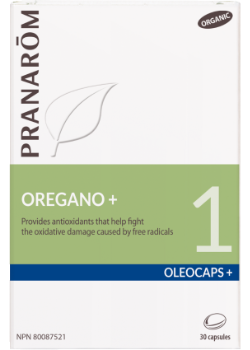
Providing antioxidants, Pranarom 1 Oleocaps+ Oregano helps fight the oxidative damage caused by free radicals. Formulated with Origanum Vulgare (Oregano essential oil) (leaf), Pranarom 1 Oleocaps+ Oregano delivers 3.5 mg thymol, 5% thymol, 42 mg carvacrol and 60% carvacrol. Current healthcare practitioners use oregano extract for its antibacterial, antiviral, and antifungal properties. It's also useful for treating colds, sore throats, coughs, chronic respiratory conditions, yeast infections, viral infections, bacterial infections, diarrhea and indigestion. Pranarom 1 Oleocaps+ Oregano is used in Herbal Medicine as an expectorant to help relieve catarrhs of the upper respiratory tract, especially coughs associated with colds. [CAPS]
Each capsule contains:
Origanum vulgare (Oregano essential oil) (leaf) (3.5 mg thymol, 5% thymol, 42 mg carvacrol, 60% carvacrol) 70 mg
Non-Medicinal Ingredients:
Gelatin, glycerin, lemon peel essential oil, rapeseed oil, tocopherols.
Important Information:
Consult a health care practitioner prior to use if you have cardiovascular disorders, coagulation, diabetes, stomach ulcers, inflammation of the gastrointestinal tract, or if you are taking blood thinners. Consult a health care practitioner if symptoms persist or worsen. Keep out of reach of young children. Do not use if you are pregnant or breastfeeding. Do not use if allergic to the Lamiaceae family (mint, basil, thyme). Some people may experience gastroesophageal reflux and prolonged use may cause irritation of the gastrointestinal mucosa. In this case, discontinue use. Hypersensitivity (e.g. allergy) has been known to occur; in which case, discontinue use.
Dosage
Adults (19 years and over): Take 1 capsule 3 times per day. Take with a meal or food, a few hours before or after if you taking supplements containing iron, calcium, copper or zinc. Take for 5 to 7 consecutive days.
Pranarom oils are scientifically formulated for specific concerns, providing support for the body's immune system, digestive system, respiratory system, and more. Odourless & tasteless, Pranarom supplements are a must-have for your natural toolkit.
OREGANO
Oregano is a well-known spice in Italian cooking. This plant is just as useful in the medicine cabinet as it is in the kitchen...
Oregano (Origanum vulgare) is a plant in the mint family that is closely related to marjoram. It has been used around the world as a culinary spice for flavouring grilled meats and vegetables, and as a preservative for meats. In ancient Greece, Hippocrates used oregano as an antiseptic, and as a cure for stomach and respiratory ailments. More current healthcare practitioners use oregano extract for its antibacterial, antiviral, and antifungal properties.
Oregano oil
can be used topically for skin infections, like Athlete's foot, ringworm and folliculitis. It is also useful for treating colds, sore throats, coughs, chronic respiratory conditions, yeast infections, viral infections, bacterial infections, diarrhea and indigestion.
Respiratory Infections
This herb not only kills infecting microbes in the respiratory tract but also acts as an expectorant (helps to expel mucus) and antispasmodic (relieves coughing). This is beneficial in a number of respiratory conditions such as:
bronchitis, croup, as well as common colds and flus.
Digestion and IBD
In the digestive tract oregano soothes digestion and decreases diarrhea, by stopping intestinal spasms. It also directly kills gastrointestinal microbes and decreases gas and bloating. The current theory is that Inflammatory Bowel Diseases like Crohn's and
Colitis
may have a triad of predisposing factors. These factors include: an unbalanced gut flora, a trigger event such as physical or emotional stress, and a bacterial or microbial invasion (infection). Given this theory, studies are currently investigating the use of oregano oil to treat
IBD, and help prevent flares.
Co-Supplementation
It is essential to be sure that you supplement
probiotics
when taking oregano internally. Because of its antimicrobial action, oregano can also eradicate the normal healthy gut flora, which can cause further digestive problems. Supplementing probiotics can replenish this loss and prevent future infections.
Essential Oil
The essential oil of oregano is a highly concentrated substance. It comes in various strengths, sometimes referred to as a percentage (i.e.: P73). Make note of the phenol carvacrol, one of the most act ve ingredients in oregano, responsible for the majority of its medicinal benefits. A carvacrol content of 70% or more is optimal.
How Can I Take Oregano?
Oregano can be purchased as a loose herb, encapsulated herb, spice or essential oil. The loose herb can be made into a poultice for topical application, used for inhalation or taken as a tea for internal use. Oregano may be included in combination teas for soothing digestion. When the essential oil is taken internally, 1-3 drops under the tongue, 3x/daily is a typical dosage. Acutely, you can do up to 3 drops every hour for the first day you are experiencing signs and symptoms of cold, flu or food poisoning (for up to 10 hours). The earlier in the infection cycle that oregano is taken the more easily it prevents progression to a full blown illness.
External Use
Externally, you can apply oregano to almost any affected area, although use extreme caution when treating highly sensitive mucosal membranes, such as the vagina and anal areas. It is highly recommended, when treating these areas that you use a carrier oil to dilute the essential oil, in order to prevent burns. Olive, almond or coconut oils are all good options. Before applying externally, you may want to test a small area of skin with the diluted essential oil, to ensure there is no reaction or determine if further dilution is necessary. A few drops of oil of oregano can be added to shampoos to treat dandruff, eczema or seborrheic
dermatitis
of the scalp. It can also be rubbed (using fingertip) on the gums to treat and prevent gingivitis, as well as a few drops added on your toothbrush to kill germs and treat bad breath.
Oregano – Quick Facts
Parts Used
· Aerial Parts, Essential Oil.
Applications
· Bacterial, Viral Or Fungal Infections, Indigestion, Coughs, Colds
Optimum Dosage
· Essential Oil, 1-3 Drops Daily. Herb, No Standard Dosing. (Clinical Doses May Be Higher As Recommended By Your Practitioner).
Works Well With
·
Echinacea, Goldenseal,
Vitamin C, Garlic, Bitter Herbs,
Slippery Elm, Mullein,
Thyme
Important Information
· The Essential Oil Of Oregano Is Toxic In High Doses And Should Not Be Used In Pregnancy Or Lactation.
· After Oral Use Of Oregano Probiotic Supplements Should Be Used To Replace Beneficial Bacterial Flora.
· Avoid Long Term Use Or Combine With Soothing Herbs Like
Marshmallow
And Slippery Elm.
Carefully SelectedShips to the U.S.Wellness EssentialsTrusted Brands
Product Details
OREGANO
Oregano is a well-known spice in Italian cooking. This plant is just as useful in the medicine cabinet as it is in the kitchen...
Oregano (Origanum vulgare) is a plant in the mint family that is closely related to marjoram. It has been used around the world as a culinary spice for flavouring grilled meats and vegetables, and as a preservative for meats. In ancient Greece, Hippocrates used oregano as an antiseptic, and as a cure for stomach and respiratory ailments. More current healthcare practitioners use oregano extract for its antibacterial, antiviral, and antifungal properties.
Oregano oil
can be used topically for skin infections, like Athlete's foot, ringworm and folliculitis. It is also useful for treating colds, sore throats, coughs, chronic respiratory conditions, yeast infections, viral infections, bacterial infections, diarrhea and indigestion.
Respiratory Infections
This herb not only kills infecting microbes in the respiratory tract but also acts as an expectorant (helps to expel mucus) and antispasmodic (relieves coughing). This is beneficial in a number of respiratory conditions such as:
bronchitis, croup, as well as common colds and flus.
Digestion and IBD
In the digestive tract oregano soothes digestion and decreases diarrhea, by stopping intestinal spasms. It also directly kills gastrointestinal microbes and decreases gas and bloating. The current theory is that Inflammatory Bowel Diseases like Crohn's and
Colitis
may have a triad of predisposing factors. These factors include: an unbalanced gut flora, a trigger event such as physical or emotional stress, and a bacterial or microbial invasion (infection). Given this theory, studies are currently investigating the use of oregano oil to treat
IBD, and help prevent flares.
Co-Supplementation
It is essential to be sure that you supplement
probiotics
when taking oregano internally. Because of its antimicrobial action, oregano can also eradicate the normal healthy gut flora, which can cause further digestive problems. Supplementing probiotics can replenish this loss and prevent future infections.
Essential Oil
The essential oil of oregano is a highly concentrated substance. It comes in various strengths, sometimes referred to as a percentage (i.e.: P73). Make note of the phenol carvacrol, one of the most act ve ingredients in oregano, responsible for the majority of its medicinal benefits. A carvacrol content of 70% or more is optimal.
How Can I Take Oregano?
Oregano can be purchased as a loose herb, encapsulated herb, spice or essential oil. The loose herb can be made into a poultice for topical application, used for inhalation or taken as a tea for internal use. Oregano may be included in combination teas for soothing digestion. When the essential oil is taken internally, 1-3 drops under the tongue, 3x/daily is a typical dosage. Acutely, you can do up to 3 drops every hour for the first day you are experiencing signs and symptoms of cold, flu or food poisoning (for up to 10 hours). The earlier in the infection cycle that oregano is taken the more easily it prevents progression to a full blown illness.
External Use
Externally, you can apply oregano to almost any affected area, although use extreme caution when treating highly sensitive mucosal membranes, such as the vagina and anal areas. It is highly recommended, when treating these areas that you use a carrier oil to dilute the essential oil, in order to prevent burns. Olive, almond or coconut oils are all good options. Before applying externally, you may want to test a small area of skin with the diluted essential oil, to ensure there is no reaction or determine if further dilution is necessary. A few drops of oil of oregano can be added to shampoos to treat dandruff, eczema or seborrheic
dermatitis
of the scalp. It can also be rubbed (using fingertip) on the gums to treat and prevent gingivitis, as well as a few drops added on your toothbrush to kill germs and treat bad breath.
Oregano – Quick Facts
Parts Used
· Aerial Parts, Essential Oil.
Applications
· Bacterial, Viral Or Fungal Infections, Indigestion, Coughs, Colds
Optimum Dosage
· Essential Oil, 1-3 Drops Daily. Herb, No Standard Dosing. (Clinical Doses May Be Higher As Recommended By Your Practitioner).
Works Well With
·
Echinacea, Goldenseal,
Vitamin C, Garlic, Bitter Herbs,
Slippery Elm, Mullein,
Thyme
Important Information
· The Essential Oil Of Oregano Is Toxic In High Doses And Should Not Be Used In Pregnancy Or Lactation.
· After Oral Use Of Oregano Probiotic Supplements Should Be Used To Replace Beneficial Bacterial Flora.
· Avoid Long Term Use Or Combine With Soothing Herbs Like
Marshmallow
And Slippery Elm.
🌿
Daily Wellness
Easy to add to your everyday health routine.
✅
Carefully Selected
Chosen with quality and customer needs in mind.
💊
Simple to Use
Designed for convenient daily supplementation.
🚚
Ships to the U.S.
Fast, reliable shipping to U.S. customers.
Choosing a selection results in a full page refresh.