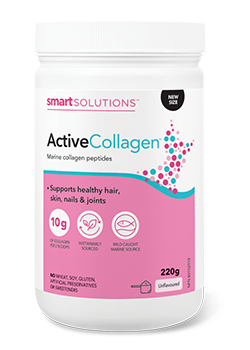
ACTIVE COLLAGEN FROM LORNA VANDERHAEGHE Active COLLAGEN from Lorna Vanderhaeghe helps to reduce the depth of deep wrinkles, increase skin moisture and lift and tone sagging skin. 28 days of continued use of Active Collagen shows significant decrease in the number of deep wrinkles and improved moisture content. Active Collagen also helps brittle nails and thickens hair, as well as improves bone mineral density and bone disease. [POWDER]
Each scoop (2g) contains:
Hydrolyzed marine collagen 2000mg
Malic Acid 400mg
Important Information:
Keep out of reach of children.
Dosage
Mix 1-2 scoops in 250 ml of water or add to smoothies.
Lorna Vanderhaeghe's products are designed to empower women to take control of their health. Founded in 2010, Lorna Vanderhaeghe's natural health products include ADRENAsmart, BONE BOOSTER, CALA-Q plus, Celadrin Skin Cream, CLA plus, COLLAGEN plus, ESTROsmart, GLA Skin Oil/Gels, GLUCOsmart, IRONsmart, SLEEPsmart and more!
COLLAGEN
There are four types of collagen in the body. Collagen type II is the primary component of cartilage, with types I and III also being present but to a lesser degree. Cartilage is the connective tissue disk that acts as a cushion and eliminates friction in your joints.
As we age our ability to make collagen type II decreases and loss of collagen type II decreases the integrity of cartilage. Wear-and-tear injuries occur in the joints and cause less support, less cushioning and more friction.
Collagen type II also has anti-inflammatory properties, which help the joint to repair itself after injury. As a supplement collagen acts as a source of
amino acids
for use in making and repairing connective tissue all over the body. Thus collagen is used to repair skin that is damaged by wounds and burns. It heals skin ulcers by repairing the skin and increasing the integrity of the arteries and veins. Collagen is added to skin care products for topical application against wrinkles and age spots. Natural health practitioners also recommend collagen type II for joint injury, arthritis, joint inflammation, skin ulcers, burns and wounds.
Collagen type II can be found as encapsulated powder or liquid. It is usually combined with other joint repairing nutrients and vitamins. Collagen type II is found as a component of pain relieving and anti-inflammatory formulas. It is often added to anti-aging skin care products. Collagen type I and III are also available and should be used after good results are found with type II to further rebuild damaged joints or tissue.
There is no toxicity, side effects or contraindications for the use of collagen. Collagen should be taken with a juice that is high in
vitamin C
or a
vitamin C
tablet to improve its absorption. Depending on the severity of joint destruction collagen may need to be taken for a few months before results are seen.
Wrinkles
If you live long enough you will eventually develop some skin wrinkling. But what can we do to minimize the appearance of wrinkles? Let’s look at the causes. A wrinkle forms when the skin loses its elasticity and maintains a permanent crease.
It usually happens around the eyes, cheeks and lips because these areas repetitively form facial expressions like smiling or frowning.
The most important factor in the development of wrinkles is sun exposure. Damage from UVA rays, which are present all year round, can attribute to up to 90 percent of skin aging.
As the skin is damaged, little by little each day, it loses its elasticity. A wrinkle is one of the end results of this damage. Other factors that contribute to wrinkled skin are nutritional status, habitual facial expressions, stress, skin care, environmental pollutants, smoking and heredity.
To fight wrinkling topically, use a natural moisturizer with sunscreen protection everyday. Try to stay out of direct sunlight. Avoid harsh cleansing products; alcohol based toners, chlorinated tap water for drinking and bathing, perfumes and colourings in laundry and personal hygiene products. Use glycerin and natural soaps to wash your skin.
Invest in high quality natural cosmetics. Add a capsule of
vitamin A
or
vitamin E
oil into your moisturizer to protect the skin from free radical damage.
Dry skin brushing is a wonderful way to exfoliate the skin, increase circulation to the skin and invigorate the body. Use a natural bristle brush.
Dietary change is important for nourishing the skin. Water. Water. Water. Drink about 2 L daily. Eat foods high in
zinc
such as whole grains, sunflower seeds and raw nuts.
Eat lots of fruit, especially mango and apricot, for its water content and alpha-hydroxy acids.
Sulphur
rich foods like garlic, onions, eggs and asparagus, provide raw material for building skin proteins. Essential fatty acids are a source of the good fats for the skin. Use cold pressed oils like flax, olive, sunflower and safflower. Avoid hydrogenated fats, fried foods, soft drinks, sugar, chocolate, junk foods, cigarettes and alcohol.
Carefully SelectedShips to the U.S.Wellness EssentialsTrusted Brands
Product Details
COLLAGEN
There are four types of collagen in the body. Collagen type II is the primary component of cartilage, with types I and III also being present but to a lesser degree. Cartilage is the connective tissue disk that acts as a cushion and eliminates friction in your joints.
As we age our ability to make collagen type II decreases and loss of collagen type II decreases the integrity of cartilage. Wear-and-tear injuries occur in the joints and cause less support, less cushioning and more friction.
Collagen type II also has anti-inflammatory properties, which help the joint to repair itself after injury. As a supplement collagen acts as a source of
amino acids
for use in making and repairing connective tissue all over the body. Thus collagen is used to repair skin that is damaged by wounds and burns. It heals skin ulcers by repairing the skin and increasing the integrity of the arteries and veins. Collagen is added to skin care products for topical application against wrinkles and age spots. Natural health practitioners also recommend collagen type II for joint injury, arthritis, joint inflammation, skin ulcers, burns and wounds.
Collagen type II can be found as encapsulated powder or liquid. It is usually combined with other joint repairing nutrients and vitamins. Collagen type II is found as a component of pain relieving and anti-inflammatory formulas. It is often added to anti-aging skin care products. Collagen type I and III are also available and should be used after good results are found with type II to further rebuild damaged joints or tissue.
There is no toxicity, side effects or contraindications for the use of collagen. Collagen should be taken with a juice that is high in
vitamin C
or a
vitamin C
tablet to improve its absorption. Depending on the severity of joint destruction collagen may need to be taken for a few months before results are seen.
Wrinkles
If you live long enough you will eventually develop some skin wrinkling. But what can we do to minimize the appearance of wrinkles? Let’s look at the causes. A wrinkle forms when the skin loses its elasticity and maintains a permanent crease.
It usually happens around the eyes, cheeks and lips because these areas repetitively form facial expressions like smiling or frowning.
The most important factor in the development of wrinkles is sun exposure. Damage from UVA rays, which are present all year round, can attribute to up to 90 percent of skin aging.
As the skin is damaged, little by little each day, it loses its elasticity. A wrinkle is one of the end results of this damage. Other factors that contribute to wrinkled skin are nutritional status, habitual facial expressions, stress, skin care, environmental pollutants, smoking and heredity.
To fight wrinkling topically, use a natural moisturizer with sunscreen protection everyday. Try to stay out of direct sunlight. Avoid harsh cleansing products; alcohol based toners, chlorinated tap water for drinking and bathing, perfumes and colourings in laundry and personal hygiene products. Use glycerin and natural soaps to wash your skin.
Invest in high quality natural cosmetics. Add a capsule of
vitamin A
or
vitamin E
oil into your moisturizer to protect the skin from free radical damage.
Dry skin brushing is a wonderful way to exfoliate the skin, increase circulation to the skin and invigorate the body. Use a natural bristle brush.
Dietary change is important for nourishing the skin. Water. Water. Water. Drink about 2 L daily. Eat foods high in
zinc
such as whole grains, sunflower seeds and raw nuts.
Eat lots of fruit, especially mango and apricot, for its water content and alpha-hydroxy acids.
Sulphur
rich foods like garlic, onions, eggs and asparagus, provide raw material for building skin proteins. Essential fatty acids are a source of the good fats for the skin. Use cold pressed oils like flax, olive, sunflower and safflower. Avoid hydrogenated fats, fried foods, soft drinks, sugar, chocolate, junk foods, cigarettes and alcohol.
🌿
Daily Wellness
Easy to add to your everyday health routine.
✅
Carefully Selected
Chosen with quality and customer needs in mind.
💊
Simple to Use
Designed for convenient daily supplementation.
🚚
Ships to the U.S.
Fast, reliable shipping to U.S. customers.
Choosing a selection results in a full page refresh.