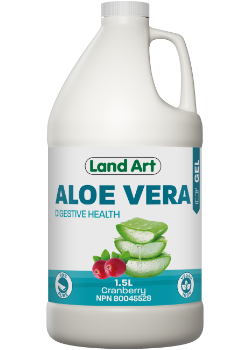
Land Art Aloe Vera Drinkable Gel is a pure gel that has been sourced from organically grown plants and does not contain sugar or glycerine. Aloe Vera is rich in amino acids, digestive enzymes, minerals and vitamins. With a delicious cranberry flavour, Aloe Vera Drinkable Gel is often recommended for people that have stomach problems or suffer from acid reflux and is useful in treating ulcers, hemorrhoids and colitis. When used externally, Aloe Vera is known to effectively soothe sunburns, minor burns, insect bites, cuts and other minor skin irritations and provides antibacterial properties. [GEL]
Ingredients per 15ml:
Aloe (aloe vera gel from the leaf) 14.8 ml
Non-medicinal Ingredients:
Water from reverse osmosis, xanthan gum, natural cranberry aroma, citric acid, ascorbic acid, potassium sorbate, sodium benzoate.
Important Information:
Consult a health care practitioner before using if you suffer from diabetes, if you are pregnant or breast feeding. Consult a health care practitioner if symptoms persist or worsen. Do not use if the security seal is broken. Keep out of the reach of children. Shake well before use. Keep refrigerated after opening.
Dosage
Children and adolescents (1 to 17 years old): Consult a health care practitioner. Adults (18 years and older): 2 tablespoons (30 ml) per day. May be diluted in a glass of water or juice.
Land Art formulates liquid supplements that offer superior absorption, bioavailability, and easier digestibility. Their professional, scientific team makes natural health products that are vegan and gluten-free. Their products undergo quality inspection and are packaged in BPA and BPS free bottles that are fully recyclable. They offer many liquid supplements to support various health concerns including, Chlorphyll and a detox blend, Milk Thistle, Melatonin, B-Complex and B-12, Collagen, or Silica, Vitamin D3, Vitamin C, Ginseng Royal Jelly, and many more, all processed in their Eco-cert NOP organic certified plant licensed by Health Canada.
Aloe Vera
By: Articles by a Naturopathic Doctor (N.D.)
Aloe Vera can help to soothe your skin and your digestive tract...
Aloe vera is a succulent (cactus-like) plant, whose sap has been used as an herbal medicine for thousands of years. It has long been used both on the skin and internally to soothe the digestive tract. Most of us are familiar with the use of Aloe on sunburns, but did you know that you can use it internally as well?
External Use - Skin
Aloe gel has been found to have anti-inflammatory properties. When used externally, it speeds the healing of many types of skin burns, including those from sun, radiation, chemicals and heat. It can also help to reduce the discomfort associated with these conditions, when applied soon after the trauma. Aloe vera can also be used topically to treat: cuts, insect stings, acne,
poison ivy, skin ulcers (including diabetic ulcers) and eczema. There is some evidence that topical application can help to reduce outbreaks of genital herpes and
psoriasis
as well.
Cosmetic
Because of its ability to help reduce inflammation and speed the healing of skin, Aloe is commonly used in a wide variety of cosmetic and skin-care products. It has been widely approved around the world as a natural food additive. It is also commonly used as a gentle antibacterial moisturizer.
Antibacterial and Antifungal
Because of its natural antibacterial and antifungal properties, Aloe vera gel is commonly used to protect damaged tissue from infection. It can also be used to topically treat minor
Skin Infections
such as boils, and Tinea infections. This makes it particularly useful in helping to treat conditions such as Acne. When taken internally its antibacterial and anti-inflammatory properties act to heal the inner lining of the digestive tract, making it useful in the treatment of ulcers,
hemorrhoids
and colitis.
Aloe Juice (Latex)
When the plant is harvested, the juice located in, and just beneath, the outer skin contains a far greater concentration of a constituent called aloin, which can create a laxative effect in the body. This substance is called the latex. In fact, many over the counter laxatives in North America contain this constituent. Thus, Aloe juice is a laxative that can be used for
Constipation
and as a colon cleanser. The gel does not contain as much of a laxative effect and is more commonly used for its soothing properties. Those using Aloe internally should be careful about the preparation they use, in order to ensure that they get the desired effects without any unwanted side effects. This is especially true in cases of Inflammatory Bowel Disease, where an irritating laxative can do more harm than good. Read labels carefully to ensure that you are purchasing the form of Aloe that your particular case requires.
Laxative
While the juice (latex) of the Aloe plant can be used as a laxative, the body will develop a tolerance over time, so it cannot be used too frequently or on an ongoing basis for the treatment of constipation. It can also have a strong laxative effect that can result in cramping and
diarrhea. Use caution with your first use of any internal Aloe product to be sure you get the dosing right for your particular needs. Some forms of Aloe can coat and soothe the digestive tract and help to soften stools. Some Aloe acts as a soluble fibre, so it can bind medications and reduce their absorption. Be sure to take any form of Aloe away from other supplements and medications.
Blood Sugar and Fats
There is some initial evidence that Aloe may help to improve blood sugar control in diabetics, and can also help to lower blood lipid levels in people suffering from hyperlipidemia. This effect is also seen in those with acute liver disease.
How can I get Aloe Vera?
Aloe vera can be purchased as a juice or gel. It is very sensitive to light and heat, and so it must be processed and stabilized immediately after harvest. The quality of Aloe vera supplements may vary amongst manufacturers because of the fragile nature of the Aloe gel. Be sure to use a manufacturer that you trust. If you have an Aloe plant at home, parts of the raw plant can be opened and the fresh juice or gel used topically or internally. Most commercial supplements contain the whole-leaf, and therefore, a mixture of juice and gel from all parts of the leaf. Be sure to take oral Aloe away from other supplements and medications as it can affect their absorption.
Aloe Vera – Quick Facts
Parts Used
· Juice And Gel.
Applications
· Constipation, Slow Wound Healing
Optimum Dosage
· Externally - Gel Containing A Minimum Of 70% Aloe Vera, Internally – No Standard Dosing. (Clinical Doses May Be Higher As Recommended By Your Practitioner).
Works Well With
· Psyllium Husks
Important Information
· Be Sure To Take Oral Aloe Away From Other Supplements And Medication As It May Block Their Absorption.
· Aloe Dried Exudate Is Not The Same Thing As Aloe Vera Gel.
· Excess Aloe Can Result In Diarrhea.
· Pregnant And Lactating Women Should Use Caution As Effects Are Not Yet Studied.
Carefully SelectedShips to the U.S.Wellness EssentialsTrusted Brands
Product Details
Aloe Vera
By: Articles by a Naturopathic Doctor (N.D.)
Aloe Vera can help to soothe your skin and your digestive tract...
Aloe vera is a succulent (cactus-like) plant, whose sap has been used as an herbal medicine for thousands of years. It has long been used both on the skin and internally to soothe the digestive tract. Most of us are familiar with the use of Aloe on sunburns, but did you know that you can use it internally as well?
External Use - Skin
Aloe gel has been found to have anti-inflammatory properties. When used externally, it speeds the healing of many types of skin burns, including those from sun, radiation, chemicals and heat. It can also help to reduce the discomfort associated with these conditions, when applied soon after the trauma. Aloe vera can also be used topically to treat: cuts, insect stings, acne,
poison ivy, skin ulcers (including diabetic ulcers) and eczema. There is some evidence that topical application can help to reduce outbreaks of genital herpes and
psoriasis
as well.
Cosmetic
Because of its ability to help reduce inflammation and speed the healing of skin, Aloe is commonly used in a wide variety of cosmetic and skin-care products. It has been widely approved around the world as a natural food additive. It is also commonly used as a gentle antibacterial moisturizer.
Antibacterial and Antifungal
Because of its natural antibacterial and antifungal properties, Aloe vera gel is commonly used to protect damaged tissue from infection. It can also be used to topically treat minor
Skin Infections
such as boils, and Tinea infections. This makes it particularly useful in helping to treat conditions such as Acne. When taken internally its antibacterial and anti-inflammatory properties act to heal the inner lining of the digestive tract, making it useful in the treatment of ulcers,
hemorrhoids
and colitis.
Aloe Juice (Latex)
When the plant is harvested, the juice located in, and just beneath, the outer skin contains a far greater concentration of a constituent called aloin, which can create a laxative effect in the body. This substance is called the latex. In fact, many over the counter laxatives in North America contain this constituent. Thus, Aloe juice is a laxative that can be used for
Constipation
and as a colon cleanser. The gel does not contain as much of a laxative effect and is more commonly used for its soothing properties. Those using Aloe internally should be careful about the preparation they use, in order to ensure that they get the desired effects without any unwanted side effects. This is especially true in cases of Inflammatory Bowel Disease, where an irritating laxative can do more harm than good. Read labels carefully to ensure that you are purchasing the form of Aloe that your particular case requires.
Laxative
While the juice (latex) of the Aloe plant can be used as a laxative, the body will develop a tolerance over time, so it cannot be used too frequently or on an ongoing basis for the treatment of constipation. It can also have a strong laxative effect that can result in cramping and
diarrhea. Use caution with your first use of any internal Aloe product to be sure you get the dosing right for your particular needs. Some forms of Aloe can coat and soothe the digestive tract and help to soften stools. Some Aloe acts as a soluble fibre, so it can bind medications and reduce their absorption. Be sure to take any form of Aloe away from other supplements and medications.
Blood Sugar and Fats
There is some initial evidence that Aloe may help to improve blood sugar control in diabetics, and can also help to lower blood lipid levels in people suffering from hyperlipidemia. This effect is also seen in those with acute liver disease.
How can I get Aloe Vera?
Aloe vera can be purchased as a juice or gel. It is very sensitive to light and heat, and so it must be processed and stabilized immediately after harvest. The quality of Aloe vera supplements may vary amongst manufacturers because of the fragile nature of the Aloe gel. Be sure to use a manufacturer that you trust. If you have an Aloe plant at home, parts of the raw plant can be opened and the fresh juice or gel used topically or internally. Most commercial supplements contain the whole-leaf, and therefore, a mixture of juice and gel from all parts of the leaf. Be sure to take oral Aloe away from other supplements and medications as it can affect their absorption.
Aloe Vera – Quick Facts
Parts Used
· Juice And Gel.
Applications
· Constipation, Slow Wound Healing
Optimum Dosage
· Externally - Gel Containing A Minimum Of 70% Aloe Vera, Internally – No Standard Dosing. (Clinical Doses May Be Higher As Recommended By Your Practitioner).
Works Well With
· Psyllium Husks
Important Information
· Be Sure To Take Oral Aloe Away From Other Supplements And Medication As It May Block Their Absorption.
· Aloe Dried Exudate Is Not The Same Thing As Aloe Vera Gel.
· Excess Aloe Can Result In Diarrhea.
· Pregnant And Lactating Women Should Use Caution As Effects Are Not Yet Studied.
🌿
Daily Wellness
Easy to add to your everyday health routine.
✅
Carefully Selected
Chosen with quality and customer needs in mind.
💊
Simple to Use
Designed for convenient daily supplementation.
🚚
Ships to the U.S.
Fast, reliable shipping to U.S. customers.
Choosing a selection results in a full page refresh.