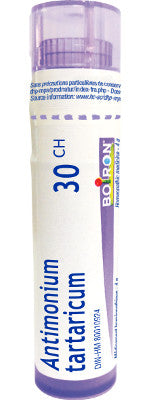
HELP STOP COUGHS WITH HOMEOPATHYAntimonium tartaricum is mainly used to help with a wet, non-productive cough. The common name for Antimonium tartaricum is Antimony potassium tartrate.
Contains:
Antimonium tartaricum 3CH
Non-Medicinal Ingredients:
Lactose, Sucrose
Important Information:
Stop use and ask a doctor if symptoms persist for more than 3 days or worsen. If pregnant or breast-feeding, ask a health professional before use. Keep out of reach of children.
Dosage
Adult and children 2 years of age and older: Dissolve 5 pellets under the tongue 3 times a day until relieved or as directed by a doctor.
Trusted European Homeopathics Source - 16 New Added
Boiron, the makers of Canada’s best selling homeopathic remedies including,
Oscillococcinum for aid with relief of flu symptoms
and
best selling seasonal illness fighter Influenzinum, now brings to you Boiron for Children as well as their classic Arnica Montana which can be useful for pain associated with sprains, strains, and falls.
Shop Arnica for homeopathic options
you can trust.
ASTHMA
& LUNG HEALTH
Asthma can leave you breathless. While puffers provide immediate relief, many are turning to natural supplements & herbs in the long term...
Asthma is a common respiratory ailment that affects people of all ages. The incidence of asthma has doubled over the last 15 years. The attacks are caused by inflammation and hypersensitivity of the airways. Spasms of the small bronchiole tubes occur and air cannot move out. This leads to difficulty breathing.
Increased mucous production and swelling of the bronchioles also blocks the tubes and exacerbates the problem.
Triggers for attacks can be external, such as a
food allergy, medications, smoke, environmental chemicals, dust, pollen, animal hair or dander. Internal triggers for asthma can be stress, emotions, exercise, cold air, humidity, dry air, low blood sugar or viral infections.
Asthma attacks usually begin with a dry cough and tightness in he chest. They can progress to wheezing and laboured breathing. Some attacks are life threatening. Anxiety and panic attacks can result from the feelings of suffocation that the asthmatic experiences.
The underlying causes of asthma are not well understood. Genetics does seem to play a role. The suppression of eczema with medication can make you more susceptible to asthma in the future. Candidiasis, low digestive
enzymes, low stomach acid and food sensitivities are also thought to be root causes of asthma.
Conventional treatment of asthma involves medications such as inhaled corticosteroids, theophylline and beta-2 agonists. They treat the symptoms of asthma by reducing spasms and inflammation. They do not address the root cause of the problem. Side effects of these medications may include anxiety, mood swings,
insomnia, immune suppression and decreased bone density.
Avoidance of all irritating substances is important for prevention of asthma. Home air purification systems, humidifiers and dehumidifiers can be helpful. Keep plants that remove pollutants from air. These types include bamboo palm, Boston fern, dracaena, English ivy, ficus ali, peace lily, rubber plant and spider plant. Regular moderate exercise and deep breathing practices can decrease hypersensitivity of the airways. Steam inhalations with
thyme
or eucalyptus essential oils are antispasmodic and antimicrobial.
For acute attacks place hot
apple cider vinegar
poultices on the arms until the attack subsides. For all of you coffee-lovers, caffeine has a dilating effect on the bronchioles and can be of help when consumed at the beginning of an asthma attack.
Dietary approaches to asthma are as follows. Increase fluid intake to decrease the viscosity of mucous secretions. Detoxify your body periodically. A diet high in raw fruits and vegetables provides a good source of vitamins, minerals and
antioxidants. Onions and garlic are good sources of
quercitin
and
vitamin C. Flaxseed and fish oils contain essential fatty acids that are anti-inflammatory.
Avoid animal products because they contain inflammatory precursors. Avoid food colourings and preservatives such as sulphites. Avoid foods and drugs that contain salicylates including aspirin,
white willow
bark and the mint family.
If food allergies are implicated in a case of asthma, individuals should use an elimination method to determine the culprit of the disturbance. An elimination diet begins with a period of abstaining from foods that are common triggers which include: eggs, wheat, shellfish, nuts, chocolate, citrus, cow’s milk and peanuts – try to also eliminate food colourings and preservatives. From this point, further control diet by eating only mild and non-irritating foods. Now, you can begin to test different triggers by introducing foods back into your diet and recording any symptoms you have. Keep foods in your diet that are safe for you in moderation. If a food causes a reaction then it is restricted for a period of a few months. It can then be retried. Rotation diets limit your food intake to certain food families each day. It can be used to assess food allergies and is a good method to prevent the return of allergies.
Carefully SelectedShips to the U.S.Wellness EssentialsTrusted Brands
Product Details
ASTHMA
& LUNG HEALTH
Asthma can leave you breathless. While puffers provide immediate relief, many are turning to natural supplements & herbs in the long term...
Asthma is a common respiratory ailment that affects people of all ages. The incidence of asthma has doubled over the last 15 years. The attacks are caused by inflammation and hypersensitivity of the airways. Spasms of the small bronchiole tubes occur and air cannot move out. This leads to difficulty breathing.
Increased mucous production and swelling of the bronchioles also blocks the tubes and exacerbates the problem.
Triggers for attacks can be external, such as a
food allergy, medications, smoke, environmental chemicals, dust, pollen, animal hair or dander. Internal triggers for asthma can be stress, emotions, exercise, cold air, humidity, dry air, low blood sugar or viral infections.
Asthma attacks usually begin with a dry cough and tightness in he chest. They can progress to wheezing and laboured breathing. Some attacks are life threatening. Anxiety and panic attacks can result from the feelings of suffocation that the asthmatic experiences.
The underlying causes of asthma are not well understood. Genetics does seem to play a role. The suppression of eczema with medication can make you more susceptible to asthma in the future. Candidiasis, low digestive
enzymes, low stomach acid and food sensitivities are also thought to be root causes of asthma.
Conventional treatment of asthma involves medications such as inhaled corticosteroids, theophylline and beta-2 agonists. They treat the symptoms of asthma by reducing spasms and inflammation. They do not address the root cause of the problem. Side effects of these medications may include anxiety, mood swings,
insomnia, immune suppression and decreased bone density.
Avoidance of all irritating substances is important for prevention of asthma. Home air purification systems, humidifiers and dehumidifiers can be helpful. Keep plants that remove pollutants from air. These types include bamboo palm, Boston fern, dracaena, English ivy, ficus ali, peace lily, rubber plant and spider plant. Regular moderate exercise and deep breathing practices can decrease hypersensitivity of the airways. Steam inhalations with
thyme
or eucalyptus essential oils are antispasmodic and antimicrobial.
For acute attacks place hot
apple cider vinegar
poultices on the arms until the attack subsides. For all of you coffee-lovers, caffeine has a dilating effect on the bronchioles and can be of help when consumed at the beginning of an asthma attack.
Dietary approaches to asthma are as follows. Increase fluid intake to decrease the viscosity of mucous secretions. Detoxify your body periodically. A diet high in raw fruits and vegetables provides a good source of vitamins, minerals and
antioxidants. Onions and garlic are good sources of
quercitin
and
vitamin C. Flaxseed and fish oils contain essential fatty acids that are anti-inflammatory.
Avoid animal products because they contain inflammatory precursors. Avoid food colourings and preservatives such as sulphites. Avoid foods and drugs that contain salicylates including aspirin,
white willow
bark and the mint family.
If food allergies are implicated in a case of asthma, individuals should use an elimination method to determine the culprit of the disturbance. An elimination diet begins with a period of abstaining from foods that are common triggers which include: eggs, wheat, shellfish, nuts, chocolate, citrus, cow’s milk and peanuts – try to also eliminate food colourings and preservatives. From this point, further control diet by eating only mild and non-irritating foods. Now, you can begin to test different triggers by introducing foods back into your diet and recording any symptoms you have. Keep foods in your diet that are safe for you in moderation. If a food causes a reaction then it is restricted for a period of a few months. It can then be retried. Rotation diets limit your food intake to certain food families each day. It can be used to assess food allergies and is a good method to prevent the return of allergies.
🌿
Daily Wellness
Easy to add to your everyday health routine.
✅
Carefully Selected
Chosen with quality and customer needs in mind.
💊
Simple to Use
Designed for convenient daily supplementation.
🚚
Ships to the U.S.
Fast, reliable shipping to U.S. customers.
Choosing a selection results in a full page refresh.