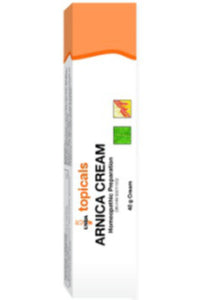
ARNICA HOMEOPATHIC CREAM FROM UNDA Arnica Cream from Unda is a homeopathic alternative to the muscle, joint and bruise creams you find over the counter today. Arnica topical cream combines two synergistic herbs, Arnica montana and Calendula officinalis, selected for their anti-inflammatory, anti-bacterial, and wound-healing properties when applied to soft tissue traumas. Apply a small amount of Arnica Cream on areas that are bruised, sprained, or in significant pain to help relieve the muscle pain, swelling, bruising and stiffness associated with the after-effects of mild injury. [CREAM]
Contains:
Arnica montana (Leopard's bane) Flowering Tops MT
Calendula officinalis (Marigold) Flowering Tops MT
Non Medicinal Ingredients:
Purified water, glycerin, cetostearyl alcohol
Important Information:
If you are pregnant or breastfeeding, consult your healthcare practitioner prior to use. If symptoms persist or worsen, consult your healthcare practitioner.
Dosage
Adults: Apply a small amount on the affected area two to three times daily.
Children: Reduce application to once daily and follow adult directions.
Homeopathic Liquid Compounds for Whole Body Health
Unda formulates
homeopathic supplements
including Unda #245 for hormone support, Unda #30 for insomnia support, Unda #8 to support circulation and Unda #6 for digestive support. Unda uses quality herbal blends to help support overall health and provide a diverse range of homeopathic supplements.
ARNICA MONTANA
Sprains, bruises and sore muscles don’t stand a chance against mighty Arnica...
Arnica’s hairy stem and bright yellow flower which blooms about mid-summer can grow to be about 2 feet tall. It is native to the mountains of Europe, Central Asia and Siberia, and it’s cultivated in North America. It’s preference for Mountainous areas gave it the common name of mountain tobacco or mountain daisy.
Arnica has been used for centuries for the treatment of muscle ache, to reduce inflammation, heal bruising, sprains and wounds. Currently Arnica Montana is one of the best known homeopathic remedies. It is still used in for treating bruises, sprains and wounds but it also a useful treatment of both
osteoarthritis
and
rheumatoid arthritis
to reduce pain and inflammation. It is typically used superficially on the affected area as a cream, ointment, gel or salve. Arnica should never be used on broken skin and after prolonged use may cause toxic skin reactions, such as peeling, eczema or blistering.
Arnica is also very commonly used internally as an acute homeopathic treatment for any kind of aches, pains, physical trauma. Arnica is also widely used in Germany for heart conditions, although usually in a gentle form such as tea, as arnica can cause severe side effects of vomiting, increasing heart rate and nervous disorders when taken internally. As a homeopathic treatment, because it is so diluted, there are no toxic side effects.
Studies have shown that it is actually an active ingredient in the herb called helenalin that is responsible for its anti-inflammatory, analgesic and anti-septic properties. It appears to work by stimulating white blood cells within muscle or joint tissue to remove stagnant or congested blood. It has also been shown to dilate sub-coetaneous blood vessels, again making movement easier.
Although Arnica is known for its ability to heal under the skin it has been shown that it may help people suffering from skin conditions and hair loss as well. Because of its antimicrobial properties it can help with acne,
psoriasis, and eczema. Its anti-inflammatory properties may help people suffering from itchy, inflamed sin rashes. As mentioned above though it is important not to apply it to broken skin. In some cases arnica was found to stimulate hair growth, and adding it to shampoos or soap can help prevent hair loss.
Important Information
Due to the lack of evidence arnica is not recommended for women who are pregnant or breast feeding. If allergic to ragweed or other related plants arnica may cause an allergic reaction. If suffering from
IBS, ulcers,
Crohn's disease
or other digestive or intestinal conditions do not take arnica. Arnica may increase heart rate and blood pressure. Stop using arnica at lest 2 weeks before a scheduled surgery as it may cause extra bleeding.
ARNICA MONTANA – QUICK FACTS
PARTS USED
· Flowers (dried), root.
APPLICATIONS
· Muscle aches and pains, bruises, sprains, inflammation, osteoarthritis, rheumatoid arthritis, fracture and other physical trauma.
OPTIMUM DOSAGE
· No determined amount is considered unsafe when applying arnica topically. As a homeopathic treatment it is commonly recommended at a dose of 30 CH.
WORKS WELL WITH
· It is often found in combination remedies alongside calendula,
witch hazel
and others.
IMPORTANT INFORMATION
· Arnica can have toxic effects when taken internally or used externally for prolonged periods. Do not apply arnica topically over broken skin.
Carefully SelectedShips to the U.S.Wellness EssentialsTrusted Brands
Product Details
ARNICA MONTANA
Sprains, bruises and sore muscles don’t stand a chance against mighty Arnica...
Arnica’s hairy stem and bright yellow flower which blooms about mid-summer can grow to be about 2 feet tall. It is native to the mountains of Europe, Central Asia and Siberia, and it’s cultivated in North America. It’s preference for Mountainous areas gave it the common name of mountain tobacco or mountain daisy.
Arnica has been used for centuries for the treatment of muscle ache, to reduce inflammation, heal bruising, sprains and wounds. Currently Arnica Montana is one of the best known homeopathic remedies. It is still used in for treating bruises, sprains and wounds but it also a useful treatment of both
osteoarthritis
and
rheumatoid arthritis
to reduce pain and inflammation. It is typically used superficially on the affected area as a cream, ointment, gel or salve. Arnica should never be used on broken skin and after prolonged use may cause toxic skin reactions, such as peeling, eczema or blistering.
Arnica is also very commonly used internally as an acute homeopathic treatment for any kind of aches, pains, physical trauma. Arnica is also widely used in Germany for heart conditions, although usually in a gentle form such as tea, as arnica can cause severe side effects of vomiting, increasing heart rate and nervous disorders when taken internally. As a homeopathic treatment, because it is so diluted, there are no toxic side effects.
Studies have shown that it is actually an active ingredient in the herb called helenalin that is responsible for its anti-inflammatory, analgesic and anti-septic properties. It appears to work by stimulating white blood cells within muscle or joint tissue to remove stagnant or congested blood. It has also been shown to dilate sub-coetaneous blood vessels, again making movement easier.
Although Arnica is known for its ability to heal under the skin it has been shown that it may help people suffering from skin conditions and hair loss as well. Because of its antimicrobial properties it can help with acne,
psoriasis, and eczema. Its anti-inflammatory properties may help people suffering from itchy, inflamed sin rashes. As mentioned above though it is important not to apply it to broken skin. In some cases arnica was found to stimulate hair growth, and adding it to shampoos or soap can help prevent hair loss.
Important Information
Due to the lack of evidence arnica is not recommended for women who are pregnant or breast feeding. If allergic to ragweed or other related plants arnica may cause an allergic reaction. If suffering from
IBS, ulcers,
Crohn's disease
or other digestive or intestinal conditions do not take arnica. Arnica may increase heart rate and blood pressure. Stop using arnica at lest 2 weeks before a scheduled surgery as it may cause extra bleeding.
ARNICA MONTANA – QUICK FACTS
PARTS USED
· Flowers (dried), root.
APPLICATIONS
· Muscle aches and pains, bruises, sprains, inflammation, osteoarthritis, rheumatoid arthritis, fracture and other physical trauma.
OPTIMUM DOSAGE
· No determined amount is considered unsafe when applying arnica topically. As a homeopathic treatment it is commonly recommended at a dose of 30 CH.
WORKS WELL WITH
· It is often found in combination remedies alongside calendula,
witch hazel
and others.
IMPORTANT INFORMATION
· Arnica can have toxic effects when taken internally or used externally for prolonged periods. Do not apply arnica topically over broken skin.
🌿
Daily Wellness
Easy to add to your everyday health routine.
✅
Carefully Selected
Chosen with quality and customer needs in mind.
💊
Simple to Use
Designed for convenient daily supplementation.
🚚
Ships to the U.S.
Fast, reliable shipping to U.S. customers.
Choosing a selection results in a full page refresh.