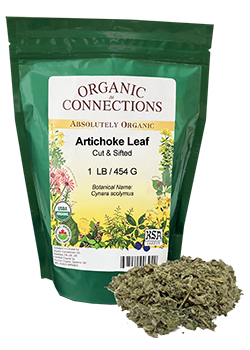
Artichoke leaf, also known as Cynara scolymus are the spike-tipped petals of the well known vegetable, the globe Artichoke. Artichoke leaf has a longstanding use in traditional medicine for digestive disturbances, this is due to the major active constituent in globe artichokes called cynarin. Cynarin is responsible for the slight bitter taste, causing an increase in bile flow which has a beneficial effect on the liver, gallbladder, and all the digestive organs. Organic Connections sources only organic Artichoke Leaf to bring to you a high quality, pesticide free artichoke leaf that has been cut and sifted, making it ideal for brewing a cup of tea or your own personalized herbal combination. [CUT & SIFTED]
Contains:
Organic Artichoke Leaf
Important Information:
Store in a cool, dry, dark place. Keep out of reach of children.
Dosage
Taken internally as a tea. Can be made into a personalized herbal combination
Certified Organic Loose Herbal Teas & Remedies
Organic Connections makes quality food supplements including: Organic ground Cinnamon powder, both Ceylon and Cassia and Organic Slippery Elm Bark powder to provide fibre and support intestinal health. Organic Connections believes in quality, natural and organic ingredients to provide the best in natural health.
Artichoke
A delicious food that can act as a digestive bitter, lower cholesterol, and help to feed beneficial gut bacteria...
The globe artichoke (Cynara scolymus) is a type of thistle that originated in Southern Europe. The flower bud is harvested and eaten around the world, although in North America the outer layers are often removed and only the heart of the artichoke bud is eaten. The antioxidant capacity of artichoke flower heads is one of the highest reported for all vegetables. The major active constituent in globe artichokes is called cynarin, and is responsible for the slight bitter taste.
Digestive Bitter
Due to its bitter taste, cynarin has been found to cause increased bile flow. Interestingly, it also inhibits specific taste receptors, which results in everything tasting sweeter for a period of time after eating. This is why even water may taste sweet immediately after eating artichokes. Supplementation with globe artichoke has also been shown to reduce the symptoms functional dyspepsia. This is not surprising since artichoke has been long established as a digestive bitter. This is a term used to describe herbs that increase the production of digestive juices and stimulate appetite. This can have a beneficial effect on the liver, gallbladder, and all the digestive organs. It can also help to reduce the symptoms of: nausea, vomiting, gas, and stomach pain.
Cholesterol Lowering and Protects Liver
Artichoke has been shown to strengthen and protect the liver. It has also been found to improve gallbladder function and raises the ratio of HDL ("good" cholesterol) to LDL ("bad" cholesterol). This improvement in blood lipids helps to reduce the risk of cardiovascular disease. Water extracts from artichoke leaves have also been shown to reduce cholesterol levels by inhibiting HMG-CoA reductase enzyme, the enzyme responsible for cholesterol production in the liver. This is the same mechanism of action used by statin drugs such as Lipitor. One 2009 study found that artichoke extract could be used as an effective means of reducing
high cholesterol.
Fibre Supporting
Probiotics
Artichoke also helps to promote the growth of the top two beneficial gut microbes called Bifidobacteria and Lactobacillus by providing
inulin. Inulin is a beneficial fibre that acts as food for good gut bacteria and supports the proper growth of supplemented
Probiotics. The proper bacterial balance in the gut helps to prevent the symptoms of
irritable bowel
syndrome.
How can I take Artichoke?
Supplementing artichoke is a relatively easy process. It can be added to the diet as part of meals, supplemented in capsule form, in liqueur (Cynar), or as a tea. The plant can be eaten as frequently as desired. When supplementing, the leaf extract can be taken to treat heartburn at a dose of 300-650mg three times daily (total dose of 900 – 1900mg daily). For lowering cholesterol, dosages at the higher end of the scale should be used.
Artichoke – Quick Facts
Parts Used
· Leaf, Flower Bud.
Applications
· Digestion, Digestive Disorders,
Ibs, Anorexia, Liver And Gall Bladder Conditions
Optimum Dosage
· Leaf Extract: 900 – 1900mg Daily In 2-3 Divided Doses. (Clinical Doses May Be Higher As Recommended By Your Practitioner).
Works Well With
· Other
Bitters,
Coq10, And Fibre
Important Information
· Use Should Be Avoided If You Are Suffering From Bile Duct Obstruction Or Are At Risk Of Bile Duct Obstruction (If You've Had Gall Bladder Attacks) - As Artichoke Increases Bile Secretion.
· Artichoke May Cause An Allergic Reaction In Those With An Allergy To The Ragweed Family Of Plants.
Carefully SelectedShips to the U.S.Wellness EssentialsTrusted Brands
Product Details
Artichoke
A delicious food that can act as a digestive bitter, lower cholesterol, and help to feed beneficial gut bacteria...
The globe artichoke (Cynara scolymus) is a type of thistle that originated in Southern Europe. The flower bud is harvested and eaten around the world, although in North America the outer layers are often removed and only the heart of the artichoke bud is eaten. The antioxidant capacity of artichoke flower heads is one of the highest reported for all vegetables. The major active constituent in globe artichokes is called cynarin, and is responsible for the slight bitter taste.
Digestive Bitter
Due to its bitter taste, cynarin has been found to cause increased bile flow. Interestingly, it also inhibits specific taste receptors, which results in everything tasting sweeter for a period of time after eating. This is why even water may taste sweet immediately after eating artichokes. Supplementation with globe artichoke has also been shown to reduce the symptoms functional dyspepsia. This is not surprising since artichoke has been long established as a digestive bitter. This is a term used to describe herbs that increase the production of digestive juices and stimulate appetite. This can have a beneficial effect on the liver, gallbladder, and all the digestive organs. It can also help to reduce the symptoms of: nausea, vomiting, gas, and stomach pain.
Cholesterol Lowering and Protects Liver
Artichoke has been shown to strengthen and protect the liver. It has also been found to improve gallbladder function and raises the ratio of HDL ("good" cholesterol) to LDL ("bad" cholesterol). This improvement in blood lipids helps to reduce the risk of cardiovascular disease. Water extracts from artichoke leaves have also been shown to reduce cholesterol levels by inhibiting HMG-CoA reductase enzyme, the enzyme responsible for cholesterol production in the liver. This is the same mechanism of action used by statin drugs such as Lipitor. One 2009 study found that artichoke extract could be used as an effective means of reducing
high cholesterol.
Fibre Supporting
Probiotics
Artichoke also helps to promote the growth of the top two beneficial gut microbes called Bifidobacteria and Lactobacillus by providing
inulin. Inulin is a beneficial fibre that acts as food for good gut bacteria and supports the proper growth of supplemented
Probiotics. The proper bacterial balance in the gut helps to prevent the symptoms of
irritable bowel
syndrome.
How can I take Artichoke?
Supplementing artichoke is a relatively easy process. It can be added to the diet as part of meals, supplemented in capsule form, in liqueur (Cynar), or as a tea. The plant can be eaten as frequently as desired. When supplementing, the leaf extract can be taken to treat heartburn at a dose of 300-650mg three times daily (total dose of 900 – 1900mg daily). For lowering cholesterol, dosages at the higher end of the scale should be used.
Artichoke – Quick Facts
Parts Used
· Leaf, Flower Bud.
Applications
· Digestion, Digestive Disorders,
Ibs, Anorexia, Liver And Gall Bladder Conditions
Optimum Dosage
· Leaf Extract: 900 – 1900mg Daily In 2-3 Divided Doses. (Clinical Doses May Be Higher As Recommended By Your Practitioner).
Works Well With
· Other
Bitters,
Coq10, And Fibre
Important Information
· Use Should Be Avoided If You Are Suffering From Bile Duct Obstruction Or Are At Risk Of Bile Duct Obstruction (If You've Had Gall Bladder Attacks) - As Artichoke Increases Bile Secretion.
· Artichoke May Cause An Allergic Reaction In Those With An Allergy To The Ragweed Family Of Plants.
🌿
Daily Wellness
Easy to add to your everyday health routine.
✅
Carefully Selected
Chosen with quality and customer needs in mind.
💊
Simple to Use
Designed for convenient daily supplementation.
🚚
Ships to the U.S.
Fast, reliable shipping to U.S. customers.
Choosing a selection results in a full page refresh.