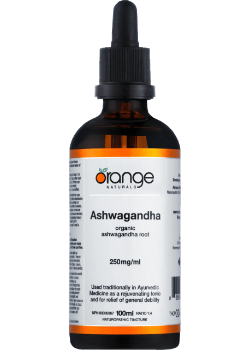
Ashwagandha is the herb that should come to mind when you are recovering from periods of exhaustion or illness. It has remarkable stress relieving and rejuvenating properties, and helps boost endurance while calming your nerves. Its only side effects are a more restful sleep and a better memory. Ashwagandha 250mg from Orange Naturals is a supportive tonic for the nervous system and comes in a tincture for rapid absoprtion. Absorption begins in the mouth, allowing the body to absorb up to 98% of the medicinal components. [LIQUID]
Each ml contains:
Organically Grown Ashwagandha Root (Withania somnifera) 250mg
Non Medicinal Ingredients:
40% grain alcohol and purified water
Important Information:
Consult a healthcare practitioner prior to use if you are pregnant or breastfeeding. Consumption with alcohol or other medications or natural health products with sedative properties is not recommended. Do not use if seal is broken. Keep out of reach of children.
Dosage
Adults: take 2 ml, 4 times per day under the tongue or in a little water, on an empty stomach (either 15 minutes before meals or 1 hour after). Shake well before use. Store in a cool, dry place, away from light.
Clean, Tested, and Truly Effective Canadian Supplements
Orange Naturals makes immune, herbal and women’s health supplements, such as: Astragalus, Echinacea, Lemon Balm, Ginkgo Biloba and PMS Herbal Combo. Orange Naturals formulates using quality, natural ingredients to provide herbal supplements that support your health needs.
5 SNEAKY SIGNS YOU MAY HAVE INFLAMMATION
Inflammation is a natural process that happens in everyone. In fact, it’s how our immune system protects us from infections, injuries, or diseases. And without it, we wouldn’t be able to heal properly.
However, inflammation can be a problem at times. There are many factors that can cause inflammation, from taking medication that doesn’t sit well with your body, to certain foods in your diet like too much sugar, refined
carbohydrates, and alcohol.
That’s why it’s important to look out for some signs that indicate you may have too much inflammation. Here are 5 signs to look for:
Constantly Feeling Tired
Feeling low in energy even after getting enough sleep may be a sign that your body has inflammation. Inflammation can be a result of not enough sleep or even sleeping too much. Inconsistent sleep patterns can disrupt the body’s inflammatory response and leave you with unnecessary inflammation. This is because your body treats too much or insufficient sleep the same way it treats an illness. So your immune system thinks you’re sick and that you need rest. While it works hard to make more immune cells, it drains you of the energy you need to function throughout the day, leaving you feeling fatigued.
Experiencing Digestive Problems
If you’re experiencing frequent digestive issues such as bloating, abdominal pain,
constipation, or loose stools, it may be an indication of inflammation in the gut. This is because inflammation can cause what’s known as “
leaky gut
” syndrome, where the intestines have increased permeability due to an imbalance in good and bad bacteria. This allows toxins and other harmful bacteria to leak out and into the rest of the body, which leads to uncomfortable digestive problems.
Getting Sick Often
Another sign of inflammation could be constantly catching colds, flus, and
viral infections. Your immune system may not be sufficiently prepared to fight off infections since it’s being overworked by the inflammation. In other words, your immune system simply has too much going on and finds it difficult to focus on improving its defence mechanisms. This makes you more vulnerable to the colds and flus that you come in contact with.
Weight Fluctuations
An increase in your weight, especially around your midsection, could also be a sign of inflammation. Your body releases cytokines when the immune system spots a possible threat, which impacts insulin response. When your body becomes resistant to insulin, the
pancreas
produces more of it, which results in the accumulation of abdominal fat. One study suggests that belly fat secretes inflammatory compounds that promote chronic inflammation. This means that excess fat around your belly is a sign that you may already have some inflammation.
Muscle Aches And Joint Pain
Although soreness after a workout or lifting too many heavy items in a day is normal, you may have inflammation if you have slight aches and pains that won’t go away. Maybe you’ve constantly felt pain after rotating your shoulders back or touching your toes. This type of pain could be a sign of arthritis. which is a form of advanced inflammation in itself and contributes to the inflammation in other parts of your body.
How Do Doctors Diagnose Inflammation?
Your healthcare practitioner may ask you to complete a blood test to look for specific markers that indicate long term inflammation. One of the most common markers is called the C-reactive
protein
(CRP). If your CRP is high, it indicates increased levels of inflammation. In the case of digestive upset, they may also ask you to undergo a colonoscopy, sigmoidoscopy, or upper endoscopy to diagnose gastrointestinal inflammation.
Since these signs can be common and are subtle, it can be hard to notice them. But being informed can help you recognize that these could be possible signs of unnecessary inflammation in your body. Be sure to speak with your healthcare practitioner if you believe you may have inflammation.
Carefully SelectedShips to the U.S.Wellness EssentialsTrusted Brands
Product Details
5 SNEAKY SIGNS YOU MAY HAVE INFLAMMATION
Inflammation is a natural process that happens in everyone. In fact, it’s how our immune system protects us from infections, injuries, or diseases. And without it, we wouldn’t be able to heal properly.
However, inflammation can be a problem at times. There are many factors that can cause inflammation, from taking medication that doesn’t sit well with your body, to certain foods in your diet like too much sugar, refined
carbohydrates, and alcohol.
That’s why it’s important to look out for some signs that indicate you may have too much inflammation. Here are 5 signs to look for:
Constantly Feeling Tired
Feeling low in energy even after getting enough sleep may be a sign that your body has inflammation. Inflammation can be a result of not enough sleep or even sleeping too much. Inconsistent sleep patterns can disrupt the body’s inflammatory response and leave you with unnecessary inflammation. This is because your body treats too much or insufficient sleep the same way it treats an illness. So your immune system thinks you’re sick and that you need rest. While it works hard to make more immune cells, it drains you of the energy you need to function throughout the day, leaving you feeling fatigued.
Experiencing Digestive Problems
If you’re experiencing frequent digestive issues such as bloating, abdominal pain,
constipation, or loose stools, it may be an indication of inflammation in the gut. This is because inflammation can cause what’s known as “
leaky gut
” syndrome, where the intestines have increased permeability due to an imbalance in good and bad bacteria. This allows toxins and other harmful bacteria to leak out and into the rest of the body, which leads to uncomfortable digestive problems.
Getting Sick Often
Another sign of inflammation could be constantly catching colds, flus, and
viral infections. Your immune system may not be sufficiently prepared to fight off infections since it’s being overworked by the inflammation. In other words, your immune system simply has too much going on and finds it difficult to focus on improving its defence mechanisms. This makes you more vulnerable to the colds and flus that you come in contact with.
Weight Fluctuations
An increase in your weight, especially around your midsection, could also be a sign of inflammation. Your body releases cytokines when the immune system spots a possible threat, which impacts insulin response. When your body becomes resistant to insulin, the
pancreas
produces more of it, which results in the accumulation of abdominal fat. One study suggests that belly fat secretes inflammatory compounds that promote chronic inflammation. This means that excess fat around your belly is a sign that you may already have some inflammation.
Muscle Aches And Joint Pain
Although soreness after a workout or lifting too many heavy items in a day is normal, you may have inflammation if you have slight aches and pains that won’t go away. Maybe you’ve constantly felt pain after rotating your shoulders back or touching your toes. This type of pain could be a sign of arthritis. which is a form of advanced inflammation in itself and contributes to the inflammation in other parts of your body.
How Do Doctors Diagnose Inflammation?
Your healthcare practitioner may ask you to complete a blood test to look for specific markers that indicate long term inflammation. One of the most common markers is called the C-reactive
protein
(CRP). If your CRP is high, it indicates increased levels of inflammation. In the case of digestive upset, they may also ask you to undergo a colonoscopy, sigmoidoscopy, or upper endoscopy to diagnose gastrointestinal inflammation.
Since these signs can be common and are subtle, it can be hard to notice them. But being informed can help you recognize that these could be possible signs of unnecessary inflammation in your body. Be sure to speak with your healthcare practitioner if you believe you may have inflammation.
🌿
Daily Wellness
Easy to add to your everyday health routine.
✅
Carefully Selected
Chosen with quality and customer needs in mind.
💊
Simple to Use
Designed for convenient daily supplementation.
🚚
Ships to the U.S.
Fast, reliable shipping to U.S. customers.
Choosing a selection results in a full page refresh.