

1
/
of
1
Natural Factors
B-12 Methylcobalamin 5,000mcg - 60 + 60 Tabs FREE
B-12 Methylcobalamin 5,000mcg - 60 + 60 Tabs FREE
Regular price
$37.15 USD
Regular price
Sale price
$37.15 USD
Shipping calculated at checkout.
No reviews
Availability
Out of stock
Key Benefits
Key Benefits
Quick dissolving sublingual tablets.
Biologically Active form of B12.
Supports brain functions, memory and concentration.
Ideal for vegetarians and seniors.
Helpful for B12 deficiency.
- Quick dissolving sublingual tablets.
- Biologically Active form of B12.
- Supports brain functions, memory and concentration.
- Ideal for vegetarians and seniors.
- Helpful for B12 deficiency.
Quantity
Couldn't load pickup availability

B-12 Methylcobalamin 5,000mcg - 60 + 60 Tabs FREE
$37.15
Natural Factors B-12 Methylcobalamin 5,000mcg - 60 + 60 Tabs FREE is a dietary supplement in tablet form, intended for adults as part of a daily wellness routine.
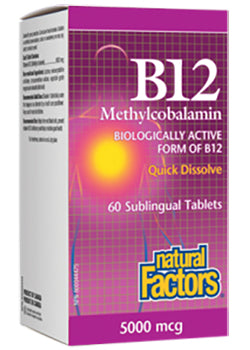
5000 MCG SUBLINGUAL B12 FROM NATURAL FACTORS.Natural Factors brings you this optimum vegetarian source of Vitamin B12 in 5000mcg! Vitamin B12 is a water-soluble vitamin necessary for energy production; for nervous system function as it is needed to produce myelin, the fatty substance that forms a protective sheath around nerves; for the production of acetylcholine, a neurotransmitter that helps with memory and learning. [SUBLINGUAL TABLETS]
Each tablet contains:
Vitamin B12 (Methylcobalamin) 5000mcg
In a base of lactose, cellulose, croscarmellose sodium and vegetable grade magnesium stearate (lubricant)
Important Information:
Contains no artificial preservatives, color or sweeteners; no corn, dairy, starch, wheat or yeast.
Vitamin B12 (Methylcobalamin) 5000mcg
In a base of lactose, cellulose, croscarmellose sodium and vegetable grade magnesium stearate (lubricant)
Important Information:
Contains no artificial preservatives, color or sweeteners; no corn, dairy, starch, wheat or yeast.
Dosage
Adult Dosage: 1 tablet daily or as directed by a health practitioner. Dissolve under the tongue for maximum benefit. Keep out of reach of children.
Adult Dosage: 1 tablet daily or as directed by a health practitioner. Dissolve under the tongue for maximum benefit. Keep out of reach of children.
Trusted Wellness For 60 Years,
Based in British Columbia, Natural Factors Canada is one of the largest manufacturers of nutritional products in North America.
Natural Factor Supplements
origins reach back to the 1950s, & right from day one, they've been fully committed to making products right. Today, Natural Factors vitamins brings you tested and true products like
Acidophilus and Bifidus,
Ultimate Multi Probiotics,
RX Omega-3, Theracurmin,
PGX Daily,
Whey Factors Protein
and
Oil of Oregano
ca.
Based in British Columbia, Natural Factors Canada is one of the largest manufacturers of nutritional products in North America.
Natural Factor Supplements
origins reach back to the 1950s, & right from day one, they've been fully committed to making products right. Today, Natural Factors vitamins brings you tested and true products like
Acidophilus and Bifidus,
Ultimate Multi Probiotics,
RX Omega-3, Theracurmin,
PGX Daily,
Whey Factors Protein
and
Oil of Oregano
ca.
The Importance of
Vitamin B
-12
What you can expect from Natural Factors Vitamin B12 Methylcobalamin 1000 mcg
- Supports the nervous system
- Helps memory and learning
- Boosts energy
- Helps control homocysteine levels
- Promotes a healthy cardiovascular system
- Enhances immune system function
- Effectively supports brain and nerve function.
- May help in the treatment of sleep-wake disorders
- May improve daytime alertness in shift-workers and the elderly
- Derived from vegetable sources so is an excellent source of vitamin B12 for vegetarians
Vitamin B12 is a water-soluble vitamin necessary for energy production; for nervous system function as it is needed to produce myelin, the fatty substance that forms a protective sheath around nerves; for the production of acetylcholine, a neurotransmitter that helps with memory and learning; for the synthesis of red blood cells; for producing the genetic materials, DNA and RNA. It can help depression and give you energy. Most vitamin B12 comes from animal source foods and is deficient in strict vegetarian diets.
Vitamin B12 works with
folic acid
to control homocysteine levels. Research shows that high levels of homocysteine may dramatically increase the risk of heart disease and stroke. However, many of us may not be absorbing the vitamin B12 as effectively from food as we could and others, such as vegetarians, may develop outright deficiencies in this important vitamin. Studies show that supplemental vitamin B12 can help us in other ways, too.
Many elderly people suffering from neurological impairment find that B12 supplementation greatly improves their cognitive function. Published studies show that vitamin B12 in supplement form is absorbed better by elderly people than vitamin B12 that is bound to food.
Shift workers, too, can benefit from sublingual methylcobalamin. It's well established that shift workers have more trouble falling asleep and staying asleep. Poor sleep quality is probably why they have greater susceptibility to illnesses, including cell growth, and have more accidents than other sectors of the population.
In a recent study, subjects taking methylcobalamin experience improved sleep quality and increased daytime alertness and concentration, and in some cases they also reported improved mood. Much of the benefit appears to be a result of methylcobalamin's influence on
melatonin
secretion and resetting the biological clock. Specifically, methylcobalamin causes a significant decrease in daytime
melatonin
levels while increasing nighttime levels.
B12 methylcobalamin makes adrenaline from norepinephrine, and melatonin from
serotonin. It is crucial for the transcription of DNA, and other entities. To convert harmful homocysteine into the beneficial antioxidant,
methionine, a methyl group is required. Methylcobalamin provides it thereby protecting your cardiac system.
HOW B12 WORKS
Vitamin B12, like folic acid, functions as a "methyl donor". A methyl donor is simply any substance that can transfer a methyl group (a carbon atom attached to three hydrogen atoms) to another substance. Referred to as methylation, many important biochemical functions rely on this process, such as proper energy metabolism, immune function, and nerve function. More specifically, methyl donors help in the production of several brain chemicals and hence improve cognitive function, mood, energy, and sleep. As we age, our body's ability to methylate declines, contributing to declining health.
B12 DEFICIENCIES AND SYMPTOMS
Vitamin B12 deficiency is far more widespread than previously recognized, according to research by the US Department of Agriculture (USDA). A study of 3,000 men and women found 39% had a B12 plasma level below 258 picomoles per litre (pmol/L). The currently accepted deficiency level is 148 pmol/L, but lead researcher Katherine Tucker said neurological symptoms of B12 deficiency occur even at B12 levels well above 258 pmol/L (McBride). Unlike other water-soluble nutrients, vitamin B12 is stored in the liver, kidneys, and other body tissues. As a result, the symptoms of vitamin B12 deficiency may not show themselves until five to six years of poor dietary intake, or inadequate secretion of "intrinsic factor" (produced along with stomach acid for absorption of B12), have transpired. The classic deficiency symptom is pernicious anemia, however, it appears that a deficiency will affect the brain and nervous system first. Impaired nerve function can cause numbness, a pins and needles sensation, or a burning feeling in the feet, as well as impaired mental function. Because B12 is found primarily in foods of animal origin, vegetarians and vegans are particularly susceptible to
B12 deficiencies. Yet, people who eat meat now have B12 deficiency rates equal to vegetarians (McBride).
Much more prevalent than a true deficiency is malabsorption due to mild or moderate atrophic gastritis, resulting from decreased gastric acid secretion. B12 levels also decrease as we age. Age-related deficiency is associated with hearing loss, memory impairment, and psychiatric disorders, along with heart disease and stroke.
Alzheimer's patients have less B12 in their spinal fluid than people without the disease. Surprisingly, the USDA study found that adults aged 26 to 49 years now have high rates of B12 deficiency, equal to that of older people.
Vitamin B12 status is also affected by smoking, high alcohol consumption, and recommendation medications that inhibit stomach acid.
METHYLCOBALAMIN A SUPERIOR FORM OF B12
An enhanced form of B12 called methylcobalamin offers advantages over all other forms, including injections given by your doctor. Methylcobalamin is a highly bioavailable form of B12 that does not require intrinsic factor. It also dissolves quickly under the tongue and is readily absorbed directly into the blood stream, bypassing digestion. Blood levels of B12 indicate that sublingual B12 becomes available as early as 15 minutes after administration and is still elevated 24 hours later. A randomized, controlled trial involving 93 patients found that oral B12 was even more effective than injections. After four months, those receiving oral B12 had a median plasma level of 1,005 pmol/L versus 325 for those receiving injections (Butler).
MINIMIZING BRAIN CELL DEATH
One cause of brain cell death is glutamate toxicity. Although brain cells use glutamate as a neurotransmitter, too much is neurotoxic to the brain. One way methylcobalamin protects against glutamate toxicity is through enhancing brain cell methylation. This key process can prevent the onset of many age-related cognitive- decline diseases such as Alzheimer's (Mitchell).
COMPARING OTHER FORMS
Cyanocobalamin is the most common form of vitamin B12, but it is inferior for two reasons. First, enough of the
protein
intrinsic factor, normally found in stomach acid, must be produced for absorption. Surprising numbers of people, both young and old, have a problem producing enough intrinsic factor. Second, even if cyanocobalamin is absorbed, the liver converts only about 1% of it to its active form, methylcobalamin. Since methylcobalmin is the active form, as the tablet dissolves under the tongue, the B12 immediately starts to benefit the blood, brain, and body. Two other forms of B12, hydroxocobalamin and adenosylcobalamin, while better than cyanocobalamin, are no match for sublingual methylcobalamin, which has produced better results in clinical trials than other forms of B12.
IMPROVING COGNITIVE FUNCTION
Supplementation with vitamin B12 has shown benefit in reversing impaired mental function in elderly people who are B12 deficient. An Israeli study looked at elderly people with low B12 levels and dementia. They found that mental impairment due to B12 deficiency can mimic Alzheimer's. In the study, patients with non-Alzheimer's dementia improved when they received B12 supplements. The Alzheimer's patients did not respond to B12 therapy (Osimani). In one large double-blind study, a complete recovery was observed in 61% of cases of mental impairment due to low levels of vitamin B12. It was thought that the remaining 39% did not respond because of irreversible damage to the brain due to long-term B12 deficiency (Healton). Several studies have shown the best clinical responders are those who have been showing signs of impaired mental function for less than six months (Van Goor).
COMBATING SLEEP DISTURBANCES
Those with sleep problems, including shift workers, can benefit from sublingual methylcobalamin. It is well-known that shift workers have more trouble falling asleep and staying asleep. Poor sleep quality is probably why they have greater susceptibility to illness, including cell growth, and have more accidents than other sectors of the population. Several studies have shown that methylcobalamin is an effective treatment to improve sleep in shift workers as well as in people with excessive daytime sleepiness, restless nights, and frequent nighttime awakenings. The subjects taking methylcobalamin experience improved sleep quality and increased daytime alertness and concentration, and in some cases improved mood (Murray).
BALANCING HOMOCYSTEINE LEVELS
Elevated homocysteine levels are found in approximately 20% to 40% of patients with heart disease. High homocysteine levels are also suspect in osteoporosis, Alzheimer's, chronic fatigue syndrome, and rheumatoid arthritis. Homocysteine is formed when the body breaks down the
sulphur
amino acids
found in meat and dairy products. But without adequate levels of folic acid, B6, and B12, homocysteine builds up in the blood rather than being metabolized for elimination through the kidneys. In an American study of 103 elderly people aged 68 to 84, those who were deficient in B12 and folic acid also had homocysteine levels 63% higher than those who had healthy B12 levels. Some of these vitamin-deficient seniors received 2,500 mcg of B12 daily, along with folic acid and B6. Their homocysteine levels dropped an average of 32% (Johnson).
DOSAGE
Dissolve 1 tablet daily under the tongue or as directed by a health care practitioner. For advanced neurological disorders such as MS, Bell's palsy, diabetic neuropathy, and Alzheimer's, take 5,000 mcg per day. Persons with any severe neurological condition should work closely with their health care practitioner.
Natural Factors provides B12 Methylcobalamin in 1,000 mcg and 5,000 mcg sublingual tablets. As all the B vitamins work together, it makes sense to take a B-complex daily when taking high amounts of any B vitamin.
ADVANCED NEUROLOGICAL DISORDERS
A vitamin B12 deficiency in multiple sclerosis (MS) may aggravate the disease and accelerate the progressive deterioration of the myelin sheath. There is evidence that individuals with MS have a defect in the utilization of vitamin B12. In preliminary studies, the oral administration of 60 mg per day of methylcobalamin improved sensory nerve function in MS patients by nearly 30%. However, motor (muscular) function did not improve. A study in the United Kingdom found that vitamin B12 relieved the symptoms of multiple sclerosis. Weekly injections of 1,000 mcg of B12 were given to 138 patients for 24 weeks. Those receiving the B12 supplement showed a statistically significant improvement on four out of five standard testing procedures (Wade). Sixty patients with Bell's palsy were assigned to three different treatment groups: group one was given steroids only, group two was given methylcobalamin and steroids, and group three was given only methylcobalamin. It took an average of 7.79 weeks for the steroids only group to completely recover. In contrast, the methylcobalamin only group recovered in 5.1 days (Jalaludin)
Contraindications
The following drugs can interfere with the absorption or utilization of vitamin B12: antibiotics, Aldomet, Atromid-S, Azidothymidine (AZT), Azulfidine, birth control pills, cimetidine (Tagamet), Metformin (Glucophage), Isoniazid (Laniazid), Pepcid, Prevacid, Prilosec, Ranitidine (Zantac).
Additional Information
Children:
Although vitamin B12 is considered suitable for children even at the adult dosage, it is preferable that children using high dosages, such as those found in stand-alone vitamins, should do so under the supervision of a health care practitioner. We prefer that children use
multivitamins
for daily maintenance specially formulated for a child's nutritional needs.
Pregnancy and Nursing:
Vitamin B12 supplementation is generally regarded as safe during pregnancy and lactation. However, therapeutic dosages, such as found in stand alone vitamins, should only be used under the supervision of a health care practitioner. The best dosage of vitamin B12 is found in specially designed prenatal vitamins.
Seniors:
No special precautions are known.
Vitamin B
-12
What you can expect from Natural Factors Vitamin B12 Methylcobalamin 1000 mcg
- Supports the nervous system
- Helps memory and learning
- Boosts energy
- Helps control homocysteine levels
- Promotes a healthy cardiovascular system
- Enhances immune system function
- Effectively supports brain and nerve function.
- May help in the treatment of sleep-wake disorders
- May improve daytime alertness in shift-workers and the elderly
- Derived from vegetable sources so is an excellent source of vitamin B12 for vegetarians
Vitamin B12 is a water-soluble vitamin necessary for energy production; for nervous system function as it is needed to produce myelin, the fatty substance that forms a protective sheath around nerves; for the production of acetylcholine, a neurotransmitter that helps with memory and learning; for the synthesis of red blood cells; for producing the genetic materials, DNA and RNA. It can help depression and give you energy. Most vitamin B12 comes from animal source foods and is deficient in strict vegetarian diets.
Vitamin B12 works with
folic acid
to control homocysteine levels. Research shows that high levels of homocysteine may dramatically increase the risk of heart disease and stroke. However, many of us may not be absorbing the vitamin B12 as effectively from food as we could and others, such as vegetarians, may develop outright deficiencies in this important vitamin. Studies show that supplemental vitamin B12 can help us in other ways, too.
Many elderly people suffering from neurological impairment find that B12 supplementation greatly improves their cognitive function. Published studies show that vitamin B12 in supplement form is absorbed better by elderly people than vitamin B12 that is bound to food.
Shift workers, too, can benefit from sublingual methylcobalamin. It's well established that shift workers have more trouble falling asleep and staying asleep. Poor sleep quality is probably why they have greater susceptibility to illnesses, including cell growth, and have more accidents than other sectors of the population.
In a recent study, subjects taking methylcobalamin experience improved sleep quality and increased daytime alertness and concentration, and in some cases they also reported improved mood. Much of the benefit appears to be a result of methylcobalamin's influence on
melatonin
secretion and resetting the biological clock. Specifically, methylcobalamin causes a significant decrease in daytime
melatonin
levels while increasing nighttime levels.
B12 methylcobalamin makes adrenaline from norepinephrine, and melatonin from
serotonin. It is crucial for the transcription of DNA, and other entities. To convert harmful homocysteine into the beneficial antioxidant,
methionine, a methyl group is required. Methylcobalamin provides it thereby protecting your cardiac system.
HOW B12 WORKS
Vitamin B12, like folic acid, functions as a "methyl donor". A methyl donor is simply any substance that can transfer a methyl group (a carbon atom attached to three hydrogen atoms) to another substance. Referred to as methylation, many important biochemical functions rely on this process, such as proper energy metabolism, immune function, and nerve function. More specifically, methyl donors help in the production of several brain chemicals and hence improve cognitive function, mood, energy, and sleep. As we age, our body's ability to methylate declines, contributing to declining health.
B12 DEFICIENCIES AND SYMPTOMS
Vitamin B12 deficiency is far more widespread than previously recognized, according to research by the US Department of Agriculture (USDA). A study of 3,000 men and women found 39% had a B12 plasma level below 258 picomoles per litre (pmol/L). The currently accepted deficiency level is 148 pmol/L, but lead researcher Katherine Tucker said neurological symptoms of B12 deficiency occur even at B12 levels well above 258 pmol/L (McBride). Unlike other water-soluble nutrients, vitamin B12 is stored in the liver, kidneys, and other body tissues. As a result, the symptoms of vitamin B12 deficiency may not show themselves until five to six years of poor dietary intake, or inadequate secretion of "intrinsic factor" (produced along with stomach acid for absorption of B12), have transpired. The classic deficiency symptom is pernicious anemia, however, it appears that a deficiency will affect the brain and nervous system first. Impaired nerve function can cause numbness, a pins and needles sensation, or a burning feeling in the feet, as well as impaired mental function. Because B12 is found primarily in foods of animal origin, vegetarians and vegans are particularly susceptible to
B12 deficiencies. Yet, people who eat meat now have B12 deficiency rates equal to vegetarians (McBride).
Much more prevalent than a true deficiency is malabsorption due to mild or moderate atrophic gastritis, resulting from decreased gastric acid secretion. B12 levels also decrease as we age. Age-related deficiency is associated with hearing loss, memory impairment, and psychiatric disorders, along with heart disease and stroke.
Alzheimer's patients have less B12 in their spinal fluid than people without the disease. Surprisingly, the USDA study found that adults aged 26 to 49 years now have high rates of B12 deficiency, equal to that of older people.
Vitamin B12 status is also affected by smoking, high alcohol consumption, and recommendation medications that inhibit stomach acid.
METHYLCOBALAMIN A SUPERIOR FORM OF B12
An enhanced form of B12 called methylcobalamin offers advantages over all other forms, including injections given by your doctor. Methylcobalamin is a highly bioavailable form of B12 that does not require intrinsic factor. It also dissolves quickly under the tongue and is readily absorbed directly into the blood stream, bypassing digestion. Blood levels of B12 indicate that sublingual B12 becomes available as early as 15 minutes after administration and is still elevated 24 hours later. A randomized, controlled trial involving 93 patients found that oral B12 was even more effective than injections. After four months, those receiving oral B12 had a median plasma level of 1,005 pmol/L versus 325 for those receiving injections (Butler).
MINIMIZING BRAIN CELL DEATH
One cause of brain cell death is glutamate toxicity. Although brain cells use glutamate as a neurotransmitter, too much is neurotoxic to the brain. One way methylcobalamin protects against glutamate toxicity is through enhancing brain cell methylation. This key process can prevent the onset of many age-related cognitive- decline diseases such as Alzheimer's (Mitchell).
COMPARING OTHER FORMS
Cyanocobalamin is the most common form of vitamin B12, but it is inferior for two reasons. First, enough of the
protein
intrinsic factor, normally found in stomach acid, must be produced for absorption. Surprising numbers of people, both young and old, have a problem producing enough intrinsic factor. Second, even if cyanocobalamin is absorbed, the liver converts only about 1% of it to its active form, methylcobalamin. Since methylcobalmin is the active form, as the tablet dissolves under the tongue, the B12 immediately starts to benefit the blood, brain, and body. Two other forms of B12, hydroxocobalamin and adenosylcobalamin, while better than cyanocobalamin, are no match for sublingual methylcobalamin, which has produced better results in clinical trials than other forms of B12.
IMPROVING COGNITIVE FUNCTION
Supplementation with vitamin B12 has shown benefit in reversing impaired mental function in elderly people who are B12 deficient. An Israeli study looked at elderly people with low B12 levels and dementia. They found that mental impairment due to B12 deficiency can mimic Alzheimer's. In the study, patients with non-Alzheimer's dementia improved when they received B12 supplements. The Alzheimer's patients did not respond to B12 therapy (Osimani). In one large double-blind study, a complete recovery was observed in 61% of cases of mental impairment due to low levels of vitamin B12. It was thought that the remaining 39% did not respond because of irreversible damage to the brain due to long-term B12 deficiency (Healton). Several studies have shown the best clinical responders are those who have been showing signs of impaired mental function for less than six months (Van Goor).
COMBATING SLEEP DISTURBANCES
Those with sleep problems, including shift workers, can benefit from sublingual methylcobalamin. It is well-known that shift workers have more trouble falling asleep and staying asleep. Poor sleep quality is probably why they have greater susceptibility to illness, including cell growth, and have more accidents than other sectors of the population. Several studies have shown that methylcobalamin is an effective treatment to improve sleep in shift workers as well as in people with excessive daytime sleepiness, restless nights, and frequent nighttime awakenings. The subjects taking methylcobalamin experience improved sleep quality and increased daytime alertness and concentration, and in some cases improved mood (Murray).
BALANCING HOMOCYSTEINE LEVELS
Elevated homocysteine levels are found in approximately 20% to 40% of patients with heart disease. High homocysteine levels are also suspect in osteoporosis, Alzheimer's, chronic fatigue syndrome, and rheumatoid arthritis. Homocysteine is formed when the body breaks down the
sulphur
amino acids
found in meat and dairy products. But without adequate levels of folic acid, B6, and B12, homocysteine builds up in the blood rather than being metabolized for elimination through the kidneys. In an American study of 103 elderly people aged 68 to 84, those who were deficient in B12 and folic acid also had homocysteine levels 63% higher than those who had healthy B12 levels. Some of these vitamin-deficient seniors received 2,500 mcg of B12 daily, along with folic acid and B6. Their homocysteine levels dropped an average of 32% (Johnson).
DOSAGE
Dissolve 1 tablet daily under the tongue or as directed by a health care practitioner. For advanced neurological disorders such as MS, Bell's palsy, diabetic neuropathy, and Alzheimer's, take 5,000 mcg per day. Persons with any severe neurological condition should work closely with their health care practitioner.
Natural Factors provides B12 Methylcobalamin in 1,000 mcg and 5,000 mcg sublingual tablets. As all the B vitamins work together, it makes sense to take a B-complex daily when taking high amounts of any B vitamin.
ADVANCED NEUROLOGICAL DISORDERS
A vitamin B12 deficiency in multiple sclerosis (MS) may aggravate the disease and accelerate the progressive deterioration of the myelin sheath. There is evidence that individuals with MS have a defect in the utilization of vitamin B12. In preliminary studies, the oral administration of 60 mg per day of methylcobalamin improved sensory nerve function in MS patients by nearly 30%. However, motor (muscular) function did not improve. A study in the United Kingdom found that vitamin B12 relieved the symptoms of multiple sclerosis. Weekly injections of 1,000 mcg of B12 were given to 138 patients for 24 weeks. Those receiving the B12 supplement showed a statistically significant improvement on four out of five standard testing procedures (Wade). Sixty patients with Bell's palsy were assigned to three different treatment groups: group one was given steroids only, group two was given methylcobalamin and steroids, and group three was given only methylcobalamin. It took an average of 7.79 weeks for the steroids only group to completely recover. In contrast, the methylcobalamin only group recovered in 5.1 days (Jalaludin)
Contraindications
The following drugs can interfere with the absorption or utilization of vitamin B12: antibiotics, Aldomet, Atromid-S, Azidothymidine (AZT), Azulfidine, birth control pills, cimetidine (Tagamet), Metformin (Glucophage), Isoniazid (Laniazid), Pepcid, Prevacid, Prilosec, Ranitidine (Zantac).
Additional Information
Children:
Although vitamin B12 is considered suitable for children even at the adult dosage, it is preferable that children using high dosages, such as those found in stand-alone vitamins, should do so under the supervision of a health care practitioner. We prefer that children use
multivitamins
for daily maintenance specially formulated for a child's nutritional needs.
Pregnancy and Nursing:
Vitamin B12 supplementation is generally regarded as safe during pregnancy and lactation. However, therapeutic dosages, such as found in stand alone vitamins, should only be used under the supervision of a health care practitioner. The best dosage of vitamin B12 is found in specially designed prenatal vitamins.
Seniors:
No special precautions are known.
Carefully Selected
Ships to the U.S.
Wellness Essentials
Trusted Brands
Product Details
The Importance ofVitamin B
-12
What you can expect from Natural Factors Vitamin B12 Methylcobalamin 1000 mcg
- Supports the nervous system
- Helps memory and learning
- Boosts energy
- Helps control homocysteine levels
- Promotes a healthy cardiovascular system
- Enhances immune system function
- Effectively supports brain and nerve function.
- May help in the treatment of sleep-wake disorders
- May improve daytime alertness in shift-workers and the elderly
- Derived from vegetable sources so is an excellent source of vitamin B12 for vegetarians
Vitamin B12 is a water-soluble vitamin necessary for energy production; for nervous system function as it is needed to produce myelin, the fatty substance that forms a protective sheath around nerves; for the production of acetylcholine, a neurotransmitter that helps with memory and learning; for the synthesis of red blood cells; for producing the genetic materials, DNA and RNA. It can help depression and give you energy. Most vitamin B12 comes from animal source foods and is deficient in strict vegetarian diets.
Vitamin B12 works with
folic acid
to control homocysteine levels. Research shows that high levels of homocysteine may dramatically increase the risk of heart disease and stroke. However, many of us may not be absorbing the vitamin B12 as effectively from food as we could and others, such as vegetarians, may develop outright deficiencies in this important vitamin. Studies show that supplemental vitamin B12 can help us in other ways, too.
Many elderly people suffering from neurological impairment find that B12 supplementation greatly improves their cognitive function. Published studies show that vitamin B12 in supplement form is absorbed better by elderly people than vitamin B12 that is bound to food.
Shift workers, too, can benefit from sublingual methylcobalamin. It's well established that shift workers have more trouble falling asleep and staying asleep. Poor sleep quality is probably why they have greater susceptibility to illnesses, including cell growth, and have more accidents than other sectors of the population.
In a recent study, subjects taking methylcobalamin experience improved sleep quality and increased daytime alertness and concentration, and in some cases they also reported improved mood. Much of the benefit appears to be a result of methylcobalamin's influence on
melatonin
secretion and resetting the biological clock. Specifically, methylcobalamin causes a significant decrease in daytime
melatonin
levels while increasing nighttime levels.
B12 methylcobalamin makes adrenaline from norepinephrine, and melatonin from
serotonin. It is crucial for the transcription of DNA, and other entities. To convert harmful homocysteine into the beneficial antioxidant,
methionine, a methyl group is required. Methylcobalamin provides it thereby protecting your cardiac system.
HOW B12 WORKS
Vitamin B12, like folic acid, functions as a "methyl donor". A methyl donor is simply any substance that can transfer a methyl group (a carbon atom attached to three hydrogen atoms) to another substance. Referred to as methylation, many important biochemical functions rely on this process, such as proper energy metabolism, immune function, and nerve function. More specifically, methyl donors help in the production of several brain chemicals and hence improve cognitive function, mood, energy, and sleep. As we age, our body's ability to methylate declines, contributing to declining health.
B12 DEFICIENCIES AND SYMPTOMS
Vitamin B12 deficiency is far more widespread than previously recognized, according to research by the US Department of Agriculture (USDA). A study of 3,000 men and women found 39% had a B12 plasma level below 258 picomoles per litre (pmol/L). The currently accepted deficiency level is 148 pmol/L, but lead researcher Katherine Tucker said neurological symptoms of B12 deficiency occur even at B12 levels well above 258 pmol/L (McBride). Unlike other water-soluble nutrients, vitamin B12 is stored in the liver, kidneys, and other body tissues. As a result, the symptoms of vitamin B12 deficiency may not show themselves until five to six years of poor dietary intake, or inadequate secretion of "intrinsic factor" (produced along with stomach acid for absorption of B12), have transpired. The classic deficiency symptom is pernicious anemia, however, it appears that a deficiency will affect the brain and nervous system first. Impaired nerve function can cause numbness, a pins and needles sensation, or a burning feeling in the feet, as well as impaired mental function. Because B12 is found primarily in foods of animal origin, vegetarians and vegans are particularly susceptible to
B12 deficiencies. Yet, people who eat meat now have B12 deficiency rates equal to vegetarians (McBride).
Much more prevalent than a true deficiency is malabsorption due to mild or moderate atrophic gastritis, resulting from decreased gastric acid secretion. B12 levels also decrease as we age. Age-related deficiency is associated with hearing loss, memory impairment, and psychiatric disorders, along with heart disease and stroke.
Alzheimer's patients have less B12 in their spinal fluid than people without the disease. Surprisingly, the USDA study found that adults aged 26 to 49 years now have high rates of B12 deficiency, equal to that of older people.
Vitamin B12 status is also affected by smoking, high alcohol consumption, and recommendation medications that inhibit stomach acid.
METHYLCOBALAMIN A SUPERIOR FORM OF B12
An enhanced form of B12 called methylcobalamin offers advantages over all other forms, including injections given by your doctor. Methylcobalamin is a highly bioavailable form of B12 that does not require intrinsic factor. It also dissolves quickly under the tongue and is readily absorbed directly into the blood stream, bypassing digestion. Blood levels of B12 indicate that sublingual B12 becomes available as early as 15 minutes after administration and is still elevated 24 hours later. A randomized, controlled trial involving 93 patients found that oral B12 was even more effective than injections. After four months, those receiving oral B12 had a median plasma level of 1,005 pmol/L versus 325 for those receiving injections (Butler).
MINIMIZING BRAIN CELL DEATH
One cause of brain cell death is glutamate toxicity. Although brain cells use glutamate as a neurotransmitter, too much is neurotoxic to the brain. One way methylcobalamin protects against glutamate toxicity is through enhancing brain cell methylation. This key process can prevent the onset of many age-related cognitive- decline diseases such as Alzheimer's (Mitchell).
COMPARING OTHER FORMS
Cyanocobalamin is the most common form of vitamin B12, but it is inferior for two reasons. First, enough of the
protein
intrinsic factor, normally found in stomach acid, must be produced for absorption. Surprising numbers of people, both young and old, have a problem producing enough intrinsic factor. Second, even if cyanocobalamin is absorbed, the liver converts only about 1% of it to its active form, methylcobalamin. Since methylcobalmin is the active form, as the tablet dissolves under the tongue, the B12 immediately starts to benefit the blood, brain, and body. Two other forms of B12, hydroxocobalamin and adenosylcobalamin, while better than cyanocobalamin, are no match for sublingual methylcobalamin, which has produced better results in clinical trials than other forms of B12.
IMPROVING COGNITIVE FUNCTION
Supplementation with vitamin B12 has shown benefit in reversing impaired mental function in elderly people who are B12 deficient. An Israeli study looked at elderly people with low B12 levels and dementia. They found that mental impairment due to B12 deficiency can mimic Alzheimer's. In the study, patients with non-Alzheimer's dementia improved when they received B12 supplements. The Alzheimer's patients did not respond to B12 therapy (Osimani). In one large double-blind study, a complete recovery was observed in 61% of cases of mental impairment due to low levels of vitamin B12. It was thought that the remaining 39% did not respond because of irreversible damage to the brain due to long-term B12 deficiency (Healton). Several studies have shown the best clinical responders are those who have been showing signs of impaired mental function for less than six months (Van Goor).
COMBATING SLEEP DISTURBANCES
Those with sleep problems, including shift workers, can benefit from sublingual methylcobalamin. It is well-known that shift workers have more trouble falling asleep and staying asleep. Poor sleep quality is probably why they have greater susceptibility to illness, including cell growth, and have more accidents than other sectors of the population. Several studies have shown that methylcobalamin is an effective treatment to improve sleep in shift workers as well as in people with excessive daytime sleepiness, restless nights, and frequent nighttime awakenings. The subjects taking methylcobalamin experience improved sleep quality and increased daytime alertness and concentration, and in some cases improved mood (Murray).
BALANCING HOMOCYSTEINE LEVELS
Elevated homocysteine levels are found in approximately 20% to 40% of patients with heart disease. High homocysteine levels are also suspect in osteoporosis, Alzheimer's, chronic fatigue syndrome, and rheumatoid arthritis. Homocysteine is formed when the body breaks down the
sulphur
amino acids
found in meat and dairy products. But without adequate levels of folic acid, B6, and B12, homocysteine builds up in the blood rather than being metabolized for elimination through the kidneys. In an American study of 103 elderly people aged 68 to 84, those who were deficient in B12 and folic acid also had homocysteine levels 63% higher than those who had healthy B12 levels. Some of these vitamin-deficient seniors received 2,500 mcg of B12 daily, along with folic acid and B6. Their homocysteine levels dropped an average of 32% (Johnson).
DOSAGE
Dissolve 1 tablet daily under the tongue or as directed by a health care practitioner. For advanced neurological disorders such as MS, Bell's palsy, diabetic neuropathy, and Alzheimer's, take 5,000 mcg per day. Persons with any severe neurological condition should work closely with their health care practitioner.
Natural Factors provides B12 Methylcobalamin in 1,000 mcg and 5,000 mcg sublingual tablets. As all the B vitamins work together, it makes sense to take a B-complex daily when taking high amounts of any B vitamin.
ADVANCED NEUROLOGICAL DISORDERS
A vitamin B12 deficiency in multiple sclerosis (MS) may aggravate the disease and accelerate the progressive deterioration of the myelin sheath. There is evidence that individuals with MS have a defect in the utilization of vitamin B12. In preliminary studies, the oral administration of 60 mg per day of methylcobalamin improved sensory nerve function in MS patients by nearly 30%. However, motor (muscular) function did not improve. A study in the United Kingdom found that vitamin B12 relieved the symptoms of multiple sclerosis. Weekly injections of 1,000 mcg of B12 were given to 138 patients for 24 weeks. Those receiving the B12 supplement showed a statistically significant improvement on four out of five standard testing procedures (Wade). Sixty patients with Bell's palsy were assigned to three different treatment groups: group one was given steroids only, group two was given methylcobalamin and steroids, and group three was given only methylcobalamin. It took an average of 7.79 weeks for the steroids only group to completely recover. In contrast, the methylcobalamin only group recovered in 5.1 days (Jalaludin)
Contraindications
The following drugs can interfere with the absorption or utilization of vitamin B12: antibiotics, Aldomet, Atromid-S, Azidothymidine (AZT), Azulfidine, birth control pills, cimetidine (Tagamet), Metformin (Glucophage), Isoniazid (Laniazid), Pepcid, Prevacid, Prilosec, Ranitidine (Zantac).
Additional Information
Children:
Although vitamin B12 is considered suitable for children even at the adult dosage, it is preferable that children using high dosages, such as those found in stand-alone vitamins, should do so under the supervision of a health care practitioner. We prefer that children use
multivitamins
for daily maintenance specially formulated for a child's nutritional needs.
Pregnancy and Nursing:
Vitamin B12 supplementation is generally regarded as safe during pregnancy and lactation. However, therapeutic dosages, such as found in stand alone vitamins, should only be used under the supervision of a health care practitioner. The best dosage of vitamin B12 is found in specially designed prenatal vitamins.
Seniors:
No special precautions are known.


🌿
Daily Wellness
Easy to add to your everyday health routine.
✅
Carefully Selected
Chosen with quality and customer needs in mind.
💊
Simple to Use
Designed for convenient daily supplementation.
🚚
Ships to the U.S.
Fast, reliable shipping to U.S. customers.