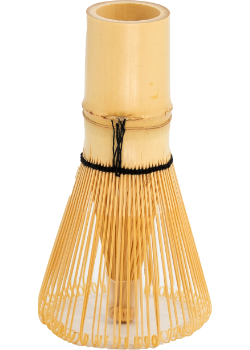
Organic Connections Bamboo Matcha Whisk is a traditional tool designed to help create a smooth and frothy matcha tea. Handcrafted from natural bamboo, it features multiple fine prongs that help blend matcha powder evenly with water for a creamy texture. Suitable for both beginners and experienced tea drinkers, it can be used to prepare a variety of matcha styles. Lightweight and easy to handle, it’s simple to clean by rinsing with water after use. A thoughtful addition to any tea routine, it offers an authentic and enjoyable matcha experience. [ACCESORY]
Contains:
Whisk handcrafted from bamboo with 80 Prongs
Important Information:
Do not wash your with soap. Simply run under hot water and remove all visible signs of matcha. Pat dry and allow to air dry. Store whisk standing upright on its base in mild environment.
Dosage
Place one tsp of matcha in a chawan (deep bowl), add 8 ounces of hot water, right before it boils. Whisk vigorously with the bamboo whisk in a "w" or left to right pattern, not a circle, until frothy.
Certified Organic Loose Herbal Teas & Remedies
Organic Connections makes quality food supplements including: Organic ground Cinnamon powder, both Ceylon and Cassia and Organic Slippery Elm Bark powder to provide fibre and support intestinal health. Organic Connections believes in quality, natural and organic ingredients to provide the best in natural health.
MATCHA
Matcha is a finely ground and purified premium
green tea
that originated in Japan and has been used in traditional Japanese tea ceremonies for nearly 800 years...
As soon as the young leaves found on the top of the plant are harvested, they are steamed, dried and then further processed to remove the veins, stems and impurities. After this, only about 10% of the original harvest remains, and this is very carefully hand ground to a fine powder.
How Is Matcha Different From Green Tea?
Because matcha consists of powdered purified green tea leaves, when it is taken as tea or in food, the entire leaf is ingested. Green tea on the other hand consists of dried leaves steeped in hot water. This releases only some of the constituents while others remain trapped in the leaves. As such, ingesting matcha can provide you with the complete benefits of the nutritional and medicinal properties of green tea that simple steeping may miss.
Is It Really Like Drinking 10 Cups Of Green Tea?
Matcha is packed full of
antioxidants. Green tea has been receiving accolades for several years now for its intense antioxidant abilities that have been successful in preventing and treating many conditions including: arthritis, infections, age-related diseases, cardiovascular disease, as well as aiding in weight loss. Matcha takes that to the next level with antioxidant levels that are between 10 and 200 times higher than regular green tea (depending on the quality of the green tea used for comparison). Strong antioxidant powers means that matcha can help to prevent, and maybe even treat, age-related disorders. In addition, one cup of relatively weak matcha tea (2 teaspoons of powder) will contain nearly 10 times the catechins found in one cup of regular green tea. So, in antioxidant and catechin content, one cup of matcha tea is actually almost the equivalent of 10 cups of regular green tea! For more information on the many benefits of green tea (and matcha), please see our green tea article.
What Else Can Matcha Do?
Prior to harvesting the tea leaves that will be used in matcha, the plants are shaded for two weeks to promote increased
chlorophyll
production, which is what gives matcha its bright green colour. The resulting high levels of chlorophyll act to help detoxify the body by drawing out and binding to chemicals and heavy metals in the body tissues.
Because it consists of the whole leaf, matcha also has a relatively high content of
amino acids
by weight. Much like other green tea, it also contains L-
theanine, an amino acid that promotes relaxed brain waves in humans. It also contains some caffeine and nutrients that help to boost mental-alertness. Combined, they improve presence of mind that you'd get from coffe, while still having the calming effect of tea.
What Does It Taste Like, And How Do I Take It?
Matcha flavour is a rich, fresh "green" taste that tends to blend well with dairy, and thus can be found in many food and drink options such as: sweets, ice cream, cheese cake, chocolate, hot chocolate, lattes, and even cream cheese. To those who have read the green tea article, I would like to note that although that article recommends avoiding mixing green tea with dairy, the levels of antioxidants in matcha are much higher, that their reduction is no longer a significant concern.
In addition to being eaten in foods, matcha can be made into a tea. To make matcha tea, simply dissolve matcha powder in hot (not boiling) water and stir vigorously (you can buy a traditional bamboo whisk to help you mix it fully and create froth, if desired). The amount of matcha and water depend on your taste preference with anywhere from 1 to 6 teaspoons per 3/4 cup of water. Generally, there is approximately 3.5g of matcha in a teaspoon, and the traditional serving size of matcha is 1/2-3/4 cup.
Matcha – Quick Facts
Parts Used
· Finely Ground Purified Leaves.
Applications
· Antioxidant, Cardiovascular Disease,
High Cholesterol, Infections, Arthritis, Aging, Osteoporosis
Optimum Dosage
· One Cup Per Day Of Matcha Tea Or Between 3 And 21g Of Matcha Powder (1-6 Teaspoons). (Clinical Doses May Be Higher As Recommended By Your Practitioner).
Works Well With
· Other Antioxidants Such As
Vitamin C,
Vitamin E,
Selenium, And
Coenzyme Q10
Important Information
· The Caffeine Present In Matcha May Not Be Suitable For Certain Individuals.
· Matcha Should Not Be Used With Stimulants, Blood Thinners, Or By Individuals With Blood Disorders Or A Decreased Ability To Clot.
· All Green Tea Should Be Discontinued 2 Weeks Prior To Surgery Or Dental Work.
· Check With Your Healthcare Practitioner If You Are Unsure About Your Use Of Green Tea.
Carefully SelectedShips to the U.S.Wellness EssentialsTrusted Brands
Product Details
MATCHA
Matcha is a finely ground and purified premium
green tea
that originated in Japan and has been used in traditional Japanese tea ceremonies for nearly 800 years...
As soon as the young leaves found on the top of the plant are harvested, they are steamed, dried and then further processed to remove the veins, stems and impurities. After this, only about 10% of the original harvest remains, and this is very carefully hand ground to a fine powder.
How Is Matcha Different From Green Tea?
Because matcha consists of powdered purified green tea leaves, when it is taken as tea or in food, the entire leaf is ingested. Green tea on the other hand consists of dried leaves steeped in hot water. This releases only some of the constituents while others remain trapped in the leaves. As such, ingesting matcha can provide you with the complete benefits of the nutritional and medicinal properties of green tea that simple steeping may miss.
Is It Really Like Drinking 10 Cups Of Green Tea?
Matcha is packed full of
antioxidants. Green tea has been receiving accolades for several years now for its intense antioxidant abilities that have been successful in preventing and treating many conditions including: arthritis, infections, age-related diseases, cardiovascular disease, as well as aiding in weight loss. Matcha takes that to the next level with antioxidant levels that are between 10 and 200 times higher than regular green tea (depending on the quality of the green tea used for comparison). Strong antioxidant powers means that matcha can help to prevent, and maybe even treat, age-related disorders. In addition, one cup of relatively weak matcha tea (2 teaspoons of powder) will contain nearly 10 times the catechins found in one cup of regular green tea. So, in antioxidant and catechin content, one cup of matcha tea is actually almost the equivalent of 10 cups of regular green tea! For more information on the many benefits of green tea (and matcha), please see our green tea article.
What Else Can Matcha Do?
Prior to harvesting the tea leaves that will be used in matcha, the plants are shaded for two weeks to promote increased
chlorophyll
production, which is what gives matcha its bright green colour. The resulting high levels of chlorophyll act to help detoxify the body by drawing out and binding to chemicals and heavy metals in the body tissues.
Because it consists of the whole leaf, matcha also has a relatively high content of
amino acids
by weight. Much like other green tea, it also contains L-
theanine, an amino acid that promotes relaxed brain waves in humans. It also contains some caffeine and nutrients that help to boost mental-alertness. Combined, they improve presence of mind that you'd get from coffe, while still having the calming effect of tea.
What Does It Taste Like, And How Do I Take It?
Matcha flavour is a rich, fresh "green" taste that tends to blend well with dairy, and thus can be found in many food and drink options such as: sweets, ice cream, cheese cake, chocolate, hot chocolate, lattes, and even cream cheese. To those who have read the green tea article, I would like to note that although that article recommends avoiding mixing green tea with dairy, the levels of antioxidants in matcha are much higher, that their reduction is no longer a significant concern.
In addition to being eaten in foods, matcha can be made into a tea. To make matcha tea, simply dissolve matcha powder in hot (not boiling) water and stir vigorously (you can buy a traditional bamboo whisk to help you mix it fully and create froth, if desired). The amount of matcha and water depend on your taste preference with anywhere from 1 to 6 teaspoons per 3/4 cup of water. Generally, there is approximately 3.5g of matcha in a teaspoon, and the traditional serving size of matcha is 1/2-3/4 cup.
Matcha – Quick Facts
Parts Used
· Finely Ground Purified Leaves.
Applications
· Antioxidant, Cardiovascular Disease,
High Cholesterol, Infections, Arthritis, Aging, Osteoporosis
Optimum Dosage
· One Cup Per Day Of Matcha Tea Or Between 3 And 21g Of Matcha Powder (1-6 Teaspoons). (Clinical Doses May Be Higher As Recommended By Your Practitioner).
Works Well With
· Other Antioxidants Such As
Vitamin C,
Vitamin E,
Selenium, And
Coenzyme Q10
Important Information
· The Caffeine Present In Matcha May Not Be Suitable For Certain Individuals.
· Matcha Should Not Be Used With Stimulants, Blood Thinners, Or By Individuals With Blood Disorders Or A Decreased Ability To Clot.
· All Green Tea Should Be Discontinued 2 Weeks Prior To Surgery Or Dental Work.
· Check With Your Healthcare Practitioner If You Are Unsure About Your Use Of Green Tea.
🌿
Daily Wellness
Easy to add to your everyday health routine.
✅
Carefully Selected
Chosen with quality and customer needs in mind.
💊
Simple to Use
Designed for convenient daily supplementation.
🚚
Ships to the U.S.
Fast, reliable shipping to U.S. customers.
Choosing a selection results in a full page refresh.