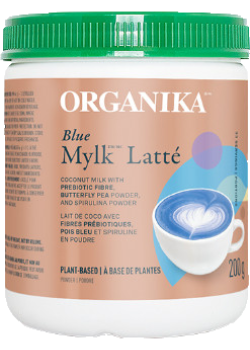
Formulated by Organika, Blue Mylk Latté + Prebiotic is a delicious caffeine free superfoods powder that combines Coconut Milk, Butterfly Pea Flower, Prebiotic fibre, nutritious Spirulina, Cardamom, Ashwagandha, and a delightful blend of spices; perfect for those quiet moments of relaxation. Feeling blue? Take the time to relax and ease your mind. This latte is 100% dairy-free and made with GMO-free ingredients. Organika’s Blue Mylk Latté + Prebiotic is a delicious, convenient, and all-natural treat for when you want to sit back, unwind, and de-stress. Simply mix with hot water and relax. [POWDER]
2 tsp (6g) contains:
Calories 25
Fat 1g
Saturated fat 0.5g
Carbohydrate 5g
Fibre 1g
Sugars 2g
Protein 0.3g
Cholesterol 0mg
Sodium 15mg
Potassium 30mg
Calcium 30mg
Iron 0.2mg
Ingredients:Coconut milk powder, Prebiotic fibre (isomalto-oligosaccharides from tapioca starch), Coconut palm sugar, Butterfly pea flower powder, Ashwagandha root powder, Spirulina powder, Cardamom seed powder, Cinnamon bark powder, Ginger root powder, Himalayan pink salt, Black pepper powder.
Important Information:
Keep out of reach of pets & children. Consult a health care practitioner prior to use if breastfeeding or pregnant. No artificial ingredients. Gluten, Dairy and soy free. Vegan.
Dosage
Create magical blue lattes by mixing 2 levelled teaspoons (~6 g) of Blue Mylk Latte into 150 ml of hot or cold water, milk, or your favorite non-dairy beverage
Nourishment Rooted in Nature - 12 New Added
Organika, formulators of Canada’s best-selling Collagen and marine collagen and Bone Broth supports skin and joint health. Organika's health products also include; Organika spirulina, Chlorella, Curcumin to support inflammation, Organika Enhanced Collagen Protein, and Adaptogens to provide balance. Shop Organika here at ca for quality, Canadian-made supplements.
Spirulina
A nutrient powerhouse that can help you recover from illnesses faster and detoxify while fighting off cell growths and
high cholesterol...
Spirulina is an edible water-grown cyanobacteria (Arthrospira species) that is often considered to be a complete food. It contains a number of vitamins and nutrients and is also a source of complete
protein. Natural health practitioners recommend spirulina for a variety of conditions including: convalescence, hypoglycemia, high cholesterol, chemical or metal toxicity, malnutrition, and malabsorption. Because it is so easy to grow and harvest, it is considered an extremely sustainable food source.
Protein Content
By weight, spirulina contains 60-70% protein. It is a source of complete protein because it contains all of the essential
amino acids. It is actually superior to typical plant protein sources, such as legumes and because of this, it is a great addition to any vegetarian diet. Also, these proportionately high levels of protein can actually help to stabilize blood sugar when spirulina is supplemented between meals. This can help to reduce sugar fluctuations in diabetics and those with hypoglycemia. For more information on the benefits of protein, please see our Protein article.
Healthy Fat Content
By weight, spirulina is approximately 7% fat, which is almost entirely healthy
omega 3
and 6 fats. It is a rich source of GLA, ALA, and linoleic acid. It also contains EPA and DHA, the omega 3 fatty acids also found in fish oil. These healthy fats can help to regulate cholesterol levels, and stimulate healthy steroid hormone synthesis, including sex hormones. EPA acts as an anti-inflammatory in the body, and DHA helps to promote proper brain health. For more information, please see our articles on EPA and DHA.
B vitamins
Spirulina contains a few different B vitamins, including: B1 (thiamine), B2 (riboflavin), B3 (niacin), B6 (pyridoxine), and B9 (folic acid). For more information on the benefits of these nutrients, please see our B vitamin article. Although many companies claim that spirulina is a source of vitamin B12, the kind found in it is not active in humans, so alternate sources of vitamin B12 are still required.
Carotenoids
Some of the nutrients found in spirulina are carotenoids such as: beta-carotene, and zeaxanthin. These are strong
antioxidants
that can help to protect the body against free radicals. For more information on the rich antioxidant benefits of these nutrients, please see our Carotenoids article.
Chlorophyll
Part of the green colour of spirulina is created by the presence of chlorophyll. This nutrient is a potent detoxifier that can help to speed the release of toxins from the bloodstream by binding them in the intestines. Chlorophyll can also help to increase the oxygenation of tissues by nourishing red blood cells. Interestingly, it has also been shown to do the work of hemoglobin in the blood, which is thought to be due to it resembling the human hemoglobin (oxygen-carrying) molecule. For more information on further benefits, please see our Chlorophyll article.
Phycocyanin
Spirulina also contains phycocyanin, a blue-green pigment that has been shown in animal models to increase the survival rate in liver cell growths. Further research is required to establish this effect.
Other Vitamins and Minerals
In addition to the B vitamins, spirulina also contains vitamin C,
vitamin A,
vitamin E
and
vitamin D. These are strong antioxidants that perform a number of different functions in the body. It is also a source of important electrolytes and minerals such as: potassium,
calcium, copper, iron,
magnesium, manganese, phosphorus, selenium, sodium,
chromium, and zinc. Each of these is essential to the maintenance of health.
How can I get more spirulina?
As a supplement, spirulina is found in tablets, liquid, and powder. Some commercial “green food” smoothies and “energy” drinks contain spirulina. Greens powders also often contain spirulina due to its rich nutritive benefits. For more information on these mixed powders, please see our Greens article.
Contamination Fears
Spirulina has been declared safe by the US National Institute of Health. Unfortunately, certain strains of cyanobacteria produce small amounts of toxins, and if these are inadvertently mixed with the spirulina during improper culturing, it can cause small levels of contamination. There is also the potential for heavy metal contamination, depending on the water source where it is grown. Be sure to use a trusted source for your spirulina to ensure you get all of the health benefits without any potential detriments.
Carefully SelectedShips to the U.S.Wellness EssentialsTrusted Brands
Product Details
Spirulina
A nutrient powerhouse that can help you recover from illnesses faster and detoxify while fighting off cell growths and
high cholesterol...
Spirulina is an edible water-grown cyanobacteria (Arthrospira species) that is often considered to be a complete food. It contains a number of vitamins and nutrients and is also a source of complete
protein. Natural health practitioners recommend spirulina for a variety of conditions including: convalescence, hypoglycemia, high cholesterol, chemical or metal toxicity, malnutrition, and malabsorption. Because it is so easy to grow and harvest, it is considered an extremely sustainable food source.
Protein Content
By weight, spirulina contains 60-70% protein. It is a source of complete protein because it contains all of the essential
amino acids. It is actually superior to typical plant protein sources, such as legumes and because of this, it is a great addition to any vegetarian diet. Also, these proportionately high levels of protein can actually help to stabilize blood sugar when spirulina is supplemented between meals. This can help to reduce sugar fluctuations in diabetics and those with hypoglycemia. For more information on the benefits of protein, please see our Protein article.
Healthy Fat Content
By weight, spirulina is approximately 7% fat, which is almost entirely healthy
omega 3
and 6 fats. It is a rich source of GLA, ALA, and linoleic acid. It also contains EPA and DHA, the omega 3 fatty acids also found in fish oil. These healthy fats can help to regulate cholesterol levels, and stimulate healthy steroid hormone synthesis, including sex hormones. EPA acts as an anti-inflammatory in the body, and DHA helps to promote proper brain health. For more information, please see our articles on EPA and DHA.
B vitamins
Spirulina contains a few different B vitamins, including: B1 (thiamine), B2 (riboflavin), B3 (niacin), B6 (pyridoxine), and B9 (folic acid). For more information on the benefits of these nutrients, please see our B vitamin article. Although many companies claim that spirulina is a source of vitamin B12, the kind found in it is not active in humans, so alternate sources of vitamin B12 are still required.
Carotenoids
Some of the nutrients found in spirulina are carotenoids such as: beta-carotene, and zeaxanthin. These are strong
antioxidants
that can help to protect the body against free radicals. For more information on the rich antioxidant benefits of these nutrients, please see our Carotenoids article.
Chlorophyll
Part of the green colour of spirulina is created by the presence of chlorophyll. This nutrient is a potent detoxifier that can help to speed the release of toxins from the bloodstream by binding them in the intestines. Chlorophyll can also help to increase the oxygenation of tissues by nourishing red blood cells. Interestingly, it has also been shown to do the work of hemoglobin in the blood, which is thought to be due to it resembling the human hemoglobin (oxygen-carrying) molecule. For more information on further benefits, please see our Chlorophyll article.
Phycocyanin
Spirulina also contains phycocyanin, a blue-green pigment that has been shown in animal models to increase the survival rate in liver cell growths. Further research is required to establish this effect.
Other Vitamins and Minerals
In addition to the B vitamins, spirulina also contains vitamin C,
vitamin A,
vitamin E
and
vitamin D. These are strong antioxidants that perform a number of different functions in the body. It is also a source of important electrolytes and minerals such as: potassium,
calcium, copper, iron,
magnesium, manganese, phosphorus, selenium, sodium,
chromium, and zinc. Each of these is essential to the maintenance of health.
How can I get more spirulina?
As a supplement, spirulina is found in tablets, liquid, and powder. Some commercial “green food” smoothies and “energy” drinks contain spirulina. Greens powders also often contain spirulina due to its rich nutritive benefits. For more information on these mixed powders, please see our Greens article.
Contamination Fears
Spirulina has been declared safe by the US National Institute of Health. Unfortunately, certain strains of cyanobacteria produce small amounts of toxins, and if these are inadvertently mixed with the spirulina during improper culturing, it can cause small levels of contamination. There is also the potential for heavy metal contamination, depending on the water source where it is grown. Be sure to use a trusted source for your spirulina to ensure you get all of the health benefits without any potential detriments.