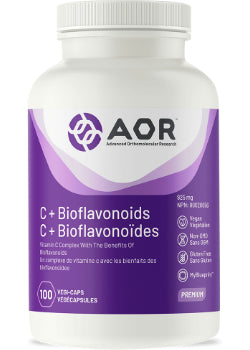
C+BIOFLAVANOIDS FROM AOR OFFER PROTECTION AGAINST COLDS & FLUSPURE VITAMIN C IN THE ASCORBIC ACID FORM + added bioflavanoids for increased absorption and anti-oxidant activity. Superior capsule form for easy digestion. C+ Bioflavonoids contains pure VITAMIN C with the synergistic action of citrus bioflavonoids, rich in eriocitrin, hesperidin, neohesperidin, and other flavonols, flavanones, and flavones and their glycosides. Bioflavonoids synergistically support the functions of vitamin C, "recharging" oxidized ascorbate and apparently assisting in the maintenance of capillaries, as well as being potent phenolic antioxidants in their own right. [VCAPS]
1 capsule contains:
Vitamin C (ascorbic acid) 900mg
Citrus Bioflavonoids 25mg
Non-medicinal Ingredients:
Corn dextrin, ascorbyl palmitate, sodium stearyl fumarate. Capsule: hypromellose.
Important Information:
Contains no wheat, gluten, nuts, peanuts, sesame seeds, sulphites, mustard, soy, dairy, eggs, fish, shellfish or any animal byproduct. This product contains corn derived ingredients, do not use if you have an allergy.
Dosage
Take one capsule daily with or without food, or as directed by a qualified health care practitioner.
Innovative Formulas by AOR Canada found at
AOR Canada is the innovative formulators of Canada’s best-selling antioxidant support,
AOR Advanced B Complex
and
AOR Tri-B12. They are also known for their top bone health supplements, Ortho Adapt and Bone Basics. You can also
SHOP AOR's Nattokinase, and trusted Curcumin Ultra, Curcumin Active and Curcumin95 inflammation support at ca. AOR are leaders in natural health with innovative product development.
Bioflavonoids & Vitamin C
Flavonoids, also called bioflavonoids, are natural plant pigments. They are a group of polyphenolic antioxidant substances that are present in most plants, concentrating in seeds, bark, flowers, and fruit skin or peel. The human body cannot produce these phytochemicals, so we must get them through diet or supplementation. The chemical structure is comprised of two benzene rings on either side of a three-carbon ring. Flavonoids comprise a large and varied group, distinguished from one another by the addition of hydroxyl groups, sugars, methyl groups etc. The terminology used to clarify the various classes of flavonoids includes: flavanols, flavanes, flavan-3-ols,
OPCs, proanthocyanins, isoflavonoids, etc. Flavonoids have a range of biological activities, acting as antioxidants and showing anti-inflammatory, anti-thrombotic, and antineoplastic actions. As well, flavonoids have a synergistic effect on Vitamin C activity.
History
Szent-Gyorgyi, the discoverer of Vitamin C, also discovered flavonoids accidentally in the late 30s. A friend given a crude vitamin C extracted from lemon found relief, but later his gums started bleeding. Szent-Gyorgyi gave a purer form of vitamin C thinking he would see better results. Instead, his friend's gums worsened! Yet upon administration of an isolated flavonoid extract, his friend's gums healed completely. Eventually, Szent-Gyorgy demonstrated that scurvy symptoms were due to a combined deficiency of Vitamin C and flavonoids.
Flavonoids were originally termed "Vitamin P" because they reduced the permeability of blood vessels. But flavonoids are so chemically diverse that they cannot be categorized as a single nutrient. The following are some herbs whose active ingredients are classified as flavonoids:
Bilberry
- anthocyanins;
Strawberries- ellagic acids;
Ginkgo
- ginkgoflavone glycosides;
Turmeric- curcuminoids;
Green tea
- catechins;
Hawthorn
berry- proanthocyanidins;
Onions-
Quercetin;
Grape seeds / skin- OPCs (oligomeric proanthocyanidins).
An interesting observation was made by some Indian researchers from the prestigious All India Institute of Medical Sciences: the vitamin C in the extract of the fruit amla, which has the highest concentration of ascorbate in any plant, had over ten times the bioavailabilty of synthetic Vitamin C. Careful analysis revealed that the tannins present in the amla fruit protected and enhanced the vitamin C activity. Other studies have found that the unhealthy cell growth inhibitory actions of the flavonoid quercetin were considerably enhanced by vitamin C. The effect on the vitamin may be due to its ability to recycle oxidized vitamin C: when antioxidants neutralize free radicals, they become themselves weak prooxidants. Flavonoids display an "antioxidant boosting" effect, returning ascorbate to its active antioxidant form.
Carefully SelectedShips to the U.S.Wellness EssentialsTrusted Brands
Product Details
Bioflavonoids & Vitamin C
Flavonoids, also called bioflavonoids, are natural plant pigments. They are a group of polyphenolic antioxidant substances that are present in most plants, concentrating in seeds, bark, flowers, and fruit skin or peel. The human body cannot produce these phytochemicals, so we must get them through diet or supplementation. The chemical structure is comprised of two benzene rings on either side of a three-carbon ring. Flavonoids comprise a large and varied group, distinguished from one another by the addition of hydroxyl groups, sugars, methyl groups etc. The terminology used to clarify the various classes of flavonoids includes: flavanols, flavanes, flavan-3-ols,
OPCs, proanthocyanins, isoflavonoids, etc. Flavonoids have a range of biological activities, acting as antioxidants and showing anti-inflammatory, anti-thrombotic, and antineoplastic actions. As well, flavonoids have a synergistic effect on Vitamin C activity.
History
Szent-Gyorgyi, the discoverer of Vitamin C, also discovered flavonoids accidentally in the late 30s. A friend given a crude vitamin C extracted from lemon found relief, but later his gums started bleeding. Szent-Gyorgyi gave a purer form of vitamin C thinking he would see better results. Instead, his friend's gums worsened! Yet upon administration of an isolated flavonoid extract, his friend's gums healed completely. Eventually, Szent-Gyorgy demonstrated that scurvy symptoms were due to a combined deficiency of Vitamin C and flavonoids.
Flavonoids were originally termed "Vitamin P" because they reduced the permeability of blood vessels. But flavonoids are so chemically diverse that they cannot be categorized as a single nutrient. The following are some herbs whose active ingredients are classified as flavonoids:
Bilberry
- anthocyanins;
Strawberries- ellagic acids;
Ginkgo
- ginkgoflavone glycosides;
Turmeric- curcuminoids;
Green tea
- catechins;
Hawthorn
berry- proanthocyanidins;
Onions-
Quercetin;
Grape seeds / skin- OPCs (oligomeric proanthocyanidins).
An interesting observation was made by some Indian researchers from the prestigious All India Institute of Medical Sciences: the vitamin C in the extract of the fruit amla, which has the highest concentration of ascorbate in any plant, had over ten times the bioavailabilty of synthetic Vitamin C. Careful analysis revealed that the tannins present in the amla fruit protected and enhanced the vitamin C activity. Other studies have found that the unhealthy cell growth inhibitory actions of the flavonoid quercetin were considerably enhanced by vitamin C. The effect on the vitamin may be due to its ability to recycle oxidized vitamin C: when antioxidants neutralize free radicals, they become themselves weak prooxidants. Flavonoids display an "antioxidant boosting" effect, returning ascorbate to its active antioxidant form.
🌿
Daily Wellness
Easy to add to your everyday health routine.
✅
Carefully Selected
Chosen with quality and customer needs in mind.
💊
Simple to Use
Designed for convenient daily supplementation.
🚚
Ships to the U.S.
Fast, reliable shipping to U.S. customers.
Choosing a selection results in a full page refresh.