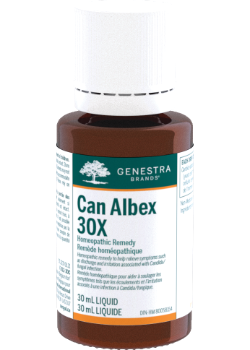
HELPS RELIEVE THE SYMPTONS OF YEAST INFECTIONS!Can Albex 30X from Genestra is a homeopathic preparation and is part of the unique Can Albex Candidiasis Program. Can Albex 30X is specifically formulated according to Materia Medica, to help relieve symptoms of a yeast infection and to help maintain natural resistance to thrush. Genestra has produced Can Ablex 30X in a convenient liquid format which is also ideal for vegans. [LIQUID]
Each drop contains:
Non-Medicinal Ingredients:
Ethanol (beet)
Important Information:
If symptoms persist or worsen consult your health care practitioner. If you are pregnant or breastfeeding, consult your health care practitioner prior to use. Store in a cool, dry place.
Dosage
Adults and Children (12+ years):
Take 10-30 drops 1-3 times daily or as recommended by your health care practitioner. To be taken 20 minutes before or after food. Place drops directly under the tongue pr into 1/4 oz of water.
Children (<12 years):
Use as directed by your health care practitioner.
Evidence-Based Natural Health Supplements for Optimal Wellness
Genestra delivers professional-grade products that are offered in a variety of formats. Genestra natural health products have been proven safe, effective and reliable for over 30 years, and are backed by clinical evidence. Genestra brings you HMF Forte, HMF Immune, HMF UTI, Digest Plus, Probiotics, D-Mulsion and Super EFA Liquid.
CANDIDA
YEAST OVERGROWTH
We all have yeast in our intestines, but for some at risk, it overgrows & makes them feel sick. When these people eat bread, pasta, or other high carbohydrate foods, they can feel sluggish & depressed, but there is alot that you can do to fight it.Fungal overgrowth in the intestines can be associated with: depression, inability to concentrate, anxiety, and fatigue...
Candida albicans is a parasitic fungus that is normally found in the human gastrointestinal and genital tracts. A Candida infection occurs when the yeast is allowed to overgrow, or spread to other areas of the body. People with Candida overgrowth typically feel fatigued and have trouble concentrating; Both of these symptoms are caused by the toxins produced by the yeast, which are easily absorbed through the intestinal lining. You can ask your practitioner to do a test for this toxin to make a diagnosis.
Symptoms of Candidiasis
Apart from the above test, a definitive diagnosis of candidiasis is difficult because the symptoms can be non-specific and can vary depending on the part of the body that is involved. For example, Candida can cause: headaches, fatigue, rashes, athlete's foot, itching, tingling or burning sensations, memory loss, joint and muscle pain, constipation or diarrhea,
PMS
prostatitis, and even diabetes or hypothyroidism. The symptoms may be worse in damp or mouldy places. They may also worsen after consuming high-sugar or yeast-based foods. Visually, a topical (skin or mucous membrane) candida infection appears as white patches that may grow together. The skin surrounding the spots is very irritated and red. There may be a white, curd-like discharge with a yeasty smell. Many of the symptoms of gastrointestinal candidiasis mimic those of Leaky Gut Syndrome, and these two conditions can often co-exist.
Conventional Treatment
Conventional treatment of candida involves antifungal agents applied topically or taken orally. These medications take care of the current infection but do not address the root cause of why the infection occurred in the first place. Candida often returns and eventually the strains become drug resistant.
Treating with Food
Dietary therapy depends upon the severity of the condition. It is aimed at starving out the yeast by removing its food source, sugar.The most severe dietary restrictions involve a total elimination of all sugar, yeast and fungal products from the diet. This includes: fruit, aged cheese, alcohol, baked goods (including bread), chocolate, fermented foods, gluten containing grains, ham, honey and all sweeteners, nut butters, potatoes, mushrooms, soy sauce, sprouts and vinegar.
Less severe cases restrict all of the above-mentioned products for a short period of time, and then allow some products back into the diet. Vegetables, fish and gluten free grains are the bulk of the diet. Fresh, live yogurt or other products containing live bacterial cultures can be added at a later time.
WHAT YOU CAN DO TO HELP
FIGHT CANDIDA
EAT MORE VEGETABLES &
PROTEIN, BUT LESS CARBS
DO COLON CLEANSES
TAKE ACIDOPHILUS DAILY
TAKE ANTIFUNGAL SUPPLEMENTS LIKE CAPRYLIC ACID, GARLIC, OREGANO, AND GRAPEFRUIT SEED
DON'T DRINK COFFEE
CUT BACK ON BEVERAGES WITH HIGH SUGAR CONTENT
GET AN ELISA ACT TEST FROM YOUR PRACTITIONER TO MAKE AN EXACT DIAGNOSIS
TREAT ANY UNDERLYING HEALTH CONCERNS
DID YOU KNOW?
(CANDIDA FACTS)
CANDIDA IS OFTEN MISDIAGNOSED AS SIMPLE DEPRESSION
YEAST CELLS MULTIPLY AT AN ALARMING RATE
CANDIDA GIVES YOUR CRAVINGS
Risk Factors for Developing Candida
Unfortunately, because this infection can cause such a litany of other concerns, it is sometimes over-diagnosed, and treatment touted as a cure-all. Be sure to discuss the potential of candidiasis with your healthcare provider to ensure that this is the root cause of your concerns. Of course, you can always go ahead with trying to treat it first to see if the treatment makes a difference for your symptoms if you prefer the do-it-yourself path. There are many risk factors for developing Candida overgrowth in the intestines. Some of the risks are common health concerns that create an environment in the body that allows yeast to grow out of control, while others are environmental factors. Here is a list of some (but not all) factors that can leave you predisposed to developing candidiasis:
Low Thyroid The lower body temperature caused by hypothyroid creates a suitable environment for the yeast to proliferate.
Diabetes or Hypoglycemia Blood sugar fluctuations and cravings for sweet foods make sugar more available and can make it easier for the yeast to grow.
Antibiotic Use The use of antibiotics can kill off the natural, "good" bacteria that help to keep yeast in check.
Stress Extended stress can exhaust your adrenal glands, thus lowering your body temperature. Stress also reduces your immune system, thus preventing your body's natural response to infection.
Menopause
or PMS These conditions cause hormonal fluctuations that can kill off the natural bacteria in the body and boost the growth of yeast.
Intestinal Toxicity Yeast can proliferate in a toxic colon with the accumulated waste matter.
Low Immunity The immune system will normally keep the yeast in check, but if it gets compromised, the yeast can be allowed to grow out of control.
Leaky Gut Small perforations in the intestinal lining can harbour yeast cells and provide them with a more direct source of nutrients.
Die Off Reactions
When you initially go to kill off the yeast in your body, beware that you will likely feel pretty terrible for a few days. Each cell of Candida naturally produces toxins, and when a large number of the yeast cells suddenly die and burst, a massive amount of toxin can be released into the intestines where they are easily absorbed. This can result in flu-like symptoms, similar to those experienced during a detox, or a cleanse. The symptoms will go away once the yeast is under control. They can be somewhat countered by drinking lots of filtered water and taking in lots of fibre.
The following list of supplements can be used for preventing and treating candida infections. Treatment is aimed at killing and removing the yeast as well as rebuilding resistance to yeast. Adult doses are given. Ensure all products are yeast free. If you are pregnant or breastfeeding seek advice from a health professional before beginning treatment.
SUPPLEMENT DOSAGE THERAPEUTIC EFFECT
OREGANO OIL
As directed
Kills candida cells, helps detoxify
COLOSTRUM
1000mg three times daily
Boosts immunity, fights yeast, and helps heal leaky gut
PROBIOTICS
1-3capsules daily.
Use high potency Contains acidophilus and bifidus.
Normal bacterial flora that prevent against fungal invasions.
CAPRYLIC ACID
500mg twice daily
Antifungal agent. Especially valuable for gastrointestinal complaints.
BENTONITE
As directed
Helps to absorb the toxin that yeast produces so you can excrete if effectively
GRAPEFRUIT SEED EXTRACT
As directed, always dilute
Antifungal agent.
GARLIC
2 capsules three times daily
Inhibits candida growth. Strengthens the immune system.
ESSENTIAL FATTY ACIDS
As directed
Heals tissue and strengthens cellular resistance to infecting organisms.
VITAMIN B
COMPLEX
100mg three times daily
Required for all body functions including digestion and immunity. Use a yeast free formula.
HOMEOPATHIC CANDIDA
As directed
Focuses the body's immune reaction on the candida. Helpful for acute and chronic infections.
Also beneficial for CANDIDA:
Multivitamins,
niacin, vitamin C,
bromelain, coenzyme Q10, aerobic oxygen,
colloidal silver, psyllium, aloe vera juice, olive leaf extract,
pau d'arco, and clove.
Carefully SelectedShips to the U.S.Wellness EssentialsTrusted Brands
Product Details
CANDIDA
YEAST OVERGROWTH
We all have yeast in our intestines, but for some at risk, it overgrows & makes them feel sick. When these people eat bread, pasta, or other high carbohydrate foods, they can feel sluggish & depressed, but there is alot that you can do to fight it.Fungal overgrowth in the intestines can be associated with: depression, inability to concentrate, anxiety, and fatigue...
Candida albicans is a parasitic fungus that is normally found in the human gastrointestinal and genital tracts. A Candida infection occurs when the yeast is allowed to overgrow, or spread to other areas of the body. People with Candida overgrowth typically feel fatigued and have trouble concentrating; Both of these symptoms are caused by the toxins produced by the yeast, which are easily absorbed through the intestinal lining. You can ask your practitioner to do a test for this toxin to make a diagnosis.
Symptoms of Candidiasis
Apart from the above test, a definitive diagnosis of candidiasis is difficult because the symptoms can be non-specific and can vary depending on the part of the body that is involved. For example, Candida can cause: headaches, fatigue, rashes, athlete's foot, itching, tingling or burning sensations, memory loss, joint and muscle pain, constipation or diarrhea,
PMS
prostatitis, and even diabetes or hypothyroidism. The symptoms may be worse in damp or mouldy places. They may also worsen after consuming high-sugar or yeast-based foods. Visually, a topical (skin or mucous membrane) candida infection appears as white patches that may grow together. The skin surrounding the spots is very irritated and red. There may be a white, curd-like discharge with a yeasty smell. Many of the symptoms of gastrointestinal candidiasis mimic those of Leaky Gut Syndrome, and these two conditions can often co-exist.
Conventional Treatment
Conventional treatment of candida involves antifungal agents applied topically or taken orally. These medications take care of the current infection but do not address the root cause of why the infection occurred in the first place. Candida often returns and eventually the strains become drug resistant.
Treating with Food
Dietary therapy depends upon the severity of the condition. It is aimed at starving out the yeast by removing its food source, sugar.The most severe dietary restrictions involve a total elimination of all sugar, yeast and fungal products from the diet. This includes: fruit, aged cheese, alcohol, baked goods (including bread), chocolate, fermented foods, gluten containing grains, ham, honey and all sweeteners, nut butters, potatoes, mushrooms, soy sauce, sprouts and vinegar.
Less severe cases restrict all of the above-mentioned products for a short period of time, and then allow some products back into the diet. Vegetables, fish and gluten free grains are the bulk of the diet. Fresh, live yogurt or other products containing live bacterial cultures can be added at a later time.
WHAT YOU CAN DO TO HELP
FIGHT CANDIDA
EAT MORE VEGETABLES &
PROTEIN, BUT LESS CARBS
DO COLON CLEANSES
TAKE ACIDOPHILUS DAILY
TAKE ANTIFUNGAL SUPPLEMENTS LIKE CAPRYLIC ACID, GARLIC, OREGANO, AND GRAPEFRUIT SEED
DON'T DRINK COFFEE
CUT BACK ON BEVERAGES WITH HIGH SUGAR CONTENT
GET AN ELISA ACT TEST FROM YOUR PRACTITIONER TO MAKE AN EXACT DIAGNOSIS
TREAT ANY UNDERLYING HEALTH CONCERNS
DID YOU KNOW?
(CANDIDA FACTS)
CANDIDA IS OFTEN MISDIAGNOSED AS SIMPLE DEPRESSION
YEAST CELLS MULTIPLY AT AN ALARMING RATE
CANDIDA GIVES YOUR CRAVINGS
Risk Factors for Developing Candida
Unfortunately, because this infection can cause such a litany of other concerns, it is sometimes over-diagnosed, and treatment touted as a cure-all. Be sure to discuss the potential of candidiasis with your healthcare provider to ensure that this is the root cause of your concerns. Of course, you can always go ahead with trying to treat it first to see if the treatment makes a difference for your symptoms if you prefer the do-it-yourself path. There are many risk factors for developing Candida overgrowth in the intestines. Some of the risks are common health concerns that create an environment in the body that allows yeast to grow out of control, while others are environmental factors. Here is a list of some (but not all) factors that can leave you predisposed to developing candidiasis:
Low Thyroid The lower body temperature caused by hypothyroid creates a suitable environment for the yeast to proliferate.
Diabetes or Hypoglycemia Blood sugar fluctuations and cravings for sweet foods make sugar more available and can make it easier for the yeast to grow.
Antibiotic Use The use of antibiotics can kill off the natural, "good" bacteria that help to keep yeast in check.
Stress Extended stress can exhaust your adrenal glands, thus lowering your body temperature. Stress also reduces your immune system, thus preventing your body's natural response to infection.
Menopause
or PMS These conditions cause hormonal fluctuations that can kill off the natural bacteria in the body and boost the growth of yeast.
Intestinal Toxicity Yeast can proliferate in a toxic colon with the accumulated waste matter.
Low Immunity The immune system will normally keep the yeast in check, but if it gets compromised, the yeast can be allowed to grow out of control.
Leaky Gut Small perforations in the intestinal lining can harbour yeast cells and provide them with a more direct source of nutrients.
Die Off Reactions
When you initially go to kill off the yeast in your body, beware that you will likely feel pretty terrible for a few days. Each cell of Candida naturally produces toxins, and when a large number of the yeast cells suddenly die and burst, a massive amount of toxin can be released into the intestines where they are easily absorbed. This can result in flu-like symptoms, similar to those experienced during a detox, or a cleanse. The symptoms will go away once the yeast is under control. They can be somewhat countered by drinking lots of filtered water and taking in lots of fibre.
The following list of supplements can be used for preventing and treating candida infections. Treatment is aimed at killing and removing the yeast as well as rebuilding resistance to yeast. Adult doses are given. Ensure all products are yeast free. If you are pregnant or breastfeeding seek advice from a health professional before beginning treatment.
SUPPLEMENT DOSAGE THERAPEUTIC EFFECT
OREGANO OIL
As directed
Kills candida cells, helps detoxify
COLOSTRUM
1000mg three times daily
Boosts immunity, fights yeast, and helps heal leaky gut
PROBIOTICS
1-3capsules daily.
Use high potency Contains acidophilus and bifidus.
Normal bacterial flora that prevent against fungal invasions.
CAPRYLIC ACID
500mg twice daily
Antifungal agent. Especially valuable for gastrointestinal complaints.
BENTONITE
As directed
Helps to absorb the toxin that yeast produces so you can excrete if effectively
GRAPEFRUIT SEED EXTRACT
As directed, always dilute
Antifungal agent.
GARLIC
2 capsules three times daily
Inhibits candida growth. Strengthens the immune system.
ESSENTIAL FATTY ACIDS
As directed
Heals tissue and strengthens cellular resistance to infecting organisms.
VITAMIN B
COMPLEX
100mg three times daily
Required for all body functions including digestion and immunity. Use a yeast free formula.
HOMEOPATHIC CANDIDA
As directed
Focuses the body's immune reaction on the candida. Helpful for acute and chronic infections.
Also beneficial for CANDIDA:
Multivitamins,
niacin, vitamin C,
bromelain, coenzyme Q10, aerobic oxygen,
colloidal silver, psyllium, aloe vera juice, olive leaf extract,
pau d'arco, and clove.
🌿
Daily Wellness
Easy to add to your everyday health routine.
✅
Carefully Selected
Chosen with quality and customer needs in mind.
💊
Simple to Use
Designed for convenient daily supplementation.
🚚
Ships to the U.S.
Fast, reliable shipping to U.S. customers.
Choosing a selection results in a full page refresh.