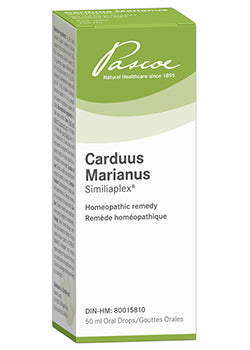
Pascoe Carduus Marianus Similiaplex is a homeopathic remedy that helps maintain a healthy liver. The origins of Pascoe's combination remedies (Similiaplex) date back to the year 1896. Similiaplexes are registered homoeopathic medicinal products and, have the added benefit of covering a broad range of symptoms. [LIQUID]
Each 10g (10.8ml) contains:
Carduus marianus (milk thistle) 2.5g
Bryonia 3X 1.2g
Berberis 4X 1.5g
Cholesterinum 4X 1.2g
Yucca filamentosa 2X 1.5g
Atropinum sulfuricum 6X 1.0g
Lycopodium 6X 0.6g
Non-Medicinal Ingredients: Contains 52% vol. alcohol
Important Information:
Contraindicated in people who are hypersensitive to Carduus Marianus and any plants of the daisy family. Consult a healthcare practitioner before use if pregnant or breastfeeding.
Dosage
Adults and children ≥ 12 years: 10-30 drops 1-3 times daily.
Acute dosing: Every 15-60 minutes (up to 12 times/day) or until improvement of symptoms. Then resume general dosing. The drops should be taken diluted in some water.
Pascoe are the leading formulators of high-quality homeopathic supplements. Top selling homeopathic Pascallerg for allergy relief, Pascoflair sleep support, Pascofemin for women’s health, menopause and PMS support. As well as popular Pascoe Detox Kit and Whole Body Cleanse. Pascoe is passionate about providing quality in homeopathic care.
LIVER DISORDERS
Detoxification, digestion, and blood purification are only some of the many roles of the liver in maintaining our health...
The liver is the largest solid organ in the body and performs a wide variety of different functions in the body. It produces bile for digestion, makes blood proteins, filters the blood, stores nutrients, breaks down old hormones, and detoxifies any contaminants in our bodies.Although the liver has an incredible ability to regenerate itself when damaged or lost, scarring of the liver tissue cannot be repaired. There are a number of factors that can damage the liver or reduce its function including: infection, excessive alcohol consumption, medications, recreational drugs, environmental toxins, and stress.
Signs of Reduced Liver Function
Depending on the cause of the problem, the symptoms of a liver condition can be varied. The most common sign of liver stagnation is jaundice, which is a build up of bilirubin in the blood that deposits as a yellow-colour in the tissues, especially in the whites of the eyes. Normally, the liver processes and filters out bilirubin so it cannot deposit in the skin. Another sign of reduced liver function is itchy skin, and a feeling of fullness and discomfort in the right upper abdomen. As the damage to the liver progresses, fluid can build up in the abdomen and varicosities (large blue-purple superficial veins) appear on the skin of the abdomen and often the lower body as well.
COMMON DISORDERS OF THE LIVER
Hepatitis
is (by definition) an inflammation of the liver. It can be caused by a wide variety of different factors, such as: viruses, bacterial infections, medications, or toxins. There are 5 types of hepatitis viruses, A-E. Hepatitis A is an infection that comes from contaminated food and water. It is usually only seen in North Americans who return from visiting tropical destinations. It usually resolves itself in one to two months and does not become chronic. Hepatitis B-E is spread through contaminated blood, blood products or sexual contact. The first signs of these infections often occur several months after the infection. These viral types usually result in a chronic liver inflammation that leads to liver damage and can be life threatening. Over use of alcohol, acetaminophen or ibuprofen can also cause hepatitis. Chlorinated hydrocarbons and arsenic are environmental toxins that are known to inflame the liver.
Fatty Liver Disease
is a condition where large globules of fat accumulate in the liver cells in a process called steatosis. It most commonly occurs in those with excessive alcohol intake or in those who are obese (alcoholic or non alcoholic fatty liver disease). Most people with this condition are asymptomatic (show no symptoms), and most often the diagnosis is incidentally made during a regular physical exam and screening blood work. Fatty liver disease is largely reversible, but it can become concerning when the accumulation of fat is combined with a progressive inflammation of the liver, creating a condition called steatohepatitis.
Liver Cysts
are found most often during routine screening tests for other conditions. This is a harmless condition that actually affects at least 5% of the population and does not have any harmful side effects. Only 5% of that small percentage actually develops symptoms of upper abdominal fullness, or discomfort. The cysts are small fluid-filled cavities in the liver that can be caused by local inflammation or developmental abnormalities in the bile ducts. As long as the cysts do not get infected, they are not a problem, and can simply be monitored by your medical doctor.
Cholestasis
is the term used to describe when there is a blockage in the bile duct leading from the liver to the intestines. This causes bile to back up into the liver, which can cause inflammation in the liver and cyst formation. If left untreated, then this can damage the structure of the liver and cause hepatitis.
Cirrhosis of the liver occurs when inflammation causes as hardening and scarring of the liver tissue. Eventually this scarring contracts and compromises blood flow to the liver. The most common cause is excessive alcohol consumption. Other causes are hepatitis C, steatohepatitis (inflammatory fatty liver disease) and toxicity. This is often the condition that results from other liver disorders that cause prolonged inflammation.
How can I protect myself?
It is important to both protect and support the liver in all of these conditions in order to reduce the risk of their progression and help prevent any complications. Eating a healthy diet and exercising regularly are two simple ways to improve both your liver and your overall health. Avoiding the use of toxic medications, recreational drugs and alcohol helps to protect the liver against damage. Performing regular liver cleanses can help to keep the liver working at its peak function.
Carefully SelectedShips to the U.S.Wellness EssentialsTrusted Brands
Product Details
LIVER DISORDERS
Detoxification, digestion, and blood purification are only some of the many roles of the liver in maintaining our health...
The liver is the largest solid organ in the body and performs a wide variety of different functions in the body. It produces bile for digestion, makes blood proteins, filters the blood, stores nutrients, breaks down old hormones, and detoxifies any contaminants in our bodies.Although the liver has an incredible ability to regenerate itself when damaged or lost, scarring of the liver tissue cannot be repaired. There are a number of factors that can damage the liver or reduce its function including: infection, excessive alcohol consumption, medications, recreational drugs, environmental toxins, and stress.
Signs of Reduced Liver Function
Depending on the cause of the problem, the symptoms of a liver condition can be varied. The most common sign of liver stagnation is jaundice, which is a build up of bilirubin in the blood that deposits as a yellow-colour in the tissues, especially in the whites of the eyes. Normally, the liver processes and filters out bilirubin so it cannot deposit in the skin. Another sign of reduced liver function is itchy skin, and a feeling of fullness and discomfort in the right upper abdomen. As the damage to the liver progresses, fluid can build up in the abdomen and varicosities (large blue-purple superficial veins) appear on the skin of the abdomen and often the lower body as well.
COMMON DISORDERS OF THE LIVER
Hepatitis
is (by definition) an inflammation of the liver. It can be caused by a wide variety of different factors, such as: viruses, bacterial infections, medications, or toxins. There are 5 types of hepatitis viruses, A-E. Hepatitis A is an infection that comes from contaminated food and water. It is usually only seen in North Americans who return from visiting tropical destinations. It usually resolves itself in one to two months and does not become chronic. Hepatitis B-E is spread through contaminated blood, blood products or sexual contact. The first signs of these infections often occur several months after the infection. These viral types usually result in a chronic liver inflammation that leads to liver damage and can be life threatening. Over use of alcohol, acetaminophen or ibuprofen can also cause hepatitis. Chlorinated hydrocarbons and arsenic are environmental toxins that are known to inflame the liver.
Fatty Liver Disease
is a condition where large globules of fat accumulate in the liver cells in a process called steatosis. It most commonly occurs in those with excessive alcohol intake or in those who are obese (alcoholic or non alcoholic fatty liver disease). Most people with this condition are asymptomatic (show no symptoms), and most often the diagnosis is incidentally made during a regular physical exam and screening blood work. Fatty liver disease is largely reversible, but it can become concerning when the accumulation of fat is combined with a progressive inflammation of the liver, creating a condition called steatohepatitis.
Liver Cysts
are found most often during routine screening tests for other conditions. This is a harmless condition that actually affects at least 5% of the population and does not have any harmful side effects. Only 5% of that small percentage actually develops symptoms of upper abdominal fullness, or discomfort. The cysts are small fluid-filled cavities in the liver that can be caused by local inflammation or developmental abnormalities in the bile ducts. As long as the cysts do not get infected, they are not a problem, and can simply be monitored by your medical doctor.
Cholestasis
is the term used to describe when there is a blockage in the bile duct leading from the liver to the intestines. This causes bile to back up into the liver, which can cause inflammation in the liver and cyst formation. If left untreated, then this can damage the structure of the liver and cause hepatitis.
Cirrhosis of the liver occurs when inflammation causes as hardening and scarring of the liver tissue. Eventually this scarring contracts and compromises blood flow to the liver. The most common cause is excessive alcohol consumption. Other causes are hepatitis C, steatohepatitis (inflammatory fatty liver disease) and toxicity. This is often the condition that results from other liver disorders that cause prolonged inflammation.
How can I protect myself?
It is important to both protect and support the liver in all of these conditions in order to reduce the risk of their progression and help prevent any complications. Eating a healthy diet and exercising regularly are two simple ways to improve both your liver and your overall health. Avoiding the use of toxic medications, recreational drugs and alcohol helps to protect the liver against damage. Performing regular liver cleanses can help to keep the liver working at its peak function.
🌿
Daily Wellness
Easy to add to your everyday health routine.
✅
Carefully Selected
Chosen with quality and customer needs in mind.
💊
Simple to Use
Designed for convenient daily supplementation.
🚚
Ships to the U.S.
Fast, reliable shipping to U.S. customers.
Choosing a selection results in a full page refresh.