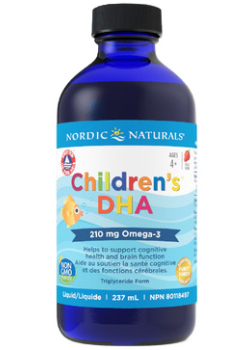
Contains healthy levels of naturally occurring vitamins A and D
Enhanced with strawberry essence for a great taste kids love
Provides vital brain nutrient: DHA
Contains only naturally existing vitamins A & D
Molecularly distilled for purity
Quantity
Couldn't load pickup availability
Children's DHA Liquid (Strawberry) - 237ml
$61.19
Nordic Naturals EFA Children's DHA Liquid (Strawberry) - 237ml is a dietary supplement in liquid form, intended for adults as part of a daily wellness routine.
CHILDREN'S DHA LIQUID FROM NORDIC NATURALS Kids everywhere love Nordic Naturals strawberry-flavored Children's DHA. Made entirely from Arctic cod liver oil, these products are rich in the omega-3 DHA. DHA is essential for the proper development of the brain, eyes, and nervous and immune systems. Children's DHA also contains healthy levels of 100% natural vitamins A and D. LARGER, MONEY SAVING SIZE! [LIQUID]
Each 1/4 teaspoon provides:
Cod Liver Oil (from Arctic Cod) 1117mg
DHA 125mg
EPA 85mg
Non-Medicinal Ingredients:
Natural strawberry flavour, Vitamin E, Rosemary extract
Important Information:
This product contains vitamin E from refined soy bean oil. Thi sproduct does not contain gluten, milk derivotives, or artificial colouring or flavour.
Dosage
Children aged 4 to 18 - 1/4 teaspoon daily, with food, or as directed by your health care professional or pharmacist.
Nordic Naturals fish oils are sustainably sourced, impeccably fresh, and purified with solvent-free technologies. Most importantly, all are delivered in the triglyceride molecular form, the form naturally found in fish. Nordic Naturals ProEFA 369 Omega Essential Fatty Acid supports a healthy immune system and joint flexibility offering a healthy balance of omegas 3, 6, and 9.
Children's DHA - Supports Memory, Learning and Visual Development
GENERAL NUTRIENT SUPPORT
Given the popularity of fat free and low fat foods in today's marketplace, the typical American diet is often deficient in the "good" fatsthe "essential" fats. Omega-3 essential fatty acids derived from fish are known to influence human health, and are essential for growth and development throughout all stages of human life.
Strong science has contributed to healthy gains for the
fish oil
marketplace as the benefits of Omega-3 fatty acidsmaintaining a healthy heart and healthy triglyceride levelsattract more attention in the medical community. In fact, the federal government is in the process of reviewing a health claim that may further expand the fish oil supplement market as a functional food. There is accumulating evidence to demonstrate the importance of Omega-3 fatty acids and their role as an important nutrient in maintaining a well-balanced diet, and an influence in human health.
Essential Fatty Acids
The standard North American diet is deficient in essential fatty acids, especially omega 3s. Every cell needs essential fatty acids for its cell membrane where the fats make the important barrier that lets other molecules into and out of the cell.
There are three categories of EFAs,
omega 3,
omega 6
and
omega 9. Vegetable-based
combination oils
usually contain alpha-linolenic acid, ALA, for omega 3, gamma-linolenic acid (GLA), for omega 6 and oleic acid, for omega-9. The sources of the oils are several of the following: flaxseed, borage, black currant, hemp, pumpkin seed,
primrose, sunflower or
safflower. Some combination oils include fish oils derived from fish such as herring, cod, mackerel, tuna or salmon. These oils give the added benefit of containing docosahexanoic acid, DHA, and eicosapentaenoic acid,
EPA, two other types of omega 3 fatty acids.
DHA: The Brain EFA
Docosahexanoic acid is an omega 3 essential fatty acid. It is an essential component of the brain and central nervous system. It seems to concentrate in areas where there is lots of electrical activity such as the synaptosomes, where nerve cells communicate, and the photoreceptors of the eye. This is why a deficiency of DHA can result in poor brain development, attention/deficit hyperactivity disorder, learning disorders, memory problems and poor visual development.
EPA: The Heart EPA
Eicosapentaenoic acid is an omega 3 essential fatty acid. It is an important fatty acid in the maintenance of cardiovascular health and the regulation of inflammation. EPA is a precursor to a series of chemicals whose job it is to regulate the inflammatory effects of arachidonic acid. Too much arachidonic acid leads to pain and inflammation in conditions such as arthritis. Arachidonic acid also causes inflammation in arteries and leads to the development of atherosclerotic plaques. Deficiency of EPA can result in cardiac arrhythmias,
high cholesterol
and excessive aging. EPA has been used to treat heart disease, arthritis and other inflammatory conditions.
Benefits Of Omega-3
- Reduce your risk of cardiovascular diseases.
- Improve overall heart functions.
- Reduce triglycerides and increase HDL Cholesterol ("the good cholesterol").
- Reduce inflammation in the joints and elsewhere in the body.
- Promote healthy brain function by enhancing concentration and attentiveness.
- Promotes healthy moods and a sense of well-being.
- Improve skin health including dry skin, eczema,
psoriasis.
- Improve your immune system.
Why Are They Essential?
Omega-3s (and omega-6s) are termed essential fatty acids (EFAs) because they are critical for good health. However, the body cannot make them on its own. For this reason, omega-3s must be obtained from food, thus making outside sources of these fats "essential."
Although the body needs both omega-3s and omega-6s to thrive, most people consume far more 6s than 3s. Hardly a day goes by, however, without reports of another health benefit associated with omega-3s. For this reason, many experts recommend consuming a better balance these two EFAs.
Carefully SelectedShips to the U.S.Wellness EssentialsTrusted Brands
Product Details
Children's DHA - Supports Memory, Learning and Visual Development
GENERAL NUTRIENT SUPPORT
Given the popularity of fat free and low fat foods in today's marketplace, the typical American diet is often deficient in the "good" fatsthe "essential" fats. Omega-3 essential fatty acids derived from fish are known to influence human health, and are essential for growth and development throughout all stages of human life.
Strong science has contributed to healthy gains for the
fish oil
marketplace as the benefits of Omega-3 fatty acidsmaintaining a healthy heart and healthy triglyceride levelsattract more attention in the medical community. In fact, the federal government is in the process of reviewing a health claim that may further expand the fish oil supplement market as a functional food. There is accumulating evidence to demonstrate the importance of Omega-3 fatty acids and their role as an important nutrient in maintaining a well-balanced diet, and an influence in human health.
Essential Fatty Acids
The standard North American diet is deficient in essential fatty acids, especially omega 3s. Every cell needs essential fatty acids for its cell membrane where the fats make the important barrier that lets other molecules into and out of the cell.
There are three categories of EFAs,
omega 3,
omega 6
and
omega 9. Vegetable-based
combination oils
usually contain alpha-linolenic acid, ALA, for omega 3, gamma-linolenic acid (GLA), for omega 6 and oleic acid, for omega-9. The sources of the oils are several of the following: flaxseed, borage, black currant, hemp, pumpkin seed,
primrose, sunflower or
safflower. Some combination oils include fish oils derived from fish such as herring, cod, mackerel, tuna or salmon. These oils give the added benefit of containing docosahexanoic acid, DHA, and eicosapentaenoic acid,
EPA, two other types of omega 3 fatty acids.
DHA: The Brain EFA
Docosahexanoic acid is an omega 3 essential fatty acid. It is an essential component of the brain and central nervous system. It seems to concentrate in areas where there is lots of electrical activity such as the synaptosomes, where nerve cells communicate, and the photoreceptors of the eye. This is why a deficiency of DHA can result in poor brain development, attention/deficit hyperactivity disorder, learning disorders, memory problems and poor visual development.
EPA: The Heart EPA
Eicosapentaenoic acid is an omega 3 essential fatty acid. It is an important fatty acid in the maintenance of cardiovascular health and the regulation of inflammation. EPA is a precursor to a series of chemicals whose job it is to regulate the inflammatory effects of arachidonic acid. Too much arachidonic acid leads to pain and inflammation in conditions such as arthritis. Arachidonic acid also causes inflammation in arteries and leads to the development of atherosclerotic plaques. Deficiency of EPA can result in cardiac arrhythmias,
high cholesterol
and excessive aging. EPA has been used to treat heart disease, arthritis and other inflammatory conditions.
Benefits Of Omega-3
- Reduce your risk of cardiovascular diseases.
- Improve overall heart functions.
- Reduce triglycerides and increase HDL Cholesterol ("the good cholesterol").
- Reduce inflammation in the joints and elsewhere in the body.
- Promote healthy brain function by enhancing concentration and attentiveness.
- Promotes healthy moods and a sense of well-being.
- Improve skin health including dry skin, eczema,
psoriasis.
- Improve your immune system.
Why Are They Essential?
Omega-3s (and omega-6s) are termed essential fatty acids (EFAs) because they are critical for good health. However, the body cannot make them on its own. For this reason, omega-3s must be obtained from food, thus making outside sources of these fats "essential."
Although the body needs both omega-3s and omega-6s to thrive, most people consume far more 6s than 3s. Hardly a day goes by, however, without reports of another health benefit associated with omega-3s. For this reason, many experts recommend consuming a better balance these two EFAs.
🌿
Daily Wellness
Easy to add to your everyday health routine.
✅
Carefully Selected
Chosen with quality and customer needs in mind.
💊
Simple to Use
Designed for convenient daily supplementation.
🚚
Ships to the U.S.
Fast, reliable shipping to U.S. customers.
Choosing a selection results in a full page refresh.