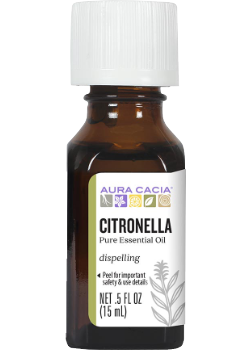
Aura Cacia Citronella Pure Essential Oil (Dispelling) - 15ml is a dietary supplement in oil form, intended for adults as part of a daily wellness routine.
Especially great for outdoor use, citronella (Cymbopogon nardus) essential oil from Aura Cacia cleanses the airspace and protects from pesky annoyances through sprays, diffusions or body lotions and balms. Aura Cacia Organic Citronella Essential Oil comes from Sri Lanka. The oil is distilled from the entire plant, a perennial grass which is harvested 3 to 5 times a year. [LIQUID]
Ingredients:
Cymbopogon winterianus (citronella) oil
Important Information:
If pregnant, suffering from any medical condition, or taking medication, consult a health care practitioner before use. Dilute properly. May irritate skin and is not for internal use. Keep out of reach of children
Dosage
For aromatherapy use. For all other uses, carefully dilute with a carriers such as skin care oil, unscented liquid soap or lotion, or witch hazel extract. Follow the dilution guide on the bottle.
Essential Oils That Nurture Body, Mind & Spirit
Aura Cacia offers an extensive selection of high quality essential oils and aromatherapy products for all ages. They offer certified organic and fair trade products when they can. Otherwise, Aura Cacia uses their very own Well Earth ethical and sustainable sourcing program developed by Frontier Co-op. They have also established the Aura Cacia 1% Organic Fund in which they donate 1% of sales from organic products to organic farmers and their communities. Aura Cacia sources their ingredients directly so that personal relationships can be developed with farmers and so they can get the best sources available. Founded in 1982, you can trust the quality Aura Cacia offers in all your must have essential oils and aromatherapy goods.
Citronella java (Citronella winterianus) essential oil has a lemony aroma and cleansing, protecting properties. It’s great for soothing body care blends.
What’s The Difference Between Citronella Java Essential Oil And Ceylon Citronella Essential Oil?
Citronella java essential oil has a slightly sweeter aroma and comes from Indonesia — specifically Sumatra and the main island of Java. It is distilled from a grass that, when cut, keeps producing. The slightly less sweet Ceylon citronella comes from Sri Lanka.
CITRONELLA ESSENTIAL OIL
Citronella is a popular essential oil and come Summer time, it's very high demand for its' fresh, citrusy scent.
Citronella oil
has many purposes and can make a great natural household cleaner or be very invigorating when used in your home diffuser.
PLANT INFORMATION
Plant History
Plant History When citronella was first discovered, it was often used as an insect repellant Authentic citronella plants are a grass plant formally known as Cymbopogon
nardus or Cymbopogon winterianus. The plant grows in warmer Asian climates such as, Sri Lanka and Java. Once citronella started being used commercially, the rest of Indonesia, Burma, India & Sri Lanka started to grow the plant quite rapidly and this is where most of the worlds citronella oils come from today. Indonesians would also use Citronella plant as a flavour enhancer in their food, much like Thai's use lemongrass. As beneficial as citronella can be, like the
tea tree
plant, the citronella plant is considered an invasive species.
Botanical Information
Citronella is a grass plant that's part of the Poaceae family that can grow up to 5 feet in height and 3 feet wide. While it grows long grass -like blades and heavily resembles lemongrass, citronella has a red coloured stem, while lemongrass is fully green. It's also interesting to note, that many plants that are sold as citronella are in fact a
geranium
plant that's cross mixed with citronella and looks nothing like the authentic plant. True citronella plants grow long grass stems, while the crossbreed's grow a textured foliage and don't contain the citronella oil that's used in
aromatherapy.
Growing Information
Citronella thrives well all year round in warmer climates, but can survive in colder climates as an annual or if planted indoors. The soil used to grow this plant Essential Oil should be well draining since it must be watered and fertilized often. It's also important to note that this plant should be placed in an area that receives 6-8 hours of sunlight, too much sun may dry out the plant.
Parts Used
The stems and grass blades from citronella plants are used. The grass is used in oil extraction and the base of the stems are used in certain culinary dishes.
OIL INFORMATION
Extraction Method
Citronella oil is extracted from either citronella species (Cymbopogon nardus/Cymbopogon winterianus) through steam distillation, as are most
essential oils. The grass is placed in a chamber of the steaming still and as the steam heats up, it pulls the essential oil out of the leaves. The steam and oil then travel through the apparatus and when they reach a holding chamber, the temperature cools, causing it to re -liquify. The mixture is then carried through to the separator and the oil is siphoned off the water and used in essential oils, while the fragrant water is commonly used to scent products.
Active Ingredients
The main active components that make up citronella oil from Cymbopogon nardus are; Citronella, Geraniol, Limonene and Methyl Isoeugenol. The active components that make up citronella oil from Cymbopogon winterianus are; Geranyl Acetate, Limonene and higher percentages of Citronella] and Geraniol.
APPLICATIONS
Muscle Spasm Relief
Citronella is very effective at stimulating the body and keeping optimal blood flow therefore, it can help relieve muscle spasms and aches. Simply:
- Mix 1 drop citronella oil with 2 tbsp of your favourite unscented body cream and rub on muscles or all over a tired body.
- Mix 2 drops citronella oil with 20 drops
almond oil
and rub into muscles.
- Mix 2 drops citronella oil with 1 cup of water. Soak cloth in mixture, wring it out and wrap cloth around muscle for 30 minutes.
Body Freshener
Citronella's antiseptic and stimulating qualities make it effective at detoxing the body and fighting unpleasant body odour.
- Mix 3 drops citronella oil in a warm bath and blend oil into water. Soak for 30 minutes to an hour to pull out toxins and refresh your body.
- Mix 2 drops citronella oil with 20 drops
tamanu oil
in a roller ball and apply to underarms as necessary.
- In a spray bottle mix 1 drop citronella oil with 3 drops
lavender
oil and 10 drops
jojoba oil. Fill bottle with water, shake and use as a body mist when needed.
- Mix 1 drop citronella oil with 2 tbsp unscented
body lotion
or cream and rub all over, avoiding sensitive areas.
Cautions:
It is not recommended to inhale Citronella oil. When not diluted properly, essential oils can cause severe skin irritation, gastrointestinal upset and even liver damage in the long term. If you have pets or children, make sure you’re using essential oils that have been deemed safe to use around them. Consult a health care practitioner before using while pregnant or breastfeeding. Essential oils need to be properly diluted before topical application.
Carefully SelectedShips to the U.S.Wellness EssentialsTrusted Brands
Product Details
Citronella java (Citronella winterianus) essential oil has a lemony aroma and cleansing, protecting properties. It’s great for soothing body care blends.
What’s The Difference Between Citronella Java Essential Oil And Ceylon Citronella Essential Oil?
Citronella java essential oil has a slightly sweeter aroma and comes from Indonesia — specifically Sumatra and the main island of Java. It is distilled from a grass that, when cut, keeps producing. The slightly less sweet Ceylon citronella comes from Sri Lanka.
CITRONELLA ESSENTIAL OIL
Citronella is a popular essential oil and come Summer time, it's very high demand for its' fresh, citrusy scent.
Citronella oil
has many purposes and can make a great natural household cleaner or be very invigorating when used in your home diffuser.
PLANT INFORMATION
Plant History
Plant History When citronella was first discovered, it was often used as an insect repellant Authentic citronella plants are a grass plant formally known as Cymbopogon
nardus or Cymbopogon winterianus. The plant grows in warmer Asian climates such as, Sri Lanka and Java. Once citronella started being used commercially, the rest of Indonesia, Burma, India & Sri Lanka started to grow the plant quite rapidly and this is where most of the worlds citronella oils come from today. Indonesians would also use Citronella plant as a flavour enhancer in their food, much like Thai's use lemongrass. As beneficial as citronella can be, like the
tea tree
plant, the citronella plant is considered an invasive species.
Botanical Information
Citronella is a grass plant that's part of the Poaceae family that can grow up to 5 feet in height and 3 feet wide. While it grows long grass -like blades and heavily resembles lemongrass, citronella has a red coloured stem, while lemongrass is fully green. It's also interesting to note, that many plants that are sold as citronella are in fact a
geranium
plant that's cross mixed with citronella and looks nothing like the authentic plant. True citronella plants grow long grass stems, while the crossbreed's grow a textured foliage and don't contain the citronella oil that's used in
aromatherapy.
Growing Information
Citronella thrives well all year round in warmer climates, but can survive in colder climates as an annual or if planted indoors. The soil used to grow this plant Essential Oil should be well draining since it must be watered and fertilized often. It's also important to note that this plant should be placed in an area that receives 6-8 hours of sunlight, too much sun may dry out the plant.
Parts Used
The stems and grass blades from citronella plants are used. The grass is used in oil extraction and the base of the stems are used in certain culinary dishes.
OIL INFORMATION
Extraction Method
Citronella oil is extracted from either citronella species (Cymbopogon nardus/Cymbopogon winterianus) through steam distillation, as are most
essential oils. The grass is placed in a chamber of the steaming still and as the steam heats up, it pulls the essential oil out of the leaves. The steam and oil then travel through the apparatus and when they reach a holding chamber, the temperature cools, causing it to re -liquify. The mixture is then carried through to the separator and the oil is siphoned off the water and used in essential oils, while the fragrant water is commonly used to scent products.
Active Ingredients
The main active components that make up citronella oil from Cymbopogon nardus are; Citronella, Geraniol, Limonene and Methyl Isoeugenol. The active components that make up citronella oil from Cymbopogon winterianus are; Geranyl Acetate, Limonene and higher percentages of Citronella] and Geraniol.
APPLICATIONS
Muscle Spasm Relief
Citronella is very effective at stimulating the body and keeping optimal blood flow therefore, it can help relieve muscle spasms and aches. Simply:
- Mix 1 drop citronella oil with 2 tbsp of your favourite unscented body cream and rub on muscles or all over a tired body.
- Mix 2 drops citronella oil with 20 drops
almond oil
and rub into muscles.
- Mix 2 drops citronella oil with 1 cup of water. Soak cloth in mixture, wring it out and wrap cloth around muscle for 30 minutes.
Body Freshener
Citronella's antiseptic and stimulating qualities make it effective at detoxing the body and fighting unpleasant body odour.
- Mix 3 drops citronella oil in a warm bath and blend oil into water. Soak for 30 minutes to an hour to pull out toxins and refresh your body.
- Mix 2 drops citronella oil with 20 drops
tamanu oil
in a roller ball and apply to underarms as necessary.
- In a spray bottle mix 1 drop citronella oil with 3 drops
lavender
oil and 10 drops
jojoba oil. Fill bottle with water, shake and use as a body mist when needed.
- Mix 1 drop citronella oil with 2 tbsp unscented
body lotion
or cream and rub all over, avoiding sensitive areas.
Cautions:
It is not recommended to inhale Citronella oil. When not diluted properly, essential oils can cause severe skin irritation, gastrointestinal upset and even liver damage in the long term. If you have pets or children, make sure you’re using essential oils that have been deemed safe to use around them. Consult a health care practitioner before using while pregnant or breastfeeding. Essential oils need to be properly diluted before topical application.