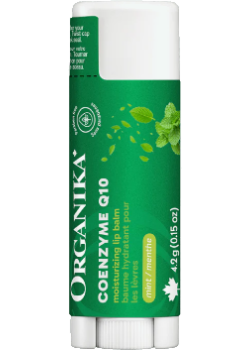
Organika CoQ10 Lip Balm offers a dry, chapped lips a luxurious layer of natural vitamin E with a touch of natural mint flavour. CoQ10 offers the anti-aging factor that everyone is looking for to keep their lips supple, smooth and in great shape! [LIP BALM STICK]
Contains:
Lanolin, Beeswax, Mentha Piperita, Tocopherol, Ubiquinone
Important Information:
Do not eat this product.
Dosage
Apply to chapped, dry lips as needed.
Nourishment Rooted in Nature - 12 New Added
Organika, formulators of Canada’s best-selling Collagen and marine collagen and Bone Broth supports skin and joint health. Organika's health products also include; Organika spirulina, Chlorella, Curcumin to support inflammation, Organika Enhanced Collagen Protein, and Adaptogens to provide balance. Shop Organika here at ca for quality, Canadian-made supplements.
Peppermint
Peppermint is found in many candies, mints and gums that line the supermarket checkout. Its fresh, clean taste and smell are a favourite for breath freshening products. Did you know that peppermint does more than freshen your breath after you eat? Medicinally it is known as a carminative, an herb that decreases gas and bloating. It also decreases spasms in the digestive tract that cause diarrhea and symptoms characterizing
irritable bowel
syndrome.
Its antispasmodic activity is due to the blockage of
calcium
channels in intestinal muscle cells. By preventing calcium exchange muscles do not contract. Peppermint is also used in aromatherapy as an energizing agent.
Peppermint can be purchased as a loose herb, encapsulated herb, enteric-coated oil tablet or essential oil. The loose herb is a popular tea. Peppermint may be a part of formulas for soothing digestion. The oil is often added to candy, gum and used in baths. The essential oil of peppermint is a highly concentrated substance. When using essential oils they can be diluted in carrier oil, such as olive, almond or any cooking oil.
Essential oils can be toxic when taken internally therefore, Use the essential oil of peppermint cautiously. Do not give peppermint to individuals with gallstones, biliary obstruction, hiatal hernia or liver damage. Do not give
peppermint oil
to children, pregnant women, nursing mothers or individuals with allergies to the mint family. Do not take peppermint oil concurrently with calcium channel blockers.
vitamin E
vitamin E
is a group of fat-soluble vitamins that act as
antioxidants
and thus neutralize free radicals. Free radicals are unstable molecules with an unpaired electron that are extremely reactive and damage surrounding cell membranes, fats, and fat soluble vitamins and nutrients. We encounter free radicals through environmental exposures, such as cigarette smoke, air pollution, and ultraviolet radiation from the sun (UV rays).
In doses less than 150IU per day, Vitamin E has been shown to increase life-span (by reducing all-cause mortality). Vitamin E is well known for the prevention of cardiovascular disease in a few different ways. First, it decreases platelet aggregation (clot formation), thus allowing the blood to flow more freely and bring more oxygen to the tissues. Also, as an antioxidant, vitamin E protects our artery walls from damage and prevents the oxidation of LDL cholesterol, both of which contribute to arterial plaque formation when left untreated.
Antioxidant properties allow vitamin E to be useful in potentially helping to support optimal cell growth by reducing free radical damage to cellular genetic material. Vitamin E is also believed to be an anti-aging vitamin because its antioxidant effects reduce the cell damage that can lead to visible aging. Cataracts are caused by free radical damage of the lens of the eye and therefore vitamin E can help to prevent this damage. It has also been shown to be anti-inflammatory by inhibiting inflammatory pathways in the body. Vitamin E has been found to be protective against Alzheimer's disease, atherosclerosis, and diabetes mediated liver damage, as well as
PMS. It is also used to treat many existing conditions including infertility, fibrocystic breasts, anemia, and topically for scars.
Subtypes of Vitamin E
There are two groups of compounds that make up vitamin E: tocopherols and
tocotrienols. Each group contains four different forms that are named by the Greek letters alpha, beta, gamma and delta. The most biologically prevalent of these forms is the naturally sourced d-alpha-tocopherol.
Although previously overlooked due to their lower levels, recent research has brought tocotrienols into the spotlight. It has been found that tocotrienols possess powerful neuroprotective, and cholesterol-lowering properties outside those exhibited by tocopherols.
Recent research suggests that the various forms of vitamin E are not redundant in their health benefits, and thus a supplement containing all subgroups of both tocopherols and tocotrienols is preferred for general supplementation, although specific conditions can be targeted with certain subgroups.
Natural vs. Synthetic Vitamin E
Synthetic alpha-tocopherols are listed as "dl" (dl-alpha-tocopherols), as opposed to their natural d-alpha-tocopherol counterparts. These synthetic mixtures contain equal amounts of eight different stereoisomers of alpha-tocopherol, four of which are absorbed, and only one of which is the naturally occurring d-alpha-tocopherol. Thus, although synthetic alpha-tocopherols are less expensive, they are half as active by dose as naturally sourced options and may have different side-effects (see below).
Formulations
Vitamin E is available in an oil or water (dry tablet) base. Because vitamin E is fat-soluble, it is preferable to have it in an oil base to promote absorption. The water-based supplement is beneficial for those who do not digest fats well, for example those with gallbladder dysfunction, and those whose conditions are aggravated by fats, for example acne sufferers.
Carefully SelectedShips to the U.S.Wellness EssentialsTrusted Brands
Product Details
Peppermint
Peppermint is found in many candies, mints and gums that line the supermarket checkout. Its fresh, clean taste and smell are a favourite for breath freshening products. Did you know that peppermint does more than freshen your breath after you eat? Medicinally it is known as a carminative, an herb that decreases gas and bloating. It also decreases spasms in the digestive tract that cause diarrhea and symptoms characterizing
irritable bowel
syndrome.
Its antispasmodic activity is due to the blockage of
calcium
channels in intestinal muscle cells. By preventing calcium exchange muscles do not contract. Peppermint is also used in aromatherapy as an energizing agent.
Peppermint can be purchased as a loose herb, encapsulated herb, enteric-coated oil tablet or essential oil. The loose herb is a popular tea. Peppermint may be a part of formulas for soothing digestion. The oil is often added to candy, gum and used in baths. The essential oil of peppermint is a highly concentrated substance. When using essential oils they can be diluted in carrier oil, such as olive, almond or any cooking oil.
Essential oils can be toxic when taken internally therefore, Use the essential oil of peppermint cautiously. Do not give peppermint to individuals with gallstones, biliary obstruction, hiatal hernia or liver damage. Do not give
peppermint oil
to children, pregnant women, nursing mothers or individuals with allergies to the mint family. Do not take peppermint oil concurrently with calcium channel blockers.
vitamin E
vitamin E
is a group of fat-soluble vitamins that act as
antioxidants
and thus neutralize free radicals. Free radicals are unstable molecules with an unpaired electron that are extremely reactive and damage surrounding cell membranes, fats, and fat soluble vitamins and nutrients. We encounter free radicals through environmental exposures, such as cigarette smoke, air pollution, and ultraviolet radiation from the sun (UV rays).
In doses less than 150IU per day, Vitamin E has been shown to increase life-span (by reducing all-cause mortality). Vitamin E is well known for the prevention of cardiovascular disease in a few different ways. First, it decreases platelet aggregation (clot formation), thus allowing the blood to flow more freely and bring more oxygen to the tissues. Also, as an antioxidant, vitamin E protects our artery walls from damage and prevents the oxidation of LDL cholesterol, both of which contribute to arterial plaque formation when left untreated.
Antioxidant properties allow vitamin E to be useful in potentially helping to support optimal cell growth by reducing free radical damage to cellular genetic material. Vitamin E is also believed to be an anti-aging vitamin because its antioxidant effects reduce the cell damage that can lead to visible aging. Cataracts are caused by free radical damage of the lens of the eye and therefore vitamin E can help to prevent this damage. It has also been shown to be anti-inflammatory by inhibiting inflammatory pathways in the body. Vitamin E has been found to be protective against Alzheimer's disease, atherosclerosis, and diabetes mediated liver damage, as well as
PMS. It is also used to treat many existing conditions including infertility, fibrocystic breasts, anemia, and topically for scars.
Subtypes of Vitamin E
There are two groups of compounds that make up vitamin E: tocopherols and
tocotrienols. Each group contains four different forms that are named by the Greek letters alpha, beta, gamma and delta. The most biologically prevalent of these forms is the naturally sourced d-alpha-tocopherol.
Although previously overlooked due to their lower levels, recent research has brought tocotrienols into the spotlight. It has been found that tocotrienols possess powerful neuroprotective, and cholesterol-lowering properties outside those exhibited by tocopherols.
Recent research suggests that the various forms of vitamin E are not redundant in their health benefits, and thus a supplement containing all subgroups of both tocopherols and tocotrienols is preferred for general supplementation, although specific conditions can be targeted with certain subgroups.
Natural vs. Synthetic Vitamin E
Synthetic alpha-tocopherols are listed as "dl" (dl-alpha-tocopherols), as opposed to their natural d-alpha-tocopherol counterparts. These synthetic mixtures contain equal amounts of eight different stereoisomers of alpha-tocopherol, four of which are absorbed, and only one of which is the naturally occurring d-alpha-tocopherol. Thus, although synthetic alpha-tocopherols are less expensive, they are half as active by dose as naturally sourced options and may have different side-effects (see below).
Formulations
Vitamin E is available in an oil or water (dry tablet) base. Because vitamin E is fat-soluble, it is preferable to have it in an oil base to promote absorption. The water-based supplement is beneficial for those who do not digest fats well, for example those with gallbladder dysfunction, and those whose conditions are aggravated by fats, for example acne sufferers.
🌿
Daily Wellness
Easy to add to your everyday health routine.
✅
Carefully Selected
Chosen with quality and customer needs in mind.
💊
Simple to Use
Designed for convenient daily supplementation.
🚚
Ships to the U.S.
Fast, reliable shipping to U.S. customers.
Choosing a selection results in a full page refresh.