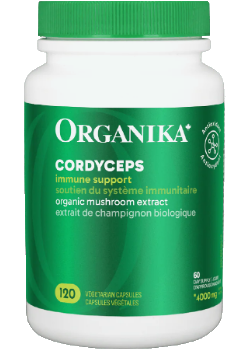
Equivalent to 2000mg of whole cordyceps mushroom powder
Helps your body adapt to stress and maintain balance
Boosts energy naturally
Supports immune system health
Ideal potency
Free from dairy, egg, artificial preservatives, colours, yeast, artificial sweeteners, wheat, soy, corn, gluten, or GMO ingredients
Quantity
Couldn't load pickup availability
Cordyceps Mushroom Extract 500mg - 120 V-Caps
$34.49
Organika Cordyceps Mushroom Extract 500mg - 120 V-Caps is a dietary supplement in capsule form, intended for adults as part of a daily wellness routine.
Cordyceps is considered by Traditional Chinese Medicine to be a cure-all since its health benefits range from supporting liver and nerve function, to improving energy production, enhancing oxygen utilization and increasing circulation. Organkia's Cordyceps Mushrooms will provide you with ingredients you can trust, each capsule is packed with the purest form of Cordyceps Mushroom Extract equivalent to 2000mg of dried Cordyceps stroma powder. This natural adaptogen helps support endurance and stamina, as well as strengthening your body's natural defences, making it an ideal choice for individuals leading active lifestyles or those looking for a natural energy boost and immune support.[V-CAPS]
Each capsule contains:
Organic Cordyceps 4:1 Extract (Ophiocordyceps sinensis, Stroma) (Equivalent to 2000 mg dried Cordyceps stroma powder) 500 mg
Non-Medicinal Ingredients:
Microcrystalline Cellulose, Magnesium Stearate (Non-GMO Vegetable Source), Hypromellose (Vegetarian Capsule)
Important Information:
Consult a health care practitioner if symptoms persist or worsen. Consult a health care practitioner prior to use if you are pregnant or breast feeding; or if you have exterior pathogens/conditions. Keep out of reach of children. Sealed for your protection. Do not accept product if safety seal is broken. Store in a cool, dry place to preserve freshness.
Dosage
Take 2 capsules 1 time per day.
Nourishment Rooted in Nature - 12 New Added
Organika, formulators of Canada’s best-selling Collagen and marine collagen and Bone Broth supports skin and joint health. Organika's health products also include; Organika spirulina, Chlorella, Curcumin to support inflammation, Organika Enhanced Collagen Protein, and Adaptogens to provide balance. Shop Organika here at ca for quality, Canadian-made supplements.
IMMUNE SYSTEM HEALTH
The immune system is the police force of the body. It is a complex system of cells that defend the body from invading organisms, regulate inflammation and control abnormal cell growth. Many organs are involved in the immune response, the bone marrow, lymphatic system,
thymus, liver and spleen. Bone marrow produces red blood cells, white blood cells and platelets.
The spleen is a location where immune cells can monitor the blood for foreign matter. It also speeds up red blood cell production and activates blood clotting. The liver can increase body temperature and induce sweating to help fight off infections. The thymus produces B cells, which make antibodies, and T cells, which are part of the immune response.
The immune system is capable of fighting off intruders and remembering them so that they are killed off quickly if they invade again. The immune system must be able to differentiate self from non-self in order to know what to attack. If it does not recognize the body's own tissue than autoimmune diseases occurs.
Physical and emotional stress has been shown in studies to depress the amount of circulating immune cells. Examples of possible stressors are excessive exercise, surgery, a long illness, and loss of a job or death of a loved one. The sympathetic nervous system is activated by stress and causes increased heart rate and blood pressure, and a heightening of the body's senses. It decreases the functioning of systems that are not essential for fighting or fleeing a situation. This includes immunity. Stress also causes increased inflammation and a build up of damaging agents called free radicals. These substances can interfere with normal immune functioning.
Poor dietary habits inhibit the immune system by creating deficiencies in
protein, vitamins and minerals. A healthy diet, with sufficient protein intake, supports the immune system because the immune cells are made of protein and are in a constant state of renewal. The immune cells use a variety of vitamins and minerals to carry out their jobs. The most important nutrients are
vitamin A, vitamin B6,
vitamin C,
vitamin E,
selenium,
zinc
and essential fatty acids. For example, vitamin C strengthens white blood cells and prevents the multiplication of bacteria and viruses. Deficiency of any one of these nutrients impairs the immune response.
Dietary sugar, especially white sugar, has been directly linked to depression of the immune system, immediately after its consumption. One study showed that eating three and a half oz. of simple sugar reduced the ability of white blood cells to destroy bacteria. Sugar also provides fuel for invading organisms, like bacteria and fungus, thus strengthening their attack.
Choose lean meats, fermented dairy products and legumes to fill your daily protein requirements. Supplement with protein powder or
amino acid complex
if you cannot consume enough protein. Eat fermented products to increase the amount of friendly bacteria in your system. A diet high in raw fruits and vegetables provides a good source of vitamins, minerals and
antioxidants
for the immune system. Onions and garlic are good sources of substances that make up anti-inflammatory compounds and help to kill microbes. Flaxseed and fish oils contain essential fatty acids that are anti-inflammatory. Avoid excess animal products, dairy products, processed foods, white flour and sugar products all of which decrease the immune system.
Optimize Your Immune System by:
- Consuming a nutrient-rich diet from a wide variety of foods
- Exercising regularly
- Maintaining regular sleeping habits
- Limiting exposure to environment toxins and medications
- Supplement with immune supporting and nutrients
Carefully SelectedShips to the U.S.Wellness EssentialsTrusted Brands
Product Details
IMMUNE SYSTEM HEALTH
The immune system is the police force of the body. It is a complex system of cells that defend the body from invading organisms, regulate inflammation and control abnormal cell growth. Many organs are involved in the immune response, the bone marrow, lymphatic system,
thymus, liver and spleen. Bone marrow produces red blood cells, white blood cells and platelets.
The spleen is a location where immune cells can monitor the blood for foreign matter. It also speeds up red blood cell production and activates blood clotting. The liver can increase body temperature and induce sweating to help fight off infections. The thymus produces B cells, which make antibodies, and T cells, which are part of the immune response.
The immune system is capable of fighting off intruders and remembering them so that they are killed off quickly if they invade again. The immune system must be able to differentiate self from non-self in order to know what to attack. If it does not recognize the body's own tissue than autoimmune diseases occurs.
Physical and emotional stress has been shown in studies to depress the amount of circulating immune cells. Examples of possible stressors are excessive exercise, surgery, a long illness, and loss of a job or death of a loved one. The sympathetic nervous system is activated by stress and causes increased heart rate and blood pressure, and a heightening of the body's senses. It decreases the functioning of systems that are not essential for fighting or fleeing a situation. This includes immunity. Stress also causes increased inflammation and a build up of damaging agents called free radicals. These substances can interfere with normal immune functioning.
Poor dietary habits inhibit the immune system by creating deficiencies in
protein, vitamins and minerals. A healthy diet, with sufficient protein intake, supports the immune system because the immune cells are made of protein and are in a constant state of renewal. The immune cells use a variety of vitamins and minerals to carry out their jobs. The most important nutrients are
vitamin A, vitamin B6,
vitamin C,
vitamin E,
selenium,
zinc
and essential fatty acids. For example, vitamin C strengthens white blood cells and prevents the multiplication of bacteria and viruses. Deficiency of any one of these nutrients impairs the immune response.
Dietary sugar, especially white sugar, has been directly linked to depression of the immune system, immediately after its consumption. One study showed that eating three and a half oz. of simple sugar reduced the ability of white blood cells to destroy bacteria. Sugar also provides fuel for invading organisms, like bacteria and fungus, thus strengthening their attack.
Choose lean meats, fermented dairy products and legumes to fill your daily protein requirements. Supplement with protein powder or
amino acid complex
if you cannot consume enough protein. Eat fermented products to increase the amount of friendly bacteria in your system. A diet high in raw fruits and vegetables provides a good source of vitamins, minerals and
antioxidants
for the immune system. Onions and garlic are good sources of substances that make up anti-inflammatory compounds and help to kill microbes. Flaxseed and fish oils contain essential fatty acids that are anti-inflammatory. Avoid excess animal products, dairy products, processed foods, white flour and sugar products all of which decrease the immune system.
Optimize Your Immune System by:
- Consuming a nutrient-rich diet from a wide variety of foods
- Exercising regularly
- Maintaining regular sleeping habits
- Limiting exposure to environment toxins and medications
- Supplement with immune supporting and nutrients
🌿
Daily Wellness
Easy to add to your everyday health routine.
✅
Carefully Selected
Chosen with quality and customer needs in mind.
💊
Simple to Use
Designed for convenient daily supplementation.
🚚
Ships to the U.S.
Fast, reliable shipping to U.S. customers.
Choosing a selection results in a full page refresh.