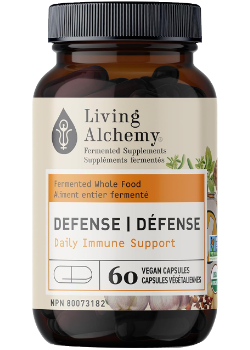
Defense from Living Alchemy has been specially formulated to provide therapeutic nutrients from fermented, activated herbs including oregano, thyme, garlic & clove plus shiitake mushroom. Promoting immune support, Defense has superior bio-availability to help relieve cold and flu symptoms. [VCAPS]
Each capsule contains:
Fermented Herb Blend
Organic Oregano (Origanum vulgare, leaf) 33.3mg
Organic Thyme (Thymus vulgaris, leaf) 33.3mg
Organic Garlic (Allium sativum, clove) 33.3mg
Organic Ginger (Zingiber officinale, root) 26.6mg
Organic Cloves (Eugenia caryophyllata, flower bud) 6.6mg
Supporting Mushroom
Organic Shiitake Mushroom (Lentinula edodes, mycelia and fruiting body) 66.6mg
Non-medicinal Ingredients:
Organic Herbal Base (Organic Alfalfa Leaf, Organic Fennel Seed, Organic Nettle Leaf, Organic Parsley Leaf), Organic Pullulan Capsule
Important Information:
Free from excipients, binders, additives, and any artificial ingredients or chemicals at every stage of manufacture. Gluten and dairy free. Suitable for vegetarians and vegans. Consult a healthcare practitioner prior to use if you are taking blood thinners (anticoagulants), have diabetes, are pregnant or breastfeeding or if symptoms persist or worsen. Hypersensitivity/allergy can occur; in which case, discontinue use.
Dosage
Adults: Take 1-3 capsules daily with or without food.
Canadian-Made Fermented Whole Food Supplements
Living Alchemy goal is to alleviate symptoms and provide a natural solution with the fermented organic whole food supplements. Always using 100% certified organic, non-GMO verified foods, herbs and mushrooms, Living Alchemy is committed to making their products as clean as possible.
Immune System
Reduced in activity by stress, nutrient deficiencies and toxins in the body, your immune system response can be optimized with the right food, supplements and approach to life...
The immune system is the police force of the body. It is a complex system of cells that defend the body from invading organisms, regulate inflammation and control abnormal cell growth. Many organs are involved in the immune response, the bone marrow, lymphatic system,
thymus, liver and spleen. Bone marrow produces red blood cells, white blood cells and platelets.
The spleen is a location where immune cells can monitor the blood for foreign matter. It also speeds up red blood cell production and activates blood clotting. The liver can increase body temperature and induce sweating to help fight off infections. The thymus produces B cells, which make antibodies, and T cells, which are part of the immune response.
The immune system is capable of fighting off intruders and remembering them so that they are killed off quickly if they invade again. The immune system must be able to differentiate self from non-self in order to know what to attack. If it does not recognize the body’s own tissue than autoimmune diseases occurs.
The immune system can be compromised by:
- Physical or emotional stress
- Poor dietary habits
- Exposure to chemicals and medications
- Lack of sleep
- Deficiency in friendly bacteria
- Lack of physical activity
Physical and emotional stress has been shown in studies to depress the amount of circulating immune cells. Examples of possible stressors are excessive exercise, surgery, a long illness, and loss of a job or death of a loved one. The sympathetic nervous system is activated by stress and causes increased heart rate and blood pressure, and a heightening of the body’s senses. It decreases the functioning of systems that are not essential for fighting or fleeing a situation. This includes immunity. Stress also causes increased inflammation and a build –up of damaging agents called free radicals. These substances can interfere with normal immune functioning.
Poor dietary habits inhibit the immune system by creating deficiencies in
protein, vitamins and minerals. A healthy diet, with sufficient protein intake, supports the immune system because the immune cells are made of protein and are in a constant state of renewal. The immune cells use a variety of vitamins and minerals to carry out their jobs. The most important nutrients are
vitamin A, vitamin B6,
vitamin C,
vitamin E,
selenium,
zinc
and essential fatty acids. For example, vitamin C strengthens white blood cells and prevents the multiplication of bacteria and viruses. Deficiency of any one of these nutrients impairs the immune response.
Dietary sugar, especially white sugar, has been directly linked to depression of the immune system, immediately after its consumption. One study showed that eating three and a half oz. of simple sugar reduced the ability of white blood cells to destroy bacteria. Sugar also provides fuel for invading organisms, like bacteria and fungus, thus strengthening their attack.
Sleep is an essential component of our body’s repair mechanisms. During sleep the body in an anabolic, or building, state.
Insomnia
prevents the renewal of immune cells. Over time this leads to a decrease in immune functioning. Lack of sleep also stresses the body and usually occurs with an increase in sympathetic nervous system function. The immune system is depressed by the mechanism described in previous paragraphs.
Many medications, especially cortisone and antibiotics, affect the immune system, especially when taken for long periods of time. Cortisone suppresses the bone marrow and antibiotics kill beneficial bacteria. Toxic substances, including excessive alcohol and heavy metals, depress the function of the immune system or cause immune cells to prematurely die.
Some of the most important players in the immune system are not part of our own body. Friendly bacteria, often called
probiotics, line the digestive tract, sinuses and other mucosal surfaces. On all of the surfaces they prevent infection with other microbes.
In the digestive tract they also break down food particles and manufacture vitamins. Friendly bacteria are in a constant state of renewal. Frequent infections can be due to an imbalance of friendly bacteria. It is easy to upset this balance by improper diet or taking medications like antibiotics.
Lack of physical activity weakens the immune response by hampering the ability of immune cells to get to where they are needed.
The lymphatic channels act as highways for immune cells but they contain no musculature of their own. They depend on the activity of surrounding muscles to push the lymph fluid around the body.
Here are some conditions that commonly affect the immune system:
In a healthy system abnormal cells are destroyed by the immune system. Tumours form when the abnormal cell multiplies, unchecked by the immune system, into a mass of tissue. If the cells do not pose a threat to health they are called benign. Malignant tumours pose a threat to the body. They can damage surrounding tissues, move to other areas of the body and will grow back if removed.
Colds and flus are a part of everyday life. They are usually caused by viruses, although if left untreated, bacteria can move in and cause infection as well. Lingering or recurrent infection is a signal of an immune system that is overwhelmed.
Environmental allergies can be any substance but the most common ones are dust, pollen, animal hair, animal dander, insect bites, grasses, moulds and fungus, cleaning products and metal in costume jewelry. The immune system incorrectly views allergens as a threat to the body. When the allergen contacts a mucous membrane inflammation occurs, due to the release of chemicals such as histamine. Some researchers postulate that this condition may be due to the build-up of environmental toxins. These toxins cause an additional strain on the body’s immune system. The hyperactive system then responds inappropriately to stimuli that are normally found in the environment.
Food allergies involve antibody responses to food. Allergens can be any food substance but the most common ones are dairy products, peanuts, eggs, wheat, corn, soy, the nightshade family, food additives and preservatives and medications like penicillin and aspirin. Some researchers postulate that early introduction of foods to infants’ causes food allergies. Other reasons for food allergies are the build-up of environmental toxins and heredity.
Autoimmunity is when our natural immunity turns against us and attacks our healthy body cells. Some common autoimmune conditions are: Celiac disease, lupus,
psoriasis, Addison’s Disease, rheumatoid arthritis, multiple sclerosis, and inflammatory bowel disease.
Carefully SelectedShips to the U.S.Wellness EssentialsTrusted Brands
Product Details
Immune System
Reduced in activity by stress, nutrient deficiencies and toxins in the body, your immune system response can be optimized with the right food, supplements and approach to life...
The immune system is the police force of the body. It is a complex system of cells that defend the body from invading organisms, regulate inflammation and control abnormal cell growth. Many organs are involved in the immune response, the bone marrow, lymphatic system,
thymus, liver and spleen. Bone marrow produces red blood cells, white blood cells and platelets.
The spleen is a location where immune cells can monitor the blood for foreign matter. It also speeds up red blood cell production and activates blood clotting. The liver can increase body temperature and induce sweating to help fight off infections. The thymus produces B cells, which make antibodies, and T cells, which are part of the immune response.
The immune system is capable of fighting off intruders and remembering them so that they are killed off quickly if they invade again. The immune system must be able to differentiate self from non-self in order to know what to attack. If it does not recognize the body’s own tissue than autoimmune diseases occurs.
The immune system can be compromised by:
- Physical or emotional stress
- Poor dietary habits
- Exposure to chemicals and medications
- Lack of sleep
- Deficiency in friendly bacteria
- Lack of physical activity
Physical and emotional stress has been shown in studies to depress the amount of circulating immune cells. Examples of possible stressors are excessive exercise, surgery, a long illness, and loss of a job or death of a loved one. The sympathetic nervous system is activated by stress and causes increased heart rate and blood pressure, and a heightening of the body’s senses. It decreases the functioning of systems that are not essential for fighting or fleeing a situation. This includes immunity. Stress also causes increased inflammation and a build –up of damaging agents called free radicals. These substances can interfere with normal immune functioning.
Poor dietary habits inhibit the immune system by creating deficiencies in
protein, vitamins and minerals. A healthy diet, with sufficient protein intake, supports the immune system because the immune cells are made of protein and are in a constant state of renewal. The immune cells use a variety of vitamins and minerals to carry out their jobs. The most important nutrients are
vitamin A, vitamin B6,
vitamin C,
vitamin E,
selenium,
zinc
and essential fatty acids. For example, vitamin C strengthens white blood cells and prevents the multiplication of bacteria and viruses. Deficiency of any one of these nutrients impairs the immune response.
Dietary sugar, especially white sugar, has been directly linked to depression of the immune system, immediately after its consumption. One study showed that eating three and a half oz. of simple sugar reduced the ability of white blood cells to destroy bacteria. Sugar also provides fuel for invading organisms, like bacteria and fungus, thus strengthening their attack.
Sleep is an essential component of our body’s repair mechanisms. During sleep the body in an anabolic, or building, state.
Insomnia
prevents the renewal of immune cells. Over time this leads to a decrease in immune functioning. Lack of sleep also stresses the body and usually occurs with an increase in sympathetic nervous system function. The immune system is depressed by the mechanism described in previous paragraphs.
Many medications, especially cortisone and antibiotics, affect the immune system, especially when taken for long periods of time. Cortisone suppresses the bone marrow and antibiotics kill beneficial bacteria. Toxic substances, including excessive alcohol and heavy metals, depress the function of the immune system or cause immune cells to prematurely die.
Some of the most important players in the immune system are not part of our own body. Friendly bacteria, often called
probiotics, line the digestive tract, sinuses and other mucosal surfaces. On all of the surfaces they prevent infection with other microbes.
In the digestive tract they also break down food particles and manufacture vitamins. Friendly bacteria are in a constant state of renewal. Frequent infections can be due to an imbalance of friendly bacteria. It is easy to upset this balance by improper diet or taking medications like antibiotics.
Lack of physical activity weakens the immune response by hampering the ability of immune cells to get to where they are needed.
The lymphatic channels act as highways for immune cells but they contain no musculature of their own. They depend on the activity of surrounding muscles to push the lymph fluid around the body.
Here are some conditions that commonly affect the immune system:
In a healthy system abnormal cells are destroyed by the immune system. Tumours form when the abnormal cell multiplies, unchecked by the immune system, into a mass of tissue. If the cells do not pose a threat to health they are called benign. Malignant tumours pose a threat to the body. They can damage surrounding tissues, move to other areas of the body and will grow back if removed.
Colds and flus are a part of everyday life. They are usually caused by viruses, although if left untreated, bacteria can move in and cause infection as well. Lingering or recurrent infection is a signal of an immune system that is overwhelmed.
Environmental allergies can be any substance but the most common ones are dust, pollen, animal hair, animal dander, insect bites, grasses, moulds and fungus, cleaning products and metal in costume jewelry. The immune system incorrectly views allergens as a threat to the body. When the allergen contacts a mucous membrane inflammation occurs, due to the release of chemicals such as histamine. Some researchers postulate that this condition may be due to the build-up of environmental toxins. These toxins cause an additional strain on the body’s immune system. The hyperactive system then responds inappropriately to stimuli that are normally found in the environment.
Food allergies involve antibody responses to food. Allergens can be any food substance but the most common ones are dairy products, peanuts, eggs, wheat, corn, soy, the nightshade family, food additives and preservatives and medications like penicillin and aspirin. Some researchers postulate that early introduction of foods to infants’ causes food allergies. Other reasons for food allergies are the build-up of environmental toxins and heredity.
Autoimmunity is when our natural immunity turns against us and attacks our healthy body cells. Some common autoimmune conditions are: Celiac disease, lupus,
psoriasis, Addison’s Disease, rheumatoid arthritis, multiple sclerosis, and inflammatory bowel disease.
🌿
Daily Wellness
Easy to add to your everyday health routine.
✅
Carefully Selected
Chosen with quality and customer needs in mind.
💊
Simple to Use
Designed for convenient daily supplementation.
🚚
Ships to the U.S.
Fast, reliable shipping to U.S. customers.
Choosing a selection results in a full page refresh.