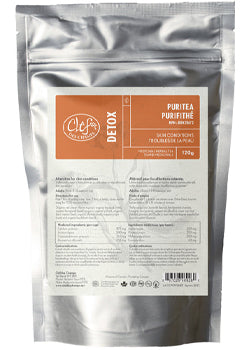
Bulk organic herbal tea with bulk savings! Clef des Champs Loose Organic Puritea is a detoxification tea designed to help skin conditions. The organic herbs used in this blend include Redclover, Burdock, Fenugreek, Rosemary, Black walnut, Plantain, Oregon grape and Buckthorn. Prepare 3-4 cups daily by pouring 1 litre of boiling water over 2 tbsp of Clef des Champs Puritea, covering and letting it steep for 10-15 minutes than filtering. Clef des Champs grows on its certified-organic farm the medicinal herbs it needs for the production of its therapeutic extracts. Red Clover is popular in Europe as a detoxification agent that targets the kidneys and liver and Burdock has been known holistically to help with boils and eczema. [LOOSE TEA]
Contains:
Organic Red Clover, Flowering Top (trifolium pratense) 875mg
Organic Burdock, Root (arctium lappa) 300mg
Organic Fenugreek, Seed (trigonella foenum-graecum 263mg
Organic Rosemary, Leaf (rosmarinus officinalis) 250mg
Organic Black walnut, Leaf (juglans nigra) 250mg
Organic Plantain, Leaf (plantago major) 250mg
Oregon Grape Wildcrafted, Root (mahonia aquifolium) 250mg
Organic Buckthorn, Bark (frangula alnus) 63mg
Important Information:
Keep out of reach of children. Consult a health care practitioner if symptoms persist, worsen, if you have diabetes or for a use longer than 2 to 3 weeks. Do not use with prescription drugs or any other health products. Do not take if you are pregnant or breastfeeding, if allergic to herbs from Asteraceae family, have oedema, a cardiovascular, kidney, liver or gallbladder disorder. Hypersensitivity or allergy is known to occur; in which case, discontinue use.
Dosage
Take 3 - 4 cups per day. Pour 1 litre of boiling water over 2 tbsp of herbs, cover and let steep for 10-15 minutes. Filter.
Herbalist Recommended Tinctures, Teas, & Capsules
Clef des Champs is a Canadian company that was founded by an herbalist in Quebec. All of their herbs are organically grown in their own garden in the Quebec mountains. The natural elements nourish each herb until it’s ready to be picked, dried and made into one of their natural formulations. Their blends offer support for many health concerns including; oral health, women’s health, immune and respiratory health, digestive health, men’s prostate health, and muscle and joint relief. Available in water-alcohol, alcohol-free, capsule, syrup or salve formula’s, Clef des Champs uses the healing power of herbs to support your needs.
DETOX 101
By: Articles by a Naturopathic Doctor (N.D.)
So you had a little too much to drink, eat and maybe even picked up some other bad habits over the holidays. Now, as a result, you're feeling sluggish, tired and lethargic? It sounds like you've come down with a bad case of what we like to call the 'holiday hangover'. But you realise that, and this is why you are considering a cleanse or detox (whichever you prefer to call it!). Often when we expose our bodies to toxins, such as too much alcohol, it is normal to feel the need to help your body rid them. However, there is a difference between tossing the word around and actually buckling down and doing it. But first let's be clear, detoxes and diets are not the same. And before you start doing your research, let's first understand that there are several detoxes that are hard on your body and will actually do more harm than good – we're here to help you do it the proper way.
But first, we know you're all asking the same thing, so we won't make you wait... DOES
Does Detoxing Work?
Yes, BUT (and it's a big but, so pay attention), not all detoxes are created equal and not all detoxes are created for all people. You also have to remember that there is a difference between dieting and detoxing – we wanted to remind you of that fact, again.
How Does a Detox Work?
A detox, short for detoxification, is the body's natural, ongoing process of neutralising or eliminating toxins from our body. What are toxins? This can be anything that can potentially harm body tissue – think of the process that leads to an ammonia, or even man-made toxins that are floating around in the environment that we ingest. Together our liver, kidneys, intestines, lungs, skin, blood and lymphatic systems work to ensure toxins are transformed to less harmful compounds and disposed from our body, a detox simply helps this process along. Did you know that the average American has over 90 toxic chemicals in their body? While this stat is scary, Dr. Oz only recommends doing a cleanse 3-4 times a year, at most.
What Is A Detox?
Let’s start with a quick definition of a detox [or detox diet] because there are so many options out there, and we couldn’t possibly address them all in one article. It's also important to understand the point of a detox diet. For the purposes of this article, we are talking about a 2-3 week (minimum) restriction of certain foods and drinks that tend to be harder on the detoxification system of the body. The detox that is referenced here may also include the addition of other herbs, vitamins, minerals or nutrients that are known to support specific organs of detoxification (which is the liver, colon, and kidneys). We are not talking about calorie restricted, or ‘juice’ diets (including the well-known
cayenne, maple syrup, and lemon water detox), nor a detox that contains heavy and harsh laxatives that keep you running to the washroom the entire life of the detox. The foods and herbs in these diets are not meant to directly cleanse the body of anything. A good detox simply aims to support the organs that are responsible for the mighty job of detoxification, and in so doing, speed up/encourage these processes more, so your body can be more effective. A detox diet/cleanse can, if done correctly, work quite well – leading to improvements in liver function, elimination processes/bowel function, clearer skin, less bloating and gas, improvements in mental function and mood, as well as provide an increase in energy, for starters. And even weight-loss.
The Organs Of Detoxification
Everything that we consume, including foods, medication, drinks, and supplements, is filtered through our liver making it the most important organ in detoxification. Other organs that play important roles in the detoxification process are the lungs, gastrointestinal tract, kidneys, and skin. Since everything is filtered through the liver, it can get sluggish over time from all of the processed, refined and fast food chemicals we consume. In fact, alcohol, refined sugar, coffee, processed/pre-made food and fast foods are included as restricted foods when doing a detox.
Detox Support Through Herbs And Nutrients
Herbs such as
milk thistle,
dandelion, globe artichoke, and curcumin are important for liver support, as are lipotropic factors,
choline,
inositol, and
methionine. Vitamins C, E, and a full range of B’s, as well as minerals such as
magnesium,
selenium,
molybdenum
are also vitally important for the detoxification process. A number of
amino acids
(
taurine, glycine, glutamic acid), along with CoQ10, and NAC (N-Acetyl Cysteine), are also necessary nutrients for detox – your lungs, liver, and kidneys all benefit from these.
Other Helpful Hints
Another ‘must’ with any detox is increasing water consumption, along with fibre. This gently supports the bowel in its job of eliminating all the toxins filtered by the liver, and helps to decrease any side effects. Exercise can also help to support the detoxification process, and elimination of toxins through the skin (sweat). So get moving!
How Will I Feel?
The detox that we are talking about here will have significantly fewer side effects than many of the ‘unhealthier’ detox options. That being said, headaches during detoxification are very common, as are acne flare-ups, or skin exacerbation. Generally, the first week of a detox can cause individuals to feel a little more lethargic than usual. Listen to your body and be gentle with it. Go to bed early if you are tired, and don't over do it with exercise if your body is saying no. By the end of the second week, most people feel significantly better than they did before they started.
Carefully SelectedShips to the U.S.Wellness EssentialsTrusted Brands
Product Details
DETOX 101
By: Articles by a Naturopathic Doctor (N.D.)
So you had a little too much to drink, eat and maybe even picked up some other bad habits over the holidays. Now, as a result, you're feeling sluggish, tired and lethargic? It sounds like you've come down with a bad case of what we like to call the 'holiday hangover'. But you realise that, and this is why you are considering a cleanse or detox (whichever you prefer to call it!). Often when we expose our bodies to toxins, such as too much alcohol, it is normal to feel the need to help your body rid them. However, there is a difference between tossing the word around and actually buckling down and doing it. But first let's be clear, detoxes and diets are not the same. And before you start doing your research, let's first understand that there are several detoxes that are hard on your body and will actually do more harm than good – we're here to help you do it the proper way.
But first, we know you're all asking the same thing, so we won't make you wait... DOES
Does Detoxing Work?
Yes, BUT (and it's a big but, so pay attention), not all detoxes are created equal and not all detoxes are created for all people. You also have to remember that there is a difference between dieting and detoxing – we wanted to remind you of that fact, again.
How Does a Detox Work?
A detox, short for detoxification, is the body's natural, ongoing process of neutralising or eliminating toxins from our body. What are toxins? This can be anything that can potentially harm body tissue – think of the process that leads to an ammonia, or even man-made toxins that are floating around in the environment that we ingest. Together our liver, kidneys, intestines, lungs, skin, blood and lymphatic systems work to ensure toxins are transformed to less harmful compounds and disposed from our body, a detox simply helps this process along. Did you know that the average American has over 90 toxic chemicals in their body? While this stat is scary, Dr. Oz only recommends doing a cleanse 3-4 times a year, at most.
What Is A Detox?
Let’s start with a quick definition of a detox [or detox diet] because there are so many options out there, and we couldn’t possibly address them all in one article. It's also important to understand the point of a detox diet. For the purposes of this article, we are talking about a 2-3 week (minimum) restriction of certain foods and drinks that tend to be harder on the detoxification system of the body. The detox that is referenced here may also include the addition of other herbs, vitamins, minerals or nutrients that are known to support specific organs of detoxification (which is the liver, colon, and kidneys). We are not talking about calorie restricted, or ‘juice’ diets (including the well-known
cayenne, maple syrup, and lemon water detox), nor a detox that contains heavy and harsh laxatives that keep you running to the washroom the entire life of the detox. The foods and herbs in these diets are not meant to directly cleanse the body of anything. A good detox simply aims to support the organs that are responsible for the mighty job of detoxification, and in so doing, speed up/encourage these processes more, so your body can be more effective. A detox diet/cleanse can, if done correctly, work quite well – leading to improvements in liver function, elimination processes/bowel function, clearer skin, less bloating and gas, improvements in mental function and mood, as well as provide an increase in energy, for starters. And even weight-loss.
The Organs Of Detoxification
Everything that we consume, including foods, medication, drinks, and supplements, is filtered through our liver making it the most important organ in detoxification. Other organs that play important roles in the detoxification process are the lungs, gastrointestinal tract, kidneys, and skin. Since everything is filtered through the liver, it can get sluggish over time from all of the processed, refined and fast food chemicals we consume. In fact, alcohol, refined sugar, coffee, processed/pre-made food and fast foods are included as restricted foods when doing a detox.
Detox Support Through Herbs And Nutrients
Herbs such as
milk thistle,
dandelion, globe artichoke, and curcumin are important for liver support, as are lipotropic factors,
choline,
inositol, and
methionine. Vitamins C, E, and a full range of B’s, as well as minerals such as
magnesium,
selenium,
molybdenum
are also vitally important for the detoxification process. A number of
amino acids
(
taurine, glycine, glutamic acid), along with CoQ10, and NAC (N-Acetyl Cysteine), are also necessary nutrients for detox – your lungs, liver, and kidneys all benefit from these.
Other Helpful Hints
Another ‘must’ with any detox is increasing water consumption, along with fibre. This gently supports the bowel in its job of eliminating all the toxins filtered by the liver, and helps to decrease any side effects. Exercise can also help to support the detoxification process, and elimination of toxins through the skin (sweat). So get moving!
How Will I Feel?
The detox that we are talking about here will have significantly fewer side effects than many of the ‘unhealthier’ detox options. That being said, headaches during detoxification are very common, as are acne flare-ups, or skin exacerbation. Generally, the first week of a detox can cause individuals to feel a little more lethargic than usual. Listen to your body and be gentle with it. Go to bed early if you are tired, and don't over do it with exercise if your body is saying no. By the end of the second week, most people feel significantly better than they did before they started.
🌿
Daily Wellness
Easy to add to your everyday health routine.
✅
Carefully Selected
Chosen with quality and customer needs in mind.
💊
Simple to Use
Designed for convenient daily supplementation.
🚚
Ships to the U.S.
Fast, reliable shipping to U.S. customers.
Choosing a selection results in a full page refresh.