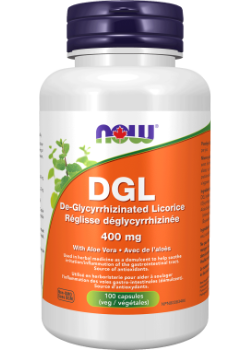
Used in herbal medicine as a demulcent to help soothe irritation/inflammation of the G.I. tract. Licorice has been extensively researched for its ability to support healthy digestive function. DGL, or de-glycyrrhizinated Licorice, is a form of licorice root that has been specially processed to remove glycyrrhizin, an undesirable compound, thereby enriching the biologically active compounds that help maintain a healthy lining in the stomach and intestines. Aloe vera has been included for its soothing properties. Veg capsule delivery helps avoid the unpleasant taste of the lozenge version that may occur for some individuals. DGL 400mg with Aloe from NOW is formulated with De-glycyrrhizinated Licorice (DGL) 400mg and Organic Aloe Vera 25mg in a fast-acting veg capsule delivery. [VCAPS]
1 vcap contains:
DGL (De-Glycyrrhizinated Licorice) Extract (Glycyrrhiza glabra) (Root) 400mg
Organic Aloe Vera (Aloe barbadensis) (Inner Leaf) (200:1 Concentrate) (Equivalent to 5000mg Fresh Aloe Vera Gel) 25mg
Non-Medicinal Ingredients:
Capsule (hypromellose, water), Stearic Acid (vegetable source), Silica.
Important Information:
Keep out of reach of children. Consult a health care practitioner prior to use if you are pregnant or breastfeeding or if you have diabetes. If symptoms persist or worsen, consult a health care practitioner.
Dosage
Adult Dosage: Take 2 capsules daily.
Since 1968 NOW has been a leader in the natural products industry. NOW Foods is an award-winning and highly respected manufacturer of vitamins, minerals, dietary supplements and natural foods. Now Foods brings you over 1600 Natural Foods, Supplements, Sports Nutrition and Personal Care Products. NOW supplements are high quality products at affordable prices.
DGL & DIGESTION
Licorice has a distinct and complex taste that may best be described as sweet and slightly bitter, with anise or
fennel
-like undertones. It is a unique flavour that some people love, while others find highly unpleasant. Licorice is derived from the root of the licorice plant (Glycyrrhiza glabra), which contains glycyrrhizin, a chemical compound responsible for its characteristic flavour. Glycyrrhizin has an intensely sweet taste, roughly 50 times sweeter than sugar, which is why licorice is so often used as a flavouring agent in food and beverages. Deglycyrrhizinated licorice (DGL) is most often used to treat digestive issues, including acid reflux, heartburn, and ulcers, as well as for sore throat and cough.
Licorice is also a staple of traditional medicine thanks to its unique therapeutic properties, including anti-inflammatory, antioxidant, and antiviral effects. Indeed, licorice has been used to treat various conditions, such as coughs, sore throats, and digestive issues. However, it's worth noting that the glycyrrhizin in licorice can have significant adverse side effects in high doses, including increasing blood pressure, lowering
potassium
levels, and causing electrolyte imbalance and fluid retention. This is why licorice extracts typically come deglycyrrhizinated – meaning with most of their glycyrrhizin removed.
Among other things, DGL increases mucus production in the stomach, which can help protect the mucosal lining and reduce inflammation.
Benefits of DGL
- Calms Symptoms Of
IBS
- Protects The Intestinal Mucosa
- Relieves Acid Reflux
- Soothes Heartburn
- Treats Peptic Ulcers
Who Needs Deglycyrrhizinated Licorice?
Deglycyrrhizinated licorice has been used clinically for decades, primarily for treating gastrointestinal conditions, thanks to its powerful anti-inflammatory properties. Indeed, research has shown that licorice extract can inhibit several inflammatory
enzymes, including cyclooxygenase-2 (COX-2) and 5-lipoxygenase (5-LOX), which reduces the production of pro-inflammatory compounds like prostaglandin E2, thromboxane B2, and leukotriene B4. In addition, licorice root extract has been shown to have potent antioxidant effects that can help heal digestive tract cells.
Carefully SelectedShips to the U.S.Wellness EssentialsTrusted Brands
Product Details
DGL & DIGESTION
Licorice has a distinct and complex taste that may best be described as sweet and slightly bitter, with anise or
fennel
-like undertones. It is a unique flavour that some people love, while others find highly unpleasant. Licorice is derived from the root of the licorice plant (Glycyrrhiza glabra), which contains glycyrrhizin, a chemical compound responsible for its characteristic flavour. Glycyrrhizin has an intensely sweet taste, roughly 50 times sweeter than sugar, which is why licorice is so often used as a flavouring agent in food and beverages. Deglycyrrhizinated licorice (DGL) is most often used to treat digestive issues, including acid reflux, heartburn, and ulcers, as well as for sore throat and cough.
Licorice is also a staple of traditional medicine thanks to its unique therapeutic properties, including anti-inflammatory, antioxidant, and antiviral effects. Indeed, licorice has been used to treat various conditions, such as coughs, sore throats, and digestive issues. However, it's worth noting that the glycyrrhizin in licorice can have significant adverse side effects in high doses, including increasing blood pressure, lowering
potassium
levels, and causing electrolyte imbalance and fluid retention. This is why licorice extracts typically come deglycyrrhizinated – meaning with most of their glycyrrhizin removed.
Among other things, DGL increases mucus production in the stomach, which can help protect the mucosal lining and reduce inflammation.
Benefits of DGL
- Calms Symptoms Of
IBS
- Protects The Intestinal Mucosa
- Relieves Acid Reflux
- Soothes Heartburn
- Treats Peptic Ulcers
Who Needs Deglycyrrhizinated Licorice?
Deglycyrrhizinated licorice has been used clinically for decades, primarily for treating gastrointestinal conditions, thanks to its powerful anti-inflammatory properties. Indeed, research has shown that licorice extract can inhibit several inflammatory
enzymes, including cyclooxygenase-2 (COX-2) and 5-lipoxygenase (5-LOX), which reduces the production of pro-inflammatory compounds like prostaglandin E2, thromboxane B2, and leukotriene B4. In addition, licorice root extract has been shown to have potent antioxidant effects that can help heal digestive tract cells.
🌿
Daily Wellness
Easy to add to your everyday health routine.
✅
Carefully Selected
Chosen with quality and customer needs in mind.
💊
Simple to Use
Designed for convenient daily supplementation.
🚚
Ships to the U.S.
Fast, reliable shipping to U.S. customers.
Choosing a selection results in a full page refresh.