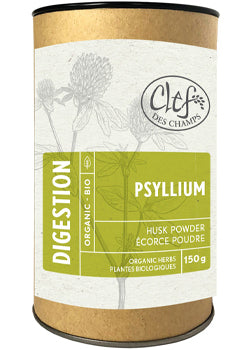
Clef Des Champs Digestion Psyllium Husk Powder (Organic, Tube) - 150g is a dietary supplement in powder form, intended for adults as part of a daily wellness routine.
Rich in mucilage, Clef Des Champs Organic Psyllium Powder (plantago ovata) to regulate the intestinal transit. Its absorbent quality considerably increases the volume of water in the feces, which softens feces and stimulates peristalsis, thereby easing elimination. Plantago ovata is very useful for constipation or any condition where intestinal elimination needs help (anal fissures, hemorrhoids, pregnancy, after anal or rectal surgery). The mucilages in psyllium are emollient; they soften, lubricate and protect the lining of the gastro-intestinal tract. Psyllium is useful in conditions where the intestinal lining is irritated (irritable bowel, inflammatory diseases of the colon). Psyllium helps control fermentation and growth of intestinal bacteria. It also absorbs toxins in the intestines and helps eliminate them. [POWDER]
Contains:
Organic Psyllium (powdered seed husks, plantago ovata)
Important Information:
Keep out of reach of children. Do not use during the first trimester of pregnancy except under supervision by a health-care professional. Do not use in case of intestinal obstruction.
Dosage
Take 1 - 2 times per day. Dilute 1 tsp of powder in 1 cup of water or juice. Stir before drinking. Do not strain.
Herbalist Recommended Tinctures, Teas, & Capsules
Clef des Champs is a Canadian company that was founded by an herbalist in Quebec. All of their herbs are organically grown in their own garden in the Quebec mountains. The natural elements nourish each herb until it’s ready to be picked, dried and made into one of their natural formulations. Their blends offer support for many health concerns including; oral health, women’s health, immune and respiratory health, digestive health, men’s prostate health, and muscle and joint relief. Available in water-alcohol, alcohol-free, capsule, syrup or salve formula’s, Clef des Champs uses the healing power of herbs to support your needs.
PSYLLIUM - POWDERED SEED HUSKS
Mechanism Of Action
Rich in mucilage, psyllium is used mainly to regulate the intestinal transit. Its absorbent quality considerably increases the volume of water in the feces, which softens feces and stimulates peristalsis, thereby easing elimination. Plantago ovata is very useful for constipation or any condition where intestinal elimination needs help (anal fissures,
hemorrhoids, pregnancy, after anal or rectal surgery). Psyllium seed husks are mostly made up of fibre, therefore they are not digested and have a strictly mechanical effect on the intestines. Using psyllium helps accelerate intestinal transit and increase the number of bowel movements per day. Where there is
diarrhea, psyllium absorbs excess water in the intestine and helps form solid feces.
The mucilages in psyllium are emollient; they soften, lubricate and protect the lining of the gastro-intestinal tract. Psyllium is useful in conditions where the intestinal lining is irritated (irritable bowel, inflammatory diseases of the colon). Psyllium helps control fermentation and growth of intestinal bacteria. It also absorbs toxins in the intestines and helps eliminate them.
The power of its absorbent properties is not limited to intestinal transit. It also acts on cholesterol and triglyceride levels (LDL, total cholesterol). By attaching itself to bile acids, psyllium increases the elimination of cholesterol by the intestines and increases the synthesis of bile salts from cholesterol. Psyllium also helps regulate blood sugar by slowing the absorption of glucose by the intestines. Its high fiber content helps feel satiated and is useful for weight loss.
The main constituents of psyllium seeds are mucilages, with a high proportion of hemicellulose but also some arabinose, rhamnose, xylose and galacturonic acid.
Helpful Associations
Dandelion
decoction for chronic constipation.
Slippery elm
for constipation, irritation of the digestive system.
Chamomile
infusion for irritation of the lining of the digestive tract.
Ginger
tincture for digestive or intestinal sluggishness.
Plantain salve
for hemorrhoids.
Digestop
for
colitis
or irritation of the intestines.
Uses
Digestive system:
constipation, diarrhea, hemorrhoids, anal fissure, intestinal irritation, inflammatory conditions of the intestines,
diverticulitis, gastroenteritis, colitis, gastric irritation.
Others:
weight loss, high blood fat, high blood sugar.
History
Psyllium has been used around the world for a long time. In India, it was integrated into Ayurvedic medicine circa 1500 BC. It has been used in
traditional Chinese medicine
for thousands of years. The Europeans introduced it into their pharmacopeia centuries ago whereas its use in North America dates back only to the end of the 20th Century. The Indians and the Chinese use it to treat constipation, diarrhea, hemorrhoids, bladder problems and
high blood pressure. It seems that psyllium was used as food by the Aztecs and that is was valued by Indian and Persian doctors in the Middle-Ages.
Carefully SelectedShips to the U.S.Wellness EssentialsTrusted Brands
Product Details
PSYLLIUM - POWDERED SEED HUSKS
Mechanism Of Action
Rich in mucilage, psyllium is used mainly to regulate the intestinal transit. Its absorbent quality considerably increases the volume of water in the feces, which softens feces and stimulates peristalsis, thereby easing elimination. Plantago ovata is very useful for constipation or any condition where intestinal elimination needs help (anal fissures,
hemorrhoids, pregnancy, after anal or rectal surgery). Psyllium seed husks are mostly made up of fibre, therefore they are not digested and have a strictly mechanical effect on the intestines. Using psyllium helps accelerate intestinal transit and increase the number of bowel movements per day. Where there is
diarrhea, psyllium absorbs excess water in the intestine and helps form solid feces.
The mucilages in psyllium are emollient; they soften, lubricate and protect the lining of the gastro-intestinal tract. Psyllium is useful in conditions where the intestinal lining is irritated (irritable bowel, inflammatory diseases of the colon). Psyllium helps control fermentation and growth of intestinal bacteria. It also absorbs toxins in the intestines and helps eliminate them.
The power of its absorbent properties is not limited to intestinal transit. It also acts on cholesterol and triglyceride levels (LDL, total cholesterol). By attaching itself to bile acids, psyllium increases the elimination of cholesterol by the intestines and increases the synthesis of bile salts from cholesterol. Psyllium also helps regulate blood sugar by slowing the absorption of glucose by the intestines. Its high fiber content helps feel satiated and is useful for weight loss.
The main constituents of psyllium seeds are mucilages, with a high proportion of hemicellulose but also some arabinose, rhamnose, xylose and galacturonic acid.
Helpful Associations
Dandelion
decoction for chronic constipation.
Slippery elm
for constipation, irritation of the digestive system.
Chamomile
infusion for irritation of the lining of the digestive tract.
Ginger
tincture for digestive or intestinal sluggishness.
Plantain salve
for hemorrhoids.
Digestop
for
colitis
or irritation of the intestines.
Uses
Digestive system:
constipation, diarrhea, hemorrhoids, anal fissure, intestinal irritation, inflammatory conditions of the intestines,
diverticulitis, gastroenteritis, colitis, gastric irritation.
Others:
weight loss, high blood fat, high blood sugar.
History
Psyllium has been used around the world for a long time. In India, it was integrated into Ayurvedic medicine circa 1500 BC. It has been used in
traditional Chinese medicine
for thousands of years. The Europeans introduced it into their pharmacopeia centuries ago whereas its use in North America dates back only to the end of the 20th Century. The Indians and the Chinese use it to treat constipation, diarrhea, hemorrhoids, bladder problems and
high blood pressure. It seems that psyllium was used as food by the Aztecs and that is was valued by Indian and Persian doctors in the Middle-Ages.
🌿
Daily Wellness
Easy to add to your everyday health routine.
✅
Carefully Selected
Chosen with quality and customer needs in mind.
💊
Simple to Use
Designed for convenient daily supplementation.
🚚
Ships to the U.S.
Fast, reliable shipping to U.S. customers.
Choosing a selection results in a full page refresh.