Alleviate gastro-intestinal irritation
Calm inflammation of the respiratory system
Soothe irritated vocal cords
Safe for everyone aged 2 and up
Gluten Free and Vegan
Alleviate gastrointestinal irritation
Calm inflammation of the respiratory system
Soothe irritated vocal cords
Safe for everyone aged 2 and up
Gluten Free and Vegan
Quantity
Couldn't load pickup availability
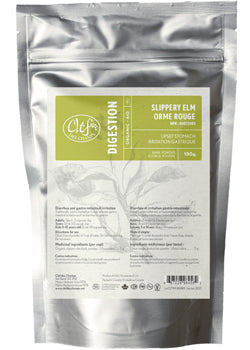
Digestion Slippery Elm Bark Powder (Organic, Bag) - 180g
$63.78
Clef Des Champs Digestion Slippery Elm Bark Powder (Organic, Bag) - 180g is a dietary supplement in powder form, intended for adults as part of a daily wellness routine.
Clef des Champs Organic Slippery Elm tea can be used to soothe irritated or inflamed digestive mucosa. Healing and calming, its prebiotic properties allow beneficial digestive bacteria to multiply. It is a herb of choice for reintroducing foods after gastroenteritis, inflammatory flare- ups due to irritable bowel syndrome and chronic gastric reflux. It is also given to infants suffering from repeated vomiting or violent regurgitation. For this purpose, it can be mixed with small quantities of breast milk. Finally, small sips of Slippery Elm are taken to soothe irritated vocal cords. Slippery elm is a nutritive, vulnerary herb, used to soothe digestive problems and calm inflammation of the respiratory system. It contains mucilage, responsible for its demulcent and emollient properties and polysaccharides that make it water-soluble (swell and retain water). It also contains flavonoids, tannins (astringent), coumarins, starch, proteins, phytosterols and calcium. [LOOSE TEA]
Contains:
Organic Slippery Elm (inner bark, ulmus rubra)
Important Information:
Keep out of reach of children. Do not take with prescription drugs. Consult a health care practitioner if symptoms persist or worsen or for use during pregnancy.
Dosage
Take 1 - 2 times per day. Dilute 1 tsp of powder in 1 cup of water. Stir before drinking. Do not strain.
Herbalist Recommended Tinctures, Teas, & Capsules
Clef des Champs is a Canadian company that was founded by an herbalist in Quebec. All of their herbs are organically grown in their own garden in the Quebec mountains. The natural elements nourish each herb until it’s ready to be picked, dried and made into one of their natural formulations. Their blends offer support for many health concerns including; oral health, women’s health, immune and respiratory health, digestive health, men’s prostate health, and muscle and joint relief. Available in water-alcohol, alcohol-free, capsule, syrup or salve formula’s, Clef des Champs uses the healing power of herbs to support your needs.
SLIPPERY ELM - UPSET STOMACH
Mechanism Of Action
Slippery elm is a nutritive, vulnerary herb, used to soothe digestive problems and calm inflammation of the respiratory system. It contains mucilage, responsible for its demulcent and emollient properties and polysaccharides that make it water-soluble (swell and retain water). It also contains flavonoids, tannins (astringent), coumarins, starch, proteins, phytosterols and
calcium.
Slippery elm is used to soothe irritated or inflamed digestive mucosa. Healing and calming, its prebiotic properties allow beneficial digestive bacteria to multiply. It is a herb of choice for reintroducing foods after gastroenteritis, inflammatory flare ups due to irritable bowel syndrome and chronic gastric reflux. It is also given to infants suffering from repeated vomiting or violent regurgitation. For this purpose, it can be mixed with small quantities of breast milk. Finally, small sips of slippery elm are taken to soothe irritated vocal cords.
Helpful Associations
Raspberry
infusion for gastroenteritis.
Estomix
for gastroenteritis.
Vocalix
for laryngitis and irritated vocal cords.
Digestop
for ulcerative
colitis.
Turmeric
capsules for irritable bowel syndrome.
Pulmona Tea
for respiratory tract irritation.
Uses
Digestive system:
vomiting, nausea,
constipation,
diarrhea, colic, gastric hyperacidity, gastric irritation, intestinal irritation, Crohn’s disease, gastroenteritis, colitis, gastric or duodenal ulcers.
Toddlers:
vomiting, violent regurgitation, gastroenteritis, colic.
Respiratory system:
tonsillitis, laryngitis, pharyngitis.
History
Slippery elm has been used for medicinal purposes since Antiquity. Europeans used the Ulmus campestris species while native Americans used Ulmus rubra. The inner bark was used internally and externally, mainly for digestive problems and to soothe irritated skin. The Dakota, Omaha, Pawnee and Winnebago used the infusion as a laxative. The Michigan tribe put slippery elm on deep wounds to keep them from closing too quickly. The Potawatomi applied it to boils and eye inflammation. The Ojibwa and Mohegan chewed the bark to soothe sore throats, while the Cherokee used it to treat intestinal problems, dysentery, heartburn, burns, injuries, eye irritation, colds, congestion and coughs. Slippery elm quickly became an important herb for European settlers, who popularized it in their popular medicine, using it mainly for sore throats and diarrhea.
Carefully SelectedShips to the U.S.Wellness EssentialsTrusted Brands
Product Details
SLIPPERY ELM - UPSET STOMACH
Mechanism Of Action
Slippery elm is a nutritive, vulnerary herb, used to soothe digestive problems and calm inflammation of the respiratory system. It contains mucilage, responsible for its demulcent and emollient properties and polysaccharides that make it water-soluble (swell and retain water). It also contains flavonoids, tannins (astringent), coumarins, starch, proteins, phytosterols and
calcium.
Slippery elm is used to soothe irritated or inflamed digestive mucosa. Healing and calming, its prebiotic properties allow beneficial digestive bacteria to multiply. It is a herb of choice for reintroducing foods after gastroenteritis, inflammatory flare ups due to irritable bowel syndrome and chronic gastric reflux. It is also given to infants suffering from repeated vomiting or violent regurgitation. For this purpose, it can be mixed with small quantities of breast milk. Finally, small sips of slippery elm are taken to soothe irritated vocal cords.
Helpful Associations
Raspberry
infusion for gastroenteritis.
Estomix
for gastroenteritis.
Vocalix
for laryngitis and irritated vocal cords.
Digestop
for ulcerative
colitis.
Turmeric
capsules for irritable bowel syndrome.
Pulmona Tea
for respiratory tract irritation.
Uses
Digestive system:
vomiting, nausea,
constipation,
diarrhea, colic, gastric hyperacidity, gastric irritation, intestinal irritation, Crohn’s disease, gastroenteritis, colitis, gastric or duodenal ulcers.
Toddlers:
vomiting, violent regurgitation, gastroenteritis, colic.
Respiratory system:
tonsillitis, laryngitis, pharyngitis.
History
Slippery elm has been used for medicinal purposes since Antiquity. Europeans used the Ulmus campestris species while native Americans used Ulmus rubra. The inner bark was used internally and externally, mainly for digestive problems and to soothe irritated skin. The Dakota, Omaha, Pawnee and Winnebago used the infusion as a laxative. The Michigan tribe put slippery elm on deep wounds to keep them from closing too quickly. The Potawatomi applied it to boils and eye inflammation. The Ojibwa and Mohegan chewed the bark to soothe sore throats, while the Cherokee used it to treat intestinal problems, dysentery, heartburn, burns, injuries, eye irritation, colds, congestion and coughs. Slippery elm quickly became an important herb for European settlers, who popularized it in their popular medicine, using it mainly for sore throats and diarrhea.