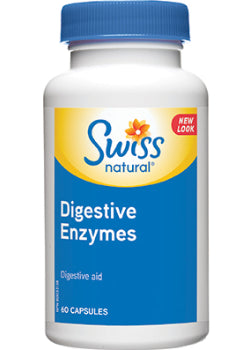
Full spectrum digestive enzyme blend
Aids in the metabolism of fats, carbs, proteins, and more
May reduce digestive disturbances including bloating and gas
Aids in the absorption of nutrients
Ideal for anyone who experiences frequent indigestion
Full spectrum digestive enzyme blend
Aids in the metabolism of fats, carbs, proteins, and more
May reduce digestive disturbances including bloating and gas
Aids in the absorption of nutrients
Ideal for anyone who experiences frequent indigestion
Quantity
Couldn't load pickup availability
Digestive Enzymes - 60 Caps
$18.58
Swiss Natural Digestive Enzymes - 60 Caps is a dietary supplement, intended for adults as part of a daily wellness routine.
FULL SPECTRUM DIGESTIVE ENZYME BLEND FROM SWISS HERBAL.Swiss Digestive Enzymes provides a broad spectrum, comprehensive blend of enzymes that will ensure effective digestion and absorption of nutrients. Containing a blend including protease (to break down protein), Lipase (to break down fats), Amylase (for carbohydrate digestion), Cellulase (for fiber) and Lactase (to help breakdown lactose). [CAPSULE]
Medicinal ingredients:
Enzyme Blend 297 mg
Protease (Aspergillus oryzae) 133.65 mg (14850 FCC HUT)
Lipase (Aspergillus niger) 23.76mg (297 FCC LU)
Alpha-Amylase (Aspergillus oryzae) 133.65 mg (5940 FCC DU)
Cellulase (Trichoderma reesei) 5.94 mg (118.8 FCC CU)
Amyloglucosidase ( Aspergillus niger) 106.2 mg (10.62 FCCAGU)
Hemicellulase (Trichoderma reesei) 12.5 mg (12.5 FCC HCU)
Lactase (Aspergiullus oryzae) 25 mg (25 FCC LU)
Non-medicinal ingredients:
Dicalcium Phosphate and magnesium stearate.
Important Information:
Consult a healthcare practitioner prior to use if you are pregnant/breastfeeding, have gastrointestinal lesions/ ulcers, diabetes, taking anticoagulants, anti-inflammatory agents or before having surgery. Discontinue use if headaches, heartburn, bloating, or hypersensitivity/allergy occurs and consult a healthcare practitioner if symptoms persist or worsen.
Dosage
Adults: Take 1 to 2 capsules with each meal 3 times daily, or as directed by healthcare practitioner. For prolonged use, consult a healthcare practitioner.
Swiss Naturals, makers of popular natural health supplements Total One multi-vitamins, Natural HRT Extra Strength, Chewable Vitamin C to support immune health, plus many more! Swiss Naturals products undergo 300 tests for quality and are packaged in 100% recyclable bottles.
What are Enzymes?
Enzymes are catalysts of chemical reactions. This means that they initiate and increase the rate of one or several body processes. Without enzymes, reactions in the body would take place too slowly to maintain life. Digestive enzymes are responsible for breaking down food particles so that they can be absorbed in the intestinal tract and either used for energy or stored for later use.
There are three main categories of digestive enzymes, amylase, protease and lipase. Amylase enzymes digest sugars, for example, like milk sugar is digested by lactase and cane sugar by sucrase. Amylase is found in saliva, pancreatic juice and intestinal juice. Proteases are responsible for breaking down
protein. It is found in intestinal and pancreatic juice. Lipases digest fat and are released in the stomach and intestines.
Don't I get Enzymes from my Food?
Enzymes naturally occur in all raw foods. When referring to the "ripeness" of a food we are talking about its readiness to be eaten. Ripe foods are most abundant in enzymes that are used for digestion. Rancid foods are already being digested by the naturally occurring enzymes. Unfortunately enzymes are destroyed by the cooking and processing of foods. This means that most of the foods the average person consumes are deficient in enzymes. The body must do all of the work to digest the food or, more commonly, foods are improperly digested. The term "
leaky gut
" is used to describe undigested protein particles that get into the bloodstream and cause allergic reactions. This is one reason why digestive enzyme supplements can improve lots of health complaints. They are widely recommended by natural health practitioners for indigestion, gas, bloating, arthritis, autoimmune disorders, food allergies and skin conditions.
You Can Support
Digestive Health
By:
Chewing food completely.
Eating several small meals daily instead of three large meals.
Avoiding fluids with meals.
Eating a variety of fresh fruits and vegetables.
Avoiding refined, processed foods.
Not overeating; eat until 80% full.
Taking a HCL supplement before meals.
Supplementing with
Probiotics.
Taking digestive enzyme during or after meals.
Intestinal Health
The intestine is the main absorptive area of the digestive tract. It is essentially a tube with a thin mucosal lining and lots of blood vessels on the inside and muscles around the outside. It has its own immune tissue called GALT, or gut associated lymphoid tissue. The inner lining is filled with little fingers, or projection of the mucosa, which greatly increases its absorptive surface.
Lying on the membrane are many friendly organisms, which help our body with the digestive process. The small intestine attaches to the stomach. Near it's beginning, ducts from the liver and
pancreas
release digestive juices. These juices mix with the partially digested food from the stomach and continue the digestive process. Nutrients are absorbed through the thin intestinal wall and transported via the bloodstream, to where they are needed. The liver also excretes processed toxins and fats through the bile. These substances must be carried through the intestine without being absorbed.
The remainder of the food is pushed through into the large intestine. The main function of the large intestine is the preparation of stool for excretion. In order to do this the digested food must be dehydrated and compacted. The last bit of nutrients may also be absorbed here.
Some of the most important players in intestinal health are not part of our own body. Friendly intestinal bacteria, often called
Probiotics, are an essential part of digestion. They break down food particles, manufacture vitamins and prevent the infection of the tract with other microbes. Each bowel movement actually contains millions of these friendly bacteria; they are in a constant state of renewal. Many concerns like
indigestion, gas, bloating and
constipation
can be due to an imbalance of the intestinal bacteria. It is easy to upset this balance by improper diet or taking medications like antibiotics.
Carefully SelectedShips to the U.S.Wellness EssentialsTrusted Brands
Product Details
What are Enzymes?
Enzymes are catalysts of chemical reactions. This means that they initiate and increase the rate of one or several body processes. Without enzymes, reactions in the body would take place too slowly to maintain life. Digestive enzymes are responsible for breaking down food particles so that they can be absorbed in the intestinal tract and either used for energy or stored for later use.
There are three main categories of digestive enzymes, amylase, protease and lipase. Amylase enzymes digest sugars, for example, like milk sugar is digested by lactase and cane sugar by sucrase. Amylase is found in saliva, pancreatic juice and intestinal juice. Proteases are responsible for breaking down
protein. It is found in intestinal and pancreatic juice. Lipases digest fat and are released in the stomach and intestines.
Don't I get Enzymes from my Food?
Enzymes naturally occur in all raw foods. When referring to the "ripeness" of a food we are talking about its readiness to be eaten. Ripe foods are most abundant in enzymes that are used for digestion. Rancid foods are already being digested by the naturally occurring enzymes. Unfortunately enzymes are destroyed by the cooking and processing of foods. This means that most of the foods the average person consumes are deficient in enzymes. The body must do all of the work to digest the food or, more commonly, foods are improperly digested. The term "
leaky gut
" is used to describe undigested protein particles that get into the bloodstream and cause allergic reactions. This is one reason why digestive enzyme supplements can improve lots of health complaints. They are widely recommended by natural health practitioners for indigestion, gas, bloating, arthritis, autoimmune disorders, food allergies and skin conditions.
You Can Support
Digestive Health
By:
Chewing food completely.
Eating several small meals daily instead of three large meals.
Avoiding fluids with meals.
Eating a variety of fresh fruits and vegetables.
Avoiding refined, processed foods.
Not overeating; eat until 80% full.
Taking a HCL supplement before meals.
Supplementing with
Probiotics.
Taking digestive enzyme during or after meals.
Intestinal Health
The intestine is the main absorptive area of the digestive tract. It is essentially a tube with a thin mucosal lining and lots of blood vessels on the inside and muscles around the outside. It has its own immune tissue called GALT, or gut associated lymphoid tissue. The inner lining is filled with little fingers, or projection of the mucosa, which greatly increases its absorptive surface.
Lying on the membrane are many friendly organisms, which help our body with the digestive process. The small intestine attaches to the stomach. Near it's beginning, ducts from the liver and
pancreas
release digestive juices. These juices mix with the partially digested food from the stomach and continue the digestive process. Nutrients are absorbed through the thin intestinal wall and transported via the bloodstream, to where they are needed. The liver also excretes processed toxins and fats through the bile. These substances must be carried through the intestine without being absorbed.
The remainder of the food is pushed through into the large intestine. The main function of the large intestine is the preparation of stool for excretion. In order to do this the digested food must be dehydrated and compacted. The last bit of nutrients may also be absorbed here.
Some of the most important players in intestinal health are not part of our own body. Friendly intestinal bacteria, often called
Probiotics, are an essential part of digestion. They break down food particles, manufacture vitamins and prevent the infection of the tract with other microbes. Each bowel movement actually contains millions of these friendly bacteria; they are in a constant state of renewal. Many concerns like
indigestion, gas, bloating and
constipation
can be due to an imbalance of the intestinal bacteria. It is easy to upset this balance by improper diet or taking medications like antibiotics.