Use as a hangover remedy, nausea relief and liver detox
0g of sugar
Free from gluten, GMOs, caffeine, diary, artificial colours and flavours
Quantity
Couldn't load pickup availability
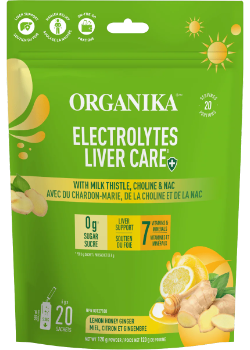
Electrolytes Liver Care (Lemon Honey Ginger) - 6g x 20 Sachets
$62.99
Organika Electrolytes Liver Care (Lemon Honey Ginger) - 6g x 20 Sachets is a dietary supplement, intended for adults as part of a daily wellness routine.
Take care of your liver by detoxifying and rehydrating with Organika's Electrolytes Liver Care. Meet your daily hydration needs with essential electrolytes plus added liver support from Milk Thistle, NAC and Choline. Use as a hangover remedy, nausea relief and liver detox, Electrolytes Liver Care supports immune function, liver recovery after medication and/or alcohol use. Milk thistle has been used for centuries for anti-inflammatory effects and to protect liver cells, while NAC helps replenish glutathione levels in the liver, reducing liver damage caused by toxic byproducts and Choline helps prevent the accumulation of fat in the liver. [SACHETS]
Each sachet (6g) contains:
Potassium (Potassium Citrate) 150mg
Magnesium (Magnesium Citrate) 60mg
Vitamin C (Ascorbic Acid) 110mg
Phosphorus (Calcium Phosphate, Tribasic) 25mg
Calcium (Calcium Phosphate, Tribasic) 50mg
L-Theanine 50mg
Vitamin B12 (Methylcobalamin) 200mcg
Zinc (Zinc Gluconate) 10mg
Choline (Choline Bitartrate) 30mg
N-Acetyl-L-Cysteine 120mg
Milk Thistle Extract (Silybum marianum - Seed) 190mg
Ginger 20:1 Extract (Zingiber officinale - Rhizome) 25mg
Non-Medicinal Ingredients:
Natural Honey Flavour, Natural Ginger Flavour, Citric Acid, Stevia Leaf Extract, Sodium Chloride, Lecithin (soy), Natural Lemon Flavour, Soluble Corn Fibre, Opuntia Ficus-Indica (Prickly Pear) Extract, Fruit Juice, Vegetable Juice.
Important Information:
Keep out of reach of children. Sealed for your protection. Do not accept product if safety seal is broken. Store in a cool, dry place.
Dosage
Add 1 sachet (6g) to 500 ml of water. Shake or stir well for 5 seconds. Take 1 serving per day. Take with food, a few hours before or after taking other medications or natural health products.
Nourishment Rooted in Nature - 12 New Added
Organika, formulators of Canada’s best-selling Collagen and marine collagen and Bone Broth supports skin and joint health. Organika's health products also include; Organika spirulina, Chlorella, Curcumin to support inflammation, Organika Enhanced Collagen Protein, and Adaptogens to provide balance. Shop Organika here at ca for quality, Canadian-made supplements.
ELECTROLYTES
Creating water balance in the body and supporting proper nerve and muscle function…
The term electrolytes, is technically a term from chemistry that means any solution that can conduct electricity. For the purpose of this article, we will be discussing the electrolytes of importance in the human body. When certain salts are dissolved in water, they break apart into ions and create an electrolyte solution. These ions ("electrolytes") play important roles in balancing fluid levels in the body. They also play a role in the function of nerves, muscles, as well as oxygen delivery and acid-base regulation in the blood.
Types Of Electrolytes
The electrolytes of greatest importance in the human body are: sodium (Na),
potassium
(K),
calcium
(Ca),
magnesium
(Mg), chloride (Cl), phosphate (PO4) and carbonate (CO3). These are often found in different forms of salt, for instance table salt is a combination of two of these ions: sodium and chloride (NaCl).
Role Of Electrolytes
All living creatures require electrolytes to help balance the fluid levels between their cells and the surrounding extracellular environment. Electrolytes also help to regulate the pH of our blood, and the ability of our red blood cells to deliver oxygen throughout the body. They are also the substances responsible for conducting signals along our nerves and also within our muscles. Thus, electrolytes are essential for nerve and muscle function.
Muscles
The contraction of our muscles is what allows us to move our bodies, and perform our daily actions such as walking and even blinking. Muscular contraction requires
calcium,
magnesium, sodium and
potassium. Without sufficient amounts of these ions, muscle weakness or severe muscle cramps can occur. Because the heart is a muscle, imbalances in these electrolytes can lead to heart arrhythmias and even death.
Nerves
The most important electrolytes for use in nerve cells are sodium, potassium, and calcium. There are pumps all along nerves that pump these ions across their membranes to create a difference in charge between the inside and outside of the cell. It is through this charge difference that nerve impulses occur. Sufficient amounts of electrolytes are essential to proper function of the nervous system.
Importance Of Water
In order to have their effect, electrolytes must be in their ionic form, which only occurs when they are properly dissolved in water. Because of this, a delicate balance is needed between electrolytes and water in the body. Too much of either will cause disruptions in proper muscle and nerve function, a condition known as electrolyte imbalance.
Control Of Electrolyte Balance
The body tightly controls the balance of electrolytes and water in the body. There are a few hormones, such as: antidiuretic hormone, aldosterone, calcitonin and parathyroid hormone. These all work together to control the concentration of electrolytes in the blood via the kidneys, which in turn controls the electrolyte concentrations in the cells of the body. Thus, there need to be sufficient levels of each ion in the body. Also, because it is the concentration of these ions in the water portion of our blood that is of such importance, dehydration or overhydration can cause an electrolyte imbalance.
Electrolyte Imbalance
Electrolyte imbalance is most commonly caused by dehydration or overexertion. It can be triggered by: diarrhea, vomiting, and sweating, all of which promote the loss of electrolytes. Symptoms of electrolyte imbalance are the same as those of dehydration: lethargy, muscle weakness, low blood pressure, rapid or irregular heart rate, and in severe cases, even shock and coma. Often, in the early stages, simply rehydrating with water can help to alleviate the problems, although if symptoms don't resolve, emergency medical attention is necessary.
Commercial Sports Drinks
Most of the commercial sport drinks on the market claim to contain replenishing electrolytes. While they do have some, they also contain massive amounts of sugar and usually also have a number of additives and food dyes as well. These substances are unnecessary and in some cases can actually be detrimental to body function, particularly in athletes. Whenever possible, it is usually a better idea to use more natural sources of electrolytes.
Replenishing Electrolytes
In general, the food that we eat will provide the electrolytes required by our bodies on a daily basis. In times of depletion, such as a prolonged illness with vomiting and diarrhea, or with prolonged strenuous exercise, it is a good idea to replenish essential electrolytes. This will help your body maintain its fluid balance. There are some simple homemade electrolyte solutions available on the internet, although many require ingredients from a compounding pharmacy. There are a number of electrolyte replacement formulas available as supplements as well. Some are tablets, or capsules while others are powders that can easily be mixed with water. It is important to always take in sufficient water with electrolytes to help your body maintain the balance. Dosing of electrolytes depends on your current need, but since they are so tightly regulated by your body, excess will simply be released. In general, it is a good idea to follow the dosing instructions provided by the manufacturer of each individual product.
Electrolytes – Quick Facts
Sources
· Minerals And Salts.
Applications
· Strenuous Exercise, Prolonged Vomiting Or Diarrhea, Prolonged Illness, Profuse Sweating
Optimum Dosage
· In General, Follow The Manufacturer's Instructions. (Clinical Doses May Differ, As Recommended By Your Practitioner).
Works Well With
· Water
Important Information
· Sodium Intake Should Be Restricted To Between 1,500mg And 2,300mg Daily To Avoid Hypertensive Effects.
· Be Sure To Drink Sufficient Water When Ingesting Electrolytes To Maintain Electrolyte Balance In The Body.
Carefully SelectedShips to the U.S.Wellness EssentialsTrusted Brands
Product Details
ELECTROLYTES
Creating water balance in the body and supporting proper nerve and muscle function…
The term electrolytes, is technically a term from chemistry that means any solution that can conduct electricity. For the purpose of this article, we will be discussing the electrolytes of importance in the human body. When certain salts are dissolved in water, they break apart into ions and create an electrolyte solution. These ions ("electrolytes") play important roles in balancing fluid levels in the body. They also play a role in the function of nerves, muscles, as well as oxygen delivery and acid-base regulation in the blood.
Types Of Electrolytes
The electrolytes of greatest importance in the human body are: sodium (Na),
potassium
(K),
calcium
(Ca),
magnesium
(Mg), chloride (Cl), phosphate (PO4) and carbonate (CO3). These are often found in different forms of salt, for instance table salt is a combination of two of these ions: sodium and chloride (NaCl).
Role Of Electrolytes
All living creatures require electrolytes to help balance the fluid levels between their cells and the surrounding extracellular environment. Electrolytes also help to regulate the pH of our blood, and the ability of our red blood cells to deliver oxygen throughout the body. They are also the substances responsible for conducting signals along our nerves and also within our muscles. Thus, electrolytes are essential for nerve and muscle function.
Muscles
The contraction of our muscles is what allows us to move our bodies, and perform our daily actions such as walking and even blinking. Muscular contraction requires
calcium,
magnesium, sodium and
potassium. Without sufficient amounts of these ions, muscle weakness or severe muscle cramps can occur. Because the heart is a muscle, imbalances in these electrolytes can lead to heart arrhythmias and even death.
Nerves
The most important electrolytes for use in nerve cells are sodium, potassium, and calcium. There are pumps all along nerves that pump these ions across their membranes to create a difference in charge between the inside and outside of the cell. It is through this charge difference that nerve impulses occur. Sufficient amounts of electrolytes are essential to proper function of the nervous system.
Importance Of Water
In order to have their effect, electrolytes must be in their ionic form, which only occurs when they are properly dissolved in water. Because of this, a delicate balance is needed between electrolytes and water in the body. Too much of either will cause disruptions in proper muscle and nerve function, a condition known as electrolyte imbalance.
Control Of Electrolyte Balance
The body tightly controls the balance of electrolytes and water in the body. There are a few hormones, such as: antidiuretic hormone, aldosterone, calcitonin and parathyroid hormone. These all work together to control the concentration of electrolytes in the blood via the kidneys, which in turn controls the electrolyte concentrations in the cells of the body. Thus, there need to be sufficient levels of each ion in the body. Also, because it is the concentration of these ions in the water portion of our blood that is of such importance, dehydration or overhydration can cause an electrolyte imbalance.
Electrolyte Imbalance
Electrolyte imbalance is most commonly caused by dehydration or overexertion. It can be triggered by: diarrhea, vomiting, and sweating, all of which promote the loss of electrolytes. Symptoms of electrolyte imbalance are the same as those of dehydration: lethargy, muscle weakness, low blood pressure, rapid or irregular heart rate, and in severe cases, even shock and coma. Often, in the early stages, simply rehydrating with water can help to alleviate the problems, although if symptoms don't resolve, emergency medical attention is necessary.
Commercial Sports Drinks
Most of the commercial sport drinks on the market claim to contain replenishing electrolytes. While they do have some, they also contain massive amounts of sugar and usually also have a number of additives and food dyes as well. These substances are unnecessary and in some cases can actually be detrimental to body function, particularly in athletes. Whenever possible, it is usually a better idea to use more natural sources of electrolytes.
Replenishing Electrolytes
In general, the food that we eat will provide the electrolytes required by our bodies on a daily basis. In times of depletion, such as a prolonged illness with vomiting and diarrhea, or with prolonged strenuous exercise, it is a good idea to replenish essential electrolytes. This will help your body maintain its fluid balance. There are some simple homemade electrolyte solutions available on the internet, although many require ingredients from a compounding pharmacy. There are a number of electrolyte replacement formulas available as supplements as well. Some are tablets, or capsules while others are powders that can easily be mixed with water. It is important to always take in sufficient water with electrolytes to help your body maintain the balance. Dosing of electrolytes depends on your current need, but since they are so tightly regulated by your body, excess will simply be released. In general, it is a good idea to follow the dosing instructions provided by the manufacturer of each individual product.
Electrolytes – Quick Facts
Sources
· Minerals And Salts.
Applications
· Strenuous Exercise, Prolonged Vomiting Or Diarrhea, Prolonged Illness, Profuse Sweating
Optimum Dosage
· In General, Follow The Manufacturer's Instructions. (Clinical Doses May Differ, As Recommended By Your Practitioner).
Works Well With
· Water
Important Information
· Sodium Intake Should Be Restricted To Between 1,500mg And 2,300mg Daily To Avoid Hypertensive Effects.
· Be Sure To Drink Sufficient Water When Ingesting Electrolytes To Maintain Electrolyte Balance In The Body.
🌿
Daily Wellness
Easy to add to your everyday health routine.
✅
Carefully Selected
Chosen with quality and customer needs in mind.
💊
Simple to Use
Designed for convenient daily supplementation.
🚚
Ships to the U.S.
Fast, reliable shipping to U.S. customers.
Choosing a selection results in a full page refresh.