

1
/
of
1
Emergen-C
Emergen-C Immune Plus C + D (Blueberry Acai) - 24 + 24 Packets FREE
Emergen-C Immune Plus C + D (Blueberry Acai) - 24 + 24 Packets FREE
Regular price
$29.99 USD
Regular price
Sale price
$29.99 USD
Shipping calculated at checkout.
Availability
Out of stock
- May help prevent colds in those undergoing physical stress
- Excellent source of vitamins C and D
- May help provide a modest reduction in duration and severity of colds when taken regularly.
- More zinc than original Emergenc formulas
- Great Tasting
Quantity
Couldn't load pickup availability

Emergen-C Immune Plus C + D (Blueberry Acai) - 24 + 24 Packets FREE
$29.99
Emergen-C Immune Plus C + D (Blueberry Acai) - 24 + 24 Packets FREE is a dietary supplement, intended for adults as part of a daily wellness routine.
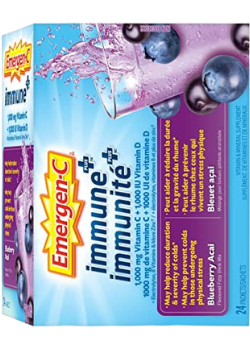
Emergen-C Immune Plus C + D provides key nutrients your body needs like vitamin C, vitamin D, zinc. Emergen-C Supports your immune system, replenishes and refuels your body and gives you a natural kick that feels amazing. A fun, fizzy vitamin drink, Emergen-C Immune Plus C + D is caffeine-free and has no artificial colour or flavours making it an ideal alternative to coffee, energy drinks, sport drinks and colas. [POWDER]
1 packet (9.3 g) contains:
Vitamin C (ascorbic acid, zinc ascorbate) 1,000 mg
Vitamin D3 (cholecalciferol) 25 mcg/1,000 IU
Vitamin B1 (thiamine hydrochloride) 0.38 mg
Riboflavin (riboflavin 5’-phosphate sodium) 0.43 mg
Niacin 4 mg
Vitamin B6 (pyridoxine hydrochloride) 10 mg
Folate (folic acid) 100 mcg
Vitamin B12 (cyanocobalamin) 25 mcg
Pantothenic Acid (calcium d-pantothenate) 2.5mg
Calcium (calcium carbonate, calcium phosphate [monobasic, tribasic]) 50mg
Magnesium (magnesium carbonate, magnesium hydroxide) 60mg
Zinc (zinc ascorbate) 10mg
Manganese (manganese gluconate) 0.5mg
Chromium (chromium picolinate) 10mcg
Non-Medicinal Ingredients:
Acacia, arabinogalactan, aspartic acid, citric acid, corn starch, dl-α-Tocopherol, D-fructose, evaporated cane juice, flavours, fruit and vegetable juice, glycine, malic acid, maltodextrin, medium chain triglycerides, modified food starch, potassium carbonate, potassium bicarbonate, potassium phosphate (monobasic), silicon dioxide, sodium ascorbate, sodium bicarbonate, sodium phosphate (monobasic), stevia leaf extract, sucrose, tapioca, tartaric acid, tricalcium phosphate, trisodium citrate, yeast extract, water.
Important Information:
Store in a cool, dry place. Take with food a few hours before or after taking other medications or natural health products. Consult with a health care practitioner for use beyond 6 months. Use for a minimum of 2 weeks to see beneficial effects (for cold prevention/reduction). Keep out of reach of children.
Vitamin C (ascorbic acid, zinc ascorbate) 1,000 mg
Vitamin D3 (cholecalciferol) 25 mcg/1,000 IU
Vitamin B1 (thiamine hydrochloride) 0.38 mg
Riboflavin (riboflavin 5’-phosphate sodium) 0.43 mg
Niacin 4 mg
Vitamin B6 (pyridoxine hydrochloride) 10 mg
Folate (folic acid) 100 mcg
Vitamin B12 (cyanocobalamin) 25 mcg
Pantothenic Acid (calcium d-pantothenate) 2.5mg
Calcium (calcium carbonate, calcium phosphate [monobasic, tribasic]) 50mg
Magnesium (magnesium carbonate, magnesium hydroxide) 60mg
Zinc (zinc ascorbate) 10mg
Manganese (manganese gluconate) 0.5mg
Chromium (chromium picolinate) 10mcg
Non-Medicinal Ingredients:
Acacia, arabinogalactan, aspartic acid, citric acid, corn starch, dl-α-Tocopherol, D-fructose, evaporated cane juice, flavours, fruit and vegetable juice, glycine, malic acid, maltodextrin, medium chain triglycerides, modified food starch, potassium carbonate, potassium bicarbonate, potassium phosphate (monobasic), silicon dioxide, sodium ascorbate, sodium bicarbonate, sodium phosphate (monobasic), stevia leaf extract, sucrose, tapioca, tartaric acid, tricalcium phosphate, trisodium citrate, yeast extract, water.
Important Information:
Store in a cool, dry place. Take with food a few hours before or after taking other medications or natural health products. Consult with a health care practitioner for use beyond 6 months. Use for a minimum of 2 weeks to see beneficial effects (for cold prevention/reduction). Keep out of reach of children.
Dosage
(Adults): Take 1 packet 1 time per day. Place contents of packet in glass, add 4-6 oz (120-180 mL) of water and stir. Take with food a few hours before or after taking other medications or natural health products. Drink it cold or try it warm!
(Adults): Take 1 packet 1 time per day. Place contents of packet in glass, add 4-6 oz (120-180 mL) of water and stir. Take with food a few hours before or after taking other medications or natural health products. Drink it cold or try it warm!
Emergen-C, creators of immune supporting supplements Emergen-C, offered in many delicious flavours, is packed with quality vitamins and minerals. Emergen-C is an excellent supplement to have on hand during cold and flu season to keep your immunity strong, naturally.
Immune System Support
Reduced in activity by stress, nutrient deficiencies and toxins in the body, your immune system response can be optimized with the right food, supplements and approach to life...
The immune system is the police force of the body. It is a complex system of cells that defend the body from invading organisms, regulate inflammation and control abnormal cell growth. Many organs are involved in the immune response, the bone marrow, lymphatic system,
thymus, liver and spleen. Bone marrow produces red blood cells, white blood cells and platelets.
The spleen is a location where immune cells can monitor the blood for foreign matter. It also speeds up red blood cell production and activates blood clotting. The liver can increase body temperature and induce sweating to help fight off infections. The thymus produces B cells, which make antibodies, and T cells, which are part of the immune response.
The immune system is capable of fighting off intruders and remembering them so that they are killed off quickly if they invade again. The immune system must be able to differentiate self from non-self in order to know what to attack. If it does not recognize the body's own tissue than autoimmune diseases occurs.
The immune system can be compromised by:
physical or emotional stress
poor dietary habits
exposure to chemicals and medications
lack of sleep
deficiency in friendly bacteria
lack of physical activity
Physical and emotional stress has been shown in studies to depress the amount of circulating immune cells. Examples of possible stressors are excessive exercise, surgery, a long illness, and loss of a job or death of a loved one. The sympathetic nervous system is activated by stress and causes increased heart rate and blood pressure, and a heightening of the body's senses. It decreases the functioning of systems that are not essential for fighting or fleeing a situation. This includes immunity. Stress also causes increased inflammation and a build up of damaging agents called free radicals. These substances can interfere with normal immune functioning.
Poor dietary habits inhibit the immune system by creating deficiencies in
protein, vitamins and minerals. A healthy diet, with sufficient protein intake, supports the immune system because the immune cells are made of protein and are in a constant state of renewal. The immune cells use a variety of vitamins and minerals to carry out their jobs. The most important nutrients are
vitamin A, vitamin B6, vitamin C,
vitamin E,
selenium, zinc and essential fatty acids. For example, vitamin C strengthens white blood cells and prevents the multiplication of bacteria and viruses. Deficiency of any one of these nutrients impairs the immune response.
Dietary sugar, especially white sugar, has been directly linked to depression of the immune system, immediately after its consumption. One study showed that eating three and a half oz. of simple sugar reduced the ability of white blood cells to destroy bacteria. Sugar also provides fuel for invading organisms, like bacteria and fungus, thus strengthening their attack.
Sleep is an essential component of our body's repair mechanisms. During sleep the body in an anabolic, or building, state.
Insomnia
prevents the renewal of immune cells. Over time this leads to a decrease in immune functioning. Lack of sleep also stresses the body and usually occurs with an increase in sympathetic nervous system function. The immune system is depressed by the mechanism described in previous paragraphs.
Many medications, especially cortisone and antibiotics, affect the immune system, especially when taken for long periods of time. Cortisone suppresses the bone marrow and antibiotics kill beneficial bacteria. Toxic substances, including excessive alcohol and heavy metals, depress the function of the immune system or cause immune cells to prematurely die.
Some of the most important players in the immune system are not part of our own body. Friendly bacteria, often called
probiotics, line the digestive tract, sinuses and other mucosal surfaces. On all of the surfaces they prevent infection with other microbes.
In the digestive tract they also break down food particles and manufacture vitamins. Friendly bacteria are in a constant state of renewal. Frequent infections can be due to an imbalance of friendly bacteria. It is easy to upset this balance by improper diet or taking medications like antibiotics.
Lack of physical activity weakens the immune response by hampering the ability of immune cells to get to where they are needed.
The lymphatic channels act as highways for immune cells but they contain no musculature of their own. They depend on the activity of surrounding muscles to push the lymph fluid around the body.
Here are some conditions that commonly affect the immune system:
Cancer
is the result of abnormal cell growth and replication. In a healthy system these abnormal cells are destroyed by the immune system. Tumours form when the abnormal cell multiplies, unchecked by the immune system, into a mass of tissue. If the cells do not pose a threat to health they are called benign or non-cancerous. Malignant or cancerous tumours pose a threat to the body. They can damage surrounding tissues, move to other areas of the body and will grow back if removed.
Colds and flus
are a part of everyday life. They are usually caused by viruses, although if left untreated, bacteria can move in and cause infection as well. Lingering or recurrent infection is a signal of an immune system that is overwhelmed.
Environmental allergies
can be any substance but the most common ones are dust, pollen, animal hair, animal dander, insect bites, grasses, moulds and fungus, cleaning products and metal in costume jewellery. The immune system incorrectly views allergens as a threat to the body. When the allergen contacts a mucous membrane inflammation occurs, due to the release of chemicals such as histamine. Some researchers postulate that this condition may be due to the build-up of environmental toxins. These toxins cause an additional strain on the body's immune system. The hyperactive system then responds inappropriately to stimuli that are normally found in the environment.
Food allergies
involve antibody responses to food. Allergens can be any food substance but the most common ones are dairy products, peanuts, eggs, wheat, corn, soy, the nightshade family, food additives and preservatives and medications like penicillin and aspirin. Some researchers postulate that early introduction of foods to infants' causes food allergies. Other reasons for food allergies are the build-up of environmental toxins and heredity
Multiple Sclerosis
(MS) is one of the most common neurological diseases and it is an autoimmune condition. It causes a breakdown of the myelin sheath surrounding the nerves of the brain and spinal cord. Without a sheath the nerve cannot effectively conduct information around the body. The exact cause of MS is unknown but several factors can contribute to its onset. Some viruses produce proteins that look like myelin. When the body produces an immune reaction to kill off the virus the cells can mistakenly attack the myelin sheath. Food allergies and hypersensitivity to toxins also contribute to MS attacks.
Rheumatoid arthritis
is an autoimmune type of arthritis. Joint damage is due a faulty immune reaction in which the body attacks its own tissues. It usually affects women between the ages of 25 and 50, however there is a juvenile form. The cause of rheumatoid arthritis is unknown but heredity does seem to play a role.
Optimize the health of your immune system by:
Consuming a nutrient-rich diet
Reducing physical and emotional stress
Getting adequate exercise, rest and relaxation
Limiting your exposure to environmental toxins & medications
Supplementing your diet with nutrients that support the immune system
Choose lean meats, fermented dairy products and legumes to fill your daily protein requirements. Supplement with protein powder or
amino acid complex
if you cannot consume enough protein. Eat fermented products to increase the amount of friendly bacteria in your system. A diet high in raw fruits and vegetables provides a good source of vitamins, minerals and
antioxidants
for the immune system. Onions and garlic are good sources of substances that make up anti-inflammatory compounds and help to kill microbes. Flaxseed and fish oils contain essential fatty acids that are anti-inflammatory. Avoid excess animal products, dairy products, processed foods, white flour and sugar products all of which decrease the immune system.
Stress puts a burden on the immune system and taxes the body's resources. Use whatever stress-busting methods work for you to decrease your stress level. Avoid excessive exercise and hectic daily routines. Do regular physical activity that you enjoy and that is appropriate for your age and fitness level. Go to bed at the same time each night, before midnight is preferable, and sleep for about 8 hours. Incorporate time into your day for relaxing practices like hobbies, reading or meditating.
If you suspect that your immune system is adversely affected by toxin build-up, undergo regular organ
detoxification
to cleanse your system. Include
lymphatic cleansing
in the protocol to decongest the immune cell's transportation network.
Reduced in activity by stress, nutrient deficiencies and toxins in the body, your immune system response can be optimized with the right food, supplements and approach to life...
The immune system is the police force of the body. It is a complex system of cells that defend the body from invading organisms, regulate inflammation and control abnormal cell growth. Many organs are involved in the immune response, the bone marrow, lymphatic system,
thymus, liver and spleen. Bone marrow produces red blood cells, white blood cells and platelets.
The spleen is a location where immune cells can monitor the blood for foreign matter. It also speeds up red blood cell production and activates blood clotting. The liver can increase body temperature and induce sweating to help fight off infections. The thymus produces B cells, which make antibodies, and T cells, which are part of the immune response.
The immune system is capable of fighting off intruders and remembering them so that they are killed off quickly if they invade again. The immune system must be able to differentiate self from non-self in order to know what to attack. If it does not recognize the body's own tissue than autoimmune diseases occurs.
The immune system can be compromised by:
physical or emotional stress
poor dietary habits
exposure to chemicals and medications
lack of sleep
deficiency in friendly bacteria
lack of physical activity
Physical and emotional stress has been shown in studies to depress the amount of circulating immune cells. Examples of possible stressors are excessive exercise, surgery, a long illness, and loss of a job or death of a loved one. The sympathetic nervous system is activated by stress and causes increased heart rate and blood pressure, and a heightening of the body's senses. It decreases the functioning of systems that are not essential for fighting or fleeing a situation. This includes immunity. Stress also causes increased inflammation and a build up of damaging agents called free radicals. These substances can interfere with normal immune functioning.
Poor dietary habits inhibit the immune system by creating deficiencies in
protein, vitamins and minerals. A healthy diet, with sufficient protein intake, supports the immune system because the immune cells are made of protein and are in a constant state of renewal. The immune cells use a variety of vitamins and minerals to carry out their jobs. The most important nutrients are
vitamin A, vitamin B6, vitamin C,
vitamin E,
selenium, zinc and essential fatty acids. For example, vitamin C strengthens white blood cells and prevents the multiplication of bacteria and viruses. Deficiency of any one of these nutrients impairs the immune response.
Dietary sugar, especially white sugar, has been directly linked to depression of the immune system, immediately after its consumption. One study showed that eating three and a half oz. of simple sugar reduced the ability of white blood cells to destroy bacteria. Sugar also provides fuel for invading organisms, like bacteria and fungus, thus strengthening their attack.
Sleep is an essential component of our body's repair mechanisms. During sleep the body in an anabolic, or building, state.
Insomnia
prevents the renewal of immune cells. Over time this leads to a decrease in immune functioning. Lack of sleep also stresses the body and usually occurs with an increase in sympathetic nervous system function. The immune system is depressed by the mechanism described in previous paragraphs.
Many medications, especially cortisone and antibiotics, affect the immune system, especially when taken for long periods of time. Cortisone suppresses the bone marrow and antibiotics kill beneficial bacteria. Toxic substances, including excessive alcohol and heavy metals, depress the function of the immune system or cause immune cells to prematurely die.
Some of the most important players in the immune system are not part of our own body. Friendly bacteria, often called
probiotics, line the digestive tract, sinuses and other mucosal surfaces. On all of the surfaces they prevent infection with other microbes.
In the digestive tract they also break down food particles and manufacture vitamins. Friendly bacteria are in a constant state of renewal. Frequent infections can be due to an imbalance of friendly bacteria. It is easy to upset this balance by improper diet or taking medications like antibiotics.
Lack of physical activity weakens the immune response by hampering the ability of immune cells to get to where they are needed.
The lymphatic channels act as highways for immune cells but they contain no musculature of their own. They depend on the activity of surrounding muscles to push the lymph fluid around the body.
Here are some conditions that commonly affect the immune system:
Cancer
is the result of abnormal cell growth and replication. In a healthy system these abnormal cells are destroyed by the immune system. Tumours form when the abnormal cell multiplies, unchecked by the immune system, into a mass of tissue. If the cells do not pose a threat to health they are called benign or non-cancerous. Malignant or cancerous tumours pose a threat to the body. They can damage surrounding tissues, move to other areas of the body and will grow back if removed.
Colds and flus
are a part of everyday life. They are usually caused by viruses, although if left untreated, bacteria can move in and cause infection as well. Lingering or recurrent infection is a signal of an immune system that is overwhelmed.
Environmental allergies
can be any substance but the most common ones are dust, pollen, animal hair, animal dander, insect bites, grasses, moulds and fungus, cleaning products and metal in costume jewellery. The immune system incorrectly views allergens as a threat to the body. When the allergen contacts a mucous membrane inflammation occurs, due to the release of chemicals such as histamine. Some researchers postulate that this condition may be due to the build-up of environmental toxins. These toxins cause an additional strain on the body's immune system. The hyperactive system then responds inappropriately to stimuli that are normally found in the environment.
Food allergies
involve antibody responses to food. Allergens can be any food substance but the most common ones are dairy products, peanuts, eggs, wheat, corn, soy, the nightshade family, food additives and preservatives and medications like penicillin and aspirin. Some researchers postulate that early introduction of foods to infants' causes food allergies. Other reasons for food allergies are the build-up of environmental toxins and heredity
Multiple Sclerosis
(MS) is one of the most common neurological diseases and it is an autoimmune condition. It causes a breakdown of the myelin sheath surrounding the nerves of the brain and spinal cord. Without a sheath the nerve cannot effectively conduct information around the body. The exact cause of MS is unknown but several factors can contribute to its onset. Some viruses produce proteins that look like myelin. When the body produces an immune reaction to kill off the virus the cells can mistakenly attack the myelin sheath. Food allergies and hypersensitivity to toxins also contribute to MS attacks.
Rheumatoid arthritis
is an autoimmune type of arthritis. Joint damage is due a faulty immune reaction in which the body attacks its own tissues. It usually affects women between the ages of 25 and 50, however there is a juvenile form. The cause of rheumatoid arthritis is unknown but heredity does seem to play a role.
Optimize the health of your immune system by:
Consuming a nutrient-rich diet
Reducing physical and emotional stress
Getting adequate exercise, rest and relaxation
Limiting your exposure to environmental toxins & medications
Supplementing your diet with nutrients that support the immune system
Choose lean meats, fermented dairy products and legumes to fill your daily protein requirements. Supplement with protein powder or
amino acid complex
if you cannot consume enough protein. Eat fermented products to increase the amount of friendly bacteria in your system. A diet high in raw fruits and vegetables provides a good source of vitamins, minerals and
antioxidants
for the immune system. Onions and garlic are good sources of substances that make up anti-inflammatory compounds and help to kill microbes. Flaxseed and fish oils contain essential fatty acids that are anti-inflammatory. Avoid excess animal products, dairy products, processed foods, white flour and sugar products all of which decrease the immune system.
Stress puts a burden on the immune system and taxes the body's resources. Use whatever stress-busting methods work for you to decrease your stress level. Avoid excessive exercise and hectic daily routines. Do regular physical activity that you enjoy and that is appropriate for your age and fitness level. Go to bed at the same time each night, before midnight is preferable, and sleep for about 8 hours. Incorporate time into your day for relaxing practices like hobbies, reading or meditating.
If you suspect that your immune system is adversely affected by toxin build-up, undergo regular organ
detoxification
to cleanse your system. Include
lymphatic cleansing
in the protocol to decongest the immune cell's transportation network.
Carefully Selected
Ships to the U.S.
Wellness Essentials
Trusted Brands
Product Details
Immune System SupportReduced in activity by stress, nutrient deficiencies and toxins in the body, your immune system response can be optimized with the right food, supplements and approach to life...
The immune system is the police force of the body. It is a complex system of cells that defend the body from invading organisms, regulate inflammation and control abnormal cell growth. Many organs are involved in the immune response, the bone marrow, lymphatic system,
thymus, liver and spleen. Bone marrow produces red blood cells, white blood cells and platelets.
The spleen is a location where immune cells can monitor the blood for foreign matter. It also speeds up red blood cell production and activates blood clotting. The liver can increase body temperature and induce sweating to help fight off infections. The thymus produces B cells, which make antibodies, and T cells, which are part of the immune response.
The immune system is capable of fighting off intruders and remembering them so that they are killed off quickly if they invade again. The immune system must be able to differentiate self from non-self in order to know what to attack. If it does not recognize the body's own tissue than autoimmune diseases occurs.
The immune system can be compromised by:
physical or emotional stress
poor dietary habits
exposure to chemicals and medications
lack of sleep
deficiency in friendly bacteria
lack of physical activity
Physical and emotional stress has been shown in studies to depress the amount of circulating immune cells. Examples of possible stressors are excessive exercise, surgery, a long illness, and loss of a job or death of a loved one. The sympathetic nervous system is activated by stress and causes increased heart rate and blood pressure, and a heightening of the body's senses. It decreases the functioning of systems that are not essential for fighting or fleeing a situation. This includes immunity. Stress also causes increased inflammation and a build up of damaging agents called free radicals. These substances can interfere with normal immune functioning.
Poor dietary habits inhibit the immune system by creating deficiencies in
protein, vitamins and minerals. A healthy diet, with sufficient protein intake, supports the immune system because the immune cells are made of protein and are in a constant state of renewal. The immune cells use a variety of vitamins and minerals to carry out their jobs. The most important nutrients are
vitamin A, vitamin B6, vitamin C,
vitamin E,
selenium, zinc and essential fatty acids. For example, vitamin C strengthens white blood cells and prevents the multiplication of bacteria and viruses. Deficiency of any one of these nutrients impairs the immune response.
Dietary sugar, especially white sugar, has been directly linked to depression of the immune system, immediately after its consumption. One study showed that eating three and a half oz. of simple sugar reduced the ability of white blood cells to destroy bacteria. Sugar also provides fuel for invading organisms, like bacteria and fungus, thus strengthening their attack.
Sleep is an essential component of our body's repair mechanisms. During sleep the body in an anabolic, or building, state.
Insomnia
prevents the renewal of immune cells. Over time this leads to a decrease in immune functioning. Lack of sleep also stresses the body and usually occurs with an increase in sympathetic nervous system function. The immune system is depressed by the mechanism described in previous paragraphs.
Many medications, especially cortisone and antibiotics, affect the immune system, especially when taken for long periods of time. Cortisone suppresses the bone marrow and antibiotics kill beneficial bacteria. Toxic substances, including excessive alcohol and heavy metals, depress the function of the immune system or cause immune cells to prematurely die.
Some of the most important players in the immune system are not part of our own body. Friendly bacteria, often called
probiotics, line the digestive tract, sinuses and other mucosal surfaces. On all of the surfaces they prevent infection with other microbes.
In the digestive tract they also break down food particles and manufacture vitamins. Friendly bacteria are in a constant state of renewal. Frequent infections can be due to an imbalance of friendly bacteria. It is easy to upset this balance by improper diet or taking medications like antibiotics.
Lack of physical activity weakens the immune response by hampering the ability of immune cells to get to where they are needed.
The lymphatic channels act as highways for immune cells but they contain no musculature of their own. They depend on the activity of surrounding muscles to push the lymph fluid around the body.
Here are some conditions that commonly affect the immune system:
Cancer
is the result of abnormal cell growth and replication. In a healthy system these abnormal cells are destroyed by the immune system. Tumours form when the abnormal cell multiplies, unchecked by the immune system, into a mass of tissue. If the cells do not pose a threat to health they are called benign or non-cancerous. Malignant or cancerous tumours pose a threat to the body. They can damage surrounding tissues, move to other areas of the body and will grow back if removed.
Colds and flus
are a part of everyday life. They are usually caused by viruses, although if left untreated, bacteria can move in and cause infection as well. Lingering or recurrent infection is a signal of an immune system that is overwhelmed.
Environmental allergies
can be any substance but the most common ones are dust, pollen, animal hair, animal dander, insect bites, grasses, moulds and fungus, cleaning products and metal in costume jewellery. The immune system incorrectly views allergens as a threat to the body. When the allergen contacts a mucous membrane inflammation occurs, due to the release of chemicals such as histamine. Some researchers postulate that this condition may be due to the build-up of environmental toxins. These toxins cause an additional strain on the body's immune system. The hyperactive system then responds inappropriately to stimuli that are normally found in the environment.
Food allergies
involve antibody responses to food. Allergens can be any food substance but the most common ones are dairy products, peanuts, eggs, wheat, corn, soy, the nightshade family, food additives and preservatives and medications like penicillin and aspirin. Some researchers postulate that early introduction of foods to infants' causes food allergies. Other reasons for food allergies are the build-up of environmental toxins and heredity
Multiple Sclerosis
(MS) is one of the most common neurological diseases and it is an autoimmune condition. It causes a breakdown of the myelin sheath surrounding the nerves of the brain and spinal cord. Without a sheath the nerve cannot effectively conduct information around the body. The exact cause of MS is unknown but several factors can contribute to its onset. Some viruses produce proteins that look like myelin. When the body produces an immune reaction to kill off the virus the cells can mistakenly attack the myelin sheath. Food allergies and hypersensitivity to toxins also contribute to MS attacks.
Rheumatoid arthritis
is an autoimmune type of arthritis. Joint damage is due a faulty immune reaction in which the body attacks its own tissues. It usually affects women between the ages of 25 and 50, however there is a juvenile form. The cause of rheumatoid arthritis is unknown but heredity does seem to play a role.
Optimize the health of your immune system by:
Consuming a nutrient-rich diet
Reducing physical and emotional stress
Getting adequate exercise, rest and relaxation
Limiting your exposure to environmental toxins & medications
Supplementing your diet with nutrients that support the immune system
Choose lean meats, fermented dairy products and legumes to fill your daily protein requirements. Supplement with protein powder or
amino acid complex
if you cannot consume enough protein. Eat fermented products to increase the amount of friendly bacteria in your system. A diet high in raw fruits and vegetables provides a good source of vitamins, minerals and
antioxidants
for the immune system. Onions and garlic are good sources of substances that make up anti-inflammatory compounds and help to kill microbes. Flaxseed and fish oils contain essential fatty acids that are anti-inflammatory. Avoid excess animal products, dairy products, processed foods, white flour and sugar products all of which decrease the immune system.
Stress puts a burden on the immune system and taxes the body's resources. Use whatever stress-busting methods work for you to decrease your stress level. Avoid excessive exercise and hectic daily routines. Do regular physical activity that you enjoy and that is appropriate for your age and fitness level. Go to bed at the same time each night, before midnight is preferable, and sleep for about 8 hours. Incorporate time into your day for relaxing practices like hobbies, reading or meditating.
If you suspect that your immune system is adversely affected by toxin build-up, undergo regular organ
detoxification
to cleanse your system. Include
lymphatic cleansing
in the protocol to decongest the immune cell's transportation network.


🌿
Daily Wellness
Easy to add to your everyday health routine.
✅
Carefully Selected
Chosen with quality and customer needs in mind.
💊
Simple to Use
Designed for convenient daily supplementation.
🚚
Ships to the U.S.
Fast, reliable shipping to U.S. customers.