Uterine and digestive tonic
Relieve menstrual disorders
Can be used at all ages
No additives, colouring, added sugar, gluten, soy or GMOs.
Kosher, vegan and non-irradiated
Uterine and digestive tonic
Relieve menstrual disorders
Can be used at all ages
No additives, colouring, added sugar, gluten, soy or GMOs.
Kosher, vegan and nonirradiated
Quantity
Couldn't load pickup availability
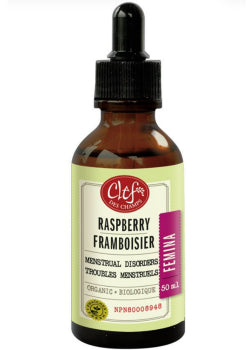
Femina Raspberry Tincture (Organic) - 50ml
$26.33
Clef Des Champs Femina Raspberry Tincture (Organic) - 50ml is a dietary supplement in liquid form, intended for adults as part of a daily wellness routine.
Clef des Champs Red Raspberry organic liquid tincture is used as a uterine and digestive tonic, relieving menstrual disorders. Red Raspberry is the main herb for all gynecological troubles. It is an important tonic of the female reproductive system and can be used at all ages. It nourishes, fortifies and balances, its action is mild and cumulative, making it an excellent support herb. Red raspberry relieves dysmenorrhea, harmonizes menstruation and tones the pelvic floor in the case of prolapsed uterus. Research has confirmed that red raspberry has been used traditionally as a support during labour. Its toning and relaxing actions on smooth muscles balance the uterus. [LIQUID]
Each ml contains:
Red Raspberry (fresh leaf, rubus idaeus) 360mg
Organic Alcohol 37%
Important Information:
Consult a health care practitioner if symptoms persist or for a use during pregnancy. Do not take with prescription drugs.
Dosage
Adults 2.2 ml, 3 times per day. Shake well before using. Take in a mouthful of water, 15 to 30 minutes before meals or at bed time. For long-term treatment, take 6 days out of 7.
Herbalist Recommended Tinctures, Teas, & Capsules
Clef des Champs is a Canadian company that was founded by an herbalist in Quebec. All of their herbs are organically grown in their own garden in the Quebec mountains. The natural elements nourish each herb until it’s ready to be picked, dried and made into one of their natural formulations. Their blends offer support for many health concerns including; oral health, women’s health, immune and respiratory health, digestive health, men’s prostate health, and muscle and joint relief. Available in water-alcohol, alcohol-free, capsule, syrup or salve formula’s, Clef des Champs uses the healing power of herbs to support your needs.
RED RASPBERRY TINCTURE - MENSTRUAL TROUBLES
Mode Of Action
Red raspberry is the main herb for all gynecological troubles. It is an important tonic of the female reproductive system and can be used at all ages. It nourishes, fortifies and balances, its action is mild and cumulative, making it an excellent support herb. Red raspberry relieves dysmenorrhea, harmonizes menstruation and tones the pelvic floor in the case of prolapsed uterus. Its tannins are astringent, they tone the mucus membranes, regulate excess menstrual bleeding and leukorrhea. Because red raspberry tightens the tissues, they become less permeable to harmful micro-organisms such as those that cause vaginitis.
Its astringent action also acts on the lining of the digestive tract and reduces
diarrhea, irritation and inflammation of the intestines, mild
constipation
and nausea. Red raspberry also soothes inflammation of the mouth (stomatitis, ulcers), of the throat (tonsillitis, sore throat) and of the respiratory and urinary system. It complements the action of emollient herbs such as
marshmallow
and
slippery elm.
Research has confirmed that red raspberry has been used traditionally as a support during labour. Its toning and relaxing actions on smooth muscles balance the uterus. It's infusion is taken during the second and third trimesters of pregnancy to prepare the uterus for labour and to make the contractions regular and efficient. It seems that women who drink red raspberry during pregnancy are less likely to require a rupture of the membranes to start labour, to undergo medical interventions during labour
(caesarian, forceps) and to give birth pre- or post-term. It also helps recover after childbirth. Its astringent properties prevent excess post-partum bleeding and tone the pelvic floor.
The main constituents of red raspberry are tannins (cyanidin,
ellagic acid, gallic acid), flavonoids (kaempferol,
quercetin
), phenolic acids (caffeic, ferulic), minerals (Ca, Mg, Zn, P), vitamins (A, B, C), trace elements, alkaloids (fragarine), polysaccharides and lipids.
Helpful Associations
Cramp Bark
for menstrual cramps and afterbirth pain.
Hormonatop
for hormone imbalance.
Feminatop
for cysts, fibroids,
endometriosis.
Mamaboost
for premenstrual tension and post-partum support.
slippery elm
infusion for cases of irritation of the stomach and diarrhea.
Uses
Endocrine system:
menstrual cramps, leucorrhea, excess menstrual flow, absent period, blood clots, gynecological problems, premenstrual syndrome, prolapsed uterus, preparing for labour, afterbirth pain, infertility.
Digestive systems:
diarrhea, mild constipation, irritation and inflammation of the intestine, nausea, irritation of the stomach.
Others:
stomatitis, mouth ulcer, sore throat, inflammation of respiratory tract lining.
History
Fossils have revealed that red raspberries have been a staple of the human diet for a very long time. Red raspberry leaves were already used in 60 BC for their medicinal properties. The Chinese have long used red raspberry leaves to treat urinary tract problems. In America, the First Nations used the leaves to treat diarrhea and dysentery and to prepare for childbirth. The Cree used it against cholera while the Dene used it as an astringent for prolapse of the uterus. In Europe, red raspberry has been cultivated for its fruits since the 16th century. It is only in the middle of the 20th century that Europeans and Americans became interested in its medicinal virtues. It remains to this day one of the most recommended herbs by midwives and most used by pregnant women around the world.
Carefully SelectedShips to the U.S.Wellness EssentialsTrusted Brands
Product Details
RED RASPBERRY TINCTURE - MENSTRUAL TROUBLES
Mode Of Action
Red raspberry is the main herb for all gynecological troubles. It is an important tonic of the female reproductive system and can be used at all ages. It nourishes, fortifies and balances, its action is mild and cumulative, making it an excellent support herb. Red raspberry relieves dysmenorrhea, harmonizes menstruation and tones the pelvic floor in the case of prolapsed uterus. Its tannins are astringent, they tone the mucus membranes, regulate excess menstrual bleeding and leukorrhea. Because red raspberry tightens the tissues, they become less permeable to harmful micro-organisms such as those that cause vaginitis.
Its astringent action also acts on the lining of the digestive tract and reduces
diarrhea, irritation and inflammation of the intestines, mild
constipation
and nausea. Red raspberry also soothes inflammation of the mouth (stomatitis, ulcers), of the throat (tonsillitis, sore throat) and of the respiratory and urinary system. It complements the action of emollient herbs such as
marshmallow
and
slippery elm.
Research has confirmed that red raspberry has been used traditionally as a support during labour. Its toning and relaxing actions on smooth muscles balance the uterus. It's infusion is taken during the second and third trimesters of pregnancy to prepare the uterus for labour and to make the contractions regular and efficient. It seems that women who drink red raspberry during pregnancy are less likely to require a rupture of the membranes to start labour, to undergo medical interventions during labour
(caesarian, forceps) and to give birth pre- or post-term. It also helps recover after childbirth. Its astringent properties prevent excess post-partum bleeding and tone the pelvic floor.
The main constituents of red raspberry are tannins (cyanidin,
ellagic acid, gallic acid), flavonoids (kaempferol,
quercetin
), phenolic acids (caffeic, ferulic), minerals (Ca, Mg, Zn, P), vitamins (A, B, C), trace elements, alkaloids (fragarine), polysaccharides and lipids.
Helpful Associations
Cramp Bark
for menstrual cramps and afterbirth pain.
Hormonatop
for hormone imbalance.
Feminatop
for cysts, fibroids,
endometriosis.
Mamaboost
for premenstrual tension and post-partum support.
slippery elm
infusion for cases of irritation of the stomach and diarrhea.
Uses
Endocrine system:
menstrual cramps, leucorrhea, excess menstrual flow, absent period, blood clots, gynecological problems, premenstrual syndrome, prolapsed uterus, preparing for labour, afterbirth pain, infertility.
Digestive systems:
diarrhea, mild constipation, irritation and inflammation of the intestine, nausea, irritation of the stomach.
Others:
stomatitis, mouth ulcer, sore throat, inflammation of respiratory tract lining.
History
Fossils have revealed that red raspberries have been a staple of the human diet for a very long time. Red raspberry leaves were already used in 60 BC for their medicinal properties. The Chinese have long used red raspberry leaves to treat urinary tract problems. In America, the First Nations used the leaves to treat diarrhea and dysentery and to prepare for childbirth. The Cree used it against cholera while the Dene used it as an astringent for prolapse of the uterus. In Europe, red raspberry has been cultivated for its fruits since the 16th century. It is only in the middle of the 20th century that Europeans and Americans became interested in its medicinal virtues. It remains to this day one of the most recommended herbs by midwives and most used by pregnant women around the world.