

1
/
of
1
Quest
For Men His Daily One - 90 Caps
For Men His Daily One - 90 Caps
Regular price
$28.49 USD
Regular price
Sale price
$28.49 USD
Shipping calculated at checkout.
Availability
In stock, and ready to ship
- Ironfree formula
- Muscle function
- Immune Support
- Bone Health
- Vision
Quantity
Couldn't load pickup availability

For Men His Daily One - 90 Caps
$28.49
Quest For Men His Daily One - 90 Caps is a dietary supplement in capsule form, intended for adults as part of a daily wellness routine.
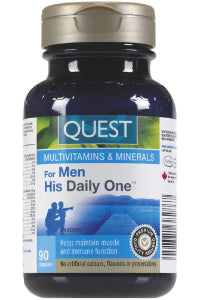
FOR MEN HIS DAILY ONE FROM QUEST.A multi vitamin that will keep up with a mans active lifstyle! Quest For Men His Daily One is a superior, balanced multivitamin supplement. Helps to maintain muscle function, immune function, eyesight, skin, bones and teeth. A factor in the maintenance of good health! [CAPSULE]
Each capsule contains:
Beta-Carotene 301 mcg
Vitamin A (palmitate) 906 mcg
Thaimine (thiamine HCI) 5 mg
Riboflavin 10 mg
Niacinamide 15 mg
Pantothenic acid (calcium d-pantothenate) 5 mg
Folate (folic acid) 500 mcg
Vitamin B6 (pyridoxine HCI) 15 mg
Vitamin B12 (cyanocobalamin) 100 mcg
Vitamin C (ascorbic acid, calcium ascorbate, magnesium ascorbate) 100 mg
Vitamin D (cholecalciferol) 12.5 mcg
Vitamin E (d-alpha-tocopheryl succinate) 33.5 mg
Biotin 50 mcg
Iodine (potassium idodide) 150 mcg
Calcium (ascorbate, carbonate) 200 mg
Chromium (HVP* chelate) 150 mg
Copper (gluconate) 2000 mcg
Magnesium (ascorbate, oxide, citrate) 50 mg
Manganesse (HVP* chelate) 2.5 mg
Potassium (citrate) 40 mg
Selenium (HVP* chelate) 100 mcg
Zinc (HVP* chelate) 20 mg
*Hydrolyzed Vegetable (corn, rice) Protein
Other Ingredients:
Magnesium stearate, silicon dioxide, gelatin.
Important Information:
For adult use only. This product does not contain dairy, eggs, gluten, shellfish, sulfites or wheat.
Beta-Carotene 301 mcg
Vitamin A (palmitate) 906 mcg
Thaimine (thiamine HCI) 5 mg
Riboflavin 10 mg
Niacinamide 15 mg
Pantothenic acid (calcium d-pantothenate) 5 mg
Folate (folic acid) 500 mcg
Vitamin B6 (pyridoxine HCI) 15 mg
Vitamin B12 (cyanocobalamin) 100 mcg
Vitamin C (ascorbic acid, calcium ascorbate, magnesium ascorbate) 100 mg
Vitamin D (cholecalciferol) 12.5 mcg
Vitamin E (d-alpha-tocopheryl succinate) 33.5 mg
Biotin 50 mcg
Iodine (potassium idodide) 150 mcg
Calcium (ascorbate, carbonate) 200 mg
Chromium (HVP* chelate) 150 mg
Copper (gluconate) 2000 mcg
Magnesium (ascorbate, oxide, citrate) 50 mg
Manganesse (HVP* chelate) 2.5 mg
Potassium (citrate) 40 mg
Selenium (HVP* chelate) 100 mcg
Zinc (HVP* chelate) 20 mg
*Hydrolyzed Vegetable (corn, rice) Protein
Other Ingredients:
Magnesium stearate, silicon dioxide, gelatin.
Important Information:
For adult use only. This product does not contain dairy, eggs, gluten, shellfish, sulfites or wheat.
Dosage
Take one or more capsules a day, as a dietary supplement.
Take one or more capsules a day, as a dietary supplement.
Quest, top quality health company and makers of Kids Chewable Multi’s and Adult Chewable Mult’si; great for overall health plus Niacin Flush- Free, Super Stress B Complex and Triple Fish Oil offer excellence in vitamins and omegas. Quest supplements receive rigorous testing; their top-selling Super Once a Day receives 300 tests alone. With Quest, you know you’re getting quality in every bottle.
For Mature Men 50+ Details
Features
For Men:
Features
20 mg
zinc
per capsule
500 IU
vitamin D
per capsule
15 mg vitamin B6 per capsule
100 mcg vitamin B12 per capsule
Helps support/maintain:
Proper muscle function (
magnesium
)
Immune function (
vitamin A, zinc)
Body metabolism of proteins/carbohydrates/fats (biotin, folate, niacinamide, pantothenic acid, thiamine, vitamins B6, B12, and C,
chromium, magnesium, manganese, zinc)
Detailed Information about the Ingredients in Quest Multi-Vitamins
Customization Details Vitamin D and
Calcium
Two million Canadians suffer from osteoporosis.
Risk factors include:
1. Low calcium intake
2. Early menopause (before age 45)
3. Medical conditions that inhibit absorption of nutrients (celiac, Crohn's)
4. Age 65+
Vitamin D increases calcium absorption by 30 to 80 percent
Health Canada's Natural Health Products Directorate (NHPD) lists some of the benefits of supplemental vitamin D and calcium:
Vitamin D and calcium help in the development and maintenance of bones and teeth
Vitamin D helps in the absorption and use of calcium
Calcium intake, when combined with sufficient vitamin D, a healthy diet, and regular exercise, may reduce the risk of developing osteoporosis
Sources of vitamin D:
Obtained from food (eggs, chicken livers, some fish, fortified foods)
Produced in the body by exposure to UVB rays from the sun
Supplements
Vitamin D supplementation is important because of the challenges in obtaining adequate
vitamin D from other sources:
Reduced exposure to sunlight 6 months of the year (in Canada)
Not realistic to eat enough vitamin D-rich foods
The Canadian Cancer Society reports that Canadians over 50 are at higher risk of not getting enough vitamin D
Health Canada reports that after the age of 50, the skin has a reduced capacity to produce vitamin D, increasing the need for supplementation
Osteoporosis Canada's vitamin D recommendations:
Adults 19 to 50 (including pregnant or lactating women): 400 IUs
Adults 50+: 800 IUs Health Canada has set a Tolerable Upper Intake Level (UL) of vitamin D at 2,000 IUs per day for all ages (over 1 year old).
Differences in
bone health
requirements across life stages and between genders
Both men and women 50+ face challenges meeting their daily calcium or vitamin D requirements and may be at risk of deficiency.
85 to 90% adult bone mass is acquired by age 18 in females and age 20 in males. Building strong bones during childhood and adolescence can help prevent osteoporosis later in life.
One in 4 women and at least 1 in 8 men over 50 are living with osteoporosis.
Women have lighter, thinner bones and tend to lose bone rapidly after menopause.
Vitamin D is prioritized in Quest's formulas for Teen Girls, Women, Women 50+, and Men 50+:
Women:
Higher incidence of osteoporosis
Important to develop strong bones from an early age
Dramatically increased need for vitamin D in women 50+
Men:
Dramatically increased need for vitamin D in men 50+
Calcium is prioritized in Quest's formulas for Teen Girls, Women, and Women 50+:
Women have particular concerns about bone health and are at higher risk of developing osteoporosis
Calcium helps in the development and maintenance of bones and teeth
Calcium intake, when combined with sufficient vitamin D, a healthy diet, and regular exercise, may reduce the risk of developing osteoporosis
Magnesium
The recommended daily allowance (RDA) for magnesium varies by life stage and gender.
Magnesium plays many important roles in the body:
Helps maintain proper muscle function
Helps the body metabolize carbohydrates, fats and proteins
Helps in the development and maintenance of bones and teeth
Helps in tissue formation
Data from the United States National Health and Nutrition Examination Survey suggests that substantial numbers of adults do not get the recommended amounts of magnesium in their diets.
Magnesium is prioritized in Quest's formulas for Teen Boys, Women, and Women 50+:
Teen Boys:
Magnesium helps to maintain proper muscle function and tissue formation, which is important to developing adolescent boys
Women:
Magnesium helps to relieve some symptoms of premenstrual syndrome
Women 50+:
Magnesium helps regulate the absorption of calcium and is involved in the structural integrity of bones and teeth
Iron
Iron requirements vary by life stage and gender. In Canada, approximately 20% of women, 50% of pregnant women, and 3% of men are iron deficient. Iron plays an essential role in the formation and proper function of red blood cells. Maintaining adequate iron levels is of particular concern for menstruating women and vegetarians.
Iron is prioritized in Quest's formulas for Women, Teen Girls, and Teen Boys:
Both teen boys and teen girls require iron for their growing, active bodies
Teen girls and women lose iron every month through menstruation; ensuring sufficient iron intake is particularly important for these groups.
Men, Men 50+ and Women 50+ are unlikely to become iron deficient, since they can obtain the iron they need from their diets. Therefore, formulas for these groups are iron-free.
Vitamin E
Vitamin E requirements vary by life stage and gender.
Antioxidants
such as vitamin E fight oxidative stress associated with aging. Quest Life-Stage. Gender-Specific Multis provide a demonstrable increase in vitamin E for Women 50+ and Men 50+. Vitamin E is well known for its antioxidant action in the body. Vitamin E disarms free radicals, which damage the body through oxidative stress. As we age, our body experiences greater levels of oxidative stress.20 UV rays from the sun, pollution, radiation, herbicides, and even overexposure to electromagnetic fields21 all negatively impact our body's cells.
Vitamin E is prioritized in Quest's formulas for Women 50+ and Men 50+. Older men and women have an increased need to fight oxidative stress, which damages health and appearance, and "ages the body"
Zinc requirements vary by life stage and gender
A large proportion of the North American population is estimated to be at risk of zinc deficiency.
Studies demonstrate that ensuring an adequate zinc intake is essential for optimal functioning of the immune system.
Research has shown low levels of zinc in individuals with acne and other skin conditions, many of whom were helped by zinc supplementation.
Research findings point to zinc playing a role in the regulation of testosterone levels in men.26 Healthy testosterone levels are critical for prostate and libido health.
Zinc is prioritized in Quest's formulas for Teen Boys, Teen Girls, Men, and Men 50+:
Zinc plays an important role in skin health, and therefore helps teens feel and look their best when they are most susceptible to acne
Zinc is necessary for the production of testosterone
B-complex vitamin requirements vary by life stage and gender
B vitamins help the body metabolize carbohydrates, fats, and proteins. Breaking down these substances into their building blocks contributes to the production of ATP, a molecule that provides energy to your cells. In addition to participating in critical metabolic processes, B vitamins included in Quest Life-Stage Gender-Specific
Multivitamins
perform a variety of other important functions:
Thiamine (B1) is required for normal growth
Riboflavin (B2), pantothenic acid and vitamin B6 help in tissue formation
Niacinamide (B3) is important for normal growth and development
Vitamin B12 is required for the production of red blood cells
Folic acid (folate) helps prevent neural tube defects, which means healthier babies, and is required for the formation of red blood cells
Biotin may help support nail health
Folic Acid
In a study conducted across seven Canadian provinces, neural tube defects in babies were demonstrated to have decreased by 46% since 1998.
Neural tube defects (NTDs) are birth defects that occur when the neural tube fails to close properly during the early weeks of pregnancy, resulting in abnormalities of the spine, brain, or skull that can result in stillbirth or lifelong disability. Closure of the neural tube happens early in pregnancy, often before a woman knows she is pregnant. Spina bifida is the most common NTD.
The need for folic acid supplementation is also of increased importance for women taking birth control pills. Many studies indicate that oral contraceptives lead to some degree of folate depletion. Health Canada32 and the Public Health Agency of Canada30 recommend that women of childbearing age be aware that they can reduce the risk of NTDs by supplementing with folic acid before they become pregnant. Health Canada's Natural Health Products Directorate (NHPD) states that folic acid helps to metabolize proteins and form red blood cells,33 which is important to all Canadians.
Folic acid is prioritized in Quest's formulas for Women and Teen Girls:
Women:
Folic acid supplementation can counteract depletion of this nutrient caused by oral contraceptives
Supplementing with folic acid prior to pregnancy reduces the risk of NTDs (neural tube defects)
Teen Girls:
Teen girls require higher folic acid to optimize red blood cell production due to the onset of menstruation
Niacinamide (Vitamin B3)
Niacinamide is a component of NAD+ (nicotinamide adenine dinucleotide), which assists in the production of ATP (adenosine triphosphate), the body's immediate source of energy.
Niacinamide also helps in normal growth and development. Quest's Life-Stage Gender-Specific Multis contain niacinamide, a form of vitamin B3 that does not cause the unpleasant "flushing" sensation often experienced when supplementing with niacin.
Niacinamide is prioritized in Quest's formulas for Teen Boys, Teen Girls, and Men:
Formulas for teen boys and girls contain extra niacinamide to support their busy lifestyles and growing bodies.
Higher Recommended Dietary Allowance (RDA) for men
Niacinamide has been used instead of niacin to avoid the "flushing" side effect.
Thiamine (Vitamin B1)
Thiamine is prioritized in Quest's formulas for Teen Boys, Teen Girls, and Men 50+:
Formulas for teen boys and girls contain extra thiamine to support normal growth and development
Thiamine is required for the body to form adenosine triphosphate (ATP), which every cell of the body uses for energy.
Vitamin B6
B6 requirements vary by life stage and gender Vitamin B6 is a water-soluble vitamin that performs a wide variety of functions in the body.
Vitamin B6 is essential for:
1. Carbohydrate, fat and
protein
metabolism
2. Tissue formation
3. Red blood cell metabolism
4. Efficient immune and nervous systems function
5. Production of hemoglobin (B6 also increases the amount of oxygen carried by hemoglobin)
6. The synthesis of serotonin, a neurotransmitter that may play a role in sleep, appetite, nausea, migraine headaches, and mood regulation Studies have shown that the use of oral contraceptives (the birth control pill) is associated with low levels of vitamin B6 (as well other vitamins such as vitamin B12 and folate).
Vitamin B6 is prioritized in Quest's formula for Women:
Women who use the birth control pill may require extra
Vitamin B6 is likely to benefit premenstrual depression
Biotin
Biotin is an essential water-soluble B vitamin required for the proper functioning of a number of enzymes. Without biotin, various skin, intestinal tract, and nervous system complications can occur. Biotin helps the body metabolize carbohydrates, fats and proteins. Research suggests that supplemental biotin may increase nail-plate thickness in people with brittle nails.
Biotin is prioritized in Quest's formulas for Teen Girls and Women:
Biotin's role as a coenzyme in skin-related functions and its potential contribution to nail health can help teen girls and women look and feel their best.
Customized Levels of Chromium, Manganese,
Potassium, Selenium
Each of these essential minerals are included in Quest's formulas for Women, Men, Women 50+ and Men 50+, but are not part of our teen formulas in accordance with regulations set out by Health Canada. As a brand, Quest strives to provide high quality natural health supplements while standing behind Health Canada's initiative to ensure the safety and efficacy of all natural health products.
Chromium:
Supports healthy glucose metabolism
Studies have demonstrated a correlation between low circulating levels of chromium and the incidence of type 2 diabetes.
Manganese:
Helps in bone development and in the metabolism of carbohydrates, fats and proteins.
Potassium:
An important electrolyte for the maintenance of good health
Selenium:
An antioxidant for the maintenance of good health
Features
For Men:
Features
20 mg
zinc
per capsule
500 IU
vitamin D
per capsule
15 mg vitamin B6 per capsule
100 mcg vitamin B12 per capsule
Helps support/maintain:
Proper muscle function (
magnesium
)
Immune function (
vitamin A, zinc)
Body metabolism of proteins/carbohydrates/fats (biotin, folate, niacinamide, pantothenic acid, thiamine, vitamins B6, B12, and C,
chromium, magnesium, manganese, zinc)
Detailed Information about the Ingredients in Quest Multi-Vitamins
Customization Details Vitamin D and
Calcium
Two million Canadians suffer from osteoporosis.
Risk factors include:
1. Low calcium intake
2. Early menopause (before age 45)
3. Medical conditions that inhibit absorption of nutrients (celiac, Crohn's)
4. Age 65+
Vitamin D increases calcium absorption by 30 to 80 percent
Health Canada's Natural Health Products Directorate (NHPD) lists some of the benefits of supplemental vitamin D and calcium:
Vitamin D and calcium help in the development and maintenance of bones and teeth
Vitamin D helps in the absorption and use of calcium
Calcium intake, when combined with sufficient vitamin D, a healthy diet, and regular exercise, may reduce the risk of developing osteoporosis
Sources of vitamin D:
Obtained from food (eggs, chicken livers, some fish, fortified foods)
Produced in the body by exposure to UVB rays from the sun
Supplements
Vitamin D supplementation is important because of the challenges in obtaining adequate
vitamin D from other sources:
Reduced exposure to sunlight 6 months of the year (in Canada)
Not realistic to eat enough vitamin D-rich foods
The Canadian Cancer Society reports that Canadians over 50 are at higher risk of not getting enough vitamin D
Health Canada reports that after the age of 50, the skin has a reduced capacity to produce vitamin D, increasing the need for supplementation
Osteoporosis Canada's vitamin D recommendations:
Adults 19 to 50 (including pregnant or lactating women): 400 IUs
Adults 50+: 800 IUs Health Canada has set a Tolerable Upper Intake Level (UL) of vitamin D at 2,000 IUs per day for all ages (over 1 year old).
Differences in
bone health
requirements across life stages and between genders
Both men and women 50+ face challenges meeting their daily calcium or vitamin D requirements and may be at risk of deficiency.
85 to 90% adult bone mass is acquired by age 18 in females and age 20 in males. Building strong bones during childhood and adolescence can help prevent osteoporosis later in life.
One in 4 women and at least 1 in 8 men over 50 are living with osteoporosis.
Women have lighter, thinner bones and tend to lose bone rapidly after menopause.
Vitamin D is prioritized in Quest's formulas for Teen Girls, Women, Women 50+, and Men 50+:
Women:
Higher incidence of osteoporosis
Important to develop strong bones from an early age
Dramatically increased need for vitamin D in women 50+
Men:
Dramatically increased need for vitamin D in men 50+
Calcium is prioritized in Quest's formulas for Teen Girls, Women, and Women 50+:
Women have particular concerns about bone health and are at higher risk of developing osteoporosis
Calcium helps in the development and maintenance of bones and teeth
Calcium intake, when combined with sufficient vitamin D, a healthy diet, and regular exercise, may reduce the risk of developing osteoporosis
Magnesium
The recommended daily allowance (RDA) for magnesium varies by life stage and gender.
Magnesium plays many important roles in the body:
Helps maintain proper muscle function
Helps the body metabolize carbohydrates, fats and proteins
Helps in the development and maintenance of bones and teeth
Helps in tissue formation
Data from the United States National Health and Nutrition Examination Survey suggests that substantial numbers of adults do not get the recommended amounts of magnesium in their diets.
Magnesium is prioritized in Quest's formulas for Teen Boys, Women, and Women 50+:
Teen Boys:
Magnesium helps to maintain proper muscle function and tissue formation, which is important to developing adolescent boys
Women:
Magnesium helps to relieve some symptoms of premenstrual syndrome
Women 50+:
Magnesium helps regulate the absorption of calcium and is involved in the structural integrity of bones and teeth
Iron
Iron requirements vary by life stage and gender. In Canada, approximately 20% of women, 50% of pregnant women, and 3% of men are iron deficient. Iron plays an essential role in the formation and proper function of red blood cells. Maintaining adequate iron levels is of particular concern for menstruating women and vegetarians.
Iron is prioritized in Quest's formulas for Women, Teen Girls, and Teen Boys:
Both teen boys and teen girls require iron for their growing, active bodies
Teen girls and women lose iron every month through menstruation; ensuring sufficient iron intake is particularly important for these groups.
Men, Men 50+ and Women 50+ are unlikely to become iron deficient, since they can obtain the iron they need from their diets. Therefore, formulas for these groups are iron-free.
Vitamin E
Vitamin E requirements vary by life stage and gender.
Antioxidants
such as vitamin E fight oxidative stress associated with aging. Quest Life-Stage. Gender-Specific Multis provide a demonstrable increase in vitamin E for Women 50+ and Men 50+. Vitamin E is well known for its antioxidant action in the body. Vitamin E disarms free radicals, which damage the body through oxidative stress. As we age, our body experiences greater levels of oxidative stress.20 UV rays from the sun, pollution, radiation, herbicides, and even overexposure to electromagnetic fields21 all negatively impact our body's cells.
Vitamin E is prioritized in Quest's formulas for Women 50+ and Men 50+. Older men and women have an increased need to fight oxidative stress, which damages health and appearance, and "ages the body"
Zinc requirements vary by life stage and gender
A large proportion of the North American population is estimated to be at risk of zinc deficiency.
Studies demonstrate that ensuring an adequate zinc intake is essential for optimal functioning of the immune system.
Research has shown low levels of zinc in individuals with acne and other skin conditions, many of whom were helped by zinc supplementation.
Research findings point to zinc playing a role in the regulation of testosterone levels in men.26 Healthy testosterone levels are critical for prostate and libido health.
Zinc is prioritized in Quest's formulas for Teen Boys, Teen Girls, Men, and Men 50+:
Zinc plays an important role in skin health, and therefore helps teens feel and look their best when they are most susceptible to acne
Zinc is necessary for the production of testosterone
B-complex vitamin requirements vary by life stage and gender
B vitamins help the body metabolize carbohydrates, fats, and proteins. Breaking down these substances into their building blocks contributes to the production of ATP, a molecule that provides energy to your cells. In addition to participating in critical metabolic processes, B vitamins included in Quest Life-Stage Gender-Specific
Multivitamins
perform a variety of other important functions:
Thiamine (B1) is required for normal growth
Riboflavin (B2), pantothenic acid and vitamin B6 help in tissue formation
Niacinamide (B3) is important for normal growth and development
Vitamin B12 is required for the production of red blood cells
Folic acid (folate) helps prevent neural tube defects, which means healthier babies, and is required for the formation of red blood cells
Biotin may help support nail health
Folic Acid
In a study conducted across seven Canadian provinces, neural tube defects in babies were demonstrated to have decreased by 46% since 1998.
Neural tube defects (NTDs) are birth defects that occur when the neural tube fails to close properly during the early weeks of pregnancy, resulting in abnormalities of the spine, brain, or skull that can result in stillbirth or lifelong disability. Closure of the neural tube happens early in pregnancy, often before a woman knows she is pregnant. Spina bifida is the most common NTD.
The need for folic acid supplementation is also of increased importance for women taking birth control pills. Many studies indicate that oral contraceptives lead to some degree of folate depletion. Health Canada32 and the Public Health Agency of Canada30 recommend that women of childbearing age be aware that they can reduce the risk of NTDs by supplementing with folic acid before they become pregnant. Health Canada's Natural Health Products Directorate (NHPD) states that folic acid helps to metabolize proteins and form red blood cells,33 which is important to all Canadians.
Folic acid is prioritized in Quest's formulas for Women and Teen Girls:
Women:
Folic acid supplementation can counteract depletion of this nutrient caused by oral contraceptives
Supplementing with folic acid prior to pregnancy reduces the risk of NTDs (neural tube defects)
Teen Girls:
Teen girls require higher folic acid to optimize red blood cell production due to the onset of menstruation
Niacinamide (Vitamin B3)
Niacinamide is a component of NAD+ (nicotinamide adenine dinucleotide), which assists in the production of ATP (adenosine triphosphate), the body's immediate source of energy.
Niacinamide also helps in normal growth and development. Quest's Life-Stage Gender-Specific Multis contain niacinamide, a form of vitamin B3 that does not cause the unpleasant "flushing" sensation often experienced when supplementing with niacin.
Niacinamide is prioritized in Quest's formulas for Teen Boys, Teen Girls, and Men:
Formulas for teen boys and girls contain extra niacinamide to support their busy lifestyles and growing bodies.
Higher Recommended Dietary Allowance (RDA) for men
Niacinamide has been used instead of niacin to avoid the "flushing" side effect.
Thiamine (Vitamin B1)
Thiamine is prioritized in Quest's formulas for Teen Boys, Teen Girls, and Men 50+:
Formulas for teen boys and girls contain extra thiamine to support normal growth and development
Thiamine is required for the body to form adenosine triphosphate (ATP), which every cell of the body uses for energy.
Vitamin B6
B6 requirements vary by life stage and gender Vitamin B6 is a water-soluble vitamin that performs a wide variety of functions in the body.
Vitamin B6 is essential for:
1. Carbohydrate, fat and
protein
metabolism
2. Tissue formation
3. Red blood cell metabolism
4. Efficient immune and nervous systems function
5. Production of hemoglobin (B6 also increases the amount of oxygen carried by hemoglobin)
6. The synthesis of serotonin, a neurotransmitter that may play a role in sleep, appetite, nausea, migraine headaches, and mood regulation Studies have shown that the use of oral contraceptives (the birth control pill) is associated with low levels of vitamin B6 (as well other vitamins such as vitamin B12 and folate).
Vitamin B6 is prioritized in Quest's formula for Women:
Women who use the birth control pill may require extra
Vitamin B6 is likely to benefit premenstrual depression
Biotin
Biotin is an essential water-soluble B vitamin required for the proper functioning of a number of enzymes. Without biotin, various skin, intestinal tract, and nervous system complications can occur. Biotin helps the body metabolize carbohydrates, fats and proteins. Research suggests that supplemental biotin may increase nail-plate thickness in people with brittle nails.
Biotin is prioritized in Quest's formulas for Teen Girls and Women:
Biotin's role as a coenzyme in skin-related functions and its potential contribution to nail health can help teen girls and women look and feel their best.
Customized Levels of Chromium, Manganese,
Potassium, Selenium
Each of these essential minerals are included in Quest's formulas for Women, Men, Women 50+ and Men 50+, but are not part of our teen formulas in accordance with regulations set out by Health Canada. As a brand, Quest strives to provide high quality natural health supplements while standing behind Health Canada's initiative to ensure the safety and efficacy of all natural health products.
Chromium:
Supports healthy glucose metabolism
Studies have demonstrated a correlation between low circulating levels of chromium and the incidence of type 2 diabetes.
Manganese:
Helps in bone development and in the metabolism of carbohydrates, fats and proteins.
Potassium:
An important electrolyte for the maintenance of good health
Selenium:
An antioxidant for the maintenance of good health
Carefully Selected
Ships to the U.S.
Wellness Essentials
Trusted Brands
Product Details
For Mature Men 50+ DetailsFeatures
For Men:
Features
20 mg
zinc
per capsule
500 IU
vitamin D
per capsule
15 mg vitamin B6 per capsule
100 mcg vitamin B12 per capsule
Helps support/maintain:
Proper muscle function (
magnesium
)
Immune function (
vitamin A, zinc)
Body metabolism of proteins/carbohydrates/fats (biotin, folate, niacinamide, pantothenic acid, thiamine, vitamins B6, B12, and C,
chromium, magnesium, manganese, zinc)
Detailed Information about the Ingredients in Quest Multi-Vitamins
Customization Details Vitamin D and
Calcium
Two million Canadians suffer from osteoporosis.
Risk factors include:
1. Low calcium intake
2. Early menopause (before age 45)
3. Medical conditions that inhibit absorption of nutrients (celiac, Crohn's)
4. Age 65+
Vitamin D increases calcium absorption by 30 to 80 percent
Health Canada's Natural Health Products Directorate (NHPD) lists some of the benefits of supplemental vitamin D and calcium:
Vitamin D and calcium help in the development and maintenance of bones and teeth
Vitamin D helps in the absorption and use of calcium
Calcium intake, when combined with sufficient vitamin D, a healthy diet, and regular exercise, may reduce the risk of developing osteoporosis
Sources of vitamin D:
Obtained from food (eggs, chicken livers, some fish, fortified foods)
Produced in the body by exposure to UVB rays from the sun
Supplements
Vitamin D supplementation is important because of the challenges in obtaining adequate
vitamin D from other sources:
Reduced exposure to sunlight 6 months of the year (in Canada)
Not realistic to eat enough vitamin D-rich foods
The Canadian Cancer Society reports that Canadians over 50 are at higher risk of not getting enough vitamin D
Health Canada reports that after the age of 50, the skin has a reduced capacity to produce vitamin D, increasing the need for supplementation
Osteoporosis Canada's vitamin D recommendations:
Adults 19 to 50 (including pregnant or lactating women): 400 IUs
Adults 50+: 800 IUs Health Canada has set a Tolerable Upper Intake Level (UL) of vitamin D at 2,000 IUs per day for all ages (over 1 year old).
Differences in
bone health
requirements across life stages and between genders
Both men and women 50+ face challenges meeting their daily calcium or vitamin D requirements and may be at risk of deficiency.
85 to 90% adult bone mass is acquired by age 18 in females and age 20 in males. Building strong bones during childhood and adolescence can help prevent osteoporosis later in life.
One in 4 women and at least 1 in 8 men over 50 are living with osteoporosis.
Women have lighter, thinner bones and tend to lose bone rapidly after menopause.
Vitamin D is prioritized in Quest's formulas for Teen Girls, Women, Women 50+, and Men 50+:
Women:
Higher incidence of osteoporosis
Important to develop strong bones from an early age
Dramatically increased need for vitamin D in women 50+
Men:
Dramatically increased need for vitamin D in men 50+
Calcium is prioritized in Quest's formulas for Teen Girls, Women, and Women 50+:
Women have particular concerns about bone health and are at higher risk of developing osteoporosis
Calcium helps in the development and maintenance of bones and teeth
Calcium intake, when combined with sufficient vitamin D, a healthy diet, and regular exercise, may reduce the risk of developing osteoporosis
Magnesium
The recommended daily allowance (RDA) for magnesium varies by life stage and gender.
Magnesium plays many important roles in the body:
Helps maintain proper muscle function
Helps the body metabolize carbohydrates, fats and proteins
Helps in the development and maintenance of bones and teeth
Helps in tissue formation
Data from the United States National Health and Nutrition Examination Survey suggests that substantial numbers of adults do not get the recommended amounts of magnesium in their diets.
Magnesium is prioritized in Quest's formulas for Teen Boys, Women, and Women 50+:
Teen Boys:
Magnesium helps to maintain proper muscle function and tissue formation, which is important to developing adolescent boys
Women:
Magnesium helps to relieve some symptoms of premenstrual syndrome
Women 50+:
Magnesium helps regulate the absorption of calcium and is involved in the structural integrity of bones and teeth
Iron
Iron requirements vary by life stage and gender. In Canada, approximately 20% of women, 50% of pregnant women, and 3% of men are iron deficient. Iron plays an essential role in the formation and proper function of red blood cells. Maintaining adequate iron levels is of particular concern for menstruating women and vegetarians.
Iron is prioritized in Quest's formulas for Women, Teen Girls, and Teen Boys:
Both teen boys and teen girls require iron for their growing, active bodies
Teen girls and women lose iron every month through menstruation; ensuring sufficient iron intake is particularly important for these groups.
Men, Men 50+ and Women 50+ are unlikely to become iron deficient, since they can obtain the iron they need from their diets. Therefore, formulas for these groups are iron-free.
Vitamin E
Vitamin E requirements vary by life stage and gender.
Antioxidants
such as vitamin E fight oxidative stress associated with aging. Quest Life-Stage. Gender-Specific Multis provide a demonstrable increase in vitamin E for Women 50+ and Men 50+. Vitamin E is well known for its antioxidant action in the body. Vitamin E disarms free radicals, which damage the body through oxidative stress. As we age, our body experiences greater levels of oxidative stress.20 UV rays from the sun, pollution, radiation, herbicides, and even overexposure to electromagnetic fields21 all negatively impact our body's cells.
Vitamin E is prioritized in Quest's formulas for Women 50+ and Men 50+. Older men and women have an increased need to fight oxidative stress, which damages health and appearance, and "ages the body"
Zinc requirements vary by life stage and gender
A large proportion of the North American population is estimated to be at risk of zinc deficiency.
Studies demonstrate that ensuring an adequate zinc intake is essential for optimal functioning of the immune system.
Research has shown low levels of zinc in individuals with acne and other skin conditions, many of whom were helped by zinc supplementation.
Research findings point to zinc playing a role in the regulation of testosterone levels in men.26 Healthy testosterone levels are critical for prostate and libido health.
Zinc is prioritized in Quest's formulas for Teen Boys, Teen Girls, Men, and Men 50+:
Zinc plays an important role in skin health, and therefore helps teens feel and look their best when they are most susceptible to acne
Zinc is necessary for the production of testosterone
B-complex vitamin requirements vary by life stage and gender
B vitamins help the body metabolize carbohydrates, fats, and proteins. Breaking down these substances into their building blocks contributes to the production of ATP, a molecule that provides energy to your cells. In addition to participating in critical metabolic processes, B vitamins included in Quest Life-Stage Gender-Specific
Multivitamins
perform a variety of other important functions:
Thiamine (B1) is required for normal growth
Riboflavin (B2), pantothenic acid and vitamin B6 help in tissue formation
Niacinamide (B3) is important for normal growth and development
Vitamin B12 is required for the production of red blood cells
Folic acid (folate) helps prevent neural tube defects, which means healthier babies, and is required for the formation of red blood cells
Biotin may help support nail health
Folic Acid
In a study conducted across seven Canadian provinces, neural tube defects in babies were demonstrated to have decreased by 46% since 1998.
Neural tube defects (NTDs) are birth defects that occur when the neural tube fails to close properly during the early weeks of pregnancy, resulting in abnormalities of the spine, brain, or skull that can result in stillbirth or lifelong disability. Closure of the neural tube happens early in pregnancy, often before a woman knows she is pregnant. Spina bifida is the most common NTD.
The need for folic acid supplementation is also of increased importance for women taking birth control pills. Many studies indicate that oral contraceptives lead to some degree of folate depletion. Health Canada32 and the Public Health Agency of Canada30 recommend that women of childbearing age be aware that they can reduce the risk of NTDs by supplementing with folic acid before they become pregnant. Health Canada's Natural Health Products Directorate (NHPD) states that folic acid helps to metabolize proteins and form red blood cells,33 which is important to all Canadians.
Folic acid is prioritized in Quest's formulas for Women and Teen Girls:
Women:
Folic acid supplementation can counteract depletion of this nutrient caused by oral contraceptives
Supplementing with folic acid prior to pregnancy reduces the risk of NTDs (neural tube defects)
Teen Girls:
Teen girls require higher folic acid to optimize red blood cell production due to the onset of menstruation
Niacinamide (Vitamin B3)
Niacinamide is a component of NAD+ (nicotinamide adenine dinucleotide), which assists in the production of ATP (adenosine triphosphate), the body's immediate source of energy.
Niacinamide also helps in normal growth and development. Quest's Life-Stage Gender-Specific Multis contain niacinamide, a form of vitamin B3 that does not cause the unpleasant "flushing" sensation often experienced when supplementing with niacin.
Niacinamide is prioritized in Quest's formulas for Teen Boys, Teen Girls, and Men:
Formulas for teen boys and girls contain extra niacinamide to support their busy lifestyles and growing bodies.
Higher Recommended Dietary Allowance (RDA) for men
Niacinamide has been used instead of niacin to avoid the "flushing" side effect.
Thiamine (Vitamin B1)
Thiamine is prioritized in Quest's formulas for Teen Boys, Teen Girls, and Men 50+:
Formulas for teen boys and girls contain extra thiamine to support normal growth and development
Thiamine is required for the body to form adenosine triphosphate (ATP), which every cell of the body uses for energy.
Vitamin B6
B6 requirements vary by life stage and gender Vitamin B6 is a water-soluble vitamin that performs a wide variety of functions in the body.
Vitamin B6 is essential for:
1. Carbohydrate, fat and
protein
metabolism
2. Tissue formation
3. Red blood cell metabolism
4. Efficient immune and nervous systems function
5. Production of hemoglobin (B6 also increases the amount of oxygen carried by hemoglobin)
6. The synthesis of serotonin, a neurotransmitter that may play a role in sleep, appetite, nausea, migraine headaches, and mood regulation Studies have shown that the use of oral contraceptives (the birth control pill) is associated with low levels of vitamin B6 (as well other vitamins such as vitamin B12 and folate).
Vitamin B6 is prioritized in Quest's formula for Women:
Women who use the birth control pill may require extra
Vitamin B6 is likely to benefit premenstrual depression
Biotin
Biotin is an essential water-soluble B vitamin required for the proper functioning of a number of enzymes. Without biotin, various skin, intestinal tract, and nervous system complications can occur. Biotin helps the body metabolize carbohydrates, fats and proteins. Research suggests that supplemental biotin may increase nail-plate thickness in people with brittle nails.
Biotin is prioritized in Quest's formulas for Teen Girls and Women:
Biotin's role as a coenzyme in skin-related functions and its potential contribution to nail health can help teen girls and women look and feel their best.
Customized Levels of Chromium, Manganese,
Potassium, Selenium
Each of these essential minerals are included in Quest's formulas for Women, Men, Women 50+ and Men 50+, but are not part of our teen formulas in accordance with regulations set out by Health Canada. As a brand, Quest strives to provide high quality natural health supplements while standing behind Health Canada's initiative to ensure the safety and efficacy of all natural health products.
Chromium:
Supports healthy glucose metabolism
Studies have demonstrated a correlation between low circulating levels of chromium and the incidence of type 2 diabetes.
Manganese:
Helps in bone development and in the metabolism of carbohydrates, fats and proteins.
Potassium:
An important electrolyte for the maintenance of good health
Selenium:
An antioxidant for the maintenance of good health


🌿
Daily Wellness
Easy to add to your everyday health routine.
✅
Carefully Selected
Chosen with quality and customer needs in mind.
💊
Simple to Use
Designed for convenient daily supplementation.
🚚
Ships to the U.S.
Fast, reliable shipping to U.S. customers.