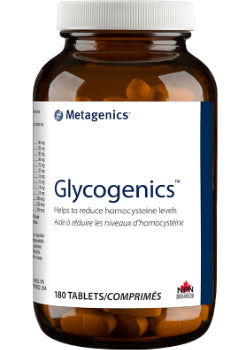
GLYCOGENICSGlycogenics is an advanced balanced B-complex formula that features a blend of B vitamins and complementary nutrients. It is often recommended by natural health care practitioners to help regulate healthy homocysteine metabolism, energy levels, and a healthy stress response. [TABS]
One tablet supplies:
Vitamin C (as ascorbic acid) 125 mg
Thiamin (as thiamin mononitrate) 14 mg
Riboflavin 16 mg
Niacin (as niacinamide and niacin) 200 mg
Vitamin B6 (as pyridoxine HCl) 22 mg
Folate (as folic acid and L-5-methyl tetrahydrofolate) 400 mcg
Vitamin B12 (as cyanocobalamin) 250 mcg
Biotin 250 mcg
Pantothenic Acid (as D-calcium pantothenate) 75 mg
Choline (as choline bitartrate) 100 mg
Inositol 94 mg
para-Aminobenzoic Acid (PABA) 15 mg
Other Ingredients:
Microcrystalline cellulose, stearic acid, silica, magnesium stearate, and coating (deionized water, microcrystalline celulose, polyethelene glycol, and carrageenan).
Important Information:
Suitable for vegetarians
Dosage
One tablet daily or as directed by your healthcare practitioner.
Premium Metagenics Formulas for Whole‑Body Health
For over 30 years, Metagenics has been dedicated to scientific discovery and bringing you the highest quality supplements. Some of Metagenics most popular supplements inlcude Metagenics Ultra Flora, Probiotics, Phytomulti, Clear Change, Ultra Glucose Control, Candibactin-BR and Candibactin-AR. From gluten-free to non-GMO, Metagenics aims to deliver clear and accurately labeled nutritional solutions with over 120 vegetarian supplements.
B VITAMINS AND THEIR BENEFITS
VITAMIN B
-6 (PYRIDOXINE, P5P)
Pyridoxine is a water-soluble B vitamin. There are several forms of B6 including pyridoxine, pyridoxal and pyridoxamine. B6 is involved in more body functions than any other single nutrient. It maintains fluid balance in the body, which can be useful for women who experience
PMS
bloating or individuals with carpal tunnel syndrome. B6 helps to make hemoglobin, the oxygen- carrying component of red blood cells. It is needed to synthesize genetic material and is essential for normal cellular growth. B6 is required for the production of neurochemicals in the brain, such as serotonin, which regulates pleasurable experiences and appetite, and
GABA, which calms the body. Therefore, B6 is useful for a variety of neurological disorders including autism and hormonally related depression. It plays an important role in the conversion of homocysteine into harmless substances. Homocysteine damages the inner lining of arteries and high levels of homocysteine are correlated to an increased risk of atherosclerosis. B6 can be used to treat anemia, allergies, arthritis,
asthma, kidney stones, pregnancy-related nausea and MS.
DOSAGES
All of the B vitamins work together and are best used by the body in a
B complex, which is why many B complex supplements include a small dose of B6 in them. If additional supplementation of B6 is needed it should be taken in addition to a good B complex. Most B vitamins are water-soluble and any extra from large doses is flushed out of the body easily, therefore it's best to take lower dosages of the B complex several times a day than one larger dose. Spray or sublingual forms of B vitamins are easily absorbed, as are capsules - if your digestion is healthy, then the tablet form is usually suitable for most people.
Time-released formulas of B6 are available. They allow the body time to gradually absorb B6 and avoid the loss of large amounts of the supplement through the urine. Pyridoxal-5-phosphate is the activated form of B6. It can be helpful to those who have decreased ability to convert B6 into the active form.
B6 is depleted by antidepressants, estrogen, oral contraceptives and alcohol. Cortisone and diuretics block the absorption of B6. Diets high in
protein
require more B6 intake.
VITAMIN B-6 QUICK FACTS
FOOD SOURCES INCLUDE:
Carrots
Chicken
Eggs
Fish
Meat
Peas
Spinach
Sunflower Seeds
Walnuts
Wheat Germ
Nutritional Yeast
DEFICIENCY SYMPTOMS INCLUDE:
Anemia
Convulsions
Headaches, nausea
Flaky skin
Sore tongue
Acne, arthritis
Depression
Dizziness
Fatigue
Impaired memory
Carpal tunnel syndrome
OPTIMUM DOSAGE:
100-300 mg daily. (Clinical doses may be higher as recommended by your practitioner)
IMPORTANT INFORMATION:
The elderly and anyone with impaired digestion are prone to a deficiency of B vitamins.
Long-term use of more than 1000mg daily can cause nerve damage and loss of coordination.
Should not be used by Parkinson's patients on dopamine therapy.
Diabetics may have to decrease their insulin intake while taking B6.
VITAMIN B-12
B12 is a water-soluble B vitamin. Deficiencies of B12 may not be seen for several years because the body can store up to 5 years worth of this vitamin. There are several forms of B12 including cyanocobalamin and methylcobalamin. B12 is required in areas where there is high cell turnover, for example the gastrointestinal tract, bone marrow and nervous system. Thus B12 has been used for the treatment of neurological diseases like multiple sclerosis and depression.
LACK OF VITAMIN B-12
Anemia is a lack of the oxygen carrying ability of red blood cells. B12 regulates blood cell production, with folic acid. Lack of B12 leads to types of anemia where the red blood cells look too large, macrocytic, under the microscope. Supplementing sublingually with B12 reverses this type of anemia. B12 is required for digestion, fertility and the normal growth and development of all cells. It enhances learning and memory, and normalizes sleep patterns.
All of the B vitamins work together and are best used by the body in a B complex, which is why many B complex supplements include a small dose of B12 in them. Most B vitamins are water-soluble and any extra from large doses is flushed out of the body easily, therefore it's best to take lower dosages of the B complex several times a day than one larger dose. Spray or sublingual forms of B vitamins are easily absorbed, as are capsules - if your digestion is healthy, then the tablet form is usually suitable for most people.
CONSUMING VITAMIN B-12
If additional supplementation of B12 is needed it can be taken in addition to a B complex. Deficiency of intrinsic factor in the stomach results in the inability of the body to absorb B12. Sublingual formulas are available and are absorbed in the mouth, thereby eliminating the need for intrinsic factor. Methylcobalamin is a form of B12 that is available as a supplement and is easier for the body to use than cyanocobalamin.
B12 is depleted by sedatives, estrogen, oral contraceptives and alcohol. Anti-gout medication, anti-coagulants and
potassium
supplements block the absorption of B12. Vegetarians that do not consume eggs or dairy products require B12 supplementation. Diets high in protein require more B12 intake.
VITAMIN B-12 QUICK FACTS
FOOD SOURCES INCLUDE:
Clams
Eggs
Herring
Kidney
Liver
Mackerel
Dairy Products
Seafood
Sea vegetables
Nutritional yeast
DEFICIENCY SYMPTOMS INCLUDE:
Anemia
Bone Loss
Fatigue
Constipation
Depression
Dizziness
Enlarged liver
Eye disorders
Memory loss
Neurological damage
Heart palpitations
OPTIMUM DOSAGE:
1000 mcg daily. May be given as an injection by a health professional. (Clinical doses may be higher as recommended by your practitioner)
WORKS WELL WITH:
Vitamin B complex
Folic acid
Vitamin A
Vitamin C
Vitamin E
Calcium
IMPORTANT INFORMATION:
The elderly and anyone with impaired digestion are prone to a deficiency of B vitamins, especially B12.
There is no toxicity associated with B12.
Carefully SelectedShips to the U.S.Wellness EssentialsTrusted Brands
Product Details
B VITAMINS AND THEIR BENEFITS
VITAMIN B
-6 (PYRIDOXINE, P5P)
Pyridoxine is a water-soluble B vitamin. There are several forms of B6 including pyridoxine, pyridoxal and pyridoxamine. B6 is involved in more body functions than any other single nutrient. It maintains fluid balance in the body, which can be useful for women who experience
PMS
bloating or individuals with carpal tunnel syndrome. B6 helps to make hemoglobin, the oxygen- carrying component of red blood cells. It is needed to synthesize genetic material and is essential for normal cellular growth. B6 is required for the production of neurochemicals in the brain, such as serotonin, which regulates pleasurable experiences and appetite, and
GABA, which calms the body. Therefore, B6 is useful for a variety of neurological disorders including autism and hormonally related depression. It plays an important role in the conversion of homocysteine into harmless substances. Homocysteine damages the inner lining of arteries and high levels of homocysteine are correlated to an increased risk of atherosclerosis. B6 can be used to treat anemia, allergies, arthritis,
asthma, kidney stones, pregnancy-related nausea and MS.
DOSAGES
All of the B vitamins work together and are best used by the body in a
B complex, which is why many B complex supplements include a small dose of B6 in them. If additional supplementation of B6 is needed it should be taken in addition to a good B complex. Most B vitamins are water-soluble and any extra from large doses is flushed out of the body easily, therefore it's best to take lower dosages of the B complex several times a day than one larger dose. Spray or sublingual forms of B vitamins are easily absorbed, as are capsules - if your digestion is healthy, then the tablet form is usually suitable for most people.
Time-released formulas of B6 are available. They allow the body time to gradually absorb B6 and avoid the loss of large amounts of the supplement through the urine. Pyridoxal-5-phosphate is the activated form of B6. It can be helpful to those who have decreased ability to convert B6 into the active form.
B6 is depleted by antidepressants, estrogen, oral contraceptives and alcohol. Cortisone and diuretics block the absorption of B6. Diets high in
protein
require more B6 intake.
VITAMIN B-6 QUICK FACTS
FOOD SOURCES INCLUDE:
Carrots
Chicken
Eggs
Fish
Meat
Peas
Spinach
Sunflower Seeds
Walnuts
Wheat Germ
Nutritional Yeast
DEFICIENCY SYMPTOMS INCLUDE:
Anemia
Convulsions
Headaches, nausea
Flaky skin
Sore tongue
Acne, arthritis
Depression
Dizziness
Fatigue
Impaired memory
Carpal tunnel syndrome
OPTIMUM DOSAGE:
100-300 mg daily. (Clinical doses may be higher as recommended by your practitioner)
IMPORTANT INFORMATION:
The elderly and anyone with impaired digestion are prone to a deficiency of B vitamins.
Long-term use of more than 1000mg daily can cause nerve damage and loss of coordination.
Should not be used by Parkinson's patients on dopamine therapy.
Diabetics may have to decrease their insulin intake while taking B6.
VITAMIN B-12
B12 is a water-soluble B vitamin. Deficiencies of B12 may not be seen for several years because the body can store up to 5 years worth of this vitamin. There are several forms of B12 including cyanocobalamin and methylcobalamin. B12 is required in areas where there is high cell turnover, for example the gastrointestinal tract, bone marrow and nervous system. Thus B12 has been used for the treatment of neurological diseases like multiple sclerosis and depression.
LACK OF VITAMIN B-12
Anemia is a lack of the oxygen carrying ability of red blood cells. B12 regulates blood cell production, with folic acid. Lack of B12 leads to types of anemia where the red blood cells look too large, macrocytic, under the microscope. Supplementing sublingually with B12 reverses this type of anemia. B12 is required for digestion, fertility and the normal growth and development of all cells. It enhances learning and memory, and normalizes sleep patterns.
All of the B vitamins work together and are best used by the body in a B complex, which is why many B complex supplements include a small dose of B12 in them. Most B vitamins are water-soluble and any extra from large doses is flushed out of the body easily, therefore it's best to take lower dosages of the B complex several times a day than one larger dose. Spray or sublingual forms of B vitamins are easily absorbed, as are capsules - if your digestion is healthy, then the tablet form is usually suitable for most people.
CONSUMING VITAMIN B-12
If additional supplementation of B12 is needed it can be taken in addition to a B complex. Deficiency of intrinsic factor in the stomach results in the inability of the body to absorb B12. Sublingual formulas are available and are absorbed in the mouth, thereby eliminating the need for intrinsic factor. Methylcobalamin is a form of B12 that is available as a supplement and is easier for the body to use than cyanocobalamin.
B12 is depleted by sedatives, estrogen, oral contraceptives and alcohol. Anti-gout medication, anti-coagulants and
potassium
supplements block the absorption of B12. Vegetarians that do not consume eggs or dairy products require B12 supplementation. Diets high in protein require more B12 intake.
VITAMIN B-12 QUICK FACTS
FOOD SOURCES INCLUDE:
Clams
Eggs
Herring
Kidney
Liver
Mackerel
Dairy Products
Seafood
Sea vegetables
Nutritional yeast
DEFICIENCY SYMPTOMS INCLUDE:
Anemia
Bone Loss
Fatigue
Constipation
Depression
Dizziness
Enlarged liver
Eye disorders
Memory loss
Neurological damage
Heart palpitations
OPTIMUM DOSAGE:
1000 mcg daily. May be given as an injection by a health professional. (Clinical doses may be higher as recommended by your practitioner)
WORKS WELL WITH:
Vitamin B complex
Folic acid
Vitamin A
Vitamin C
Vitamin E
Calcium
IMPORTANT INFORMATION:
The elderly and anyone with impaired digestion are prone to a deficiency of B vitamins, especially B12.
There is no toxicity associated with B12.
🌿
Daily Wellness
Easy to add to your everyday health routine.
✅
Carefully Selected
Chosen with quality and customer needs in mind.
💊
Simple to Use
Designed for convenient daily supplementation.
🚚
Ships to the U.S.
Fast, reliable shipping to U.S. customers.
Choosing a selection results in a full page refresh.