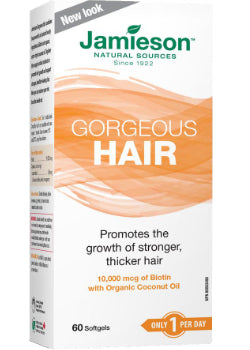
Jamieson Gorgeous Hair blends two powerful and natural beauty ingredients: Biotin and organic, extra-virgin coconut oil. With 10,000mcg of Biotin and 500mg of Organic, extra-virgin coconut oil per softgel Gorgeous Hair supplies essential nutrients to promote hair growth and support stronger, healthier-looking hair. By taking 1 softgel daily of Gorgeous Hair you can nurture your hair from the inside out. [SOFTGELS]
Each softgel contains:
Biotin 10,000 mcg
Organic, extra-virgin coconut oil 500 mg
Non-Medicinal Ingredients:
Gelatin (bovine), yellow beeswax, glycerin, titanium dioxide, natural carmine colour.
Important Information:
Consult a health care practitioner prior to use if you are pregnant or breastfeeding. Biotin supplements may interfere with medical lab tests; advise your health care practitioner if you are taking this product.
Dosage
Adults: Take 1 softgel daily.
Jamieson Supplements for Whole-Family Health & Wellness
Jamieson has consistently been voted Canada’s most trusted brand of vitamins.
Jamieson vitamins and supplements
most popular natural health products include Jamieson probiotic, multivitamin, Jamieson vitamin C, Omega 3 and D3, plus many more! They provide consumers with the purest, safest and most effective natural health solutions available.
Shop Jamieson right here
at ca
Hair Health
Providing your body with the right nutrients and making the right lifestyle changes can slow and even halt hair loss...
The condition of our hair is often a great sign of the underlying health of our entire body, and you really are what you eat. Often our hair and nails are the first parts of us to show nutrient deficiencies and signs of illness. Although a number of products can be applied to the hair to improve its appearance, true hair health comes from the inside, out. Soft, shiny, and smooth hair is a sign of good health, and a loss of these characteristics can indicate underlying imbalances in the body.
Hair Growth
In the same way that all of the cells in our bodies are replaced over time, our hair goes through similar life cycles. Although hair is not alive itself, it is a substance produced by living hair follicle cells in our skin. Hair grows at a rate of about ½ to ¾ of an inch each month. In order for our body to produce this growth, it requires the nutritional building blocks to do so. The major building blocks of hair are:
protein, fat, water, and
trace minerals. The final component of hair is the pigment molecules, which give each person’s hair its distinctive colour.
Hair
protein
Content
The precise amino acid content of hair and the genetic code used to manufacture it, both affect the shape, thickness, and texture of the completed hair strand. A protein called keratin makes up the vast majority of the structure of hair, between 65-95% by weight. When we don’t eat enough protein, it prevents the body from growing new hair as required. Even deficiencies in certain
amino acids
can cause problems, depending on your body’s particular requirements determined by your genes.
Hair Water Content
Approximately 6% - 14% of the weight of hair is made up of water which fluctuates depending on the surrounding humidity and whether or not the hair has been air dried or heat dried. Friction and static of hair is affected by its moisture content which is why the manageability of our hair changes depending on environmental humidity. When hair is blow dried with heat and moisture is removed, the hair will gradually collect moisture from the air throughout the day. That hair style you worked so hard to achieve will fall a bit and begin to frizz as your hair regains its moisture.
Hair Fat Content
Fat is the next major component of hair by weight, and can be found both inside the shaft of the hair, and deposited on its surface by the glands of the surrounding skin. Internal fat content accounts for 1-9% of the structure of hair, by weight. The most common fats found in hair are palmitoleic, palmitic, and oleic acids. In fact, 40-50% of the lipids found in the hair itself are unsaturated fatty acids (palmitoleic and oleic). In addition to this internal fat, there is also the protective layer of fat on the surface of the hair that affects the way the hair lays on the head. This fat layer is called sebum and is produced by glands in the skin surrounding the hair follicles. Over-washing can remove a large proportion of this protective layer and cause hair that is more prone to flyaways and static frizz. Because oil and water don’t mix, the protective layer of sebum on the surface of the hair can protect it against alteration by the humidity in the air. Thus, having some buildup of oil in your hair can help to prevent flyaways on humid days.
Hormonal Effects
Hormonal changes greatly affect the composition and texture of hair during our lifetime. This becomes most apparent at times of transition like puberty and
menopause. The hair of premenopausal women was found to contain more sebum than that of postmenopausal women. As we age, our sebum production reduces and the hair’s permeability to sebum is also affected. This affects hair softness, smoothness and shine. Thus, the hormonal changes of menopause can directly affect the texture and quality of the hair. Interestingly, poor hormonal balance in our younger years can have similar effects on hair quality.
Mineral Content
Hair also contains
trace minerals, although usually this makes up less than 1% of its composition. Some of these minerals are incorporated during the growth process while some of them are deposited on the hair later by exposure from the environment. The hair of children in cities was found to contain much higher mineral content than those living in the country, farther from pollution.
Hair Mineral Analysis
It has been found by researchers that concentrations of metals such as cadmium, arsenic, mercury and lead in the hair tend to correlate with their concentrations of the same metals in the internal organs. Because of this fact, healthcare practitioners have become interested in performing hair mineral analysis to assess the body’s content of certain heavy metals. Testing for other minerals has proven to be less reliable than heavy metal testing in this manner.
Hair Concerns
There are a number of conditions that can affect hair growth and quality. When hair is dry and fragile, it is important to nourish it with oil to promote increased strength. This can be particularly beneficial in those with insufficient sebum production from their skin (those with dry skin). Trimming hair regularly to remove split ends early in their development can help to prevent them from traveling up the hair and further reducing its strength.
Carefully SelectedShips to the U.S.Wellness EssentialsTrusted Brands
Product Details
Hair Health
Providing your body with the right nutrients and making the right lifestyle changes can slow and even halt hair loss...
The condition of our hair is often a great sign of the underlying health of our entire body, and you really are what you eat. Often our hair and nails are the first parts of us to show nutrient deficiencies and signs of illness. Although a number of products can be applied to the hair to improve its appearance, true hair health comes from the inside, out. Soft, shiny, and smooth hair is a sign of good health, and a loss of these characteristics can indicate underlying imbalances in the body.
Hair Growth
In the same way that all of the cells in our bodies are replaced over time, our hair goes through similar life cycles. Although hair is not alive itself, it is a substance produced by living hair follicle cells in our skin. Hair grows at a rate of about ½ to ¾ of an inch each month. In order for our body to produce this growth, it requires the nutritional building blocks to do so. The major building blocks of hair are:
protein, fat, water, and
trace minerals. The final component of hair is the pigment molecules, which give each person’s hair its distinctive colour.
Hair
protein
Content
The precise amino acid content of hair and the genetic code used to manufacture it, both affect the shape, thickness, and texture of the completed hair strand. A protein called keratin makes up the vast majority of the structure of hair, between 65-95% by weight. When we don’t eat enough protein, it prevents the body from growing new hair as required. Even deficiencies in certain
amino acids
can cause problems, depending on your body’s particular requirements determined by your genes.
Hair Water Content
Approximately 6% - 14% of the weight of hair is made up of water which fluctuates depending on the surrounding humidity and whether or not the hair has been air dried or heat dried. Friction and static of hair is affected by its moisture content which is why the manageability of our hair changes depending on environmental humidity. When hair is blow dried with heat and moisture is removed, the hair will gradually collect moisture from the air throughout the day. That hair style you worked so hard to achieve will fall a bit and begin to frizz as your hair regains its moisture.
Hair Fat Content
Fat is the next major component of hair by weight, and can be found both inside the shaft of the hair, and deposited on its surface by the glands of the surrounding skin. Internal fat content accounts for 1-9% of the structure of hair, by weight. The most common fats found in hair are palmitoleic, palmitic, and oleic acids. In fact, 40-50% of the lipids found in the hair itself are unsaturated fatty acids (palmitoleic and oleic). In addition to this internal fat, there is also the protective layer of fat on the surface of the hair that affects the way the hair lays on the head. This fat layer is called sebum and is produced by glands in the skin surrounding the hair follicles. Over-washing can remove a large proportion of this protective layer and cause hair that is more prone to flyaways and static frizz. Because oil and water don’t mix, the protective layer of sebum on the surface of the hair can protect it against alteration by the humidity in the air. Thus, having some buildup of oil in your hair can help to prevent flyaways on humid days.
Hormonal Effects
Hormonal changes greatly affect the composition and texture of hair during our lifetime. This becomes most apparent at times of transition like puberty and
menopause. The hair of premenopausal women was found to contain more sebum than that of postmenopausal women. As we age, our sebum production reduces and the hair’s permeability to sebum is also affected. This affects hair softness, smoothness and shine. Thus, the hormonal changes of menopause can directly affect the texture and quality of the hair. Interestingly, poor hormonal balance in our younger years can have similar effects on hair quality.
Mineral Content
Hair also contains
trace minerals, although usually this makes up less than 1% of its composition. Some of these minerals are incorporated during the growth process while some of them are deposited on the hair later by exposure from the environment. The hair of children in cities was found to contain much higher mineral content than those living in the country, farther from pollution.
Hair Mineral Analysis
It has been found by researchers that concentrations of metals such as cadmium, arsenic, mercury and lead in the hair tend to correlate with their concentrations of the same metals in the internal organs. Because of this fact, healthcare practitioners have become interested in performing hair mineral analysis to assess the body’s content of certain heavy metals. Testing for other minerals has proven to be less reliable than heavy metal testing in this manner.
Hair Concerns
There are a number of conditions that can affect hair growth and quality. When hair is dry and fragile, it is important to nourish it with oil to promote increased strength. This can be particularly beneficial in those with insufficient sebum production from their skin (those with dry skin). Trimming hair regularly to remove split ends early in their development can help to prevent them from traveling up the hair and further reducing its strength.
🌿
Daily Wellness
Easy to add to your everyday health routine.
✅
Carefully Selected
Chosen with quality and customer needs in mind.
💊
Simple to Use
Designed for convenient daily supplementation.
🚚
Ships to the U.S.
Fast, reliable shipping to U.S. customers.
Choosing a selection results in a full page refresh.