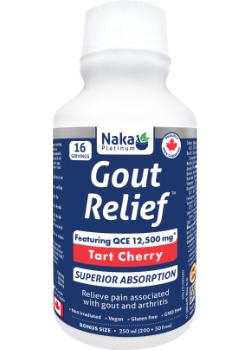
High levels of uric acid in the bloodstream can trigger an arthritic ailment known as Gout. This condition predominantly affects men aged between forty and fifty, and recurrent Gout episodes can lead to deteriorating joint health. Naka Platinum has developed Gout Relief, a unique blend formulated to alleviate the discomfort associated with gout and arthritis. Gout Relief provides exceptional absorption capabilities, and has potent anti-inflammatory properties, while being conveniently available in a liquid form, making it ideal for anyone who struggles taking capsules. [LIQUID]
Each tbsp (15ml) contains:
Tart cherry (Prunus cerasus, Fruit) (5:1, QCE 12500 mg) 2500mg
Parsley (Petroselinum crispum, Herb top) 300mg
Celery (Apium graveolens, Seed) 300mg
Celery (Apium graveolens, Seed) (6:1, QCE 1200mg) 200mg
Devil’s claw (Harpagophytum procumbens, Secondary root tuber) (6:1, QCE 900mg) 150mg
Nettle (Urtica dioica, Herb top) 150mg
Amla (Phyllanthus emblica, Fruit) 100mg
Beleric myrobalan (Terminalia bellirica, Fruit) 100mg
Haritaki (Terminalia chebula, Fruit) 100mg
Vitamin C (Ascorbic acid) 60mg
Dandelion (Taraxacum officinale, Root) (4:1, QCE 200mg) 50mg
Fenugreek (Trigonella foenum-graecum, Seed) 50mg
Turmeric (Curcuma longa, Rhizome) (25:1, QCE 1250mg) 50mg
Stem bromelain (Ananas comosus var. bracteatus, Stem (50mg) 1800000 FCC PU
Non-Medicinal Ingredients:
Citric acid, Glycerine, Mixed berry flavor, Potassium sorbate Purified water, Stevia leaf extract, Xanthan Gum.
Important Information:
Consult a health care practitioner if symptoms persist or worsen. Consult a health care practitioner prior to use if you are taking anticoagulant agents, anti-inflammatory agents, or antibiotics. Consult a health care practitioner prior to use if you have gastrointestinal lesions/ulcers or are having a surgery. Sealed for your protection. Do not use if safety seal is broken or missing. Keep out of the reach of children. Shake well before each use. Refrigerate after opening. This is a product with natural components. Therefore, slight variations in the color and taste are normal and do not affect the quality of the product.
Dosage
Adults: 1 tablespoon (15ml) 1 time per day. Use the calibrated measuring cup provided to obtain an accurate dosage. Do not drink directly from the bottle. Take with food/ meal. Take 2 hours before or after taking other medications.
Premium Quality & Canadian Made - 12 New Added
Founded in 1991, Naka’s success has been built upon introducing innovative supplements in liquid or easy-to-swallow capsule forms designed to meet the better health needs of consumers worldwide. Their most popular supplements include:
Naka Pro Collagen,
Naka Vital Greens,
Naka Magnesium Bisglycinate,
Naka Nutri Flex,
Naka Vital Greens
and Naka Probiotics.You can find Naka herbs and
buy Naka supplements
at
SUPPLEMENTS FOR THE EFFECTIVE MANAGEMENT OF GOUT
Gout is a form of arthritis characterized by sudden and severe attacks of pain, swelling, redness, and tenderness in the joints, particularly the base of the big toe. The condition has been recognized for centuries and is often associated with dietary excesses, most notably, rich foods and alcohol consumption. Understanding the causes, symptoms, long-term implications, treatment options, and nutritional supplements that can help gout is crucial for effectively managing this painful condition.
Potential Causes Of Gout
Gout is primarily caused by the build-up of uric acid in the blood, a condition known as hyperuricemia. Uric acid is a waste product formed when the body breaks down purines, substances found naturally in the body and certain foods. When uric acid levels become too high, they can form crystals that accumulate in the joints, leading to inflammation and pain. Factors that can contribute to the development of gout include genetics, diet high in purine-rich foods (such as red meat, shellfish, and sugary beverages), excessive alcohol consumption, obesity, certain medications (such as diuretics), and medical conditions like hypertension and kidney disease.
Key Symptoms Of Gout
The hallmark symptom of gout is the sudden onset of intense pain, usually in the joint at the base of the big toe. Other common symptoms include swelling, redness, warmth, and stiffness in the affected joint. Gout attacks often occur at night and can last a few days to several weeks. Some individuals may experience multiple gout attacks over time, with periods of remission in between.
If left untreated or poorly managed, gout can lead to long-term complications such as chronic joint damage, kidney stones, and kidney damage due to urate crystal deposits in the kidneys. Additionally, people with gout have an increased risk of developing other health conditions like cardiovascular disease and metabolic syndrome.
Popular Protocols, Treatments & Supplements For Gout
The primary goals of gout treatment are to relieve pain during acute attacks, reduce inflammation, lower uric acid levels, and prevent future gout attacks and complications. In conventional medicine, acute gout attacks are typically treated with nonsteroidal anti-inflammatory drugs (NSAIDs), corticosteroids, or colchicine to relieve pain and inflammation. Long-term management involves lifestyle modifications, such as reducing purine intake, weight loss, limiting alcohol consumption, and staying hydrated. Medications like xanthine oxidase inhibitors (e.g., allopurinol, febuxostat) and uricosuric agents (e.g., probenecid) may be prescribed to lower uric acid levels and prevent recurrent attacks.
Dietary Supplements for Gout Management
If you're interested in going the natural route, certain dietary supplements can be game changers when it comes to effectively managing gout symptoms and reducing the risk of recurrent attacks. These include:
Black Cherry
Extract
– Cherries contain compounds that help lower uric acid levels and reduce inflammation. You can purchase cherry extract in lincture form or opt for unsweetened cherry juice.
Bromelain
– Bromelain is a proteolytic enzyme naturally present in pineapples; it has been shown to help reduce uric acid build-up, temper inflammation, and soothe pain associated with gout.
Celery Seed Extract / Celery Juice
– Rich in
antioxidants
and a
natural diuretic, celery has been shown to decrease uric acid build-up in the body and, as a result, calm gout symptoms.
Fish Oil
– Omega-3 fatty acids found in fish oil have anti-inflammatory properties that may effectively help alleviate gout symptoms. You can choose from either liquid oil form or capsules.
Magnesium
– As an alkaline mineral,
Magnesium
has been shown to naturally decrease uric acid formation and, thus, reduce the painful symptoms of gout.
Stinging
Nettle
– As a powerful anti-inflammatory, stinging nettle has been shown to help flush out uric acid, preventing its build-up around the joints and preventing pain and swelling.
Turmeric
–
Curcumin, the active compound in turmeric, has potent anti-inflammatory properties that help reduce joint pain and inflammation associated with gout.
Vitamin C
–
Vitamin C
supplementation has been shown to lower uric acid levels in the blood, reducing the risk of gout attacks. Foods rich in vitamin C, such as citrus fruits and berries, are also beneficial.
The above supplements are widely available in health food stores, supplement retail stores, and online. You can choose from capsules, tablets, powders, and liquid/tincture forms according to your preference, or alternately, you can get many in tea form.
Lifestyle Considerations For Gout Managements
Gout is best managed with proper nutrition. The Gout Diet is a targeted nutritional approach to manage and prevent gout attacks. It involves limiting foods high in purines, such as red meat, organ meat, shellfish, small fish, mushrooms, peas, lentils, and certain vegetables like asparagus and spinach, as purines can increase uric acid levels in the body, contributing to gout flare-ups. Other foods to avoid include refined carbohydrates, fried foods, hydrogenated oils, and sodium, which can cause tissue swelling and aggravate gout symptoms.
Instead, the Gout Diet encourages the consumption of low-purine and high-fibre foods like fruits, vegetables, whole grains, nuts, seeds, and low-fat dairy products. Berries and cherries are especially effective at neutralizing uric acid.
Other dietary recommendations associated with the Gout Diet include eating plenty of
potassium
-rich foods like avocado, bananas, squash, and apricots to help balance intracellular fluid. Wild-caught fish rich in omega-3 fatty acids should also be a diet staple to help reduce inflammation and mitigate gout symptoms.
Carefully SelectedShips to the U.S.Wellness EssentialsTrusted Brands
Product Details
SUPPLEMENTS FOR THE EFFECTIVE MANAGEMENT OF GOUT
Gout is a form of arthritis characterized by sudden and severe attacks of pain, swelling, redness, and tenderness in the joints, particularly the base of the big toe. The condition has been recognized for centuries and is often associated with dietary excesses, most notably, rich foods and alcohol consumption. Understanding the causes, symptoms, long-term implications, treatment options, and nutritional supplements that can help gout is crucial for effectively managing this painful condition.
Potential Causes Of Gout
Gout is primarily caused by the build-up of uric acid in the blood, a condition known as hyperuricemia. Uric acid is a waste product formed when the body breaks down purines, substances found naturally in the body and certain foods. When uric acid levels become too high, they can form crystals that accumulate in the joints, leading to inflammation and pain. Factors that can contribute to the development of gout include genetics, diet high in purine-rich foods (such as red meat, shellfish, and sugary beverages), excessive alcohol consumption, obesity, certain medications (such as diuretics), and medical conditions like hypertension and kidney disease.
Key Symptoms Of Gout
The hallmark symptom of gout is the sudden onset of intense pain, usually in the joint at the base of the big toe. Other common symptoms include swelling, redness, warmth, and stiffness in the affected joint. Gout attacks often occur at night and can last a few days to several weeks. Some individuals may experience multiple gout attacks over time, with periods of remission in between.
If left untreated or poorly managed, gout can lead to long-term complications such as chronic joint damage, kidney stones, and kidney damage due to urate crystal deposits in the kidneys. Additionally, people with gout have an increased risk of developing other health conditions like cardiovascular disease and metabolic syndrome.
Popular Protocols, Treatments & Supplements For Gout
The primary goals of gout treatment are to relieve pain during acute attacks, reduce inflammation, lower uric acid levels, and prevent future gout attacks and complications. In conventional medicine, acute gout attacks are typically treated with nonsteroidal anti-inflammatory drugs (NSAIDs), corticosteroids, or colchicine to relieve pain and inflammation. Long-term management involves lifestyle modifications, such as reducing purine intake, weight loss, limiting alcohol consumption, and staying hydrated. Medications like xanthine oxidase inhibitors (e.g., allopurinol, febuxostat) and uricosuric agents (e.g., probenecid) may be prescribed to lower uric acid levels and prevent recurrent attacks.
Dietary Supplements for Gout Management
If you're interested in going the natural route, certain dietary supplements can be game changers when it comes to effectively managing gout symptoms and reducing the risk of recurrent attacks. These include:
Black Cherry
Extract
– Cherries contain compounds that help lower uric acid levels and reduce inflammation. You can purchase cherry extract in lincture form or opt for unsweetened cherry juice.
Bromelain
– Bromelain is a proteolytic enzyme naturally present in pineapples; it has been shown to help reduce uric acid build-up, temper inflammation, and soothe pain associated with gout.
Celery Seed Extract / Celery Juice
– Rich in
antioxidants
and a
natural diuretic, celery has been shown to decrease uric acid build-up in the body and, as a result, calm gout symptoms.
Fish Oil
– Omega-3 fatty acids found in fish oil have anti-inflammatory properties that may effectively help alleviate gout symptoms. You can choose from either liquid oil form or capsules.
Magnesium
– As an alkaline mineral,
Magnesium
has been shown to naturally decrease uric acid formation and, thus, reduce the painful symptoms of gout.
Stinging
Nettle
– As a powerful anti-inflammatory, stinging nettle has been shown to help flush out uric acid, preventing its build-up around the joints and preventing pain and swelling.
Turmeric
–
Curcumin, the active compound in turmeric, has potent anti-inflammatory properties that help reduce joint pain and inflammation associated with gout.
Vitamin C
–
Vitamin C
supplementation has been shown to lower uric acid levels in the blood, reducing the risk of gout attacks. Foods rich in vitamin C, such as citrus fruits and berries, are also beneficial.
The above supplements are widely available in health food stores, supplement retail stores, and online. You can choose from capsules, tablets, powders, and liquid/tincture forms according to your preference, or alternately, you can get many in tea form.
Lifestyle Considerations For Gout Managements
Gout is best managed with proper nutrition. The Gout Diet is a targeted nutritional approach to manage and prevent gout attacks. It involves limiting foods high in purines, such as red meat, organ meat, shellfish, small fish, mushrooms, peas, lentils, and certain vegetables like asparagus and spinach, as purines can increase uric acid levels in the body, contributing to gout flare-ups. Other foods to avoid include refined carbohydrates, fried foods, hydrogenated oils, and sodium, which can cause tissue swelling and aggravate gout symptoms.
Instead, the Gout Diet encourages the consumption of low-purine and high-fibre foods like fruits, vegetables, whole grains, nuts, seeds, and low-fat dairy products. Berries and cherries are especially effective at neutralizing uric acid.
Other dietary recommendations associated with the Gout Diet include eating plenty of
potassium
-rich foods like avocado, bananas, squash, and apricots to help balance intracellular fluid. Wild-caught fish rich in omega-3 fatty acids should also be a diet staple to help reduce inflammation and mitigate gout symptoms.
🌿
Daily Wellness
Easy to add to your everyday health routine.
✅
Carefully Selected
Chosen with quality and customer needs in mind.
💊
Simple to Use
Designed for convenient daily supplementation.
🚚
Ships to the U.S.
Fast, reliable shipping to U.S. customers.
Choosing a selection results in a full page refresh.