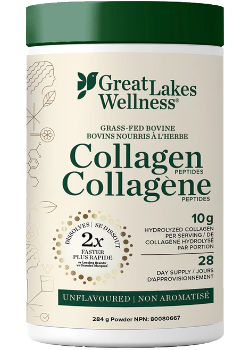
Great Lakes Gelatin Grass-Fed Bovine Collagen Peptides (Unflavoured) - 284g is a dietary supplement, intended for adults as part of a daily wellness routine.
Great Lakes Wellness Grass-Fed Collagen Peptides provide a unique blend of amino acids that support bone and joint health more effectively than other proteins. This low molecular weight protein is easily digested and absorbed within minutes, promoting fast-acting nourishment. Hydrolyzed for improved assimilation, it won’t congeal, ensuring smooth mixing and optimal hydration for connective tissues. Collagen plays a key role in maintaining nitrogen balance and is now recognized as an essential anti-aging supplement, helping to combat age-related cartilage damage and collagen loss. [POWDER]
Each 1.5 tbsp / 2 scoops (10g):
Calories 35
Fat 0g
Carbohydrate 0g
Protein 9g
Sodium 50mg
Hydrolyzed Collagen (from bovine skin/hide) 10g
Important Information:
Do not use if safety seal is broken or missing. Ask a health care practitioner before use if you are pregnant or breast feeding, have liver or kidney disease or if you have been instructed to follow a low protein diet. May cause gastrointestinal disturbances. Keep out of reach of children.
Dosage
Add 2 scoops to your favorite beverage or recipe. Mix and enjoy!
Premium Collagen Supplements for Skin, Hair & Joint Health
Since 1922, Great Lakes Gelatin has been providing customers with top quality collagen-based health products. Great Lakes Gelatin Beef Hide Gelatin and Great Lakes Gelatin Collagen Hydrolysate are their leading products. You might remember Great Lakes Gelatin by their former name, Grayslake Gelatin.
COLLAGEN
Collagen is beneficial for arthritis, skin ulcers due to vascular insufficiency, burns, wounds, and sprains and strains...
Collagen is one of the major proteins found in the soft tissue and connective tissue of humans and other mammals. As a supplement, collagen acts as a source of
amino acids
for use in making and repairing connective tissue all over the body.
Thus collagen is used to repair skin that is damaged by wounds and burns, and it can also help to support healthy cartilage, ligaments and tendons in the body. Natural health practitioners commonly recommend collagen supplementation for joint injury, arthritis, joint inflammation, skin ulcers, burns, wounds, as well as joint strains and sprains.
Cartilage And Joint Support
Cartilage is the connective tissue pad that acts as a cushion and eliminates friction in your joints. It is the cushion in your knees, and other large joints, and it forms the pads that space each vertebra to help protect the spinal cord. Wear-and-tear injuries occur in the joints and cause less support, less cushioning and more friction. Breakdown of cartilage is responsible for erosive conditions, such as osteoarthritis. Interestingly, the presence of the stress hormone cortisol in the blood promotes the breakdown of collagen into its amino acid building blocks.
Skin
Collagen is one of the main building blocks of our skin. The structure of collagen actually draws water into the tissues, resulting in firm, plump, youthful skin. Thus, a lack of sufficient cartilage can result in wrinkles and sagging of skin associated with aging. Collagen is often added to skin care products for topical application against wrinkles and age spots. In addition to keeping our youthful glow, the presence of collagen heals skin ulcers by repairing the skin and increasing the integrity of the arteries and veins. Because collagen provides the building blocks for skin repair, it can speed the healing of most wounds.
What Damages Collagen?
There are a number of aspects that affect the collagen levels found in the body.
High sugar consumption:
High quantities of sugar increases the rate of glycation. Sugar in the blood attaches to proteins to form advanced glycation end products (AGEs) which then make collagen brittle, dry, and weak.
Smoking:
We all know smoking is bad for our overall health. Many of the chemicals cause damager to collagen and elastin in the skin. The nicotine narrows blood vessels in the outer layers of skin reducing the amount nutrients and oxygen to the skin.
Sunlight:
Rays from the sun can cause collagen to breakdown at a higher rate and accumulation of abnormal elastin leading to the production of an enzyme that can also breakdown collagen.
Autoimmune disorders:
Some autoimmune disorders cause antibodies to target collagen.
By avoiding these things the skin can stay healthy longer. However, collagen levels deplete naturally over time and there is no way to prevent it from happening but it is possible to slow it down.
Types Of Collagen
There is at least 16 different types of collagen in the body, referred to in the health industry by roman numeral. Four of these are the main ones used to form our tissues and organs.
Type I & III Collagen
Type I collagen is the type found in over 90% of the body. It is found in skin, tendon, vascular ligature, organs, bone, and scar tissue. In fact, collagen type I is the main organic component of the bone. Type III collagen is commonly found alongside type I in the human body. These types of collagen can also be used to provide the building blocks to help repair damaged ligaments and tendons.
Type II Collagen
Over 50% of cartilage protein is made of type II collagen. This type is also commonly called hyaline cartilage. Cartilage is the tissue that eliminates friction in your joints. Because of this, type II collagen is often used as a supplement to provide the building blocks for the protection and repair of cartilage in the body. This allows it to be used to help treat wear-and-tear injuries, and erosive joint conditions like osteoarthritis.
Type IV Collagen
This particular type of collagen is found in the body's tissues and actually forms the vast majority of the basement membrane. This means that it forms the main connections between the bases of the cells of our tissues. This allows type IV collagen to support proper healing of wounds.
Nutrients That May Support Collagen Formation
There are a number of sources that can help in the formation of collagen. These include:
Proline:
egg whites, cheese, soy and cabbage
Anthocyanidins:
blackberries, blueberries, cherries and raspberries
Vitamin C:
oranges, strawberries, peppers and
broccoli
Copper:
shellfish, nuts, red meat and some drinking water
Vitamin A:
animal derived foods and plant foods as
beta carotene.
How Can I Take Collagen?
Various types of collagen can be found as encapsulated powder or liquid. They are usually combined with other joint repairing nutrients and vitamins. Sometimes cartilage is directly supplemented to be a source of collagen, particularly type II collagen. When found individually, type II collagen is found as a component of pain relieving and anti-inflammatory formulas. It is often added to anti-aging skin care products. Type I & III collagen are also available and should be used after good results are found with type II to further rebuild damaged joints or tissue. Depending on the severity of joint destruction collagen may need to be taken for a few months before results are seen.
Carefully SelectedShips to the U.S.Wellness EssentialsTrusted Brands
Product Details
COLLAGEN
Collagen is beneficial for arthritis, skin ulcers due to vascular insufficiency, burns, wounds, and sprains and strains...
Collagen is one of the major proteins found in the soft tissue and connective tissue of humans and other mammals. As a supplement, collagen acts as a source of
amino acids
for use in making and repairing connective tissue all over the body.
Thus collagen is used to repair skin that is damaged by wounds and burns, and it can also help to support healthy cartilage, ligaments and tendons in the body. Natural health practitioners commonly recommend collagen supplementation for joint injury, arthritis, joint inflammation, skin ulcers, burns, wounds, as well as joint strains and sprains.
Cartilage And Joint Support
Cartilage is the connective tissue pad that acts as a cushion and eliminates friction in your joints. It is the cushion in your knees, and other large joints, and it forms the pads that space each vertebra to help protect the spinal cord. Wear-and-tear injuries occur in the joints and cause less support, less cushioning and more friction. Breakdown of cartilage is responsible for erosive conditions, such as osteoarthritis. Interestingly, the presence of the stress hormone cortisol in the blood promotes the breakdown of collagen into its amino acid building blocks.
Skin
Collagen is one of the main building blocks of our skin. The structure of collagen actually draws water into the tissues, resulting in firm, plump, youthful skin. Thus, a lack of sufficient cartilage can result in wrinkles and sagging of skin associated with aging. Collagen is often added to skin care products for topical application against wrinkles and age spots. In addition to keeping our youthful glow, the presence of collagen heals skin ulcers by repairing the skin and increasing the integrity of the arteries and veins. Because collagen provides the building blocks for skin repair, it can speed the healing of most wounds.
What Damages Collagen?
There are a number of aspects that affect the collagen levels found in the body.
High sugar consumption:
High quantities of sugar increases the rate of glycation. Sugar in the blood attaches to proteins to form advanced glycation end products (AGEs) which then make collagen brittle, dry, and weak.
Smoking:
We all know smoking is bad for our overall health. Many of the chemicals cause damager to collagen and elastin in the skin. The nicotine narrows blood vessels in the outer layers of skin reducing the amount nutrients and oxygen to the skin.
Sunlight:
Rays from the sun can cause collagen to breakdown at a higher rate and accumulation of abnormal elastin leading to the production of an enzyme that can also breakdown collagen.
Autoimmune disorders:
Some autoimmune disorders cause antibodies to target collagen.
By avoiding these things the skin can stay healthy longer. However, collagen levels deplete naturally over time and there is no way to prevent it from happening but it is possible to slow it down.
Types Of Collagen
There is at least 16 different types of collagen in the body, referred to in the health industry by roman numeral. Four of these are the main ones used to form our tissues and organs.
Type I & III Collagen
Type I collagen is the type found in over 90% of the body. It is found in skin, tendon, vascular ligature, organs, bone, and scar tissue. In fact, collagen type I is the main organic component of the bone. Type III collagen is commonly found alongside type I in the human body. These types of collagen can also be used to provide the building blocks to help repair damaged ligaments and tendons.
Type II Collagen
Over 50% of cartilage protein is made of type II collagen. This type is also commonly called hyaline cartilage. Cartilage is the tissue that eliminates friction in your joints. Because of this, type II collagen is often used as a supplement to provide the building blocks for the protection and repair of cartilage in the body. This allows it to be used to help treat wear-and-tear injuries, and erosive joint conditions like osteoarthritis.
Type IV Collagen
This particular type of collagen is found in the body's tissues and actually forms the vast majority of the basement membrane. This means that it forms the main connections between the bases of the cells of our tissues. This allows type IV collagen to support proper healing of wounds.
Nutrients That May Support Collagen Formation
There are a number of sources that can help in the formation of collagen. These include:
Proline:
egg whites, cheese, soy and cabbage
Anthocyanidins:
blackberries, blueberries, cherries and raspberries
Vitamin C:
oranges, strawberries, peppers and
broccoli
Copper:
shellfish, nuts, red meat and some drinking water
Vitamin A:
animal derived foods and plant foods as
beta carotene.
How Can I Take Collagen?
Various types of collagen can be found as encapsulated powder or liquid. They are usually combined with other joint repairing nutrients and vitamins. Sometimes cartilage is directly supplemented to be a source of collagen, particularly type II collagen. When found individually, type II collagen is found as a component of pain relieving and anti-inflammatory formulas. It is often added to anti-aging skin care products. Type I & III collagen are also available and should be used after good results are found with type II to further rebuild damaged joints or tissue. Depending on the severity of joint destruction collagen may need to be taken for a few months before results are seen.
🌿
Daily Wellness
Easy to add to your everyday health routine.
✅
Carefully Selected
Chosen with quality and customer needs in mind.
💊
Simple to Use
Designed for convenient daily supplementation.
🚚
Ships to the U.S.
Fast, reliable shipping to U.S. customers.
Choosing a selection results in a full page refresh.