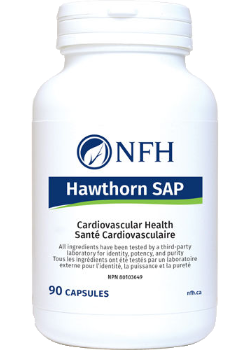
Widely recorded in traditional medicine for its medicinal properties, hawthorn (Crataegus laevigata) has been extensively studied for its beneficial effects in cardiovascular health. NFH hawthorn SAP provides high quality hawthorn berry extract standardized to vitexin that can help maintain and support cardiovascular health. Its unique chemical composition rich in flavonoids and oligomeric proanthocyanidins, especially vitexin have been found to exert antiarrhythmic, hypotensive, and hypolipidemic effects. Hawthorn SAP from Nutritional Fundamentals for Health Inc. should be supplement for a minimum of two months to see beneficial effects. Practitioner recommendation required. [CAPS]
Each capsule contains:
Hawthorn (Crataegus laevigata) extract (Berry), providing 1.8% Vitexin 300 mg
Hawthorn berry (Crataegus laevigata) 200 mg
Non-Medicinal Ingredients:
Vegetable magnesium stearate in a capsule made of vegetable carbohydrate gum and purified water
Important Information:
Keep out of reach of children.
Dosage
Adults: Take 1 capsule up to three times daily before a meal or as directed by your healthcare practitioner. Use the smallest effective dose which controls symptoms.
The Standard In Professional-Grade Nutrition.
Paving the path to optimal health with evidence-based nutrition and professional education. NFH stands for Nutritional Fundamentals for Health, they are committed to the highest standards of excellence in laboratory quality assurance and good manufacturing practices. NFH brings you evidence-based nutritional supplements like Heme Iron, Prenatal, EGCG, Melatonin, Probiotics and more. Buy Nutritional Fundamentals for Health Inc. NFH products in Canada, on sale now at
HAWTHORN SUPPLEMENTS USES & BENEFITS
Hawthorn (Crataegus) is a fascinating and versatile plant from the Rosaceae family. The Crataegus genus comprises many species, each with its unique characteristics. Different species of Hawthorn can vary in appearance, from shrubs to small trees, and they can produce berries in various colours, including red, black, and yellow.
Hawthorns are native to various regions across the Northern Hemisphere, including North America, Europe, and Asia. One of the distinctive features of these plants is their thorny branches, which serve as natural protection against predators.
Historical records tell us that the use of Hawthorn in cuisine, traditional medicine and folklore spans centuries. Let's explore each of these in a bit more detail:
Traditional Uses Of Hawthorn
Medicinal Applications: Hawthorn has been prized for its unique therapeutic properties for centuries. Indeed, various parts of the plant, particularly the berries and leaves, have been employed to treat a range of ailments. First and foremost, it is known to support cardiovascular health, with its use dating back to the early 19th century for conditions such as heart palpitations,
high blood pressure,
angina, and congestive heart failure.
Historically, Hawthorn was also used to improve blood circulation throughout the body and strengthen the heart muscle. Moreover, anti-inflammatory and antioxidant-rich Hawthorn was extensively used as digestive support to relieve all sorts of digestive complaints, reduce symptoms of anxiety, and even alleviate skin issues.
Culinary Applications: Hawthorn berries have long been renowned for their unique flavour profile, which combines a delightful blend of tartness and sweetness. These small, red or yellowish fruits offer a slightly sour, apple-like taste with underlying notes of earthiness and a hint of floral aroma. The flavour may best be described as both refreshing and a touch astringent, making hawthorn berries a versatile ingredient in a variety of culinary applications.
Traditionally, Hawthorn berries were used to create jams, jellies, and sauces due to their natural
pectin
content, which helps thicken and add a fruity zing to dishes. They were also used in pies, tarts, and desserts, and, in some cultures, they were fermented to make wines and liqueurs.
Folklore and Symbolism: In many societies, Hawthorn has been associated with superstitions, legends, and folklore. In Celtic tradition, for example, it's associated with the fairies and seen as a portal to their realm, making it taboo to cut down hawthorn trees. The tree has also long been intertwined with May Day festivities, symbolizing the arrival of Spring and the celebration of Beltane, a Celtic festival of fertility and fire. In European folklore, Hawthorn was seen as a symbol of protection against evil spirits and witches, with its branches hung over doorways to ward off malevolent forces. Its thorns were thought to hold powerful protective qualities, while its fragrant blossoms were believed to bring luck and love.
Hawthorn is still prized today and holds a special place in modern herbalism as one of the most effective cardio-supportive plants. Below are some of Hawthorn's most impressive health benefits.
Key Health Benefits Of Hawthorn
- Antioxidant & Anti-Inflammatory Effects
- Cardiotonic – Promotes & Protects
Heart Health
- Helps Prevent And Treat Angina
- Lowers Cholesterol & Triglycerides
- Reduces Blood Pressure
Who Would Benefit From Herbal Supplements?
Adding Hawthorn to one's supplement routine can benefit individuals seeking support for their cardiovascular health. It may particularly benefit those with mild heart conditions, such as hypertension or mild congestive heart failure, by helping to dilate blood vessels, reduce blood pressure, and enhance blood flow. Additionally, Hawthorn's antioxidant properties are ideal for people who wish to protect their heart from oxidative stress and inflammation, perhaps most notably, those with a family history of heart disease.
Hawthorn Supplement Varieties
Hawthorn can be purchased as tea (hawthorn berry tea), as well as in supplement form. These come in capsules, extracts, and tinctures, catering to diverse consumer preferences. The potency of supplements can range from standard extracts with lower concentrations of active compounds to more potent formulations, such as standardized extracts or concentrated tinctures. Generally, hawthorn doses are between 160 to 1,800 mg daily for 3 to 24 weeks. Speak to a qualified healthcare practitioner if you aren’t sure how much you should be taking for your specific health goals.
Potential Side Effects of Herbal Supplements
Some individuals may experience mild side effects such as dizziness, digestive issues, or headaches when using Hawthorn. In rare cases, more serious side effects, including heart palpitations or low blood pressure, have been reported. It's advisable to consult with a healthcare professional before starting a hawthorn supplement if you have an existing heart condition or are taking medications for cardiovascular issues.
Carefully SelectedShips to the U.S.Wellness EssentialsTrusted Brands
Product Details
HAWTHORN SUPPLEMENTS USES & BENEFITS
Hawthorn (Crataegus) is a fascinating and versatile plant from the Rosaceae family. The Crataegus genus comprises many species, each with its unique characteristics. Different species of Hawthorn can vary in appearance, from shrubs to small trees, and they can produce berries in various colours, including red, black, and yellow.
Hawthorns are native to various regions across the Northern Hemisphere, including North America, Europe, and Asia. One of the distinctive features of these plants is their thorny branches, which serve as natural protection against predators.
Historical records tell us that the use of Hawthorn in cuisine, traditional medicine and folklore spans centuries. Let's explore each of these in a bit more detail:
Traditional Uses Of Hawthorn
Medicinal Applications: Hawthorn has been prized for its unique therapeutic properties for centuries. Indeed, various parts of the plant, particularly the berries and leaves, have been employed to treat a range of ailments. First and foremost, it is known to support cardiovascular health, with its use dating back to the early 19th century for conditions such as heart palpitations,
high blood pressure,
angina, and congestive heart failure.
Historically, Hawthorn was also used to improve blood circulation throughout the body and strengthen the heart muscle. Moreover, anti-inflammatory and antioxidant-rich Hawthorn was extensively used as digestive support to relieve all sorts of digestive complaints, reduce symptoms of anxiety, and even alleviate skin issues.
Culinary Applications: Hawthorn berries have long been renowned for their unique flavour profile, which combines a delightful blend of tartness and sweetness. These small, red or yellowish fruits offer a slightly sour, apple-like taste with underlying notes of earthiness and a hint of floral aroma. The flavour may best be described as both refreshing and a touch astringent, making hawthorn berries a versatile ingredient in a variety of culinary applications.
Traditionally, Hawthorn berries were used to create jams, jellies, and sauces due to their natural
pectin
content, which helps thicken and add a fruity zing to dishes. They were also used in pies, tarts, and desserts, and, in some cultures, they were fermented to make wines and liqueurs.
Folklore and Symbolism: In many societies, Hawthorn has been associated with superstitions, legends, and folklore. In Celtic tradition, for example, it's associated with the fairies and seen as a portal to their realm, making it taboo to cut down hawthorn trees. The tree has also long been intertwined with May Day festivities, symbolizing the arrival of Spring and the celebration of Beltane, a Celtic festival of fertility and fire. In European folklore, Hawthorn was seen as a symbol of protection against evil spirits and witches, with its branches hung over doorways to ward off malevolent forces. Its thorns were thought to hold powerful protective qualities, while its fragrant blossoms were believed to bring luck and love.
Hawthorn is still prized today and holds a special place in modern herbalism as one of the most effective cardio-supportive plants. Below are some of Hawthorn's most impressive health benefits.
Key Health Benefits Of Hawthorn
- Antioxidant & Anti-Inflammatory Effects
- Cardiotonic – Promotes & Protects
Heart Health
- Helps Prevent And Treat Angina
- Lowers Cholesterol & Triglycerides
- Reduces Blood Pressure
Who Would Benefit From Herbal Supplements?
Adding Hawthorn to one's supplement routine can benefit individuals seeking support for their cardiovascular health. It may particularly benefit those with mild heart conditions, such as hypertension or mild congestive heart failure, by helping to dilate blood vessels, reduce blood pressure, and enhance blood flow. Additionally, Hawthorn's antioxidant properties are ideal for people who wish to protect their heart from oxidative stress and inflammation, perhaps most notably, those with a family history of heart disease.
Hawthorn Supplement Varieties
Hawthorn can be purchased as tea (hawthorn berry tea), as well as in supplement form. These come in capsules, extracts, and tinctures, catering to diverse consumer preferences. The potency of supplements can range from standard extracts with lower concentrations of active compounds to more potent formulations, such as standardized extracts or concentrated tinctures. Generally, hawthorn doses are between 160 to 1,800 mg daily for 3 to 24 weeks. Speak to a qualified healthcare practitioner if you aren’t sure how much you should be taking for your specific health goals.
Potential Side Effects of Herbal Supplements
Some individuals may experience mild side effects such as dizziness, digestive issues, or headaches when using Hawthorn. In rare cases, more serious side effects, including heart palpitations or low blood pressure, have been reported. It's advisable to consult with a healthcare professional before starting a hawthorn supplement if you have an existing heart condition or are taking medications for cardiovascular issues.
🌿
Daily Wellness
Easy to add to your everyday health routine.
✅
Carefully Selected
Chosen with quality and customer needs in mind.
💊
Simple to Use
Designed for convenient daily supplementation.
🚚
Ships to the U.S.
Fast, reliable shipping to U.S. customers.
Choosing a selection results in a full page refresh.