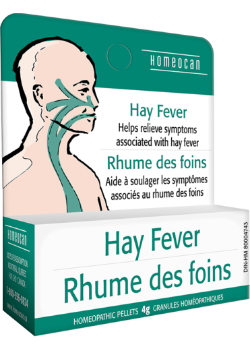
The Hay Fever combination pellet is a homeopathic remedy from Homeocan. It is caused by pollen. In April and May, the pollen responsible for your allergies comes from trees. In June and July, it comes from the grass. Mid-summer, mould blooms are the ones to blame. Finally, ragweed season begins during late summer. Homeocan’s Hay FeverPellets can help with nasal congestion, runny nose, teary and scratchy eyes, repetitive sneezing, tension in your sinuses, headaches, throat, nose and ear irritation plus also assist with sleepiness and insomnia when the symptoms drag on. [PELLETS]
Contains:
Allium cepa 6X
Sabadilla 6X
Sticta pulmonaria 6X
Cuprum metallicum 9X
Aralia racemosa 6X
Apis mellifica 9CH
Non-medicinal ingredients:
Lactose, Saccharose
Important Information:
Do not use if seal is broken. Keep out of reach of children. Do not administer to babies. Consult a healthcare practitioner before use if you are pregnant or nursing. Consult a healthcare practitioner if symptoms persist or worsen after 72 hours. Do not exceed recommended dosage. Keep at room temperature.
Dosage
Children (from 2 to 12 yrs.): 2 pellets.
Adults (12 yrs. ): 3 pellets. Repeat every 15 minutes until relief begins, then take 3 times a day. For better results, begin treatment 2 months before allergy season. Or use as directed by a health professional. For better results, begin treatment 2 months before allergy season. Or use as directed by a health professional.
Why Choose Homeocan Therapeutics?
Homeocan Therapeutics is a well-known Canadian brand specializing in homeopathic remedies. Their wide range of popular products includes homeopathic pellets to support allergies, sleep, immune health and stress and topical products like traumacare and arnica gel. Homeocan is trusted in providing safe and effective alternatives to conventional medicine.
ENVIRONMENTAL ALLERGIES
By: Articles by a Naturopathic Doctor and a Holistic Nutritionist
Allergies aren't so much a disease in themselves, but a symptom of a
weakened immune system
or other health problem. Treat the underlying cause, not just the symptom for long term relief...
Allergens can be any substance but the most common ones are dust, pollen, animal hair, animal dander, insect bites, grasses, molds and fungus, cleaning products and metal in costume jewelry. Heredity does appear to play a role in allergies.
If both parents have allergies then the child will have a 70 percent chance of developing allergies. Persons who are not breastfed are also more likely to develop allergies.
Allergens can be any substance but the most common ones are dust, pollen, animal hair, animal dander, insect bites, grasses, molds and fungus, cleaning products and metal in costume jewelry. Heredity does appear to play a role in allergies. If both parents have allergies then the child will have a 70 percent chance of developing allergies. Persons who are not breastfed are also more likely to develop allergies.
Allergic reactions occur when our immune system comes into contact with substances and interprets them as threatening. At times of physical and emotional stress, the immune system might show a heightened response to allergens and have a more difficult time dealing with fungal and parasitic infections. The body releases histamine which creates inflammation of the mucous membranes and can cause reactions of varying severity. Some of the more common, less severe symptoms are itching, increased mucous production, redness and swelling. Serious reactions may cause
asthma
attacks, severe hives and rashes and anaphylactic reactions.
Conventional treatment of environmental allergies is targeted at decreasing symptoms. Antihistamines are the most common treatment for moderate allergies. They inhibit the ability of mast cells to release histamine. Steroid nasal sprays also decrease nasal allergy symptoms. Long-term effects of using these sprays may include
glaucoma
and decreased bone density. Anaphylactic reactions cause the swelling of the air passages. They are treated with injections of nor
epinephrine. This hormone causes a sympathetic nervous system response resulting in an opening of the airways.
There are many ways of decreasing allergic reactions. Take only hypoallergenic supplements. Keep rooms free of dust and use an air purification system. Avoid feather and down bedding. Keep windows closed during times when the allergen is present in the air. Pollen is at highest concentrations between 5 and 10 AM and lowest after it rains. Use mold proof paint and disinfectant in the house. Exercise indoors. Do not smoke and eliminate exposure to second hand smoke. Keep plants that remove pollutants from air. These types include bamboo palm, Boston fern, dracaena, English ivy, ficus ali, peace lily, rubber plant and spider plant. Wear protective clothing when handling allergenic substances and wash after using them. Use
calendula
cream to heal skin reactions. Avoid cantaloupe if you have a ragweed allergy. Cantaloupe contains similar proteins to ragweed. Decrease stress, eat healthy and be well rested. Perform regular cleansing of the liver, kidney and intestinal tract to reduce the build up of allergens in the system.
Carefully SelectedShips to the U.S.Wellness EssentialsTrusted Brands
Product Details
ENVIRONMENTAL ALLERGIES
By: Articles by a Naturopathic Doctor and a Holistic Nutritionist
Allergies aren't so much a disease in themselves, but a symptom of a
weakened immune system
or other health problem. Treat the underlying cause, not just the symptom for long term relief...
Allergens can be any substance but the most common ones are dust, pollen, animal hair, animal dander, insect bites, grasses, molds and fungus, cleaning products and metal in costume jewelry. Heredity does appear to play a role in allergies.
If both parents have allergies then the child will have a 70 percent chance of developing allergies. Persons who are not breastfed are also more likely to develop allergies.
Allergens can be any substance but the most common ones are dust, pollen, animal hair, animal dander, insect bites, grasses, molds and fungus, cleaning products and metal in costume jewelry. Heredity does appear to play a role in allergies. If both parents have allergies then the child will have a 70 percent chance of developing allergies. Persons who are not breastfed are also more likely to develop allergies.
Allergic reactions occur when our immune system comes into contact with substances and interprets them as threatening. At times of physical and emotional stress, the immune system might show a heightened response to allergens and have a more difficult time dealing with fungal and parasitic infections. The body releases histamine which creates inflammation of the mucous membranes and can cause reactions of varying severity. Some of the more common, less severe symptoms are itching, increased mucous production, redness and swelling. Serious reactions may cause
asthma
attacks, severe hives and rashes and anaphylactic reactions.
Conventional treatment of environmental allergies is targeted at decreasing symptoms. Antihistamines are the most common treatment for moderate allergies. They inhibit the ability of mast cells to release histamine. Steroid nasal sprays also decrease nasal allergy symptoms. Long-term effects of using these sprays may include
glaucoma
and decreased bone density. Anaphylactic reactions cause the swelling of the air passages. They are treated with injections of nor
epinephrine. This hormone causes a sympathetic nervous system response resulting in an opening of the airways.
There are many ways of decreasing allergic reactions. Take only hypoallergenic supplements. Keep rooms free of dust and use an air purification system. Avoid feather and down bedding. Keep windows closed during times when the allergen is present in the air. Pollen is at highest concentrations between 5 and 10 AM and lowest after it rains. Use mold proof paint and disinfectant in the house. Exercise indoors. Do not smoke and eliminate exposure to second hand smoke. Keep plants that remove pollutants from air. These types include bamboo palm, Boston fern, dracaena, English ivy, ficus ali, peace lily, rubber plant and spider plant. Wear protective clothing when handling allergenic substances and wash after using them. Use
calendula
cream to heal skin reactions. Avoid cantaloupe if you have a ragweed allergy. Cantaloupe contains similar proteins to ragweed. Decrease stress, eat healthy and be well rested. Perform regular cleansing of the liver, kidney and intestinal tract to reduce the build up of allergens in the system.
🌿
Daily Wellness
Easy to add to your everyday health routine.
✅
Carefully Selected
Chosen with quality and customer needs in mind.
💊
Simple to Use
Designed for convenient daily supplementation.
🚚
Ships to the U.S.
Fast, reliable shipping to U.S. customers.
Choosing a selection results in a full page refresh.