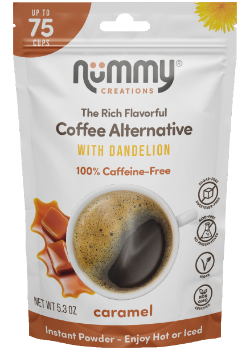
Herbal Coffee Alternative With Dandelion (Caramel) - 150g
$26.99
Nummy Creations Herbal Coffee Alternative With Dandelion (Caramel) - 150g is a dietary supplement, intended for adults as part of a daily wellness routine.
Nummy Creations Herbal Coffee Alternative with Dandelion Caramel delivers smooth, buttery caramel notes over a rich, roasted base. Naturally sweet and velvety, it offers cozy satisfaction without the sugar, jitters, or crash. Made from all-natural, vegan ingredients, this caffeine-free blend supports calm energy and gentle digestion with prebiotic herbs. Enjoy it hot, iced, or frothed — an instant, soothing ritual that’s easy on the stomach and full of flavour. [POWDER]
Each tsp (2g) contains:
Calories 5g
Total Fat 0g
Total Carbohydrate 2g
Protein 0.1g
Cholesterol 0mg
Sodium 2mg
Ingredients:
Roasted extracts (Rye, Barley, Dandelion root, Chicory root, Barley malt) Natural flavour
Important Information:
Very low gluten content but not suggested for Celiac. Consult your doctor before consuming while pregnant or breastfeeding. Keep out of reach of children. Do not use if safety seal is broken. Store in a cool, dry place.
Dosage
Scoop 1-3 tsps into a mug. Add hot or cold water. Stir. Enjoy.
Herbal Roasted Coffee Alternatives for Wellness
Nummy Creations is a caffeine-free coffee alternative that truly tastes like coffee. Created by two coffee lovers who couldn’t handle caffeine’s side effects, Nummy delivers the rich, full-bodied experience you crave—without the jitters, crashes, or sleepless nights. Made with clean, natural ingredients and free from acid and chemicals, it’s a cozy, feel-good beverage you can enjoy any way you like—hot, iced, or frothed. For those sensitive to caffeine or simply seeking a mindful swap, Nummy is comfort in a cup.
CAFFEINE
Caffeine can be a great way to improve mental alertness and reduce fatigue, but caution should be used to avoid any negative side effects...
Caffeine is naturally produced by a variety of different plants and acts as a pesticide to protect the plant or seeds against insects. It is a compound known as a xanthine alkaloid (methylxanthine) that acts as a stimulant drug in the human body. The most commonly consumed sources of caffeine are Coffee, Tea (Top Ten Teas), and Cocoa (Cacao) although other sources like Yerba Mate, Kola Nut, and Guarana are also gaining popularity and becoming mainstream. Caffeine is also commonly added to carbonated drinks, Energy Drinks and some medications for cold and headache relief.
Stimulant
Caffeine acts as a central nervous system stimulant in the human body, allowing it to help reduce fatigue and improve mental alertness. In fact, caffeine is the most commonly used psychoactive substance worldwide. It is estimated that 90% of adults in North America consume caffeine daily. The stimulant effects of caffeine also result in an increased heart rate, a relaxation of smooth muscle, and increased stomach acid secretion.
Diuretic
When not used on a daily basis, caffeine has a diuretic effect, which means that it increases the shedding of water from the kidneys and thus increases urination. It also reduces the water content of the body, which can lead to dehydration. The flushing caused by this diuretic effect can cause a reduction in
calcium
and other important
electrolytes
in the body. This is why caffeine consumption can increase the risk of Osteoporosis. Those who use caffeine on a regular basis and develop tolerance generally no longer get this diuretic effect.
Asthma
Traditionally, a cup of coffee was used to help treat mild
asthma
attacks in children. Due to its ability to relax smooth muscle, caffeine can act as a bronchodilator in people with
asthma. Caffeine is very similar in structure to theophylline, another methylxanthine commonly used to treat asthma. Recent research has found that caffeine can be used in place of theophylline when necessary for bronchodilation in asthmatics.
Energy Metabolism
Professional athletes will often use small to moderate doses of caffeine to help improve their athletic performance. It helps to mobilize fat from the muscle and increase blood
epinephrine
levels. These effects allow the muscles to mobilize and use fat for energy, which spares muscle glycogen. This allows for better results with endurance exercise, by giving longer acting energy. The dosing for this effect is very specific, as excess can quickly become detrimental for athletic performance, by throwing off co-ordination and balance. The metabolic effects of caffeine may also allow it to help prevent the development of Type II
Diabetes. Unfortunately, once diabetes is already present, caffeine's effects are actually detrimental and can worsen blood sugar control.
Caffeine and Constipation
Because of its diuretic effects, caffeine can cause dehydration, a condition that can greatly worsen
constipation
over time. This seems counter-intuitive to the many people who drink coffee to promote a bowel movement in the morning. This direct effect is likely due to the relaxation of smooth muscle caused by caffeine. In general, it is a good idea to find other ways to promote bowel movements, rather than relying on a stimulant like caffeine.
Toxicity
The side effects of caffeine exposure depend on the dose. At typical doses, it can cause:
insomnia, nervousness, restlessness, gastritis, nausea, increased heart rate,
high blood pressure, and increased urination. Often people will complain of muscle tremors known as the "caffeine jitters" after ingesting excess caffeine. Larger doses can cause: headache, anxiety, agitation, ringing in the ears, stomach cramps, sensory disturbances, vomiting, rapid breathing, tremors, delirium, irregular heartbeat, and even convulsions. Fatal overdoses by ingestion are rare because the irritation of the gastric lining caused by caffeine generally results in vomiting of excess amounts. This irritation is also why caffeine intake is associated with an increased risk of developing Ulcers. Prolonged use of caffeine has also been shown to be associated with increased risk of developing several health conditions such as High Blood Pressure, and Cardiovascular disease.
Addiction, Tolerance, and Withdrawal
With daily use, caffeine can cause a physical dependency and addiction. The stimulatory effects of caffeine are also reduced over time with constant use, and tolerance develops. Tolerance is a condition in which larger doses are required to have the desired effect. Suddenly stopping caffeine intake can often cause symptoms of withdrawal. Nicotine can increase the breakdown of caffeine in the bloodstream, and thus reduce its stimulatory effects. This may be why cigarette smokers often drink greater amounts of caffeinated beverages. Caffeine withdrawal symptoms include: headache, irritability, drowsiness, insomnia, poor concentration, stomach pain, and joint aches.
Decaffeination
In order to produce beverages like coffee and tea without the caffeine content, manufacturers came up with ways to remove the caffeine. Originally, this was done using solvents like: benzene, chloroform, trichloroethylene, and dichloromethane. Due to the toxic nature of these chemicals and their environmental impact, other methods have since been created. The two most common, and more natural means of decaffeinating are water extraction and supercritical carbon dioxide extraction. In both cases the caffeine is extracted, leaving the coffee bean intact. The caffeine that is removed is then used in the manufacturing of caffeinated energy drinks and carbonated beverages.
How Much Caffeine?
The amount of caffeine required to have a stimulatory effect varies by body size and degree of tolerance. One cup (250ml) of brewed coffee contains between 95-200mg of caffeine. It is recommended that pregnant women not exceed 2 cups of coffee daily, which is effectively a dose of 190-400mg of caffeine per day. Health Canada recommends a daily caffeine intake of no more than 400mg daily for healthy adults, which is the equivalent of about three cups of brewed coffee (http://www.hc-sc.gc.ca/hl-vs/iyh-vsv/food-aliment/caffeine-eng.php). In children, this amount is significantly lower, with the recommended dose falling between 40 and 85mg of caffeine daily depending on body weight.
Caffeine Content of Common Foods*
Food / Beverage
Caffeine Dose
- 1 cup brewed coffee / 95 - 200mg
- 1 cup instant coffee / 76 - 106mg
- 1 cup decaffeinated coffee / 3mg
- 1 cup of black tea / 43mg
- 1 can cola soft drink (355ml) / 36 50mg
- 1 can energy drink (250ml) / 80mg
- 1oz (28g)
dark chocolate
/ 19mg
- 1oz (28g)
milk chocolate
/ 7mg
- 1 packet hot chocolate mix / 7mg
- Caffeine pills / 100 200mg each
*Source: CAMH (
www.camh.ca
)
Using Caffeine To Sober Up?
Although alcohol is a depressant and caffeine is a stimulant of the central nervous system, they cannot be used to counteract one another. Alcohol reduces neuronal sensitivity, making them less easy to activate, and also reduces mental inhibitions. Caffeine intake after alcohol intake may help to increase neuronal sensitivity (and thus improve alertness), but will not have any effect on inhibitions. Thus, caffeine will not completely reverse the effects of alcohol and should not be considered an effective way of "sobering up". Although you will feel more awake and alert, you will still not be capable of making good decisions. The only effective way to sober up is time and hydration.
Carefully SelectedShips to the U.S.Wellness EssentialsTrusted Brands
Product Details
CAFFEINE
Caffeine can be a great way to improve mental alertness and reduce fatigue, but caution should be used to avoid any negative side effects...
Caffeine is naturally produced by a variety of different plants and acts as a pesticide to protect the plant or seeds against insects. It is a compound known as a xanthine alkaloid (methylxanthine) that acts as a stimulant drug in the human body. The most commonly consumed sources of caffeine are Coffee, Tea (Top Ten Teas), and Cocoa (Cacao) although other sources like Yerba Mate, Kola Nut, and Guarana are also gaining popularity and becoming mainstream. Caffeine is also commonly added to carbonated drinks, Energy Drinks and some medications for cold and headache relief.
Stimulant
Caffeine acts as a central nervous system stimulant in the human body, allowing it to help reduce fatigue and improve mental alertness. In fact, caffeine is the most commonly used psychoactive substance worldwide. It is estimated that 90% of adults in North America consume caffeine daily. The stimulant effects of caffeine also result in an increased heart rate, a relaxation of smooth muscle, and increased stomach acid secretion.
Diuretic
When not used on a daily basis, caffeine has a diuretic effect, which means that it increases the shedding of water from the kidneys and thus increases urination. It also reduces the water content of the body, which can lead to dehydration. The flushing caused by this diuretic effect can cause a reduction in
calcium
and other important
electrolytes
in the body. This is why caffeine consumption can increase the risk of Osteoporosis. Those who use caffeine on a regular basis and develop tolerance generally no longer get this diuretic effect.
Asthma
Traditionally, a cup of coffee was used to help treat mild
asthma
attacks in children. Due to its ability to relax smooth muscle, caffeine can act as a bronchodilator in people with
asthma. Caffeine is very similar in structure to theophylline, another methylxanthine commonly used to treat asthma. Recent research has found that caffeine can be used in place of theophylline when necessary for bronchodilation in asthmatics.
Energy Metabolism
Professional athletes will often use small to moderate doses of caffeine to help improve their athletic performance. It helps to mobilize fat from the muscle and increase blood
epinephrine
levels. These effects allow the muscles to mobilize and use fat for energy, which spares muscle glycogen. This allows for better results with endurance exercise, by giving longer acting energy. The dosing for this effect is very specific, as excess can quickly become detrimental for athletic performance, by throwing off co-ordination and balance. The metabolic effects of caffeine may also allow it to help prevent the development of Type II
Diabetes. Unfortunately, once diabetes is already present, caffeine's effects are actually detrimental and can worsen blood sugar control.
Caffeine and Constipation
Because of its diuretic effects, caffeine can cause dehydration, a condition that can greatly worsen
constipation
over time. This seems counter-intuitive to the many people who drink coffee to promote a bowel movement in the morning. This direct effect is likely due to the relaxation of smooth muscle caused by caffeine. In general, it is a good idea to find other ways to promote bowel movements, rather than relying on a stimulant like caffeine.
Toxicity
The side effects of caffeine exposure depend on the dose. At typical doses, it can cause:
insomnia, nervousness, restlessness, gastritis, nausea, increased heart rate,
high blood pressure, and increased urination. Often people will complain of muscle tremors known as the "caffeine jitters" after ingesting excess caffeine. Larger doses can cause: headache, anxiety, agitation, ringing in the ears, stomach cramps, sensory disturbances, vomiting, rapid breathing, tremors, delirium, irregular heartbeat, and even convulsions. Fatal overdoses by ingestion are rare because the irritation of the gastric lining caused by caffeine generally results in vomiting of excess amounts. This irritation is also why caffeine intake is associated with an increased risk of developing Ulcers. Prolonged use of caffeine has also been shown to be associated with increased risk of developing several health conditions such as High Blood Pressure, and Cardiovascular disease.
Addiction, Tolerance, and Withdrawal
With daily use, caffeine can cause a physical dependency and addiction. The stimulatory effects of caffeine are also reduced over time with constant use, and tolerance develops. Tolerance is a condition in which larger doses are required to have the desired effect. Suddenly stopping caffeine intake can often cause symptoms of withdrawal. Nicotine can increase the breakdown of caffeine in the bloodstream, and thus reduce its stimulatory effects. This may be why cigarette smokers often drink greater amounts of caffeinated beverages. Caffeine withdrawal symptoms include: headache, irritability, drowsiness, insomnia, poor concentration, stomach pain, and joint aches.
Decaffeination
In order to produce beverages like coffee and tea without the caffeine content, manufacturers came up with ways to remove the caffeine. Originally, this was done using solvents like: benzene, chloroform, trichloroethylene, and dichloromethane. Due to the toxic nature of these chemicals and their environmental impact, other methods have since been created. The two most common, and more natural means of decaffeinating are water extraction and supercritical carbon dioxide extraction. In both cases the caffeine is extracted, leaving the coffee bean intact. The caffeine that is removed is then used in the manufacturing of caffeinated energy drinks and carbonated beverages.
How Much Caffeine?
The amount of caffeine required to have a stimulatory effect varies by body size and degree of tolerance. One cup (250ml) of brewed coffee contains between 95-200mg of caffeine. It is recommended that pregnant women not exceed 2 cups of coffee daily, which is effectively a dose of 190-400mg of caffeine per day. Health Canada recommends a daily caffeine intake of no more than 400mg daily for healthy adults, which is the equivalent of about three cups of brewed coffee (http://www.hc-sc.gc.ca/hl-vs/iyh-vsv/food-aliment/caffeine-eng.php). In children, this amount is significantly lower, with the recommended dose falling between 40 and 85mg of caffeine daily depending on body weight.
Caffeine Content of Common Foods*
Food / Beverage
Caffeine Dose
- 1 cup brewed coffee / 95 - 200mg
- 1 cup instant coffee / 76 - 106mg
- 1 cup decaffeinated coffee / 3mg
- 1 cup of black tea / 43mg
- 1 can cola soft drink (355ml) / 36 50mg
- 1 can energy drink (250ml) / 80mg
- 1oz (28g)
dark chocolate
/ 19mg
- 1oz (28g)
milk chocolate
/ 7mg
- 1 packet hot chocolate mix / 7mg
- Caffeine pills / 100 200mg each
*Source: CAMH (
www.camh.ca
)
Using Caffeine To Sober Up?
Although alcohol is a depressant and caffeine is a stimulant of the central nervous system, they cannot be used to counteract one another. Alcohol reduces neuronal sensitivity, making them less easy to activate, and also reduces mental inhibitions. Caffeine intake after alcohol intake may help to increase neuronal sensitivity (and thus improve alertness), but will not have any effect on inhibitions. Thus, caffeine will not completely reverse the effects of alcohol and should not be considered an effective way of "sobering up". Although you will feel more awake and alert, you will still not be capable of making good decisions. The only effective way to sober up is time and hydration.
🌿
Daily Wellness
Easy to add to your everyday health routine.
✅
Carefully Selected
Chosen with quality and customer needs in mind.
💊
Simple to Use
Designed for convenient daily supplementation.
🚚
Ships to the U.S.
Fast, reliable shipping to U.S. customers.
Choosing a selection results in a full page refresh.