contains no peanuts, wheat, dairy, soy, animal products, artificial colours, flavours, or sweeteners
Quantity
Couldn't load pickup availability
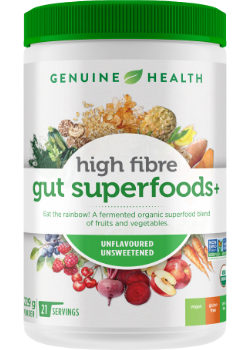
High Fibre Gut Superfoods+ (Unflavoured & Unsweetened) - 229g
$47.99
Genuine Health High Fibre Gut Superfoods+ (Unflavoured & Unsweetened) - 229g is a dietary supplement in powder form, intended for adults as part of a daily wellness routine.
THE ULTIMATE NO BLOAT GUT SUPERFOODHigh Fibre Gut Superfoods+ by Genuine Health is a simple and tasty way to add more plant-based nutrition to your day. Made from a colourful mix of fermented fruits, vegetables, and sea greens, it provides a natural source of fibre and iron in every scoop. This nourishing blend mixes smoothly into water and is gentle on the stomach, making it easy to enjoy regularly without discomfort or bloating. With wholesome ingredients and a vibrant flavour profile, it’s a convenient choice for supporting your daily wellness routine. [POWDER]
1 scoop (10.9g) contains:
Calories 25
Fat 0g
Saturated 0g
Trans 0g
Carbohydrate 5g
Fibre 6g
Sugars 1g
Protein 2g
Cholesterol 0mg
Sodium 60mg
Potassium 100mg
Calcium 50mg
Iron 2.25mg
Magnesium 6mg
Ingredients:
Organic fermented superfood blend (organic spirulina, organic beetroot, organic carrot, organic zucchini, organic ginger root, organic blueberry, organic tart cherry juice powder, organic sweet potato, organic raspberry, organic shittake mushroom, organic pineapple juice powder), organic acacia gum (fibre), organic oat hull fibre, organic apple fibre, organic red beet juice powder, xanthan gum.
Important Information:
Consult a healthcare practitioner in cases of yeast/candida infection, as some practitioners recommend avoiding fermented foods and supplements during this time. Store in a cool, dry place.
Dosage
Mix 1 scoop in 1 cup (250mL) of water. Shake well and enjoy.
Superfoods, Probiotics & Protein for Optimal Health
Genuine Health is best known for their award winning Greens+ Formula. Genuine Health supplements are trusted and include: Marine Collagen, omega 3, Fermented Vegan Protein, Advanced Probiotics and Fast Joint Care. For over 25 years, Genuine Health has delivered natural, science-based supplements that supports your body with nourishment. Where to
INTESTINAL HEALTH
Neglected, it can cause serious health concerns. Taken care of intestinal health can help you to stay energetic and full of life. Read on to discover how you can improve the health of your intestines...
The intestine is the main absorptive area of the digestive tract. It is essentially a tube with a thin mucosal lining and lots of blood vessels on the inside and muscles around the outside. It has its own immune tissue called GALT, or gut associated lymphoid tissue. The inner lining is filled with little fingers, or projection of the mucosa, which greatly increases its absorptive surface.
Lying on the membrane are many friendly organisms, which help our body with the digestive process. The small intestine attaches to the stomach. Near it’s beginning, ducts from the liver and
pancreas
release digestive juices. These juices mix with the partially digested food from the stomach and continue the digestive process. Nutrients are absorbed through the thin intestinal wall and transported via the bloodstream, to where they are needed. The liver also excretes processed toxins and fats through the bile. These substances must be carried through the intestine without being absorbed.
The remainder of the food is pushed through into the large intestine. The main function of the large intestine is the preparation of stool for excretion. In order to do this the digested food must be dehydrated and compacted. The last bit of nutrients may also be absorbed here.
The immune system has an important role to play in the health of the intestine and the body at large. One can think of the digestive tract as part of the exterior since it is in contact with things taken in from our environment. GALT must identify normal food particles and nutrients from microbes, toxins and other foreign substances that can cause our body’s harm. Improper immune responses are a cause of
food allergy, food sensitivity and can be the basis for autoimmune conditions.
Some of the most important players in intestinal health are not part of our own body. Friendly intestinal bacteria, often called
probiotics, are an essential part of digestion. They break down food particles, manufacture vitamins and prevent the infection of the tract with other microbes. Each bowel movement actually contains millions of these friendly bacteria; they are in a constant state of renewal. Many concerns like indigestion, gas, bloating and constipation can be due to an imbalance of the intestinal bacteria. It is easy to upset this balance by improper diet or taking medications like antibiotics.
Many foods that we eat, other substances we consume and our lifestyles contribute to intestinal disorders. Highly processed foods, alcohol, medications and tobacco are difficult for our body to break down and may also physically damage the digestive lining.
Processed foods are also deficient in nutrients so not only does the body have to work extra hard to digest the food, but it also gets depleted of the things it needs to do its work. Water and fibre intake is important to have proper moisture and bulk in the stool and make bowel movements regular.
Stress, anxiety and other emotional concerns put our nervous system in an excited state. Our digestive processes are only fully functional when our nervous system is relaxed. Sedentary lifestyles decrease movement throughout the digestive tract. As our transit time slows there is more opportunity for the re-absorption of processed toxins and greater chance of microbial overgrowth. Slow transit time also dries the stool and makes it more difficult to pass. Our body is designed so that each time we eat a meal we have a bowel movement. Many individuals can be considered constipated and have bowel movements less than once daily.
Support the intestine by:
· Undertaking regular bowel detoxification.
· Stay hydrated and eat more fiber
· Eliminating all processed and refined foods from the diet. Also avoid any food that you are sensitive to.
· Reducing stress and increasing exercise, which promotes proper bowel functioning.
· Using caution with food and water sources while camping and traveling.
· Using nutritional and herbal supplementation.
Bowel cleansing removes excess build-up on the colon walls and repairs the intestinal lining. If necessary, substances to kill infecting organisms can also be used. One simple way to cleanse the bowel is by drinking a glass of warm water with the juice of half a lemon each morning. Many herbs are helpful to restore intestinal health. To heal the intestine, calendula, fennel,
peppermint
and
slippery elm
can be used. To eliminate parasites clove, garlic or
wormwood
are often used.
Eat lots of vegetables, fruits, whole grains and legumes as food sources of fibre. Supplemental fibre can be taken in the form of inulin, apple
pectin
and oat bran. Drink 1.5 to 2L of filtered water daily. Fibre and water are important to regulate bowel movements.
Do not use the following foods because they irritate the intestine; unfermented dairy products, wheat, animal fat, caffeine, carbonated drinks, chocolate, candy, processed food, additives, preservatives, citrus fruits, spices and sugar-free foods. If you are celiac maintain a gluten free diet. Some gluten containing foods are: barley, oats, rye, wheat, spelt, kamut, hydrolysed vegetable
protein, texturized vegetable
protein, hydrolysed plant protein malt, modified food starch, some soy sauces, grain vinegars, binders, fillers, excipients, natural flavours, hot dogs, gravies, luncheon meat, beer, mustard, ketchup, non-dairy creamer, white vinegar, processed foods, bouillon cubes, chocolate, bottled salad dressing, curry powder and seasonings. If you have diverticulitis avoid grains, seeds, nuts, dairy products, sugar products, spicy food, fats, and processed foods.
Food that support intestinal health are
vegetarian protein, raw vegetables and fruits, whole grains, brown rice, potatoes, carrots, turnips, soy products and
green drinks. Consume fermented products like yogurt, kefir, quark, buttermilk and natural cheeses to replenish the friendly bacteria that assist with nutrient digestion. Broil or bake fish and meats instead of frying. Steam vegetables lightly.
To counteract stress do regular exercise and deep breathing exercises. Take time to enjoy your foods, chew well and eat in a comfortable environment. Use a hot pack over the abdomen to provide more blood to the digestive organs. If you have an inflammatory bowel condition only use heat therapy during the healing stage.
When camping or travelling take precautions to ensure the safety of your food and water. Water filtration devices can be used with some water bottles or sterilizing pellets can be added to water. Ensure all of the food that you eat is well cooked. Do not eat raw produce that you have not cleaned yourself, including salad in restaurants.
Carefully SelectedShips to the U.S.Wellness EssentialsTrusted Brands
Product Details
INTESTINAL HEALTH
Neglected, it can cause serious health concerns. Taken care of intestinal health can help you to stay energetic and full of life. Read on to discover how you can improve the health of your intestines...
The intestine is the main absorptive area of the digestive tract. It is essentially a tube with a thin mucosal lining and lots of blood vessels on the inside and muscles around the outside. It has its own immune tissue called GALT, or gut associated lymphoid tissue. The inner lining is filled with little fingers, or projection of the mucosa, which greatly increases its absorptive surface.
Lying on the membrane are many friendly organisms, which help our body with the digestive process. The small intestine attaches to the stomach. Near it’s beginning, ducts from the liver and
pancreas
release digestive juices. These juices mix with the partially digested food from the stomach and continue the digestive process. Nutrients are absorbed through the thin intestinal wall and transported via the bloodstream, to where they are needed. The liver also excretes processed toxins and fats through the bile. These substances must be carried through the intestine without being absorbed.
The remainder of the food is pushed through into the large intestine. The main function of the large intestine is the preparation of stool for excretion. In order to do this the digested food must be dehydrated and compacted. The last bit of nutrients may also be absorbed here.
The immune system has an important role to play in the health of the intestine and the body at large. One can think of the digestive tract as part of the exterior since it is in contact with things taken in from our environment. GALT must identify normal food particles and nutrients from microbes, toxins and other foreign substances that can cause our body’s harm. Improper immune responses are a cause of
food allergy, food sensitivity and can be the basis for autoimmune conditions.
Some of the most important players in intestinal health are not part of our own body. Friendly intestinal bacteria, often called
probiotics, are an essential part of digestion. They break down food particles, manufacture vitamins and prevent the infection of the tract with other microbes. Each bowel movement actually contains millions of these friendly bacteria; they are in a constant state of renewal. Many concerns like indigestion, gas, bloating and constipation can be due to an imbalance of the intestinal bacteria. It is easy to upset this balance by improper diet or taking medications like antibiotics.
Many foods that we eat, other substances we consume and our lifestyles contribute to intestinal disorders. Highly processed foods, alcohol, medications and tobacco are difficult for our body to break down and may also physically damage the digestive lining.
Processed foods are also deficient in nutrients so not only does the body have to work extra hard to digest the food, but it also gets depleted of the things it needs to do its work. Water and fibre intake is important to have proper moisture and bulk in the stool and make bowel movements regular.
Stress, anxiety and other emotional concerns put our nervous system in an excited state. Our digestive processes are only fully functional when our nervous system is relaxed. Sedentary lifestyles decrease movement throughout the digestive tract. As our transit time slows there is more opportunity for the re-absorption of processed toxins and greater chance of microbial overgrowth. Slow transit time also dries the stool and makes it more difficult to pass. Our body is designed so that each time we eat a meal we have a bowel movement. Many individuals can be considered constipated and have bowel movements less than once daily.
Support the intestine by:
· Undertaking regular bowel detoxification.
· Stay hydrated and eat more fiber
· Eliminating all processed and refined foods from the diet. Also avoid any food that you are sensitive to.
· Reducing stress and increasing exercise, which promotes proper bowel functioning.
· Using caution with food and water sources while camping and traveling.
· Using nutritional and herbal supplementation.
Bowel cleansing removes excess build-up on the colon walls and repairs the intestinal lining. If necessary, substances to kill infecting organisms can also be used. One simple way to cleanse the bowel is by drinking a glass of warm water with the juice of half a lemon each morning. Many herbs are helpful to restore intestinal health. To heal the intestine, calendula, fennel,
peppermint
and
slippery elm
can be used. To eliminate parasites clove, garlic or
wormwood
are often used.
Eat lots of vegetables, fruits, whole grains and legumes as food sources of fibre. Supplemental fibre can be taken in the form of inulin, apple
pectin
and oat bran. Drink 1.5 to 2L of filtered water daily. Fibre and water are important to regulate bowel movements.
Do not use the following foods because they irritate the intestine; unfermented dairy products, wheat, animal fat, caffeine, carbonated drinks, chocolate, candy, processed food, additives, preservatives, citrus fruits, spices and sugar-free foods. If you are celiac maintain a gluten free diet. Some gluten containing foods are: barley, oats, rye, wheat, spelt, kamut, hydrolysed vegetable
protein, texturized vegetable
protein, hydrolysed plant protein malt, modified food starch, some soy sauces, grain vinegars, binders, fillers, excipients, natural flavours, hot dogs, gravies, luncheon meat, beer, mustard, ketchup, non-dairy creamer, white vinegar, processed foods, bouillon cubes, chocolate, bottled salad dressing, curry powder and seasonings. If you have diverticulitis avoid grains, seeds, nuts, dairy products, sugar products, spicy food, fats, and processed foods.
Food that support intestinal health are
vegetarian protein, raw vegetables and fruits, whole grains, brown rice, potatoes, carrots, turnips, soy products and
green drinks. Consume fermented products like yogurt, kefir, quark, buttermilk and natural cheeses to replenish the friendly bacteria that assist with nutrient digestion. Broil or bake fish and meats instead of frying. Steam vegetables lightly.
To counteract stress do regular exercise and deep breathing exercises. Take time to enjoy your foods, chew well and eat in a comfortable environment. Use a hot pack over the abdomen to provide more blood to the digestive organs. If you have an inflammatory bowel condition only use heat therapy during the healing stage.
When camping or travelling take precautions to ensure the safety of your food and water. Water filtration devices can be used with some water bottles or sterilizing pellets can be added to water. Ensure all of the food that you eat is well cooked. Do not eat raw produce that you have not cleaned yourself, including salad in restaurants.
🌿
Daily Wellness
Easy to add to your everyday health routine.
✅
Carefully Selected
Chosen with quality and customer needs in mind.
💊
Simple to Use
Designed for convenient daily supplementation.
🚚
Ships to the U.S.
Fast, reliable shipping to U.S. customers.
Choosing a selection results in a full page refresh.