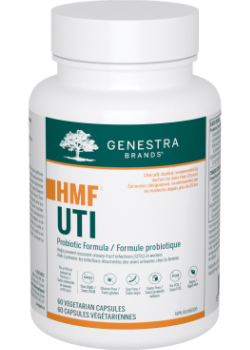
HELP PREVENT REOCCURRING UTI'SGenetra's HMF UTI is a combination of probiotics and PACRAN, a clinically studied cranberry fruit extract that helps prevent recurrent urinary tract infections (UTIs) in women. HMF UTI also contains five strains of proprietary probiotics including L. gasseri, one of the predominant vaginal Lactobacillus species that has shown superior adherence to the gut lining and natural resistance to pH and bile acid. [VCAPS]
Each capsule contains:
Probiotic Consortium 15 Billion CFU
Lactobacillus acidophilus (CUL-60, CUL-21) 10 Billion CFU
Bifidobacterium animalis subsp. lactis (CUL-34)
& Bifidobacterium bifidum(CUL-20) 2 .5 Billion CFU
Lactobacillus gasseri(CUL-09) 2 .5 Billion CFU
PACRAN® Cranberry (Vaccinium macrocarpon) Fruit Extract (50:1) 250 mg
12 .5 g Fresh Fruit Equivalent
Non-Medicinal Ingredients:Hypromellose, cellulose, silica, magnesium stearate
Important Information:
Contains no added wheat, starch, gluten, soy, artificial colouring or flavouring, antimicrobial preservatives, dairy or animal products . Ideal for vegans. Keep refrigerated.
Dosage
Take two capsules daily, at least two to three hours before or after taking antibiotics, or as recommended by your healthcare practitioner.
Evidence-Based Natural Health Supplements for Optimal Wellness
Genestra delivers professional-grade products that are offered in a variety of formats. Genestra natural health products have been proven safe, effective and reliable for over 30 years, and are backed by clinical evidence. Genestra brings you HMF Forte, HMF Immune, HMF UTI, Digest Plus, Probiotics, D-Mulsion and Super EFA Liquid.
cranberry
Containing a significant amount of
Vitamin C
is only one of the many benefits of cranberries...
Cranberries are the fruit of a bush (Vaccinium macrocarpon) that have a tart flavour and are commonly used in cooking, baking, juice, or eaten plain. Cranberry sauce is frequently paired with turkey during Thanksgiving celebrations in North America. Traditionally, cranberry has been used for hundreds of years to prevent and and treat urinary tract infections.
In the current medical model, a large amount of scientific research has been performed to confirm this traditional usage, and has also shown it to decrease the severity of established Urinary Tract Infections as well. It is now widely used by naturopathic and medical healthcare practitioners around the world.
How does it work?
Cranberry contains compounds called lectins that prevent bacteria from sticking to the walls of the urinary tract. When they cannot stay stuck to the bladder wall, they are easily flushed out with the urine and do not lead to infection. This is particularly true of the most common urinary tract pathogen, the bacteria commonly called E. coli. The increased activity against E. coli may also be due to the mannose content of cranberry. Supplementation with cranberry also acidifies the urine, which makes it an uncomfortable environment for many bacteria to live and reproduce.
Aside from UTI research, cardiovascular health is one of the best researched areas of cranberries. The combination of
antioxidants
and anti-inflammatory phytonutrients found in cranberries are the reason for this. Dietary intake of cranberries has been shown to prevent triggering two
enzymes
that contributes to atherosclerosis. In animal studies, it was also shown that the antioxidants helped to decrease the risk of
high blood pressure. Consuming cranberry extracts helped prevent over constriction of blood vessels. Lastly cranberries have been shown to help lower LDL-cholesterol and total cholesterol while increasing HDL-cholesterol levels.
Cranberries have also been shown to help the digestive tract including the mouth, gums, stomach and colon. Due to it's anti-inflammatory properties dietary consumption of cranberries have been shown to reduce the risk of chronic, and unwanted inflammation in the stomach, large intestine and cardiovascular system.
Nutritional Content
In addition to the antibacterial sugar mannose, cranberries also contain significant amounts of
Vitamin C, which is important for the healing of the lining of the urinary tract. The chemical compounds called proanthocyanidins found in cranberry have been shown to have anti-cell growth effects in preliminary laboratory testing. More studies are needed to determine if cranberry will be clinically useful for patients.
Why doesn’t sweetened cranberry juice work?
It is important to avoid drinking sweetened cranberry cocktails, because they often contain little actual cranberry juice and lots of sugar. Sugar actually feeds the bacteria that cause urinary tract infections, and can allow them to reproduce more quickly.
How can I take cranberry?
Cranberry can be purchased as a raw or dried berries, encapsulated dried berries, encapsulated extract, or concentrated juice. The concentrated unsweetened juice is the best way to consume cranberry for its medicinal qualities. The juice is very tart but be sure to only dilute the juice with water, not other fruit juices to avoid adding extra sugar. Encapsulated cranberry ranges in strength and quality. Purchase a product that gives an equivalent value of raw cranberries or concentrated cranberry juice. Combination products for urinary tract infections may contain cranberry. The dose of unsweetened juice recommended is generally 300ml daily (diluted as desired with water), and the dose for tablets is 400mg three times a day for at least a month. In children, the dose of concentrated juice is 15ml per kg of body weight (diluted as desired with water).
Cranberry– QUICK FACTS
PARTS USED
· Berries.
APPLICATIONS
· Bladder infections, kidney infections,
skin infections.
OPTIMUM DOSAGE
· Unsweetened concentrated juice dilute one cup in 1L of water, consume daily. Concentrated capsules 600-800mg daily. (Clinical doses may be higher as recommended by your practitioner).
WORKS WELL WITH
· Probiotics,
uva ursi, hydrangea,
dandelion
leaf.
IMPORTANT INFORMATION
· There are no cautions or side effects associated with the use of cranberry.
· Avoid juices containing sugar as they can aggravate symptoms
Carefully SelectedShips to the U.S.Wellness EssentialsTrusted Brands
Product Details
cranberry
Containing a significant amount of
Vitamin C
is only one of the many benefits of cranberries...
Cranberries are the fruit of a bush (Vaccinium macrocarpon) that have a tart flavour and are commonly used in cooking, baking, juice, or eaten plain. Cranberry sauce is frequently paired with turkey during Thanksgiving celebrations in North America. Traditionally, cranberry has been used for hundreds of years to prevent and and treat urinary tract infections.
In the current medical model, a large amount of scientific research has been performed to confirm this traditional usage, and has also shown it to decrease the severity of established Urinary Tract Infections as well. It is now widely used by naturopathic and medical healthcare practitioners around the world.
How does it work?
Cranberry contains compounds called lectins that prevent bacteria from sticking to the walls of the urinary tract. When they cannot stay stuck to the bladder wall, they are easily flushed out with the urine and do not lead to infection. This is particularly true of the most common urinary tract pathogen, the bacteria commonly called E. coli. The increased activity against E. coli may also be due to the mannose content of cranberry. Supplementation with cranberry also acidifies the urine, which makes it an uncomfortable environment for many bacteria to live and reproduce.
Aside from UTI research, cardiovascular health is one of the best researched areas of cranberries. The combination of
antioxidants
and anti-inflammatory phytonutrients found in cranberries are the reason for this. Dietary intake of cranberries has been shown to prevent triggering two
enzymes
that contributes to atherosclerosis. In animal studies, it was also shown that the antioxidants helped to decrease the risk of
high blood pressure. Consuming cranberry extracts helped prevent over constriction of blood vessels. Lastly cranberries have been shown to help lower LDL-cholesterol and total cholesterol while increasing HDL-cholesterol levels.
Cranberries have also been shown to help the digestive tract including the mouth, gums, stomach and colon. Due to it's anti-inflammatory properties dietary consumption of cranberries have been shown to reduce the risk of chronic, and unwanted inflammation in the stomach, large intestine and cardiovascular system.
Nutritional Content
In addition to the antibacterial sugar mannose, cranberries also contain significant amounts of
Vitamin C, which is important for the healing of the lining of the urinary tract. The chemical compounds called proanthocyanidins found in cranberry have been shown to have anti-cell growth effects in preliminary laboratory testing. More studies are needed to determine if cranberry will be clinically useful for patients.
Why doesn’t sweetened cranberry juice work?
It is important to avoid drinking sweetened cranberry cocktails, because they often contain little actual cranberry juice and lots of sugar. Sugar actually feeds the bacteria that cause urinary tract infections, and can allow them to reproduce more quickly.
How can I take cranberry?
Cranberry can be purchased as a raw or dried berries, encapsulated dried berries, encapsulated extract, or concentrated juice. The concentrated unsweetened juice is the best way to consume cranberry for its medicinal qualities. The juice is very tart but be sure to only dilute the juice with water, not other fruit juices to avoid adding extra sugar. Encapsulated cranberry ranges in strength and quality. Purchase a product that gives an equivalent value of raw cranberries or concentrated cranberry juice. Combination products for urinary tract infections may contain cranberry. The dose of unsweetened juice recommended is generally 300ml daily (diluted as desired with water), and the dose for tablets is 400mg three times a day for at least a month. In children, the dose of concentrated juice is 15ml per kg of body weight (diluted as desired with water).
Cranberry– QUICK FACTS
PARTS USED
· Berries.
APPLICATIONS
· Bladder infections, kidney infections,
skin infections.
OPTIMUM DOSAGE
· Unsweetened concentrated juice dilute one cup in 1L of water, consume daily. Concentrated capsules 600-800mg daily. (Clinical doses may be higher as recommended by your practitioner).
WORKS WELL WITH
· Probiotics,
uva ursi, hydrangea,
dandelion
leaf.
IMPORTANT INFORMATION
· There are no cautions or side effects associated with the use of cranberry.
· Avoid juices containing sugar as they can aggravate symptoms
🌿
Daily Wellness
Easy to add to your everyday health routine.
✅
Carefully Selected
Chosen with quality and customer needs in mind.
💊
Simple to Use
Designed for convenient daily supplementation.
🚚
Ships to the U.S.
Fast, reliable shipping to U.S. customers.
Choosing a selection results in a full page refresh.