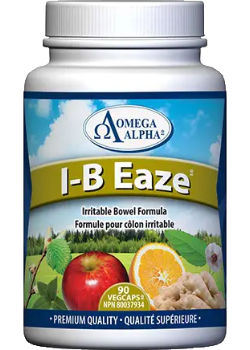
Used in Herbal Medicine to help relieve digestive disturbances or dyspepsia. Omega Alpha brings you I‐B Eaze, a supplement to help you combat Irritable Bowel Syndrome (IBS). Formulated with key ingredients including Ginger Rhizome, Marshmallow Root and Slippery Elm Bark to name a few. Ginger is traditionally used in Herbal Medicine to help relieve digestive upset and disturbances including lack of appetite, nausea, digestive spasms, indigestion, dyspepsia and flatulent colic (carminative). Slippery elm is a demulcent, an agent that coats and protects mucosal surfaces. and in the stomach and intestines, protects the lining from ulceration. Keep in mind that fibre intake is crucial to recovery from IBS. It helps to cleanse toxins from both the large and small intestines that can cause both irritation and create an environment in which parasites and candida proliferate. [VCAP]
Each v-caps contains:
Zingiber officinale (Ginger Rhizome) 170 mg
Althaea officinalis (Marshmallow Root) 80 mg
Hesperidin 80 mg
Ulmus rubra (Slippery Elm Bark) 80 mg
Camellia sinensis (Green Tea Extract Leaf) (45% Epigallocatechin 3-gallate) 40 mg
L-Glutamine 25 mg
alpha-Amylase 720 FCC DU1
Lipase 20 FIP LU2
Maltase 11.2 FCC DP3
Cellulase 10 FCC CU4
Non-Medicinal Ingredients:
Hypromellose (vegcaps®/vegetarian capsule shell), Cellulose, Magnesium stearate, Apple Fibre.
Important Information:
Consult a health care practitioner prior to use if you are pregnant, breastfeeding or following a low protein diet; have diabetes, iron deficiency, or are taking any prescription medications. If you have a liver disorder, consult a healthcare practitioner prior to use. Stop use if you develop symptoms of liver trouble such as yellowing of the skin/eyes (jaundice), stomach pain, dark urine, sweating, nausea, unusual tiredness and/or loss of appetite and consult a health care practitioner. Rare, unpredictable cases of liver injury associated with green tea extract-containing products have been reported (in Canada and internationally). Hypersensitivity/allergy has been known to occur, in which case discontinue use. Do not use if security seal is broken. Store away from children. Store protected from light and moisture.
Dosage
Adults: Take 1 capsule three times per day with food.
Advanced Herbal Formulas That Deliver
Support immune health, energy, and focus with Omega Alpha’s mushroom extracts.
Chaga Mushroom Extract
delivers antioxidant support, while
Cordyceps Mushroom Extract
boosts energy and endurance.
Coriolus (Turkey Tail) Mushroom Extract
supports immune and gut health, and
Lion’s Mane Mushroom Extract
enhances memory and cognition.
Maitake Mushroom Extract,
Reishi Mushroom Extract, and
Shiitake Mushroom Extract
provide additional support for immunity, stress balance, and overall wellness.
DIGESTIVE HEALTH
You might only notice healthy digestion when you don't have it. Most people don't even think about their digestion until symptoms start. Enzyme supplements &
probiotics
can make a significant difference for you
digestive health...
The digestive process takes food material, breaks it down into absorbable pieces and transports it into the body. It is a complex process, involving many organs. Digestion begins with the scent of food stimulating the secretion of saliva. When food enters the mouth
enzymes
in the saliva begin to break it down. Chewing physically breaks down food pieces and stimulates saliva production. The mucus membranes of the mouth can absorb some nutrients.
Swallowed food travels down the esophagus and into the stomach. The stomach uses muscular contractions to mix the food with digestive enzymes and hydrochloric acid. High acid levels kill germs that may be in the food. Food stays in the stomach longer if it contains more fat and shorter if it contains more sugar.
The small intestine attaches to the stomach. Near it’s beginning, ducts from the liver and
pancreas
release digestive juices. Nutrients are absorbed through the thin intestinal wall and transported via the bloodstream, to where they are needed. The remainder of the food is pushed through into the large intestine where water is absorbed. The remaining food is compacted and prepared for excretion as stool.
The liver produces bile, which metabolizes fats and proteins. It also takes the toxic material from food substances, like medications, alcohol, and hormones, and processes them to make them harmless. The liver produces factors for blood clotting and the immune system. The gallbladder is a storage area for bile from the liver. The pancreas manufactures enzymes and hormones, like insulin. Insulin allows cells to take in sugar to burn as fuel.
Digestive disorders can be influenced by foods and other substances we ingest and our lifestyle. Water and fibre intake is important for healthy, regular bowel movements since we need them to add bulk to our stool. Foods that are highly processed, certain medications, tobacco and alcohol cause the body trouble as they are hard to break down and damage organs like our liver and pancreas. The digestive lining may also become damaged while the body works extra hard to digest these and especially processed foods. Since processed foods are deficient in nutrients, the body also becomes depleted in fuel in needs to work extra hard.
Stress, anxiety and other emotional concerns put our nervous system in an excited state. Our digestive processes are only fully functional when our nervous system is relaxed. Sedentary lifestyles decrease movement throughout the digestive tract. As our transit time slows there is more opportunity for the resorption of processed toxins from our food and greater chance of microbial overgrowth. Slow transit time also dries the stool and makes it more difficult to pass. Our body is designed so that each time we eat a meal we have a bowel movement. Many individuals can be considered constipated and have bowel movements less than once daily.
Some of the most important players in digestion are not part of our own body.
Friendly intestinal bacteria, often called probiotics, are an essential part of digestion. They break down food particles, manufacture vitamins and prevent the infection of the tract with other microbes.
Each bowel movement actually contains millions of these friendly bacteria; they are in a constant state of renewal. Many concerns like indigestion, gas, bloating and constipation can be due to an imbalance of the intestinal bacteria. It is easy to upset this balance by improper diet or taking medications like antibiotics.
The health of our teeth and gums is often overlooked as a factor in digestive concerns. Problems in the mouth can lead to malnutrition when foods are avoided due to pain or the inability to chew them correctly. To maintain dental health:
- Use proper dental hygiene including regular tooth brushing, flossing and dental visits
- Avoid all refined sugars, sticky foods, smoking, carbonated beverages and chewable
vitamin C
tablets
- Eat raw crunchy foods, like apples and carrots, and drink unsweetened
cranberry
juice because they have plaque-fighting properties
The stomach can be afflicted with several common digestive concerns. Indigestion is caused by an inability to breakdown and absorb food. It is usually directly related to the type of food eaten and poor eating habits. Chronic indigestion may be related to lack of bile, stomach acid and enzymes, or food sensitivities. Gastric and peptic ulcers are erosions of the mucus membrane that line the stomach and upper intestine. Excess digestive juices, deficient digestive juices, bacteria, poor diet, caffeine, alcohol, tobacco, anti-inflammatory medication, cortisone and stress can cause ulcers. Hiatal hernias are a bulge of stomach tissue that have gone through the diaphragm and sit around the esophagus. It is associated with poor eating habits, obesity and the use of estrogen medications. Optimize the health and functioning of your stomach by:
- Cooking all foods well and eating small frequent meals in a comfortable environment.
- Eat slowly to avoid swallowing excess air. Do not drink liquids while eating because it dilutes digestive juices.
- Eliminate all processed and refined foods from the diet. Other foods that irritate the stomach are alcohol, coffee, tea, colas, tobacco, aspirin, ibuprofen and spicy foods.
- For ulcers, eat soothing foods that produce a protective coating over the digestive tract for example, ground flax seed, yogurt, porridge and congee.
One can eat the most nutritious food but if the intestinal membrane is not in good working order the body will not be able to absorb the nutrients. Diverticulitis occurs when the intestinal muscle tissue weakens, forms pouches and becomes inflamed. Crohn’s Disease is an inflammation of the small intestine, but it can also affect the mouth and stomach. Ulcerative colitis occurs when small ulcers develop on the mucous lining of the large intestine. Irritable bowel syndrome mimics Crohn’s disease and ulcerative colitis but does not make visible lesions in the bowel. Support the intestine by:
- Undertake regular bowel detoxification with a juice fast and supplementation.
- Increasing dietary fibre intake. Eat lots of vegetables, fruits and legumes. Use inulin, apple pectin and oat bran as daily fibre sources.
- Drinking lots of filtered water to regulate bowel movements.
- Eliminating all processed and refined foods from the diet. Also avoid any food that you are sensitive to.
- Reducing stress and increasing exercise, which promotes proper bowel functioning.
Toxins, microbes or other medical conditions can compromise pancreatic and liver function. Diabetes occurs when a person’s pancreas is unable to produce enough insulin to metabolize the amount of sugar that they are ingesting. A diet high in refined carbohydrates and nutrient deficiency are large contributing factors to “age onset diabetes”, as it is often called; excess body weight, lack of exercise, and heredity also often play significant roles when a person develops diabetes. Hepatitis is an inflammation of the liver that is caused by the hepatitis virus, medications or toxins. Gallstones are precipitates, made mostly of cholesterol, that form as a result of a lack of fibre, excess cholesterol, decreased liver function, lack of bile and lack of bile movement. Functioning of the digestive glands can be optimized using natural treatments such as:
- Undertaking regular liver and gallbladder detoxification. Drink warm water and lemon juice daily as a gentle flush of the system.
- Eating bitter foods like artichoke, rhubarb and salad
greens
in order to stimulate the flow of digestive juices.
- Regulating blood sugar by limiting the intake of sugars and eating more
protein, healthy fats and fibre.
Carefully SelectedShips to the U.S.Wellness EssentialsTrusted Brands
Product Details
DIGESTIVE HEALTH
You might only notice healthy digestion when you don't have it. Most people don't even think about their digestion until symptoms start. Enzyme supplements &
probiotics
can make a significant difference for you
digestive health...
The digestive process takes food material, breaks it down into absorbable pieces and transports it into the body. It is a complex process, involving many organs. Digestion begins with the scent of food stimulating the secretion of saliva. When food enters the mouth
enzymes
in the saliva begin to break it down. Chewing physically breaks down food pieces and stimulates saliva production. The mucus membranes of the mouth can absorb some nutrients.
Swallowed food travels down the esophagus and into the stomach. The stomach uses muscular contractions to mix the food with digestive enzymes and hydrochloric acid. High acid levels kill germs that may be in the food. Food stays in the stomach longer if it contains more fat and shorter if it contains more sugar.
The small intestine attaches to the stomach. Near it’s beginning, ducts from the liver and
pancreas
release digestive juices. Nutrients are absorbed through the thin intestinal wall and transported via the bloodstream, to where they are needed. The remainder of the food is pushed through into the large intestine where water is absorbed. The remaining food is compacted and prepared for excretion as stool.
The liver produces bile, which metabolizes fats and proteins. It also takes the toxic material from food substances, like medications, alcohol, and hormones, and processes them to make them harmless. The liver produces factors for blood clotting and the immune system. The gallbladder is a storage area for bile from the liver. The pancreas manufactures enzymes and hormones, like insulin. Insulin allows cells to take in sugar to burn as fuel.
Digestive disorders can be influenced by foods and other substances we ingest and our lifestyle. Water and fibre intake is important for healthy, regular bowel movements since we need them to add bulk to our stool. Foods that are highly processed, certain medications, tobacco and alcohol cause the body trouble as they are hard to break down and damage organs like our liver and pancreas. The digestive lining may also become damaged while the body works extra hard to digest these and especially processed foods. Since processed foods are deficient in nutrients, the body also becomes depleted in fuel in needs to work extra hard.
Stress, anxiety and other emotional concerns put our nervous system in an excited state. Our digestive processes are only fully functional when our nervous system is relaxed. Sedentary lifestyles decrease movement throughout the digestive tract. As our transit time slows there is more opportunity for the resorption of processed toxins from our food and greater chance of microbial overgrowth. Slow transit time also dries the stool and makes it more difficult to pass. Our body is designed so that each time we eat a meal we have a bowel movement. Many individuals can be considered constipated and have bowel movements less than once daily.
Some of the most important players in digestion are not part of our own body.
Friendly intestinal bacteria, often called probiotics, are an essential part of digestion. They break down food particles, manufacture vitamins and prevent the infection of the tract with other microbes.
Each bowel movement actually contains millions of these friendly bacteria; they are in a constant state of renewal. Many concerns like indigestion, gas, bloating and constipation can be due to an imbalance of the intestinal bacteria. It is easy to upset this balance by improper diet or taking medications like antibiotics.
The health of our teeth and gums is often overlooked as a factor in digestive concerns. Problems in the mouth can lead to malnutrition when foods are avoided due to pain or the inability to chew them correctly. To maintain dental health:
- Use proper dental hygiene including regular tooth brushing, flossing and dental visits
- Avoid all refined sugars, sticky foods, smoking, carbonated beverages and chewable
vitamin C
tablets
- Eat raw crunchy foods, like apples and carrots, and drink unsweetened
cranberry
juice because they have plaque-fighting properties
The stomach can be afflicted with several common digestive concerns. Indigestion is caused by an inability to breakdown and absorb food. It is usually directly related to the type of food eaten and poor eating habits. Chronic indigestion may be related to lack of bile, stomach acid and enzymes, or food sensitivities. Gastric and peptic ulcers are erosions of the mucus membrane that line the stomach and upper intestine. Excess digestive juices, deficient digestive juices, bacteria, poor diet, caffeine, alcohol, tobacco, anti-inflammatory medication, cortisone and stress can cause ulcers. Hiatal hernias are a bulge of stomach tissue that have gone through the diaphragm and sit around the esophagus. It is associated with poor eating habits, obesity and the use of estrogen medications. Optimize the health and functioning of your stomach by:
- Cooking all foods well and eating small frequent meals in a comfortable environment.
- Eat slowly to avoid swallowing excess air. Do not drink liquids while eating because it dilutes digestive juices.
- Eliminate all processed and refined foods from the diet. Other foods that irritate the stomach are alcohol, coffee, tea, colas, tobacco, aspirin, ibuprofen and spicy foods.
- For ulcers, eat soothing foods that produce a protective coating over the digestive tract for example, ground flax seed, yogurt, porridge and congee.
One can eat the most nutritious food but if the intestinal membrane is not in good working order the body will not be able to absorb the nutrients. Diverticulitis occurs when the intestinal muscle tissue weakens, forms pouches and becomes inflamed. Crohn’s Disease is an inflammation of the small intestine, but it can also affect the mouth and stomach. Ulcerative colitis occurs when small ulcers develop on the mucous lining of the large intestine. Irritable bowel syndrome mimics Crohn’s disease and ulcerative colitis but does not make visible lesions in the bowel. Support the intestine by:
- Undertake regular bowel detoxification with a juice fast and supplementation.
- Increasing dietary fibre intake. Eat lots of vegetables, fruits and legumes. Use inulin, apple pectin and oat bran as daily fibre sources.
- Drinking lots of filtered water to regulate bowel movements.
- Eliminating all processed and refined foods from the diet. Also avoid any food that you are sensitive to.
- Reducing stress and increasing exercise, which promotes proper bowel functioning.
Toxins, microbes or other medical conditions can compromise pancreatic and liver function. Diabetes occurs when a person’s pancreas is unable to produce enough insulin to metabolize the amount of sugar that they are ingesting. A diet high in refined carbohydrates and nutrient deficiency are large contributing factors to “age onset diabetes”, as it is often called; excess body weight, lack of exercise, and heredity also often play significant roles when a person develops diabetes. Hepatitis is an inflammation of the liver that is caused by the hepatitis virus, medications or toxins. Gallstones are precipitates, made mostly of cholesterol, that form as a result of a lack of fibre, excess cholesterol, decreased liver function, lack of bile and lack of bile movement. Functioning of the digestive glands can be optimized using natural treatments such as:
- Undertaking regular liver and gallbladder detoxification. Drink warm water and lemon juice daily as a gentle flush of the system.
- Eating bitter foods like artichoke, rhubarb and salad
greens
in order to stimulate the flow of digestive juices.
- Regulating blood sugar by limiting the intake of sugars and eating more
protein, healthy fats and fibre.
🌿
Daily Wellness
Easy to add to your everyday health routine.
✅
Carefully Selected
Chosen with quality and customer needs in mind.
💊
Simple to Use
Designed for convenient daily supplementation.
🚚
Ships to the U.S.
Fast, reliable shipping to U.S. customers.
Choosing a selection results in a full page refresh.