Expectorant, anticatarrhal, antiviral, antibacterial
Relieves all respiratory tract conditions
Soothes spasmodic cough and sore throat
Reduces inflammation of the mucus membrane of ear, nose and throat
Gluten Free and Vegan
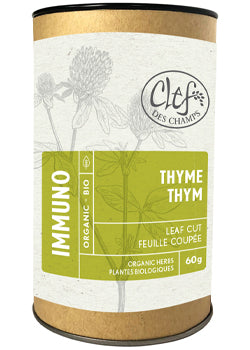
Clef Des Champs Immuno Thyme Leaf Cut (Loose Tea Organic, Tube) - 60g is a dietary supplement, intended for adults as part of a daily wellness routine.
Organic Thyme from Clef Des Champs can be used for all respiratory tract conditions where there is productive or spasmodic cough. As an expectorant and anticatarrhal, it frees the bronchi and calms inflammation. Thyme’s action on the bronchial cilia helps expectorate mucus. It is antiseptic and rich in antibacterial volatile oils. Drinking a hot infusion disperses the essential oils in the lungs, where they have a direct action on the respiratory tract. Thyme has a relaxing effect on the smooth muscles of the bronchi, making it very effective to treat coughs. Thyme can be used as a gargle to relieve sore throat, tonsillitis and mouth sores and also helps to reduce bad breath. [LOOSE TEA]
Contains:
Organic Thyme (leaf, thymus vulgaris)
Important Information:
Keep out of reach of children. Do not use if pregnant or breast feeding. Do not use if hypersensitive or allergic to the Lamiaceae (mint) family
Dosage
Drink 2 - 3 cups per day. Pour 1 litre of boiling water over 3 tbsp of herbs, cover and let steep for 10-15 minutes. Filter.
Herbalist Recommended Tinctures, Teas, & Capsules
Clef des Champs is a Canadian company that was founded by an herbalist in Quebec. All of their herbs are organically grown in their own garden in the Quebec mountains. The natural elements nourish each herb until it’s ready to be picked, dried and made into one of their natural formulations. Their blends offer support for many health concerns including; oral health, women’s health, immune and respiratory health, digestive health, men’s prostate health, and muscle and joint relief. Available in water-alcohol, alcohol-free, capsule, syrup or salve formula’s, Clef des Champs uses the healing power of herbs to support your needs.
THYME, LEAF CUT - ANTISEPTIC OF THE RESPIRATORY TRACT
Mode Of Action
Thyme is used for all respiratory tract conditions where there is productive or spasmodic cough. As an expectorant and anticatarrhal, it frees the bronchi and calms inflammation. Thyme’s action on the bronchial cilia helps expectorate mucus. It is antiseptic and rich in antibacterial volatile oils. Drinking a hot infusion disperses the essential oils in the lungs, where they have a direct action on the respiratory tract. Thyme has a relaxing effect on the smooth muscles of the bronchi, making it very effective to treat coughs. It soothes spasmodic cough and sore throat. Thyme reduces inflammation of the mucus membrane of ear, nose and throat and is antibacterial and antiviral. It is diaphoretic, relieves fever and is used in the treatment of cold, flu, laryngitis and pharyngitis.
Thyme is used as a gargle to relieve sore throat, tonsillitis and mouth sores. Thyme helps reduce bad breath and is an active antibacterial on P. gingivalis, a bacteria that contributes to the development of certain pathologies of the mouth and teeth, such as gingivitis and stomatitis. It is also antioxidant.
Thyme is also beneficial for the digestive system. It is antispasmodic, carminative and calms abdominal pain, bloating and gas caused by dyspepsia. It is antiparasitic and efficient against certain bacteria (H. pylori) and yeasts (
Candida
albicans).
Thymus
vulgaris is a mild astringent used for
diarrhea, especially in children. A cold or cool infusion tones the digestive system. Also, its antiseptic and diuretic properties are very efficient to treat urinary tract infections.
The active principles of thyme are volatile oils (thymol, carvacrol, linalool), tannins, flavonoids (eriodictyol, luteolin, naringenin), acids (rosmarinic, caffeic), saponins, resins, polysaccharides (arabinogalactane) and bitter principles.
Helpful Associations
Pulmona Tea
for spasmodic cough, irritation of the bronchi.
Bronchix or Plantain Syrup
for irritation of the bronchi,
bronchitis.
Vocalix
for sore throat and laryngitis.
Estomix
for gas, bloating and digestive troubles.
Parasitix
for parasites.
Gingivix
for mouth and teeth problems accompanied by inflammation of the gums.
Uses
Immune system:
whooping cough, laryngitis, tonsillitis (as a gargle).
Respiratory system:
bronchitis,
asthma, emphysema, catarrh of the respiratory tract.
Genito-urinary system:
bedwetting (children).
Digestive system:
colic, flatulence, abdominal cramps, diarrhea, parasites, fungus infection, gastritis, acid reflux.
Other uses:
gingivitis (gargle), inflammation of the mouth caused by chemotherapy (gargle), convalescence, allergies.
History
Originally from the Mediterranean basin, thyme was used by the Pharaohs and the Sumerians to embalm the dead. In Antiquity, the Romans used it to flavour cheeses and alcoholic beverages and Roman legionnaires felt increased vigor when they added it to their bathwater. The Greeks used it as incense to purify the air and to keep animals away. In his 17th Century writings, the herbalist Nicholas Culpeper mentioned that thyme was used to treat whooping cough, shortness of breath,
gout
and stomach aches. Today, thyme is included in many products such as soaps and mouthwashes.
Carefully SelectedShips to the U.S.Wellness EssentialsTrusted Brands
Product Details
THYME, LEAF CUT - ANTISEPTIC OF THE RESPIRATORY TRACT
Mode Of Action
Thyme is used for all respiratory tract conditions where there is productive or spasmodic cough. As an expectorant and anticatarrhal, it frees the bronchi and calms inflammation. Thyme’s action on the bronchial cilia helps expectorate mucus. It is antiseptic and rich in antibacterial volatile oils. Drinking a hot infusion disperses the essential oils in the lungs, where they have a direct action on the respiratory tract. Thyme has a relaxing effect on the smooth muscles of the bronchi, making it very effective to treat coughs. It soothes spasmodic cough and sore throat. Thyme reduces inflammation of the mucus membrane of ear, nose and throat and is antibacterial and antiviral. It is diaphoretic, relieves fever and is used in the treatment of cold, flu, laryngitis and pharyngitis.
Thyme is used as a gargle to relieve sore throat, tonsillitis and mouth sores. Thyme helps reduce bad breath and is an active antibacterial on P. gingivalis, a bacteria that contributes to the development of certain pathologies of the mouth and teeth, such as gingivitis and stomatitis. It is also antioxidant.
Thyme is also beneficial for the digestive system. It is antispasmodic, carminative and calms abdominal pain, bloating and gas caused by dyspepsia. It is antiparasitic and efficient against certain bacteria (H. pylori) and yeasts (
Candida
albicans).
Thymus
vulgaris is a mild astringent used for
diarrhea, especially in children. A cold or cool infusion tones the digestive system. Also, its antiseptic and diuretic properties are very efficient to treat urinary tract infections.
The active principles of thyme are volatile oils (thymol, carvacrol, linalool), tannins, flavonoids (eriodictyol, luteolin, naringenin), acids (rosmarinic, caffeic), saponins, resins, polysaccharides (arabinogalactane) and bitter principles.
Helpful Associations
Pulmona Tea
for spasmodic cough, irritation of the bronchi.
Bronchix or Plantain Syrup
for irritation of the bronchi,
bronchitis.
Vocalix
for sore throat and laryngitis.
Estomix
for gas, bloating and digestive troubles.
Parasitix
for parasites.
Gingivix
for mouth and teeth problems accompanied by inflammation of the gums.
Uses
Immune system:
whooping cough, laryngitis, tonsillitis (as a gargle).
Respiratory system:
bronchitis,
asthma, emphysema, catarrh of the respiratory tract.
Genito-urinary system:
bedwetting (children).
Digestive system:
colic, flatulence, abdominal cramps, diarrhea, parasites, fungus infection, gastritis, acid reflux.
Other uses:
gingivitis (gargle), inflammation of the mouth caused by chemotherapy (gargle), convalescence, allergies.
History
Originally from the Mediterranean basin, thyme was used by the Pharaohs and the Sumerians to embalm the dead. In Antiquity, the Romans used it to flavour cheeses and alcoholic beverages and Roman legionnaires felt increased vigor when they added it to their bathwater. The Greeks used it as incense to purify the air and to keep animals away. In his 17th Century writings, the herbalist Nicholas Culpeper mentioned that thyme was used to treat whooping cough, shortness of breath,
gout
and stomach aches. Today, thyme is included in many products such as soaps and mouthwashes.
🌿
Daily Wellness
Easy to add to your everyday health routine.
✅
Carefully Selected
Chosen with quality and customer needs in mind.
💊
Simple to Use
Designed for convenient daily supplementation.
🚚
Ships to the U.S.
Fast, reliable shipping to U.S. customers.
Choosing a selection results in a full page refresh.