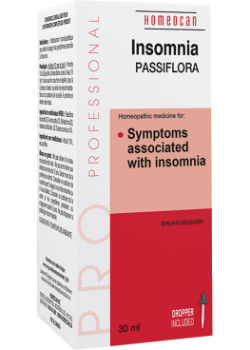
Homeocan’s Insomnia Passiflora is designed to help you get a peaceful and restful sleep. Insomnia Passiflora from Homeocan is a homeopathic remedy which is a reliable for the treatment of insomnia and conditions associated with inflammation in acute disease. Insomnia Passiflora Complex is a homeopathic medicine to help you relieve the symptoms associated with insomnia including difficulty falling asleep, nocturnal awakening, anxiety in sleep, early awakening Insomnia is a problem that affects many people. It results in a decrease in the amount and quality of sleep. If you are unable to sleep, drops Insomnia Passiflora do not cause addiction. Insomnia is a condition of habitual sleeplessness that affects approximately one in ten individuals and becomes more common as we age. It can involve either the inability to fall asleep, or the inability to stay asleep, or both. [LIQUID]
Contains:
Passiflora incarnata 2X
Avena sativa 2X
Belladonna 3X
Valeriana officinalis 2X
Secale cornutum 4X
Non-medicinal ingredients:
Alcohol 13%, Purified water.
Important Information:
Do not use if seal is broken. Do not administer to children under 12 years of age. Consult a healthcare practitioner before use if you are pregnant or nursing. Consult a healthcare practitioner if symptoms persist or worsen after 5 days. Keep out of reach of children. Do not exceed recommended dosage. Keep at room temperature
Dosage
Adults (12 years plus): Take 10 to 30 drops in a small amount of water (15 ml), 1 hour before bedtime and may be repeated up to 3 times if needed or as directed by a healthcare practitioner. To be taken away from meals.
Why Choose Homeocan Therapeutics?
Homeocan Therapeutics is a well-known Canadian brand specializing in homeopathic remedies. Their wide range of popular products includes homeopathic pellets to support allergies, sleep, immune health and stress and topical products like traumacare and arnica gel. Homeocan is trusted in providing safe and effective alternatives to conventional medicine.
INSOMNIA
By: Articles by a Naturopathic Doctor and a Holistic Nutritionist
Counting sheep may not help, but the correct nutritional supplements and the right herbs can provide significant support if you are battling insomnia...
Insomnia is a condition of habitual sleeplessness that affects approximately one in ten individuals and becomes more common as we age. It can involve either the inability to fall asleep, or the inability to stay asleep, or both.
Causes Of Insomnia
Many factors can affect whether or not you are able to get to sleep deeply and soundly on any given night.
Some causes of insomnia include: use of stimulants like caffeine or nicotine, evening eating, evening exercise, shift work, an uncomfortable sleep environment, a weak bladder, and mental-emotional causes, such as worry, grief or stress. stress can have a large impact on your ability to relax and subsequently get to sleep. Chronic neurotransmitter deficiencies can make it difficult to get to sleep no matter how well you arrange all other factors, and nutritional deficiencies can reduce your body's ability to produce these important brain messengers. Chronic insomnia is usually caused by a medical condition such as: hypoglycemia, hyperthyroidism, restless leg syndrome, arthritis, indigestion or breathing disorders like sleep apnea. Half of all chronic insomniacs suffer from depression or another psychological disorder.
Nutritional Support
Nutritional support for insomnia should include supplements to address each of the potential causes of insomnia including: stress reduction, optimizing neurotransmitter production, and addressing potential sleep disorders. See our article on sleep for more information on sleep disorders.
Stress reduction can be supported with a number of effective and safe nutritional supplements and herbs. A foundation for any stress reduction program should always include nutritional and herbal support for your adrenal glands. Use a combination of
B complex
and
vitamin C
along with a herbal adrenal formula that includes Siberian
ginseng,
licorice, and
ashwaghanda
or
rhodiola. Most people notice that this combination helps to take the "edge" off of their stress.
Optimizing neurotransmitter production is crucial, as these are the chemical messengers that tell your brain when it's time to go to sleep.
Melatonin
is a neurohormone that regulates your sleep cycle. Often used for jet lag, this supplement helps to "reset" your sleep cycle when it has been disrupted by travel or irregular sleeping.
The amino acid 5HTP is the direct precursor to the neurotransmitter serotonin, which is partly responsible for sound sleep, healthy mood and for feeling calm and happy. The herb
St. John's wort
can also help to elevate neurotransmitter levels and reduce anxiety and nervousness. Please note that none of these supplements should be taken with prescription antidepressants.
Conventional Treatment
Conventional treatment of insomnia involves sedative or tranquilizing medication. Sedatives make insomnia worse because they induce a sleep that lacks normal REM patterning. They also are psychologically and physically addicting and can increase the risk of certain sleep disorders, such as sleep apnea. Tranquilizer side effects include: confusion, sluggishness, restlessness, anxiety and dependency. Over the counter sleep medications have side effects such as agitation, confusion, depression, dry mouth and a worsening of prostate conditions. Overall, individuals on sleep medications are 50% more likely to die in accidents than those who are not on such medications.
Sleep Hygiene
Maintaining regular sleeping habits is an essential component of healthy sleep. Go to bed only when you are tired and do not stay in bed if you are not sleepy. Use the bedroom only for sleep and sex. Get up at the same time each day. Do not nap unless it is a daily routine, and exercise during the day but not before bed. Take a hot bath or shower 1-2 hours before bed. Keep the bedroom quiet and comfortable. If necessary, use a white noise machine to generate background noise to overcome any ambient noise present in your home. Put worries out of your mind and focus your thinking on positive things.
Eating For Sleep
Nutritional considerations for insomnia are as follows. Eat foods containing tryptophan at dinner and for a bedtime snack, such as: warm milk, bananas, dates, figs, nut butter, tuna, turkey and yogurt. Tryptophan is converted into serotonin, which induces sleep and prevents waking. Avoid taking stimulants, tobacco, alcohol, caffeine, heavy meals and cold/flu medications in the evening. Try lettuce juice with lemon for a sleep inducing drink, as it contains an opium-like substance and an anti-cramping agent.
Important Information
Insomnia is a frustrating and trying condition that can often leave sufferers feeling hopeless and without the restorative time needed to approach their problem productively. If you, or someone you know is overwhelmed with insomnia, reach out to local support programs or a healthcare practitioner to help you get back on the road to health.
Carefully SelectedShips to the U.S.Wellness EssentialsTrusted Brands
Product Details
INSOMNIA
By: Articles by a Naturopathic Doctor and a Holistic Nutritionist
Counting sheep may not help, but the correct nutritional supplements and the right herbs can provide significant support if you are battling insomnia...
Insomnia is a condition of habitual sleeplessness that affects approximately one in ten individuals and becomes more common as we age. It can involve either the inability to fall asleep, or the inability to stay asleep, or both.
Causes Of Insomnia
Many factors can affect whether or not you are able to get to sleep deeply and soundly on any given night.
Some causes of insomnia include: use of stimulants like caffeine or nicotine, evening eating, evening exercise, shift work, an uncomfortable sleep environment, a weak bladder, and mental-emotional causes, such as worry, grief or stress. stress can have a large impact on your ability to relax and subsequently get to sleep. Chronic neurotransmitter deficiencies can make it difficult to get to sleep no matter how well you arrange all other factors, and nutritional deficiencies can reduce your body's ability to produce these important brain messengers. Chronic insomnia is usually caused by a medical condition such as: hypoglycemia, hyperthyroidism, restless leg syndrome, arthritis, indigestion or breathing disorders like sleep apnea. Half of all chronic insomniacs suffer from depression or another psychological disorder.
Nutritional Support
Nutritional support for insomnia should include supplements to address each of the potential causes of insomnia including: stress reduction, optimizing neurotransmitter production, and addressing potential sleep disorders. See our article on sleep for more information on sleep disorders.
Stress reduction can be supported with a number of effective and safe nutritional supplements and herbs. A foundation for any stress reduction program should always include nutritional and herbal support for your adrenal glands. Use a combination of
B complex
and
vitamin C
along with a herbal adrenal formula that includes Siberian
ginseng,
licorice, and
ashwaghanda
or
rhodiola. Most people notice that this combination helps to take the "edge" off of their stress.
Optimizing neurotransmitter production is crucial, as these are the chemical messengers that tell your brain when it's time to go to sleep.
Melatonin
is a neurohormone that regulates your sleep cycle. Often used for jet lag, this supplement helps to "reset" your sleep cycle when it has been disrupted by travel or irregular sleeping.
The amino acid 5HTP is the direct precursor to the neurotransmitter serotonin, which is partly responsible for sound sleep, healthy mood and for feeling calm and happy. The herb
St. John's wort
can also help to elevate neurotransmitter levels and reduce anxiety and nervousness. Please note that none of these supplements should be taken with prescription antidepressants.
Conventional Treatment
Conventional treatment of insomnia involves sedative or tranquilizing medication. Sedatives make insomnia worse because they induce a sleep that lacks normal REM patterning. They also are psychologically and physically addicting and can increase the risk of certain sleep disorders, such as sleep apnea. Tranquilizer side effects include: confusion, sluggishness, restlessness, anxiety and dependency. Over the counter sleep medications have side effects such as agitation, confusion, depression, dry mouth and a worsening of prostate conditions. Overall, individuals on sleep medications are 50% more likely to die in accidents than those who are not on such medications.
Sleep Hygiene
Maintaining regular sleeping habits is an essential component of healthy sleep. Go to bed only when you are tired and do not stay in bed if you are not sleepy. Use the bedroom only for sleep and sex. Get up at the same time each day. Do not nap unless it is a daily routine, and exercise during the day but not before bed. Take a hot bath or shower 1-2 hours before bed. Keep the bedroom quiet and comfortable. If necessary, use a white noise machine to generate background noise to overcome any ambient noise present in your home. Put worries out of your mind and focus your thinking on positive things.
Eating For Sleep
Nutritional considerations for insomnia are as follows. Eat foods containing tryptophan at dinner and for a bedtime snack, such as: warm milk, bananas, dates, figs, nut butter, tuna, turkey and yogurt. Tryptophan is converted into serotonin, which induces sleep and prevents waking. Avoid taking stimulants, tobacco, alcohol, caffeine, heavy meals and cold/flu medications in the evening. Try lettuce juice with lemon for a sleep inducing drink, as it contains an opium-like substance and an anti-cramping agent.
Important Information
Insomnia is a frustrating and trying condition that can often leave sufferers feeling hopeless and without the restorative time needed to approach their problem productively. If you, or someone you know is overwhelmed with insomnia, reach out to local support programs or a healthcare practitioner to help you get back on the road to health.
🌿
Daily Wellness
Easy to add to your everyday health routine.
✅
Carefully Selected
Chosen with quality and customer needs in mind.
💊
Simple to Use
Designed for convenient daily supplementation.
🚚
Ships to the U.S.
Fast, reliable shipping to U.S. customers.
Choosing a selection results in a full page refresh.