

1
/
of
1
North Coast Naturals
ISO Protein 100 (Chocolate) - 680g
ISO Protein 100 (Chocolate) - 680g
Regular price
$71.99 USD
Regular price
Sale price
$71.99 USD
Shipping calculated at checkout.
Availability
In stock, and ready to ship
- 100% GrassFed Whey Isolate
- 24 g of Protein and 5.5 g BCAAs per Serving
- Fortified with the prebiotic Inulin, probiotic and digestive enzymes
- KetoFriendly
- Free from GMOs, gluten, yeast
Quantity
Couldn't load pickup availability

ISO Protein 100 (Chocolate) - 680g
$71.99
North Coast Naturals ISO Protein 100 (Chocolate) - 680g is a dietary supplement, intended for adults as part of a daily wellness routine.
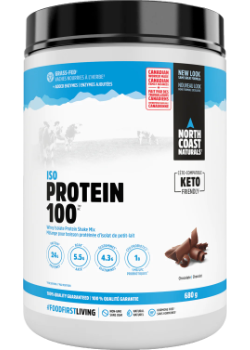
North Coast Naturals’ ISO Whey Protein 100 is a rich source of essential amino acids and branched-chain amino acids (BCAAs), known for its immune-boosting protein peptides. North Coast Naturals’ grass-fed whey isolate formula is highly bioavailable and supports tissue growth, offering a complete protein with 24g of protein and 5.5g of BCAAs per serving. Featuring prebiotic Inulin, probiotics, and digestive enzymes for better digestion, all while being low in fat, carbohydrates, and lactose. [POWDER]
Each scoop (30g) contains:
Calories 120
Fat 1.5g
Saturated 0.5g
Trans 0g
Carbohydrate 2g
Sugars 1g
Fiber 1g
Protein 24g
Cholesterol 10mg
Sodium 30mg
Potassium 100mg
Calcium 220mg
Iron 0.6mg
Niacinamide 45%
Phosphorus 60mg
Magnesium 45mg
Ingredients:
Isolated whey protein, isolated whey peptides, cocoa, natural flavours, organic cane juice solids (1%), sea salt, sunflower lecithin and/or soy lecithin, purified stevia leaf extract (debittered), inulin, bacterial culture (Lactobacillus fermentum SD-5847), enzymes (protease, lactase).
Important Information:
Store in a cool, dry place. Allergy information: Contains Milk and soy
Calories 120
Fat 1.5g
Saturated 0.5g
Trans 0g
Carbohydrate 2g
Sugars 1g
Fiber 1g
Protein 24g
Cholesterol 10mg
Sodium 30mg
Potassium 100mg
Calcium 220mg
Iron 0.6mg
Niacinamide 45%
Phosphorus 60mg
Magnesium 45mg
Ingredients:
Isolated whey protein, isolated whey peptides, cocoa, natural flavours, organic cane juice solids (1%), sea salt, sunflower lecithin and/or soy lecithin, purified stevia leaf extract (debittered), inulin, bacterial culture (Lactobacillus fermentum SD-5847), enzymes (protease, lactase).
Important Information:
Store in a cool, dry place. Allergy information: Contains Milk and soy
Dosage
Mix 1 serving of powder in 150 – 250 ml (~6-8 fl oz) of water, milk, juice or your favourite beverage.
Mix 1 serving of powder in 150 – 250 ml (~6-8 fl oz) of water, milk, juice or your favourite beverage.
Trusted Canadian Nutrition for Active Living
North Coast Naturals is Canadian owned and operated bringing you the same great products, now in new packaging! North Coast Naturals uses the best of science and nature to develop the highest quality certified organic nutrition and natural health products. Shop Canadian for North Coast Naturals Fermented L-Glutamine Powder, Hemp Seed Hearts, Organic Hemp Protein and Organic Brown Rice Protein at
North Coast Naturals is Canadian owned and operated bringing you the same great products, now in new packaging! North Coast Naturals uses the best of science and nature to develop the highest quality certified organic nutrition and natural health products. Shop Canadian for North Coast Naturals Fermented L-Glutamine Powder, Hemp Seed Hearts, Organic Hemp Protein and Organic Brown Rice Protein at
PROTEIN
Protein is one of the most important building blocks in our bodies...
Protein is second most abundant substance in our body; it is second only to water. Protein makes up much of the structure of our body, including: our muscles, ligaments, tendons, bones, organs, glands, nails, and hair. It also makes up the vast majority of the molecules that allow our bodies to function and regulate itself; protein is required for: cell signaling molecules, hormones, transport molecules and most enzymes in our bodies, including our digestive enzymes. Without sufficient protein, our bodies cannot function properly.
DNA – The Code For Proteins
Our genetic material (DNA) is the blueprint that shows each cell how to produce the proteins that make life possible. It is differences in this coding that makes the variations of our proteins that make each of us unique. For example, it is protein in the iris of our eyes that gives us our distinctive eye colours.
What Is Protein?
Proteins are composed of building blocks called amino acids. These subunits are linked together by peptide bonds to form chains that can be straight lines, or branched like the sub-branches on a tree. When we eat protein the body must break these peptide bonds in the digestive tract using proteases. Then single amino acids, or amino acids in short chains (called peptides), are absorbed through the gut, into the body, where they are used as building blocks to create whatever protein the body needs.
Essential Amino Acids
Some amino acids are considered "non-essential". This means that we do not need to ingest these amino acids, because our bodies can biosynthesize them using the skeleton of other amino acids. So long as the body gets sufficient protein, these amino acids are not required. The amino acids that the body cannot produce itself need to be taken in through the diet, and are called "essential" amino acids. There are 9 essential amino acids: isoleucine, leucine,
lysine,
methionine, phenylalanine, threonine, tryptophan, histidine, and valine. Some amino acids are "conditionally essential", meaning that certain populations who naturally don't make enough, or all humans under certain conditions, may require certain dietary intake to meet their needs. Some examples of conditionally essential amino acids are:
arginine,
glutamine, cysteine, and glycine.
Protein Malnutrition
Protein is an easily available energy source for the body. When insufficient protein is ingested in the diet, or insufficient calories are taken in, the body will catabolize protein from muscle mass and then eventually from the organs to cover the deficit. This breakdown of body tissue can even happen before exhausting fat reserves. As protein levels drop, the body will prioritize protein usage to enzymes and signaling molecules to continue proper bodily function, and will catabolize other tissues to do so. As such, insufficient protein or calorie intake results in protein malnutrition, which causes muscle wasting, and eventually can lead to the breakdown of organs, and tissues. Eventually this causes a condition known as Kwashiorkor, which causes diarrhea, edema (swelling) and a large protruding belly.
Protein and Weight Loss
It is important to note the connection between low calorie diets and loss of muscle mass. Those individuals seeking to lose weight who overly restrict their dietary intake will ultimately lower their muscle mass. This is counterproductive, as our muscles are the body tissue that burns the most calories by weight. From a biological perspective, the body's response makes sense; when food is scarce, reducing the amount of calorie burning tissue you have, allows you to live with lesser requirements until food can be found again. In modern society, this leads to the inability to lose weight despite a calorie-restricted diet. Recently, the popularity of high protein diets has made supplementation of protein popular for weight loss. When protein is ingested with carbohydrate, it slows the rate at which sugar enters the body. By avoiding spikes in blood sugar, protein minimizes the storage of sugar as fat. Individuals with blood sugar imbalances, like diabetes and hypoglycemia, will benefit from protein's regulation of blood sugar. Because protein also builds muscle tissue, which burns more energy than other body tissue, it can also help weight loss.
Protein Requirements
According to the Canadian Dietary Reference Intake guidelines: sedentary adult women require 46 grams of protein per day, while sedentary adult males require 56 grams to avoid deficiency. This is just the amount to prevent protein malnutrition. Athletes and individuals who are physically active at work or play will all require additional protein to repair their tissue and build more lean muscle. People who are recovering from illness or long periods of inactivity require additional protein to rebuild their lost muscle mass as well. The immune system is dependent on protein to make the cells and antibodies that protect our body. Frequent colds and flus and chronic infections are signs that the body may need more protein. In general, the recommendation is between 1.5 and 2 grams of protein per kilogram body weight daily intake for fairly active people. This is around 125g of protein per day for a 70kg (155lb) person.
Excess Protein
The body is incapable of storing protein, so when we ingest it in much larger amounts than the body needs, excess protein has to be broken down. The extra amino acids are transported to the liver where they are broken down to create energy. Although an easy energy source, protein does not "burn clean", and breaking it down creates a waste product called urea. Normally this is easily excreted through the kidneys in our urine. This excretion requires
calcium, so high protein diets should be combined with a calcium supplement to protect against reduced calcium stores.
Protein Powders
Protein powders can be used for many different health and performance enhancing purposes. There are a large variety of readily available
protein supplements
and protein processing techniques. The six main supplemental sources are: whey, egg, hemp, soy, rice and pea, although other sources are occasionally used in some supplements. Higher quality formulas use superior processing techniques, and avoid binders, fillers, artificial flavorings and sweeteners. Be sure to check the ingredients on the label of your protein supplement.
Protein Availability – Biological Value (BV)
Scientists have developed a measure of a protein's ability to be used by the body and with this in mind created a scale of bioavailability called biological value (BV). The value given to a protein source represents the percentage of the absorbed protein that your body actually uses.
There is a lot of controversy around what form of protein is best, according to both source and preparation of each type. It is important to note, that although protein changes shape when it is heated, a process called "denaturing", so long as some of its bonds remain available for cleaving, it can still be digested and absorbed. We do not actually absorb whole proteins as they are too large to pass through our digestive tract, instead we absorb single amino acids, or small peptides of a few amino acids in a chain. Any denaturing of proteins does not greatly affect these small building blocks, and will not change their absorption. Any differences in bioavailability must come from a blockage of our digestive proteases from properly cutting the protein up into smaller pieces. This may be impeded by denaturing, depending on the protein and the degree of damage.
Protein Manufacturing
Protein isolates or hydrolyzed protein sources come mostly predigested, taking the work out of digestion for your body. The body still has to digest some of the protein chains but in general, the protein is absorbed more quickly and used more effectively by muscle. These supplements tend to be costly but are easy for the body to use. Manufacturers claim that most individuals who have food sensitivities to a particular protein source will be able to tolerate the amino acids found in isolate powders. Hydrolyzed supplements like whey concentrates are predigested make amino acid chains smaller. Egg, rice and pea proteins are not usually altered by manufacturing techniques to make them more absorbable. Fermenting soy protein makes it easier to digest.
BCAAs – Branched Chain Amino Acids
This group of amino acids: valine, leucine, and isoleucine are essential amino acids that contain branched side groups. They have been shown to help prevent the painful lactic acid build up during strenuous exercise that causes stiffness the morning after, also known as delayed onset muscle soreness (DOMS).
Single Amino Acids
A number of amino acids can be supplemented individually in powder or capsule form. Since each amino acid has particular benefits and effects, please see the individual articles for a better understanding of each one. Some examples are: lysine, glutamine, glycine, leucine, and histidine.
How Can I Get More Protein?
Protein can be ingested in the diet through a number of different sources including: meat, dairy, eggs, nuts, legumes, tofu,
spirulina, and even grains like quinoa. Protein supplements can be used for individuals who do not meet their daily protein requirement through food intake, for individuals who suffer from blood sugar fluctuations or for athletes who need to take in large amounts of protein to build muscle more quickly. Protein supplements can also be used when food is not readily available as a meal replacement. These meal replacement protein supplements must conform to government regulations to ensure that the proper amount of vitamins and minerals are present in the formula.
Protein is one of the most important building blocks in our bodies...
Protein is second most abundant substance in our body; it is second only to water. Protein makes up much of the structure of our body, including: our muscles, ligaments, tendons, bones, organs, glands, nails, and hair. It also makes up the vast majority of the molecules that allow our bodies to function and regulate itself; protein is required for: cell signaling molecules, hormones, transport molecules and most enzymes in our bodies, including our digestive enzymes. Without sufficient protein, our bodies cannot function properly.
DNA – The Code For Proteins
Our genetic material (DNA) is the blueprint that shows each cell how to produce the proteins that make life possible. It is differences in this coding that makes the variations of our proteins that make each of us unique. For example, it is protein in the iris of our eyes that gives us our distinctive eye colours.
What Is Protein?
Proteins are composed of building blocks called amino acids. These subunits are linked together by peptide bonds to form chains that can be straight lines, or branched like the sub-branches on a tree. When we eat protein the body must break these peptide bonds in the digestive tract using proteases. Then single amino acids, or amino acids in short chains (called peptides), are absorbed through the gut, into the body, where they are used as building blocks to create whatever protein the body needs.
Essential Amino Acids
Some amino acids are considered "non-essential". This means that we do not need to ingest these amino acids, because our bodies can biosynthesize them using the skeleton of other amino acids. So long as the body gets sufficient protein, these amino acids are not required. The amino acids that the body cannot produce itself need to be taken in through the diet, and are called "essential" amino acids. There are 9 essential amino acids: isoleucine, leucine,
lysine,
methionine, phenylalanine, threonine, tryptophan, histidine, and valine. Some amino acids are "conditionally essential", meaning that certain populations who naturally don't make enough, or all humans under certain conditions, may require certain dietary intake to meet their needs. Some examples of conditionally essential amino acids are:
arginine,
glutamine, cysteine, and glycine.
Protein Malnutrition
Protein is an easily available energy source for the body. When insufficient protein is ingested in the diet, or insufficient calories are taken in, the body will catabolize protein from muscle mass and then eventually from the organs to cover the deficit. This breakdown of body tissue can even happen before exhausting fat reserves. As protein levels drop, the body will prioritize protein usage to enzymes and signaling molecules to continue proper bodily function, and will catabolize other tissues to do so. As such, insufficient protein or calorie intake results in protein malnutrition, which causes muscle wasting, and eventually can lead to the breakdown of organs, and tissues. Eventually this causes a condition known as Kwashiorkor, which causes diarrhea, edema (swelling) and a large protruding belly.
Protein and Weight Loss
It is important to note the connection between low calorie diets and loss of muscle mass. Those individuals seeking to lose weight who overly restrict their dietary intake will ultimately lower their muscle mass. This is counterproductive, as our muscles are the body tissue that burns the most calories by weight. From a biological perspective, the body's response makes sense; when food is scarce, reducing the amount of calorie burning tissue you have, allows you to live with lesser requirements until food can be found again. In modern society, this leads to the inability to lose weight despite a calorie-restricted diet. Recently, the popularity of high protein diets has made supplementation of protein popular for weight loss. When protein is ingested with carbohydrate, it slows the rate at which sugar enters the body. By avoiding spikes in blood sugar, protein minimizes the storage of sugar as fat. Individuals with blood sugar imbalances, like diabetes and hypoglycemia, will benefit from protein's regulation of blood sugar. Because protein also builds muscle tissue, which burns more energy than other body tissue, it can also help weight loss.
Protein Requirements
According to the Canadian Dietary Reference Intake guidelines: sedentary adult women require 46 grams of protein per day, while sedentary adult males require 56 grams to avoid deficiency. This is just the amount to prevent protein malnutrition. Athletes and individuals who are physically active at work or play will all require additional protein to repair their tissue and build more lean muscle. People who are recovering from illness or long periods of inactivity require additional protein to rebuild their lost muscle mass as well. The immune system is dependent on protein to make the cells and antibodies that protect our body. Frequent colds and flus and chronic infections are signs that the body may need more protein. In general, the recommendation is between 1.5 and 2 grams of protein per kilogram body weight daily intake for fairly active people. This is around 125g of protein per day for a 70kg (155lb) person.
Excess Protein
The body is incapable of storing protein, so when we ingest it in much larger amounts than the body needs, excess protein has to be broken down. The extra amino acids are transported to the liver where they are broken down to create energy. Although an easy energy source, protein does not "burn clean", and breaking it down creates a waste product called urea. Normally this is easily excreted through the kidneys in our urine. This excretion requires
calcium, so high protein diets should be combined with a calcium supplement to protect against reduced calcium stores.
Protein Powders
Protein powders can be used for many different health and performance enhancing purposes. There are a large variety of readily available
protein supplements
and protein processing techniques. The six main supplemental sources are: whey, egg, hemp, soy, rice and pea, although other sources are occasionally used in some supplements. Higher quality formulas use superior processing techniques, and avoid binders, fillers, artificial flavorings and sweeteners. Be sure to check the ingredients on the label of your protein supplement.
Protein Availability – Biological Value (BV)
Scientists have developed a measure of a protein's ability to be used by the body and with this in mind created a scale of bioavailability called biological value (BV). The value given to a protein source represents the percentage of the absorbed protein that your body actually uses.
There is a lot of controversy around what form of protein is best, according to both source and preparation of each type. It is important to note, that although protein changes shape when it is heated, a process called "denaturing", so long as some of its bonds remain available for cleaving, it can still be digested and absorbed. We do not actually absorb whole proteins as they are too large to pass through our digestive tract, instead we absorb single amino acids, or small peptides of a few amino acids in a chain. Any denaturing of proteins does not greatly affect these small building blocks, and will not change their absorption. Any differences in bioavailability must come from a blockage of our digestive proteases from properly cutting the protein up into smaller pieces. This may be impeded by denaturing, depending on the protein and the degree of damage.
Protein Manufacturing
Protein isolates or hydrolyzed protein sources come mostly predigested, taking the work out of digestion for your body. The body still has to digest some of the protein chains but in general, the protein is absorbed more quickly and used more effectively by muscle. These supplements tend to be costly but are easy for the body to use. Manufacturers claim that most individuals who have food sensitivities to a particular protein source will be able to tolerate the amino acids found in isolate powders. Hydrolyzed supplements like whey concentrates are predigested make amino acid chains smaller. Egg, rice and pea proteins are not usually altered by manufacturing techniques to make them more absorbable. Fermenting soy protein makes it easier to digest.
BCAAs – Branched Chain Amino Acids
This group of amino acids: valine, leucine, and isoleucine are essential amino acids that contain branched side groups. They have been shown to help prevent the painful lactic acid build up during strenuous exercise that causes stiffness the morning after, also known as delayed onset muscle soreness (DOMS).
Single Amino Acids
A number of amino acids can be supplemented individually in powder or capsule form. Since each amino acid has particular benefits and effects, please see the individual articles for a better understanding of each one. Some examples are: lysine, glutamine, glycine, leucine, and histidine.
How Can I Get More Protein?
Protein can be ingested in the diet through a number of different sources including: meat, dairy, eggs, nuts, legumes, tofu,
spirulina, and even grains like quinoa. Protein supplements can be used for individuals who do not meet their daily protein requirement through food intake, for individuals who suffer from blood sugar fluctuations or for athletes who need to take in large amounts of protein to build muscle more quickly. Protein supplements can also be used when food is not readily available as a meal replacement. These meal replacement protein supplements must conform to government regulations to ensure that the proper amount of vitamins and minerals are present in the formula.
Carefully Selected
Ships to the U.S.
Wellness Essentials
Trusted Brands
Product Details
PROTEINProtein is one of the most important building blocks in our bodies...
Protein is second most abundant substance in our body; it is second only to water. Protein makes up much of the structure of our body, including: our muscles, ligaments, tendons, bones, organs, glands, nails, and hair. It also makes up the vast majority of the molecules that allow our bodies to function and regulate itself; protein is required for: cell signaling molecules, hormones, transport molecules and most enzymes in our bodies, including our digestive enzymes. Without sufficient protein, our bodies cannot function properly.
DNA – The Code For Proteins
Our genetic material (DNA) is the blueprint that shows each cell how to produce the proteins that make life possible. It is differences in this coding that makes the variations of our proteins that make each of us unique. For example, it is protein in the iris of our eyes that gives us our distinctive eye colours.
What Is Protein?
Proteins are composed of building blocks called amino acids. These subunits are linked together by peptide bonds to form chains that can be straight lines, or branched like the sub-branches on a tree. When we eat protein the body must break these peptide bonds in the digestive tract using proteases. Then single amino acids, or amino acids in short chains (called peptides), are absorbed through the gut, into the body, where they are used as building blocks to create whatever protein the body needs.
Essential Amino Acids
Some amino acids are considered "non-essential". This means that we do not need to ingest these amino acids, because our bodies can biosynthesize them using the skeleton of other amino acids. So long as the body gets sufficient protein, these amino acids are not required. The amino acids that the body cannot produce itself need to be taken in through the diet, and are called "essential" amino acids. There are 9 essential amino acids: isoleucine, leucine,
lysine,
methionine, phenylalanine, threonine, tryptophan, histidine, and valine. Some amino acids are "conditionally essential", meaning that certain populations who naturally don't make enough, or all humans under certain conditions, may require certain dietary intake to meet their needs. Some examples of conditionally essential amino acids are:
arginine,
glutamine, cysteine, and glycine.
Protein Malnutrition
Protein is an easily available energy source for the body. When insufficient protein is ingested in the diet, or insufficient calories are taken in, the body will catabolize protein from muscle mass and then eventually from the organs to cover the deficit. This breakdown of body tissue can even happen before exhausting fat reserves. As protein levels drop, the body will prioritize protein usage to enzymes and signaling molecules to continue proper bodily function, and will catabolize other tissues to do so. As such, insufficient protein or calorie intake results in protein malnutrition, which causes muscle wasting, and eventually can lead to the breakdown of organs, and tissues. Eventually this causes a condition known as Kwashiorkor, which causes diarrhea, edema (swelling) and a large protruding belly.
Protein and Weight Loss
It is important to note the connection between low calorie diets and loss of muscle mass. Those individuals seeking to lose weight who overly restrict their dietary intake will ultimately lower their muscle mass. This is counterproductive, as our muscles are the body tissue that burns the most calories by weight. From a biological perspective, the body's response makes sense; when food is scarce, reducing the amount of calorie burning tissue you have, allows you to live with lesser requirements until food can be found again. In modern society, this leads to the inability to lose weight despite a calorie-restricted diet. Recently, the popularity of high protein diets has made supplementation of protein popular for weight loss. When protein is ingested with carbohydrate, it slows the rate at which sugar enters the body. By avoiding spikes in blood sugar, protein minimizes the storage of sugar as fat. Individuals with blood sugar imbalances, like diabetes and hypoglycemia, will benefit from protein's regulation of blood sugar. Because protein also builds muscle tissue, which burns more energy than other body tissue, it can also help weight loss.
Protein Requirements
According to the Canadian Dietary Reference Intake guidelines: sedentary adult women require 46 grams of protein per day, while sedentary adult males require 56 grams to avoid deficiency. This is just the amount to prevent protein malnutrition. Athletes and individuals who are physically active at work or play will all require additional protein to repair their tissue and build more lean muscle. People who are recovering from illness or long periods of inactivity require additional protein to rebuild their lost muscle mass as well. The immune system is dependent on protein to make the cells and antibodies that protect our body. Frequent colds and flus and chronic infections are signs that the body may need more protein. In general, the recommendation is between 1.5 and 2 grams of protein per kilogram body weight daily intake for fairly active people. This is around 125g of protein per day for a 70kg (155lb) person.
Excess Protein
The body is incapable of storing protein, so when we ingest it in much larger amounts than the body needs, excess protein has to be broken down. The extra amino acids are transported to the liver where they are broken down to create energy. Although an easy energy source, protein does not "burn clean", and breaking it down creates a waste product called urea. Normally this is easily excreted through the kidneys in our urine. This excretion requires
calcium, so high protein diets should be combined with a calcium supplement to protect against reduced calcium stores.
Protein Powders
Protein powders can be used for many different health and performance enhancing purposes. There are a large variety of readily available
protein supplements
and protein processing techniques. The six main supplemental sources are: whey, egg, hemp, soy, rice and pea, although other sources are occasionally used in some supplements. Higher quality formulas use superior processing techniques, and avoid binders, fillers, artificial flavorings and sweeteners. Be sure to check the ingredients on the label of your protein supplement.
Protein Availability – Biological Value (BV)
Scientists have developed a measure of a protein's ability to be used by the body and with this in mind created a scale of bioavailability called biological value (BV). The value given to a protein source represents the percentage of the absorbed protein that your body actually uses.
There is a lot of controversy around what form of protein is best, according to both source and preparation of each type. It is important to note, that although protein changes shape when it is heated, a process called "denaturing", so long as some of its bonds remain available for cleaving, it can still be digested and absorbed. We do not actually absorb whole proteins as they are too large to pass through our digestive tract, instead we absorb single amino acids, or small peptides of a few amino acids in a chain. Any denaturing of proteins does not greatly affect these small building blocks, and will not change their absorption. Any differences in bioavailability must come from a blockage of our digestive proteases from properly cutting the protein up into smaller pieces. This may be impeded by denaturing, depending on the protein and the degree of damage.
Protein Manufacturing
Protein isolates or hydrolyzed protein sources come mostly predigested, taking the work out of digestion for your body. The body still has to digest some of the protein chains but in general, the protein is absorbed more quickly and used more effectively by muscle. These supplements tend to be costly but are easy for the body to use. Manufacturers claim that most individuals who have food sensitivities to a particular protein source will be able to tolerate the amino acids found in isolate powders. Hydrolyzed supplements like whey concentrates are predigested make amino acid chains smaller. Egg, rice and pea proteins are not usually altered by manufacturing techniques to make them more absorbable. Fermenting soy protein makes it easier to digest.
BCAAs – Branched Chain Amino Acids
This group of amino acids: valine, leucine, and isoleucine are essential amino acids that contain branched side groups. They have been shown to help prevent the painful lactic acid build up during strenuous exercise that causes stiffness the morning after, also known as delayed onset muscle soreness (DOMS).
Single Amino Acids
A number of amino acids can be supplemented individually in powder or capsule form. Since each amino acid has particular benefits and effects, please see the individual articles for a better understanding of each one. Some examples are: lysine, glutamine, glycine, leucine, and histidine.
How Can I Get More Protein?
Protein can be ingested in the diet through a number of different sources including: meat, dairy, eggs, nuts, legumes, tofu,
spirulina, and even grains like quinoa. Protein supplements can be used for individuals who do not meet their daily protein requirement through food intake, for individuals who suffer from blood sugar fluctuations or for athletes who need to take in large amounts of protein to build muscle more quickly. Protein supplements can also be used when food is not readily available as a meal replacement. These meal replacement protein supplements must conform to government regulations to ensure that the proper amount of vitamins and minerals are present in the formula.


🌿
Daily Wellness
Easy to add to your everyday health routine.
✅
Carefully Selected
Chosen with quality and customer needs in mind.
💊
Simple to Use
Designed for convenient daily supplementation.
🚚
Ships to the U.S.
Fast, reliable shipping to U.S. customers.