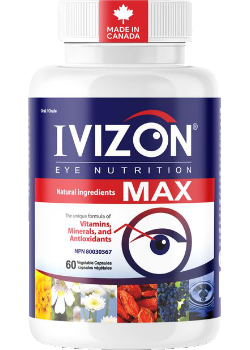
Protect your vision with Ivizon Max, a premium extra-strength eye health formula crafted for long-term clarity and support. Each 500 mg capsule delivers a powerful blend of lutein, zeaxanthin, antioxidants, and essential nutrients that help maintain healthy eyesight, reduce digital eye strain, and support macular health. Based on recommendations from the National Eye Institute and Health Canada, Ivizon Max provides scientifically balanced ingredients to promote visual function and help reduce the risk of age-related eye concerns. Proudly made in Canada in a cGMP-certified, third-party tested facility for purity and potency. [VCAPS]
Dosage
Adults: Take 1 Capsule 2 times per day. Take a few hours before or after taking other medications.
See the Difference with Ivizon at
Ivizon, a supplement brand committed to supporting vision and eye health. This Canadian brand formulates supplements that are rich in eye health nutrients like zeaxanthin, lutein, and bilberry extract.
VITAMINS FOR EYE HEALTH
Our eyes are incredibly complex, highly productive, resilient organs that must regularly adjust to different conditions and environments. They are essential to our overall well-being and daily functioning. More concretely, our eyes allow light rays that deflect off objects to land on the cornea to be transmitted to the retina and then the brain. These light rays are what the brain interprets as objects that we can see. Unsurprisingly, taking care of our eyes and maintaining good vision is crucial for optimal quality of life. Many factors can affect the health of our eyes and, in turn, the quality of our vision. Let's explore vitamins for eye health.
10 Diet & Lifestyle Recommendations For Healthy Eyes
Proper Nutrition:
A healthy, clean, colourful, and varied diet plays a significant role in maintaining good eye health. Nutrients like vitamins A, C, and E,
zinc, omega-3 fatty acids, and lutein are critical to eye health. Foods like leafy green vegetables, citrus fruits, fish, nuts, and carrots are also highly beneficial for the eyes.
Adequate Sleep:
Getting enough quality sleep is crucial for overall health, including eye health. Insufficient sleep can lead to eye fatigue, dryness, and other vision problems.
Regular Eye Exams:
Getting routine eye examinations is vital for the early detection and prevention of eye conditions, including diminishing vision and glaucoma, cataracts, and other eye diseases.
Protecting Eyes From Ultraviolet (UV) Radiation:
Prolonged exposure to UV rays from the sun can contribute to eye conditions such as cataracts and macular degeneration. This is why wearing sunglasses that block 100% of UV rays and wide-brimmed hats when spending time outdoors is essential.
Managing Screen Time:
In today's digital age, many people spend extended periods in front of screens such as computers, smartphones, and tablets. Prolonged screen time can cause eye strain, dryness, and discomfort. Taking regular breaks, practicing the 20-20-20 rule (looking away from the screen every 20 minutes at something 20 feet away for 20 seconds), and maintaining proper ergonomics can help alleviate digital eye strain.
Proper Lighting:
The right kind of lighting is crucial for reducing eye strain. When reading or working, ensure the lighting is neither dim nor bright. Avoid glare from direct sunlight or harsh artificial lighting.
Regular Breaks & Eye Exercises:
Those that perform tasks that require intense visual focus, such as reading or working on a computer for hours; taking frequent breaks and doing eye exercises can help relax eye muscles and prevent eye fatigue.
Avoiding Smoking:
Smoking has been linked to an increased risk of developing cataracts, macular degeneration, and other eye diseases. Quitting smoking or avoiding exposure to second-hand smoke can also positively impact eye health.
Proper Contact Lens Care:
Those who wear contact lenses should follow good hygiene and care guidelines. Failing to do so can lead to eye infections and other complications.
Eye Safety:
When participating in sports or engaging in activities that pose a risk of eye injury, wearing appropriate protective eyewear, such as goggles or safety glasses, is essential.
Best Supplements & Vitamins For Eye and Vision Health
Several nutritional supplements are known to support eye health and can, bolster your nutritional profile and help maintain good vision across the lifespan. These include:
Astaxanthin, Lutein and Zeaxanthin:
These
carotenoids
accumulate in the retina and help filter harmful blue light (present in cells, tablets, laptops, etc.). These vitamins have been shown to play a role in reducing the risk of AMD and cataracts to support eye health. Good dietary sources include salmon, trout, krill, shrimp, crayfish, spinach, kale, broccoli, and egg yolks. Astaxanthin, lutein and zeaxanthin supplements are also widely available.
Omega-3 Fatty Acids:
Found in fish oil and certain types of algae, as well as sold in supplement form, omega-3 fatty acids have significant anti-inflammatory properties and studies have shown they can help prevent dry eyes and reduce the risk of age-related macular degeneration (AMD).
Vitamin A
(
Beta Carotene
):
Essential for good vision, vitamin A helps maintain the cornea's health and supports low-light and colour vision. It can be obtained from carrots, sweet potatoes, and liver. This vitamin can also be purchased as a supplement to further support eye health
Vitamin C:
An antioxidant found in high concentrations in the eye. It helps protect the eyes against damage caused by free radicals and may lower the risk of cataracts and AMD. Citrus fruits, strawberries, and bell peppers are all good dietary sources of vitamin C, and nutritional supplements are also widely available.
Vitamin E:
Another potent antioxidant, Vitamin E supports eye health and helps protect the cells in the eyes from oxidative stress. Vitamin E is sold in various iterations as a supplement and is also naturally present in nuts, seeds, and vegetable oils.
Zinc:
This mineral is involved in transporting vitamin A from the liver to the retina, where it is converted into the pigment melanin. Zinc deficiency has been associated with poor night vision, cataracts, and AMD. Good sources of zinc include oysters, beef, poultry, and nutritional supplements.
Other potent nutritional supplements for eye health include
bilberry, blueberry, DL-
alpha lipoic acid,
eyebright, saffron, and others.
Shopping For Vision Support Supplements
Although getting enough vitamins and antioxidants naturally through a healthy diet is best, statistics tell us that the average person eating the standard North American diet is likely low in essential vitamins, minerals, and critical antioxidants. Moreover, many of the precious nutrients mentioned in this article cannot be synthesized by the human body. This is why nutritional supplements are a fantastic way to bolster your overall nutrient profile and help you maintain optimal eye health well into old age.
Carefully SelectedShips to the U.S.Wellness EssentialsTrusted Brands
Product Details
VITAMINS FOR EYE HEALTH
Our eyes are incredibly complex, highly productive, resilient organs that must regularly adjust to different conditions and environments. They are essential to our overall well-being and daily functioning. More concretely, our eyes allow light rays that deflect off objects to land on the cornea to be transmitted to the retina and then the brain. These light rays are what the brain interprets as objects that we can see. Unsurprisingly, taking care of our eyes and maintaining good vision is crucial for optimal quality of life. Many factors can affect the health of our eyes and, in turn, the quality of our vision. Let's explore vitamins for eye health.
10 Diet & Lifestyle Recommendations For Healthy Eyes
Proper Nutrition:
A healthy, clean, colourful, and varied diet plays a significant role in maintaining good eye health. Nutrients like vitamins A, C, and E,
zinc, omega-3 fatty acids, and lutein are critical to eye health. Foods like leafy green vegetables, citrus fruits, fish, nuts, and carrots are also highly beneficial for the eyes.
Adequate Sleep:
Getting enough quality sleep is crucial for overall health, including eye health. Insufficient sleep can lead to eye fatigue, dryness, and other vision problems.
Regular Eye Exams:
Getting routine eye examinations is vital for the early detection and prevention of eye conditions, including diminishing vision and glaucoma, cataracts, and other eye diseases.
Protecting Eyes From Ultraviolet (UV) Radiation:
Prolonged exposure to UV rays from the sun can contribute to eye conditions such as cataracts and macular degeneration. This is why wearing sunglasses that block 100% of UV rays and wide-brimmed hats when spending time outdoors is essential.
Managing Screen Time:
In today's digital age, many people spend extended periods in front of screens such as computers, smartphones, and tablets. Prolonged screen time can cause eye strain, dryness, and discomfort. Taking regular breaks, practicing the 20-20-20 rule (looking away from the screen every 20 minutes at something 20 feet away for 20 seconds), and maintaining proper ergonomics can help alleviate digital eye strain.
Proper Lighting:
The right kind of lighting is crucial for reducing eye strain. When reading or working, ensure the lighting is neither dim nor bright. Avoid glare from direct sunlight or harsh artificial lighting.
Regular Breaks & Eye Exercises:
Those that perform tasks that require intense visual focus, such as reading or working on a computer for hours; taking frequent breaks and doing eye exercises can help relax eye muscles and prevent eye fatigue.
Avoiding Smoking:
Smoking has been linked to an increased risk of developing cataracts, macular degeneration, and other eye diseases. Quitting smoking or avoiding exposure to second-hand smoke can also positively impact eye health.
Proper Contact Lens Care:
Those who wear contact lenses should follow good hygiene and care guidelines. Failing to do so can lead to eye infections and other complications.
Eye Safety:
When participating in sports or engaging in activities that pose a risk of eye injury, wearing appropriate protective eyewear, such as goggles or safety glasses, is essential.
Best Supplements & Vitamins For Eye and Vision Health
Several nutritional supplements are known to support eye health and can, bolster your nutritional profile and help maintain good vision across the lifespan. These include:
Astaxanthin, Lutein and Zeaxanthin:
These
carotenoids
accumulate in the retina and help filter harmful blue light (present in cells, tablets, laptops, etc.). These vitamins have been shown to play a role in reducing the risk of AMD and cataracts to support eye health. Good dietary sources include salmon, trout, krill, shrimp, crayfish, spinach, kale, broccoli, and egg yolks. Astaxanthin, lutein and zeaxanthin supplements are also widely available.
Omega-3 Fatty Acids:
Found in fish oil and certain types of algae, as well as sold in supplement form, omega-3 fatty acids have significant anti-inflammatory properties and studies have shown they can help prevent dry eyes and reduce the risk of age-related macular degeneration (AMD).
Vitamin A
(
Beta Carotene
):
Essential for good vision, vitamin A helps maintain the cornea's health and supports low-light and colour vision. It can be obtained from carrots, sweet potatoes, and liver. This vitamin can also be purchased as a supplement to further support eye health
Vitamin C:
An antioxidant found in high concentrations in the eye. It helps protect the eyes against damage caused by free radicals and may lower the risk of cataracts and AMD. Citrus fruits, strawberries, and bell peppers are all good dietary sources of vitamin C, and nutritional supplements are also widely available.
Vitamin E:
Another potent antioxidant, Vitamin E supports eye health and helps protect the cells in the eyes from oxidative stress. Vitamin E is sold in various iterations as a supplement and is also naturally present in nuts, seeds, and vegetable oils.
Zinc:
This mineral is involved in transporting vitamin A from the liver to the retina, where it is converted into the pigment melanin. Zinc deficiency has been associated with poor night vision, cataracts, and AMD. Good sources of zinc include oysters, beef, poultry, and nutritional supplements.
Other potent nutritional supplements for eye health include
bilberry, blueberry, DL-
alpha lipoic acid,
eyebright, saffron, and others.
Shopping For Vision Support Supplements
Although getting enough vitamins and antioxidants naturally through a healthy diet is best, statistics tell us that the average person eating the standard North American diet is likely low in essential vitamins, minerals, and critical antioxidants. Moreover, many of the precious nutrients mentioned in this article cannot be synthesized by the human body. This is why nutritional supplements are a fantastic way to bolster your overall nutrient profile and help you maintain optimal eye health well into old age.
🌿
Daily Wellness
Easy to add to your everyday health routine.
✅
Carefully Selected
Chosen with quality and customer needs in mind.
💊
Simple to Use
Designed for convenient daily supplementation.
🚚
Ships to the U.S.
Fast, reliable shipping to U.S. customers.
Choosing a selection results in a full page refresh.