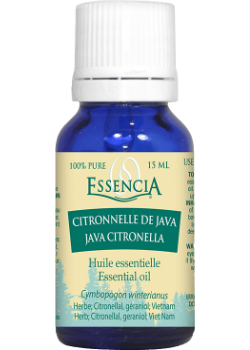
Citronella Essential Oil from Homeocan has a distinctive scent, it's often described as grassy, lemony, and floral. Citronella is commonly used in Aromatherapy to help relieve joint and muscle pain associated with sprain, strain and rheumatoid arthritis. As a carminative antispasmodic it can be used for symptomatic relief of digestive discomfort and also to relieve headaches. Look closely, and you'll find it as an ingredient in many perfumes, soaps, skin lotions, and deodorants. [LIQUID]
Ingredients:
Citronella Essential Oil (Cymbopogon winterianus)
Important Information:
Do not use essential oils undiluted. External use only. Avoid contact with eyes and mucous membranes; if this happens, rinse thoroughly with vegetable oil. Keep out of reach of children. If accidental ingestion occurs, seek urgent medical attention or contact a Poison Control Center. If symptoms persist or worsen, consult a health care practitioner. If you have epilepsy or asthma, consult a health care practitioner prior to use. Avoid exposure of applied area(s) to the sun. If you are pregnant or breastfeeding, do not use this product.
If you have broken, irritated, or sensitive skin, do not use this product. If you experience nausea, dizziness, headache or an allergic reaction, discontinue use.
Dosage
Local application (10% or less of body surface area): add 1 drop in a teaspoon of vegetable oil, 3 times per day. Body massage (more than 10% of the body surface area): add 5 drops in 25 ml vegetable oil, once a day.
Proudly Canadian Essential Oils Crafted in Quebec
New from Homeocan comes a high quality Aromatherapy line - Essencia. It is the most active pure and concentrated plant extract in the world. Discover an essential selection of natural products for your health: essential oils, organic plant oils, massage oils, floral waters, room sprays or even fine fragrances and diffusers. Essencia is the ultimate line of natural aromatherapy products.
ESSENTIAL OILS
By: Articles by a Naturopathic Doctor and a Holistic Nutritionist
Each unique plant essential oil has healing properties both through the strong smell and when used as medicine as well...
Essential oils
are aromatic compounds extracted from a number of different plants. They are also known as volatile oils because they evaporate so quickly, which is also how they create such a strong aroma in the air. Because of this ability to quickly create strong scents, these oils are often used in perfumes, cosmetics, soaps and other scented products.
How Are They Made?
Essential oils are extracted from the plant by steam distillation, cold pressing, or solvent extraction. Good quality products create a pure product that will evaporate cleanly if dripped on a piece of paper. Each type of extraction is used for different plant materials. Solvent extraction is used for substances like flowers that contain very little volatile oil, and those that can be damaged by the temperatures used in steam distillation. Solvents used are hexane or supercritical carbon dioxide. Because carbon dioxide evaporates quickly when the temperature is raised to normal, it is the preferred solvent extraction method to maintain purity. Solvent extraction performed at lower temperatures is preferred to maintain the integrity of the active compounds.
Medicinal Properties
The benefits of essential oils are as diverse as the oils themselves. Some are diluted and used as skin treatments for acne or rashes, while others are used for internal use to fight infection or even help to treat specific diseases. Often current research will focus on specific compounds found in essential oils, to determine which one is responsible for their medicinal benefits. More traditional herbalists believe that it is the synergy between all of the active constituents in the oil that provide the full benefit. In some cases, the benefits of essential oils can simply be attributed to the effect of their scent on the brain. To stimulate the limbic system in the brain, essential oils are often used for aromatherapy in combination with massage and other balancing techniques. For more information, please see our Aromatherapy article.
Dilution
Because of their extremely concentrated state, it is important to dilute essential oils in other high quality carrier oils like olive, almond, grapeseed, or sesame. Keeping in the spirit of oil not mixing with water, an essential oil can only be diluted by mixing it with another oil. When essential oils are used without being diluted, they can cause severe skin irritation, gastrointestinal upset and even liver damage in the long term. Certain essential oils are not for internal use, and can be toxic even in small amounts.
Storage
Because of their volatile nature, essential oils can react with their storage containers, particularly those made of rubber or plastic. In general, essential oils are best handled with glass pipettes, and glass storage bottles. Keep products away from pets, as essential oils can be toxic to some animals, particularly cats.
Carefully SelectedShips to the U.S.Wellness EssentialsTrusted Brands
Product Details
ESSENTIAL OILS
By: Articles by a Naturopathic Doctor and a Holistic Nutritionist
Each unique plant essential oil has healing properties both through the strong smell and when used as medicine as well...
Essential oils
are aromatic compounds extracted from a number of different plants. They are also known as volatile oils because they evaporate so quickly, which is also how they create such a strong aroma in the air. Because of this ability to quickly create strong scents, these oils are often used in perfumes, cosmetics, soaps and other scented products.
How Are They Made?
Essential oils are extracted from the plant by steam distillation, cold pressing, or solvent extraction. Good quality products create a pure product that will evaporate cleanly if dripped on a piece of paper. Each type of extraction is used for different plant materials. Solvent extraction is used for substances like flowers that contain very little volatile oil, and those that can be damaged by the temperatures used in steam distillation. Solvents used are hexane or supercritical carbon dioxide. Because carbon dioxide evaporates quickly when the temperature is raised to normal, it is the preferred solvent extraction method to maintain purity. Solvent extraction performed at lower temperatures is preferred to maintain the integrity of the active compounds.
Medicinal Properties
The benefits of essential oils are as diverse as the oils themselves. Some are diluted and used as skin treatments for acne or rashes, while others are used for internal use to fight infection or even help to treat specific diseases. Often current research will focus on specific compounds found in essential oils, to determine which one is responsible for their medicinal benefits. More traditional herbalists believe that it is the synergy between all of the active constituents in the oil that provide the full benefit. In some cases, the benefits of essential oils can simply be attributed to the effect of their scent on the brain. To stimulate the limbic system in the brain, essential oils are often used for aromatherapy in combination with massage and other balancing techniques. For more information, please see our Aromatherapy article.
Dilution
Because of their extremely concentrated state, it is important to dilute essential oils in other high quality carrier oils like olive, almond, grapeseed, or sesame. Keeping in the spirit of oil not mixing with water, an essential oil can only be diluted by mixing it with another oil. When essential oils are used without being diluted, they can cause severe skin irritation, gastrointestinal upset and even liver damage in the long term. Certain essential oils are not for internal use, and can be toxic even in small amounts.
Storage
Because of their volatile nature, essential oils can react with their storage containers, particularly those made of rubber or plastic. In general, essential oils are best handled with glass pipettes, and glass storage bottles. Keep products away from pets, as essential oils can be toxic to some animals, particularly cats.
🌿
Daily Wellness
Easy to add to your everyday health routine.
✅
Carefully Selected
Chosen with quality and customer needs in mind.
💊
Simple to Use
Designed for convenient daily supplementation.
🚚
Ships to the U.S.
Fast, reliable shipping to U.S. customers.
Choosing a selection results in a full page refresh.