

1
/
of
1
Provita
Kardio Flow - 90 V-Caps
Kardio Flow - 90 V-Caps
Regular price
$60.00 USD
Regular price
Sale price
$60.00 USD
Shipping calculated at checkout.
Availability
In stock, and ready to ship
- Complete cardiovascular formula
- Helps to maintain immune function
- Helps to form red blood cells
- Support peripheral circulation
- Does not contain dairy, egg, gluten, soy, wheat, corn, yeast, nuts, artificial sweeteners, preservatives, colours or flavours
Quantity
Couldn't load pickup availability

Kardio Flow - 90 V-Caps
$60.00
Provita Kardio Flow - 90 V-Caps is a dietary supplement in capsule form, intended for adults as part of a daily wellness routine.
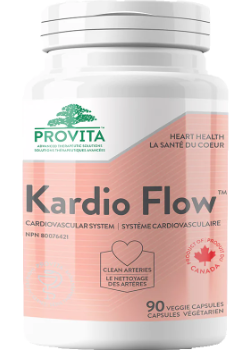
A complete multivitamin and mineral formula that’s reinforced with herbs and amino acids known for their benefits for the cardiovascular system. Kardio Flow By Provita is a multivitamins and minerals complex with specific amino acids and plant extracts. The ingredients in this formula support the body’s capacity to strengthen and clean the cardiovascular system. Formulated by Dr. Lucian Delcea, Provita’s Kardio Flow was introduced in Europe in 2009 where it quickly become a top seller. Over time, the formulation has undergone improvements that incorporate some of the latest research, thus resulting in today’s unique synergistic formulation. Kardio Flow from Provita can “awake” the body’s built-in capacity to improve blood circulation, lower blood pressure, support the immune system, support collagen formation, improve peripheral circulation, increase vitality and improve the quality of life. [VCAPS]
Each capsule contains:
Coenzyme Q10 (natural ubiquinone) 10 mg
Cayenne (Capsicum annuum) 5 mg
Hawthorn Berry (Crataegus laevigata) 10:1 Extract 20 mg
Choline (choline bitartrate) 25 mg
Piperine (Piper nigrum) 4 mg
Liver (bos taurus) 10 mg
Spleen (bos taurus) 10 mg
Vitamin A (palmitate) 550 mcg RAE
Vitamin B1 (thiamine hydrochloride) 10 mg
Vitamin B2 (riboflavin) 10 mg
Vitamin B3 (niacinamide) 25 mg
Vitamin B5 (calcium pantothenate) 30 mg
Vitamin B6 (pyridoxine hydrochloride) 8 mg
Vitamin B7 (biotin) 50 mcg
Vitamin B9 (folate) 50 mcg
Vitamin B12 (methylcobalamin) 200 mcg
Vitamin C (ascorbic acid) 150 mg
Vitamin D (cholecalciferol) 10 mg AT
Inositol 25 mg
Calcium (calcium carbonate) 10 mg
Copper (copper sulphate) 400 mcg
Iodine (potassium iodide) 20 mcg
Magnesium (magnesium carbonate) 15 mg
Manganese (manganese sulphate) 500 mcg
Molybdenum (sodium molybdate VI) 150 mcg
Potassium (potassium chloride) 5.2 mg
Selenium (selenomethionine) 20 mcg
Zinc (zinc sulphate) 3 mg
Glycine 25 mg
L-Arginine (L-Arginine mono hydrochloride) 75 mg
L-Carnitine (L-Carnitine tartrate) 25 mg
L-Citruline (L-Citruline malate) 20 mg
L-Cysteine (Cysteine hydrochloride) 15 mg
L-Lysine (L-Lysine mono hydrochloride) 75 mg
L-Methionine (dl-Methionine) 20 mg
L-Proline 75 mg
Taurine 50 mg
Non-medicinal Ingredients:
Vegetable stearate, potassium nitrate, hypromellose (capsule shell).
Important Information:
Consult a health care practitioner prior to use if you are taking blood pressure medication. Consult a health care practitioner prior to use if you are taking cardiac glycosides such as digitalis/digoxin. Consult a health care practitioner prior to use if you have diabetes. If symptoms persist or worsen, consult a health care practitioner. If you are pregnant or breastfeeding, consult a health care practitioner prior to use. If you have stomach ulcers or inflammation, consult a health care practitioner prior to use. If you are taking any other medications or natural health products, consult a health care practitioner prior to use, as piperine may alter their effectiveness. Consult a health care practitioner prior to use if you are following a low protein diet. Consult a health care practitioner prior to use if you are taking cardiac glycosides such as digitalis/digoxin, or blood pressure medication. Do not take if you are pregnant or breastfeeding. Sealed for your protection. Keep out of reach of children. Keep sealed, store in a cool, dry place.
Coenzyme Q10 (natural ubiquinone) 10 mg
Cayenne (Capsicum annuum) 5 mg
Hawthorn Berry (Crataegus laevigata) 10:1 Extract 20 mg
Choline (choline bitartrate) 25 mg
Piperine (Piper nigrum) 4 mg
Liver (bos taurus) 10 mg
Spleen (bos taurus) 10 mg
Vitamin A (palmitate) 550 mcg RAE
Vitamin B1 (thiamine hydrochloride) 10 mg
Vitamin B2 (riboflavin) 10 mg
Vitamin B3 (niacinamide) 25 mg
Vitamin B5 (calcium pantothenate) 30 mg
Vitamin B6 (pyridoxine hydrochloride) 8 mg
Vitamin B7 (biotin) 50 mcg
Vitamin B9 (folate) 50 mcg
Vitamin B12 (methylcobalamin) 200 mcg
Vitamin C (ascorbic acid) 150 mg
Vitamin D (cholecalciferol) 10 mg AT
Inositol 25 mg
Calcium (calcium carbonate) 10 mg
Copper (copper sulphate) 400 mcg
Iodine (potassium iodide) 20 mcg
Magnesium (magnesium carbonate) 15 mg
Manganese (manganese sulphate) 500 mcg
Molybdenum (sodium molybdate VI) 150 mcg
Potassium (potassium chloride) 5.2 mg
Selenium (selenomethionine) 20 mcg
Zinc (zinc sulphate) 3 mg
Glycine 25 mg
L-Arginine (L-Arginine mono hydrochloride) 75 mg
L-Carnitine (L-Carnitine tartrate) 25 mg
L-Citruline (L-Citruline malate) 20 mg
L-Cysteine (Cysteine hydrochloride) 15 mg
L-Lysine (L-Lysine mono hydrochloride) 75 mg
L-Methionine (dl-Methionine) 20 mg
L-Proline 75 mg
Taurine 50 mg
Non-medicinal Ingredients:
Vegetable stearate, potassium nitrate, hypromellose (capsule shell).
Important Information:
Consult a health care practitioner prior to use if you are taking blood pressure medication. Consult a health care practitioner prior to use if you are taking cardiac glycosides such as digitalis/digoxin. Consult a health care practitioner prior to use if you have diabetes. If symptoms persist or worsen, consult a health care practitioner. If you are pregnant or breastfeeding, consult a health care practitioner prior to use. If you have stomach ulcers or inflammation, consult a health care practitioner prior to use. If you are taking any other medications or natural health products, consult a health care practitioner prior to use, as piperine may alter their effectiveness. Consult a health care practitioner prior to use if you are following a low protein diet. Consult a health care practitioner prior to use if you are taking cardiac glycosides such as digitalis/digoxin, or blood pressure medication. Do not take if you are pregnant or breastfeeding. Sealed for your protection. Keep out of reach of children. Keep sealed, store in a cool, dry place.
Dosage
Adults, take 1 capsule 3 times per day.
Adults, take 1 capsule 3 times per day.
High-Potency Herbal Supplements by Provita
Provita offers targeted natural solutions for sleep, stress, and cognitive health with formulas like
Dream-On
for deep, restful sleep without melatonin,
GABA Pro
to support calm and relaxation,
Lion’s Mane 5000
for memory, focus, and brain function, and
PS-100+ With ALC
for cognitive support and mental clarity.
These advanced, non-habit-forming supplements are designed to support neurotransmitter balance, reduce mental fatigue, and promote overall brain health and wellness.
Provita offers targeted natural solutions for sleep, stress, and cognitive health with formulas like
Dream-On
for deep, restful sleep without melatonin,
GABA Pro
to support calm and relaxation,
Lion’s Mane 5000
for memory, focus, and brain function, and
PS-100+ With ALC
for cognitive support and mental clarity.
These advanced, non-habit-forming supplements are designed to support neurotransmitter balance, reduce mental fatigue, and promote overall brain health and wellness.
CARDIO HEALTH
By: Articles by a Naturopathic Doctor and a Holistic Nutritionist
Many factors affect the health of your heart and your circulatory system, many of which are fortunately within our control - even if you have a family history...
The cardiovascular system consists of the heart, which pumps blood around the body through approximately 60 thousand miles of blood vessels. These vessels are divided by function into two types. There are the arteries, which carry blood from the heart to the body and the veins, which drain blood from the body back to the heart. Blood nourishes the cells of the body by transporting nutrients like oxygen and food to the cells.
It also removes waste products from the cells for filtering by organs like the liver, kidneys and spleen. Any interruption in blood supply causes cell and tissue death, like those caused by heart attack and stroke. Because of this, the maintenance of a healthy cardiovascular system is essential.
Any interruption in blood supply, for example a heart attack or stroke, causes tissue death so the maintenance of a healthy cardiovascular system is essential.
Causes Of Cardiovascular Disease
Lifestyle factors such as smoking, obesity, improper diet, stress and lack of exercise are bigger indicators of your heart disease risk than your family history. Common lifestyle contributors are: obesity, poor nutrition, medications, free radical damage, lack of exercise, poor emotional processing, and stress.
Obesity
Being overweight is detrimental to cardiovascular health for several reasons. Excess weight increases the force of gravity acting on the body. The heart is forced to respond by working harder and increasing blood pressure to ensure all of the body cells still receive nourishment. Excess intake of food causes the body to increase the amount of cholesterol and triglycerides in the blood. Cholesterol shuttles fat around the body and is implicated in the formation of plaque in arterial walls. For more information on this process, please see our Cholesterol and Arteriosclerosis articles.
Poor Diet
Hearth health requires a nutritious diet high in vitamins, minerals and essential fatty acids. The saturated fat, chemical additives, preservatives and refined carbohydrates that have come to represent the typical North American diet of processed foods are harmful to the vessels in your heart. The heart is a muscle and the best way to keep it working for you is to provide it with a varied diet high in nutrients and low in food that does not provide the heart with usable energy. Trans-fatty acids and toxic additives are harmful to heart health.
Medications
Some medications deplete heart-supporting nutrients like
Coenzyme Q10,
Magnesium,
Potassium
and
Zinc. Ironically, several of these medications are those used to treat cardiovascular disease. Cholesterol lowering medications, such as statins can deplete
Coenzyme Q10. Diuretics, used to treat high blood pressure, increase the excretion of minerals like
Magnesium
and potassium. This can cause problems maintaining heart rhythm and can lead to muscle spasms and lightheadedness. ACE inhibitors deplete zinc, and beta-blockers deplete coenzyme Q10. It is important to replenish these minerals and nutrients if you are on these medications to avoid deficiencies.
Free Radical Damage
We encounter free radicals through environmental exposures, such as cigarette smoke, air pollution, processed foods, and ultraviolet radiation from the sun (UV rays). Free radicals are unstable molecules with an unpaired electron that are extremely reactive, and damage surrounding cell membranes, fats, and fat-soluble vitamins and nutrients. When free radicals damage the smooth inner lining of the blood vessels, this leads to inflammation, and causes a raw region to form (like a cut) that makes the area susceptible to further damage, and clot or plaque formation.
Poor Emotional Expression
Studies have shown that certain personality types are at a greater risk for developing heart disease. An individual of type A personality is driven, focused and goal oriented. They are focused on control. Emotionally, they are inexpressive and tend to hold in volatile emotions like anger and frustration. This personality type keeps the body on constant alert, which raises blood pressure and heart rate. The cardiovascular system may weaken under this constant strain and eventually lead to heart disease and heart attack or stroke.
Sedentary Lifestyle
Lack of exercise and a sedentary lifestyle are the norm in North American society. Most people find it difficult to make time in their busy schedule for exercise. Being sedentary is detrimental to the cardiovascular system because it stagnates circulation. Sitting or standing in one place allows blood to pool in the lower body making it unavailable to the internal organs and brain. Stagnation impedes the delivery of nutrients to cells and slows the clearing of waste products.
Common Cardiovascular Concerns
Arteriosclerosis and Atherosclerosis
Arteriosclerosis is a hardening of the arteries that decreases the flexibility and elasticity of the walls. Atherosclerosis, on the other hand, occurs when deposits build-up inside of the artery walls. Both conditions are caused by inflammation and deposits of unhealthy substances that cause a reduced ability of the arteries to function. Deposits can be made of
calcium
(arteriosclerosis) or fatty substances like cholesterol (atherosclerosis). For more information on these disease processes, please see our Arteriosclerosis / Atherosclerosis article. As the arteries harden and narrow, it can cause a decrease in circulation to the body.
High Blood Pressure (Hypertension)
Decreased circulation leads to high blood pressure as the body struggles to maintain enough blood flow to its tissues. This is often caused by arteriosclerosis and/or atherosclerosis creating a narrowing of the artery. In these cases, pieces of the deposits can break off or the turbulent flow of blood caused by restricted arteries can cause clots to form. If the pieces or clots lodge in smaller vessels this can lead to heart attack (in the blood vessels of the heart) or stroke (in the blood vessels of the brain). Other causes are kidney disease, heavy metal toxicity, obesity, stress, and poor diet. Over time, high blood pressure leads to heart attacks, strokes, kidney failure and retinal damage. For more information, please see our Blood Pressure article.
Heart Attack
When the blood vessels feeding the heart become sufficiently constricted or blocked, it effectively blocks blood flow to the heart muscle, and results in a heart attack. Over the following minutes, the starved muscle cells begin to die, and are replaced with scar tissue. It is this remodelling of heart muscle with non-functional scar tissues that leads to permanent heart damage, and potentially death. The cause of the constriction can be an atherosclerotic plaque, a piece of tissue, an air bubble or a blood clot. For more information, please see our Heart Attack article.
Stroke
When blood flow to an area of the brain is compromised it starves brain cells for oxygen and nutrients, and within minutes the brain tissue begins to die. There are two types of stroke. Ischemic stroke occurs when blood flow is decreased due to a blood clot, arterial plaque or air bubble. Hemorrhagic stroke occurs when blood vessels in the brain rupture and bleed into the surrounding tissue. For more information, please see our Stroke article.
Reducing Your Risk
Most cardiovascular disease is caused by a combination of genetic and lifestyle factors, but the vast majority of cardiovascular disease risk is actually due to lifestyle factors. Therefore it is encouraging to note that adopting a healthier lifestyle and using natural therapies can maintain a healthy vascular system.
- Maintain a healthy weight
- Consume a heart friendly diet
- Stop smoking and limit your exposure to environmental toxins
- Use stress reduction techniques and improve your emotional health
- Make regular exercise part of your daily routine
- Supplement your diet with nutrients that support the heart, especially if you take medications that deplete essential nutrients
By: Articles by a Naturopathic Doctor and a Holistic Nutritionist
Many factors affect the health of your heart and your circulatory system, many of which are fortunately within our control - even if you have a family history...
The cardiovascular system consists of the heart, which pumps blood around the body through approximately 60 thousand miles of blood vessels. These vessels are divided by function into two types. There are the arteries, which carry blood from the heart to the body and the veins, which drain blood from the body back to the heart. Blood nourishes the cells of the body by transporting nutrients like oxygen and food to the cells.
It also removes waste products from the cells for filtering by organs like the liver, kidneys and spleen. Any interruption in blood supply causes cell and tissue death, like those caused by heart attack and stroke. Because of this, the maintenance of a healthy cardiovascular system is essential.
Any interruption in blood supply, for example a heart attack or stroke, causes tissue death so the maintenance of a healthy cardiovascular system is essential.
Causes Of Cardiovascular Disease
Lifestyle factors such as smoking, obesity, improper diet, stress and lack of exercise are bigger indicators of your heart disease risk than your family history. Common lifestyle contributors are: obesity, poor nutrition, medications, free radical damage, lack of exercise, poor emotional processing, and stress.
Obesity
Being overweight is detrimental to cardiovascular health for several reasons. Excess weight increases the force of gravity acting on the body. The heart is forced to respond by working harder and increasing blood pressure to ensure all of the body cells still receive nourishment. Excess intake of food causes the body to increase the amount of cholesterol and triglycerides in the blood. Cholesterol shuttles fat around the body and is implicated in the formation of plaque in arterial walls. For more information on this process, please see our Cholesterol and Arteriosclerosis articles.
Poor Diet
Hearth health requires a nutritious diet high in vitamins, minerals and essential fatty acids. The saturated fat, chemical additives, preservatives and refined carbohydrates that have come to represent the typical North American diet of processed foods are harmful to the vessels in your heart. The heart is a muscle and the best way to keep it working for you is to provide it with a varied diet high in nutrients and low in food that does not provide the heart with usable energy. Trans-fatty acids and toxic additives are harmful to heart health.
Medications
Some medications deplete heart-supporting nutrients like
Coenzyme Q10,
Magnesium,
Potassium
and
Zinc. Ironically, several of these medications are those used to treat cardiovascular disease. Cholesterol lowering medications, such as statins can deplete
Coenzyme Q10. Diuretics, used to treat high blood pressure, increase the excretion of minerals like
Magnesium
and potassium. This can cause problems maintaining heart rhythm and can lead to muscle spasms and lightheadedness. ACE inhibitors deplete zinc, and beta-blockers deplete coenzyme Q10. It is important to replenish these minerals and nutrients if you are on these medications to avoid deficiencies.
Free Radical Damage
We encounter free radicals through environmental exposures, such as cigarette smoke, air pollution, processed foods, and ultraviolet radiation from the sun (UV rays). Free radicals are unstable molecules with an unpaired electron that are extremely reactive, and damage surrounding cell membranes, fats, and fat-soluble vitamins and nutrients. When free radicals damage the smooth inner lining of the blood vessels, this leads to inflammation, and causes a raw region to form (like a cut) that makes the area susceptible to further damage, and clot or plaque formation.
Poor Emotional Expression
Studies have shown that certain personality types are at a greater risk for developing heart disease. An individual of type A personality is driven, focused and goal oriented. They are focused on control. Emotionally, they are inexpressive and tend to hold in volatile emotions like anger and frustration. This personality type keeps the body on constant alert, which raises blood pressure and heart rate. The cardiovascular system may weaken under this constant strain and eventually lead to heart disease and heart attack or stroke.
Sedentary Lifestyle
Lack of exercise and a sedentary lifestyle are the norm in North American society. Most people find it difficult to make time in their busy schedule for exercise. Being sedentary is detrimental to the cardiovascular system because it stagnates circulation. Sitting or standing in one place allows blood to pool in the lower body making it unavailable to the internal organs and brain. Stagnation impedes the delivery of nutrients to cells and slows the clearing of waste products.
Common Cardiovascular Concerns
Arteriosclerosis and Atherosclerosis
Arteriosclerosis is a hardening of the arteries that decreases the flexibility and elasticity of the walls. Atherosclerosis, on the other hand, occurs when deposits build-up inside of the artery walls. Both conditions are caused by inflammation and deposits of unhealthy substances that cause a reduced ability of the arteries to function. Deposits can be made of
calcium
(arteriosclerosis) or fatty substances like cholesterol (atherosclerosis). For more information on these disease processes, please see our Arteriosclerosis / Atherosclerosis article. As the arteries harden and narrow, it can cause a decrease in circulation to the body.
High Blood Pressure (Hypertension)
Decreased circulation leads to high blood pressure as the body struggles to maintain enough blood flow to its tissues. This is often caused by arteriosclerosis and/or atherosclerosis creating a narrowing of the artery. In these cases, pieces of the deposits can break off or the turbulent flow of blood caused by restricted arteries can cause clots to form. If the pieces or clots lodge in smaller vessels this can lead to heart attack (in the blood vessels of the heart) or stroke (in the blood vessels of the brain). Other causes are kidney disease, heavy metal toxicity, obesity, stress, and poor diet. Over time, high blood pressure leads to heart attacks, strokes, kidney failure and retinal damage. For more information, please see our Blood Pressure article.
Heart Attack
When the blood vessels feeding the heart become sufficiently constricted or blocked, it effectively blocks blood flow to the heart muscle, and results in a heart attack. Over the following minutes, the starved muscle cells begin to die, and are replaced with scar tissue. It is this remodelling of heart muscle with non-functional scar tissues that leads to permanent heart damage, and potentially death. The cause of the constriction can be an atherosclerotic plaque, a piece of tissue, an air bubble or a blood clot. For more information, please see our Heart Attack article.
Stroke
When blood flow to an area of the brain is compromised it starves brain cells for oxygen and nutrients, and within minutes the brain tissue begins to die. There are two types of stroke. Ischemic stroke occurs when blood flow is decreased due to a blood clot, arterial plaque or air bubble. Hemorrhagic stroke occurs when blood vessels in the brain rupture and bleed into the surrounding tissue. For more information, please see our Stroke article.
Reducing Your Risk
Most cardiovascular disease is caused by a combination of genetic and lifestyle factors, but the vast majority of cardiovascular disease risk is actually due to lifestyle factors. Therefore it is encouraging to note that adopting a healthier lifestyle and using natural therapies can maintain a healthy vascular system.
- Maintain a healthy weight
- Consume a heart friendly diet
- Stop smoking and limit your exposure to environmental toxins
- Use stress reduction techniques and improve your emotional health
- Make regular exercise part of your daily routine
- Supplement your diet with nutrients that support the heart, especially if you take medications that deplete essential nutrients
Carefully Selected
Ships to the U.S.
Wellness Essentials
Trusted Brands
Product Details
CARDIO HEALTHBy: Articles by a Naturopathic Doctor and a Holistic Nutritionist
Many factors affect the health of your heart and your circulatory system, many of which are fortunately within our control - even if you have a family history...
The cardiovascular system consists of the heart, which pumps blood around the body through approximately 60 thousand miles of blood vessels. These vessels are divided by function into two types. There are the arteries, which carry blood from the heart to the body and the veins, which drain blood from the body back to the heart. Blood nourishes the cells of the body by transporting nutrients like oxygen and food to the cells.
It also removes waste products from the cells for filtering by organs like the liver, kidneys and spleen. Any interruption in blood supply causes cell and tissue death, like those caused by heart attack and stroke. Because of this, the maintenance of a healthy cardiovascular system is essential.
Any interruption in blood supply, for example a heart attack or stroke, causes tissue death so the maintenance of a healthy cardiovascular system is essential.
Causes Of Cardiovascular Disease
Lifestyle factors such as smoking, obesity, improper diet, stress and lack of exercise are bigger indicators of your heart disease risk than your family history. Common lifestyle contributors are: obesity, poor nutrition, medications, free radical damage, lack of exercise, poor emotional processing, and stress.
Obesity
Being overweight is detrimental to cardiovascular health for several reasons. Excess weight increases the force of gravity acting on the body. The heart is forced to respond by working harder and increasing blood pressure to ensure all of the body cells still receive nourishment. Excess intake of food causes the body to increase the amount of cholesterol and triglycerides in the blood. Cholesterol shuttles fat around the body and is implicated in the formation of plaque in arterial walls. For more information on this process, please see our Cholesterol and Arteriosclerosis articles.
Poor Diet
Hearth health requires a nutritious diet high in vitamins, minerals and essential fatty acids. The saturated fat, chemical additives, preservatives and refined carbohydrates that have come to represent the typical North American diet of processed foods are harmful to the vessels in your heart. The heart is a muscle and the best way to keep it working for you is to provide it with a varied diet high in nutrients and low in food that does not provide the heart with usable energy. Trans-fatty acids and toxic additives are harmful to heart health.
Medications
Some medications deplete heart-supporting nutrients like
Coenzyme Q10,
Magnesium,
Potassium
and
Zinc. Ironically, several of these medications are those used to treat cardiovascular disease. Cholesterol lowering medications, such as statins can deplete
Coenzyme Q10. Diuretics, used to treat high blood pressure, increase the excretion of minerals like
Magnesium
and potassium. This can cause problems maintaining heart rhythm and can lead to muscle spasms and lightheadedness. ACE inhibitors deplete zinc, and beta-blockers deplete coenzyme Q10. It is important to replenish these minerals and nutrients if you are on these medications to avoid deficiencies.
Free Radical Damage
We encounter free radicals through environmental exposures, such as cigarette smoke, air pollution, processed foods, and ultraviolet radiation from the sun (UV rays). Free radicals are unstable molecules with an unpaired electron that are extremely reactive, and damage surrounding cell membranes, fats, and fat-soluble vitamins and nutrients. When free radicals damage the smooth inner lining of the blood vessels, this leads to inflammation, and causes a raw region to form (like a cut) that makes the area susceptible to further damage, and clot or plaque formation.
Poor Emotional Expression
Studies have shown that certain personality types are at a greater risk for developing heart disease. An individual of type A personality is driven, focused and goal oriented. They are focused on control. Emotionally, they are inexpressive and tend to hold in volatile emotions like anger and frustration. This personality type keeps the body on constant alert, which raises blood pressure and heart rate. The cardiovascular system may weaken under this constant strain and eventually lead to heart disease and heart attack or stroke.
Sedentary Lifestyle
Lack of exercise and a sedentary lifestyle are the norm in North American society. Most people find it difficult to make time in their busy schedule for exercise. Being sedentary is detrimental to the cardiovascular system because it stagnates circulation. Sitting or standing in one place allows blood to pool in the lower body making it unavailable to the internal organs and brain. Stagnation impedes the delivery of nutrients to cells and slows the clearing of waste products.
Common Cardiovascular Concerns
Arteriosclerosis and Atherosclerosis
Arteriosclerosis is a hardening of the arteries that decreases the flexibility and elasticity of the walls. Atherosclerosis, on the other hand, occurs when deposits build-up inside of the artery walls. Both conditions are caused by inflammation and deposits of unhealthy substances that cause a reduced ability of the arteries to function. Deposits can be made of
calcium
(arteriosclerosis) or fatty substances like cholesterol (atherosclerosis). For more information on these disease processes, please see our Arteriosclerosis / Atherosclerosis article. As the arteries harden and narrow, it can cause a decrease in circulation to the body.
High Blood Pressure (Hypertension)
Decreased circulation leads to high blood pressure as the body struggles to maintain enough blood flow to its tissues. This is often caused by arteriosclerosis and/or atherosclerosis creating a narrowing of the artery. In these cases, pieces of the deposits can break off or the turbulent flow of blood caused by restricted arteries can cause clots to form. If the pieces or clots lodge in smaller vessels this can lead to heart attack (in the blood vessels of the heart) or stroke (in the blood vessels of the brain). Other causes are kidney disease, heavy metal toxicity, obesity, stress, and poor diet. Over time, high blood pressure leads to heart attacks, strokes, kidney failure and retinal damage. For more information, please see our Blood Pressure article.
Heart Attack
When the blood vessels feeding the heart become sufficiently constricted or blocked, it effectively blocks blood flow to the heart muscle, and results in a heart attack. Over the following minutes, the starved muscle cells begin to die, and are replaced with scar tissue. It is this remodelling of heart muscle with non-functional scar tissues that leads to permanent heart damage, and potentially death. The cause of the constriction can be an atherosclerotic plaque, a piece of tissue, an air bubble or a blood clot. For more information, please see our Heart Attack article.
Stroke
When blood flow to an area of the brain is compromised it starves brain cells for oxygen and nutrients, and within minutes the brain tissue begins to die. There are two types of stroke. Ischemic stroke occurs when blood flow is decreased due to a blood clot, arterial plaque or air bubble. Hemorrhagic stroke occurs when blood vessels in the brain rupture and bleed into the surrounding tissue. For more information, please see our Stroke article.
Reducing Your Risk
Most cardiovascular disease is caused by a combination of genetic and lifestyle factors, but the vast majority of cardiovascular disease risk is actually due to lifestyle factors. Therefore it is encouraging to note that adopting a healthier lifestyle and using natural therapies can maintain a healthy vascular system.
- Maintain a healthy weight
- Consume a heart friendly diet
- Stop smoking and limit your exposure to environmental toxins
- Use stress reduction techniques and improve your emotional health
- Make regular exercise part of your daily routine
- Supplement your diet with nutrients that support the heart, especially if you take medications that deplete essential nutrients


🌿
Daily Wellness
Easy to add to your everyday health routine.
✅
Carefully Selected
Chosen with quality and customer needs in mind.
💊
Simple to Use
Designed for convenient daily supplementation.
🚚
Ships to the U.S.
Fast, reliable shipping to U.S. customers.