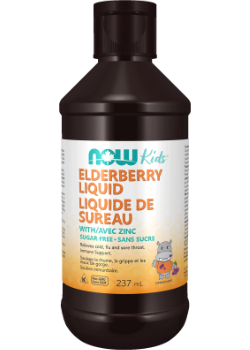
Formulated to help relieve colds, flus and sore throats plus support the immune system. Elderberry has been used traditionally in herbal medicine to maintain health and well-being. NOW Kids™ Elderberry Liquid for Kids combines elderberry 10:1 concentrate. Zinc has been added to support normal immune system function. NOW® Elderberry Liquid is sweetened with Xylitol to be tooth friendly and low glycemic, therefore safe for diabetics. NOW Kids™ Kids Elderberry Liquid with Zinc helps to promote seasonal wellness. [LIQUID]
Each tsp contains:
Elderberry (10:1 Concentrate) (Sambucus nigra) (Fruit) 250mg
Zinc (from Zinc Bisglycinate) (TRAACS™) 1.25mg
Non-Medicinal Ingredients:
De-ionized Water, Xylitol, Vegetable Glycerin, Citric Acid, Potassium Sorbate
Important Information:
Keep out of reach of children. Please see below for more information.
Dosage
Children 2 to 9 years: take 1 teaspoon daily. Adolescents 10 to 13 years: take 3 teaspoons daily. Adolescents 14 to 18 years old: take 4 teaspoons daily. Take with food, a few hours before or after taking other medications or natural health products.
Since 1968 NOW has been a leader in the natural products industry. NOW Foods is an award-winning and highly respected manufacturer of vitamins, minerals, dietary supplements and natural foods. Now Foods brings you over 1600 Natural Foods, Supplements, Sports Nutrition and Personal Care Products. NOW supplements are high quality products at affordable prices.
Cautions & Warnings:
Consult a physician if symptoms persist or worsen or if you are pregnant or breastfeeding. Stop use if hypersensitivity/allergy occurs. Zinc supplementation can cause a
copper
deficiency. If you are unsure whether you are taking enough copper, consult a physician prior to use.
Xylitol
is harmful to pets. Do not feed Xylitol to dogs or other pets. Seek veterinary care immediately if ingestion is suspected.
ELDERBERRY SYRUP: HOW DOES IT SUPPORT HEALTH?
In plant medicine, few herbs have withstood the test of time like the elderberry. Indeed, with a history that spans millennia, this unassuming dark-purple fruit offers a treasure trove of health benefits and a fascinating tale of historical significance. Join us as we explore the origins of the elderberry, its myriad historical uses, its range of formats, including popular elderberry syrup and its celebrated medicinal applications that continue to enchant consumers today.
Origins Of Elderberry Plants & Extracts
Elderberry (Sambucus) is a genus of flowering plants that encompasses around 30 species. The most well-known among them is Sambucus nigra, or European elderberry. Native to Europe, elderberry bushes grow in various temperate regions across the globe, including North America. These small yet mighty berries have been cherished for their unique properties for thousands of years.
The use of elderberry can be traced back to ancient civilizations, with records of its applications dating as far as 400 BC. Hippocrates and Dioscorides, renowned figures in the history of medicine, praised elderberries for their medicinal qualities. Moreover, in his influential work "De Materia Medica," the Greek physician Dioscorides detailed the use of elderberries for treating ailments ranging from colds and fevers to skin conditions.
In medieval Europe, elderberry was often called the "people's medicine chest" for its accessibility and potent therapeutic properties. Indeed, from the ancient Egyptians to Native American tribes, elderberry was a constant presence in herbal remedies and folk medicine.
Key Health Benefits Of Elderberry Syrup
Antioxidant Powerhouse
– Elderberries are packed with
antioxidants, which protect the body from oxidative stress and reduce the risk of chronic diseases.
Cold and Flu Relief
– The most celebrated application of elderberry is its role in mitigating the symptoms of colds and flu. Its high
vitamin C
content and antioxidant-rich profile make it a trusted ally in the battle against respiratory illnesses.
Digestive Aid
– The flowers of the elderberry bush have long been used to make a soothing tea that helps alleviate digestive discomfort and relieve
constipation.
Immune System Support
– The immune-boosting properties of elderberry have been scientifically demonstrated and shown to help ward off infections and maintain overall health.
Wound Healing
– Elderberry can be used topically to promote wound healing, including burns. Its anti-inflammatory and antiseptic properties also make it an effective remedy for various skin ailments.
Who Should Consider Elderberry Syrup?
Elderberry's scientifically validated health benefits make it a compelling option for those seeking to bolster their immune system and overall health. Moreover, its rich nutrient profile makes it a valuable choice for those looking to reduce their risk of the common cold, flu and other infections. In addition, individuals who lead a hectic lifestyle or have high levels of stress may also find elderberry supplementation advantageous, as it can help mitigate the impact of stress on the immune system.
Elderberry Supplements Varieties: Formats, Potency & More
Elderberry is available in various forms to cater to different preferences and health needs. One of the most common forms is elderberry syrup, which is delicious, easy to consume, and often recommended for daily use during cold and flu seasons. Elderberry supplements in the form of capsules or tablets are other options that offer convenient and precise dosing. Additionally, elderberry gummies have gained popularity in recent years, especially among children, due to their palatable taste and candy-like appearance.
The recommended daily dose can vary based on the specific product and its concentration. Generally, for elderberry syrup, a typical daily dose is around 1-2 teaspoons, while elderberry supplements might recommend 300-600 mg per day. Always read and follow product label instructions carefully.
Final Considerations For Elderberry
While elderberry is generally considered safe when consumed in recommended amounts, it can cause gastrointestinal discomfort in some individuals, resulting in symptoms like nausea, vomiting, or
diarrhea.
People with underlying health conditions, such as
diabetes
or autoimmune disorders, should consult a healthcare practitioner before incorporating elderberry into their routine, as it may interact with certain medications or exacerbate their conditions.
Carefully SelectedShips to the U.S.Wellness EssentialsTrusted Brands
Product Details
Cautions & Warnings:
Consult a physician if symptoms persist or worsen or if you are pregnant or breastfeeding. Stop use if hypersensitivity/allergy occurs. Zinc supplementation can cause a
copper
deficiency. If you are unsure whether you are taking enough copper, consult a physician prior to use.
Xylitol
is harmful to pets. Do not feed Xylitol to dogs or other pets. Seek veterinary care immediately if ingestion is suspected.
ELDERBERRY SYRUP: HOW DOES IT SUPPORT HEALTH?
In plant medicine, few herbs have withstood the test of time like the elderberry. Indeed, with a history that spans millennia, this unassuming dark-purple fruit offers a treasure trove of health benefits and a fascinating tale of historical significance. Join us as we explore the origins of the elderberry, its myriad historical uses, its range of formats, including popular elderberry syrup and its celebrated medicinal applications that continue to enchant consumers today.
Origins Of Elderberry Plants & Extracts
Elderberry (Sambucus) is a genus of flowering plants that encompasses around 30 species. The most well-known among them is Sambucus nigra, or European elderberry. Native to Europe, elderberry bushes grow in various temperate regions across the globe, including North America. These small yet mighty berries have been cherished for their unique properties for thousands of years.
The use of elderberry can be traced back to ancient civilizations, with records of its applications dating as far as 400 BC. Hippocrates and Dioscorides, renowned figures in the history of medicine, praised elderberries for their medicinal qualities. Moreover, in his influential work "De Materia Medica," the Greek physician Dioscorides detailed the use of elderberries for treating ailments ranging from colds and fevers to skin conditions.
In medieval Europe, elderberry was often called the "people's medicine chest" for its accessibility and potent therapeutic properties. Indeed, from the ancient Egyptians to Native American tribes, elderberry was a constant presence in herbal remedies and folk medicine.
Key Health Benefits Of Elderberry Syrup
Antioxidant Powerhouse
– Elderberries are packed with
antioxidants, which protect the body from oxidative stress and reduce the risk of chronic diseases.
Cold and Flu Relief
– The most celebrated application of elderberry is its role in mitigating the symptoms of colds and flu. Its high
vitamin C
content and antioxidant-rich profile make it a trusted ally in the battle against respiratory illnesses.
Digestive Aid
– The flowers of the elderberry bush have long been used to make a soothing tea that helps alleviate digestive discomfort and relieve
constipation.
Immune System Support
– The immune-boosting properties of elderberry have been scientifically demonstrated and shown to help ward off infections and maintain overall health.
Wound Healing
– Elderberry can be used topically to promote wound healing, including burns. Its anti-inflammatory and antiseptic properties also make it an effective remedy for various skin ailments.
Who Should Consider Elderberry Syrup?
Elderberry's scientifically validated health benefits make it a compelling option for those seeking to bolster their immune system and overall health. Moreover, its rich nutrient profile makes it a valuable choice for those looking to reduce their risk of the common cold, flu and other infections. In addition, individuals who lead a hectic lifestyle or have high levels of stress may also find elderberry supplementation advantageous, as it can help mitigate the impact of stress on the immune system.
Elderberry Supplements Varieties: Formats, Potency & More
Elderberry is available in various forms to cater to different preferences and health needs. One of the most common forms is elderberry syrup, which is delicious, easy to consume, and often recommended for daily use during cold and flu seasons. Elderberry supplements in the form of capsules or tablets are other options that offer convenient and precise dosing. Additionally, elderberry gummies have gained popularity in recent years, especially among children, due to their palatable taste and candy-like appearance.
The recommended daily dose can vary based on the specific product and its concentration. Generally, for elderberry syrup, a typical daily dose is around 1-2 teaspoons, while elderberry supplements might recommend 300-600 mg per day. Always read and follow product label instructions carefully.
Final Considerations For Elderberry
While elderberry is generally considered safe when consumed in recommended amounts, it can cause gastrointestinal discomfort in some individuals, resulting in symptoms like nausea, vomiting, or
diarrhea.
People with underlying health conditions, such as
diabetes
or autoimmune disorders, should consult a healthcare practitioner before incorporating elderberry into their routine, as it may interact with certain medications or exacerbate their conditions.
🌿
Daily Wellness
Easy to add to your everyday health routine.
✅
Carefully Selected
Chosen with quality and customer needs in mind.
💊
Simple to Use
Designed for convenient daily supplementation.
🚚
Ships to the U.S.
Fast, reliable shipping to U.S. customers.
Choosing a selection results in a full page refresh.