["Renewing a clean living space", "Goes well with Eucalyptus, Geranium, Lavender", "Fruity top note aroma", "Wide variety of applications", "No Animal Testing", "Essential Purity Tested", "No Synthetic Preservatives Colours Fragrances, Synthetic Colours Stabilizers, Synthetic Fragrances, Paraben Petroleum Free"']
["Renewing a clean living space", "Goes well with Eucalyptus, Geranium, Lavender", "Fruity top note aroma", "Wide variety of applications", "No Animal Testing", "Essential Purity Tested", "No Synthetic Preservatives Colours Fragrances, Synthetic Colours Stabilizers, Synthetic Fragrances, Paraben Petroleum Free"']
Quantity
Couldn't load pickup availability
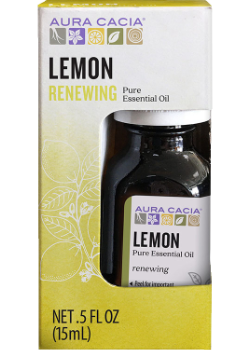
Lemon Pure Essential Oil Box (Renewing) - 15ml
$17.05
Aura Cacia Lemon Pure Essential Oil Box (Renewing) - 15ml is a dietary supplement in oil form, intended for adults as part of a daily wellness routine.
Lemon (Citrus limon) essential oil has a bright, fresh aroma and a wide variety of applications, making it a well-known essential oil powerhouse. Aura Cacia Lemon Essential Oil comes from the United States. Like other citruses, lemon is one of the few essential oils expressed from the peel of the fresh fruit. Lemon can not only kill odor causing bacteria, it also smells very fresh and invigorating. Lemon oil is a great energizer and can help to stimulate brain activity. The boxed packaging makes this essential oil great for gift giving. [LIQUID]
Ingredients:
Citrus limon (lemon) oil.
Important Information:
If pregnant, nursing, suffering from a medical condition, or taking medication, consult a health care practitioner before use. Dilute properly. Avoid eyes and mucous membranes. If irritation occurs, discontinue use. Not for internal use. Keep out of each of children. Product is flammable. Avoid direct sunlight when used in skin applications.
Dosage
For aromatherapy use. For all other uses, carefully dilute with a carriers such as skin care oil, unscented liquid soap or lotion, or witch hazel extract. Follow the dilution guide on the bottle.
Essential Oils That Nurture Body, Mind & Spirit
Aura Cacia offers an extensive selection of high quality essential oils and aromatherapy products for all ages. They offer certified organic and fair trade products when they can. Otherwise, Aura Cacia uses their very own Well Earth ethical and sustainable sourcing program developed by Frontier Co-op. They have also established the Aura Cacia 1% Organic Fund in which they donate 1% of sales from organic products to organic farmers and their communities. Aura Cacia sources their ingredients directly so that personal relationships can be developed with farmers and so they can get the best sources available. Founded in 1982, you can trust the quality Aura Cacia offers in all your must have essential oils and aromatherapy goods.
Lemon (Citrus limon) essential oil has a bright, fresh aroma and a wide variety of applications, making it a well-known essential oil powerhouse. Aura Cacia Lemon Essential Oil comes from the United States. Like other citruses, lemon is one of the few essential oils expressed from the peel of the fresh fruit. The expression method uses pressure to physically squeeze the oil from plant tissue which is practical for citrus because of the unique oil-bearing structure of the rind. This item is not available for expedited shipping and must be shipped via ground service.
LEMON ESSENTIAL OIL
Lemon oil is antibacterial and is commonly used in cleaning products. It has a very refreshing and tangy scent that can heighten alertness and uplift any mood, making it a fan favourite.
PLANT INFORMATION
Plant History
The lemon tree’s history wasn’t well documented, so it’s not fully known where it truly originated. The earliest findings link the lemon tree to Northern regions of India and China and state that by around 200AD, the lemon tree made its way to the South of Italy. In it’s early years, the lemon’s medicinal properties weren’t known, so the tree was grown for its natural beauty. The first record of lemons being studied scientifically are linked to a study done in 1747. During this study,
vitamin c
hadn’t been discovered and lemons were tested as a remedy to treat scurvy. The study found, those who were treated with lemons and oranges were on their way to being cured, while the other test groups showed no sign of improvement. After this revelation, lemon trees began being cultivated in larger quantities in India, China, Italy and Arabic nations. Closer to the 15th century, lemons were brought to Latin America, by Christopher Columbus on one of his excursions. Latin Americans grew the tree for both esthetic and medicinal purposes. By the 17 and 1800’s, the lemon tree was being commercially grown in the USA, in California, Arizona and Florida.
Botanical Information
The lemon tree is scientifically known as, Citrus Limon, and is part of the Rutaceae (citrus) family of plants. This is a perennial tree and grows up to 3 meters in height, growing pointy green leaves, white flowers and vibrant yellow fruit. There are many different types of lemon trees grown worldwide. The Eureka lemon is most commonly found in supermarkets here in Canada.
Growing Information
The lemon tree thrives best in warmer climates that have a minimum temperature of 7 degrees celsius however, since the Meyer lemon tree is more compact, it can be grown in colder climates in a pot and taken indoors during the Winter. The lemon tree requires moderate pruning to achieve optimal growth. The fruit is generally picked when it’s still green, so it can finish ripening during transport to the grocery store or oil production plant. If growing at home, the tree will harvest during warmer months.
Parts Used
The leaves of the lemon tree can be used in teas and the whole fruit of the lemon can be used for various purposes. The juice is used for treating illness or in the kitchen, the peel is used in oil extraction and the fruit and zest are used in culinary dishes.
OIL INFORMATION
Extraction Method
Lemon oil is extracted through cold pressing. This can be done by taking the peel of the lemon and sending it through a machine that lightly punctures the skin to activate the oil glands, the lemon juice and oil would then be extracted and separate naturally, the oil would then be siphoned off. Another way cold pressing is done, is by pressing the whole fruit and squeezing out the juice and oil. The oil and juice then naturally separate and the oil is collected.
Active Ingredients
The chemical composition of lemon oil is made up of: a-pinene, camphene, b-pinene, sabinene, mycrene, a-terpinene, linalool, b-bisabolene, limonene, trans-a-bergamotene, nerol and neral.
APPLICATIONS
Cleaning Aid
Lemon has been linked to cleaning products for ages. Many cleaning products have an artificial lemon scent that has been added. However, lemon oil is very anti-bacterial and makes for a great disinfectant on its own, without all the nasty chemicals conventional cleaning products have.
- If you forget your clothes in the washer, add 4 drops lemon oil to a rinse cycle with just waterand put clothes in dryer. The oil will get rid of any musty smell.
- Add 2 drops lemon oil to dish water or dishwasher to add extra cleaning power.
- Add 5 drops lemon oil to a bucket of warm, soapy water to clean household surfaces.
Fungal Support
Fungal infections can be supported with essential oils. Since lemon oil has antibacterial properties, it can assist fungal infections or mold. To target these issues:
Fungal infection support: Mix 3 drops lemon oil with 10ml carrier oil and rub on infected area.
Mold: Mix 5 drops lemon oil with 2 drops
tea tree oil
and mix in water. Dip cloth into mixture and rub on moldy area to clean.
If you suspect a fungal infection, you should seek medical guidance.
Alert Yourself
Lemon oil is a great energizer. It can help to stimulate brain activity and in a study done in Japan, it was found that when lemon oil was diffused, employees made 54% fewer errors than those without the essential oil diffuser. To stay mentally alert:
Add a few drops to car diffuser to stay alert while driving.
Diffuse 10 drops lemon oil when working, studying or in the morning.
Mix 3 drops lemon oil with 100ml water, shake and spray in car or room when need to be alert.
Air Freshner
Lemon can not only kill odor causing bacteria, it also smells very fresh and invigorating. To freshen up the scent in any room:
Mix 5 drops lemon oil and 10 drops
vanilla oil. Add to a diffuser or mix with 50ml
witch hazel
and 50ml purified water, shake and spray.
Carefully SelectedShips to the U.S.Wellness EssentialsTrusted Brands
Product Details
Lemon (Citrus limon) essential oil has a bright, fresh aroma and a wide variety of applications, making it a well-known essential oil powerhouse. Aura Cacia Lemon Essential Oil comes from the United States. Like other citruses, lemon is one of the few essential oils expressed from the peel of the fresh fruit. The expression method uses pressure to physically squeeze the oil from plant tissue which is practical for citrus because of the unique oil-bearing structure of the rind. This item is not available for expedited shipping and must be shipped via ground service.
LEMON ESSENTIAL OIL
Lemon oil is antibacterial and is commonly used in cleaning products. It has a very refreshing and tangy scent that can heighten alertness and uplift any mood, making it a fan favourite.
PLANT INFORMATION
Plant History
The lemon tree’s history wasn’t well documented, so it’s not fully known where it truly originated. The earliest findings link the lemon tree to Northern regions of India and China and state that by around 200AD, the lemon tree made its way to the South of Italy. In it’s early years, the lemon’s medicinal properties weren’t known, so the tree was grown for its natural beauty. The first record of lemons being studied scientifically are linked to a study done in 1747. During this study,
vitamin c
hadn’t been discovered and lemons were tested as a remedy to treat scurvy. The study found, those who were treated with lemons and oranges were on their way to being cured, while the other test groups showed no sign of improvement. After this revelation, lemon trees began being cultivated in larger quantities in India, China, Italy and Arabic nations. Closer to the 15th century, lemons were brought to Latin America, by Christopher Columbus on one of his excursions. Latin Americans grew the tree for both esthetic and medicinal purposes. By the 17 and 1800’s, the lemon tree was being commercially grown in the USA, in California, Arizona and Florida.
Botanical Information
The lemon tree is scientifically known as, Citrus Limon, and is part of the Rutaceae (citrus) family of plants. This is a perennial tree and grows up to 3 meters in height, growing pointy green leaves, white flowers and vibrant yellow fruit. There are many different types of lemon trees grown worldwide. The Eureka lemon is most commonly found in supermarkets here in Canada.
Growing Information
The lemon tree thrives best in warmer climates that have a minimum temperature of 7 degrees celsius however, since the Meyer lemon tree is more compact, it can be grown in colder climates in a pot and taken indoors during the Winter. The lemon tree requires moderate pruning to achieve optimal growth. The fruit is generally picked when it’s still green, so it can finish ripening during transport to the grocery store or oil production plant. If growing at home, the tree will harvest during warmer months.
Parts Used
The leaves of the lemon tree can be used in teas and the whole fruit of the lemon can be used for various purposes. The juice is used for treating illness or in the kitchen, the peel is used in oil extraction and the fruit and zest are used in culinary dishes.
OIL INFORMATION
Extraction Method
Lemon oil is extracted through cold pressing. This can be done by taking the peel of the lemon and sending it through a machine that lightly punctures the skin to activate the oil glands, the lemon juice and oil would then be extracted and separate naturally, the oil would then be siphoned off. Another way cold pressing is done, is by pressing the whole fruit and squeezing out the juice and oil. The oil and juice then naturally separate and the oil is collected.
Active Ingredients
The chemical composition of lemon oil is made up of: a-pinene, camphene, b-pinene, sabinene, mycrene, a-terpinene, linalool, b-bisabolene, limonene, trans-a-bergamotene, nerol and neral.
APPLICATIONS
Cleaning Aid
Lemon has been linked to cleaning products for ages. Many cleaning products have an artificial lemon scent that has been added. However, lemon oil is very anti-bacterial and makes for a great disinfectant on its own, without all the nasty chemicals conventional cleaning products have.
- If you forget your clothes in the washer, add 4 drops lemon oil to a rinse cycle with just waterand put clothes in dryer. The oil will get rid of any musty smell.
- Add 2 drops lemon oil to dish water or dishwasher to add extra cleaning power.
- Add 5 drops lemon oil to a bucket of warm, soapy water to clean household surfaces.
Fungal Support
Fungal infections can be supported with essential oils. Since lemon oil has antibacterial properties, it can assist fungal infections or mold. To target these issues:
Fungal infection support: Mix 3 drops lemon oil with 10ml carrier oil and rub on infected area.
Mold: Mix 5 drops lemon oil with 2 drops
tea tree oil
and mix in water. Dip cloth into mixture and rub on moldy area to clean.
If you suspect a fungal infection, you should seek medical guidance.
Alert Yourself
Lemon oil is a great energizer. It can help to stimulate brain activity and in a study done in Japan, it was found that when lemon oil was diffused, employees made 54% fewer errors than those without the essential oil diffuser. To stay mentally alert:
Add a few drops to car diffuser to stay alert while driving.
Diffuse 10 drops lemon oil when working, studying or in the morning.
Mix 3 drops lemon oil with 100ml water, shake and spray in car or room when need to be alert.
Air Freshner
Lemon can not only kill odor causing bacteria, it also smells very fresh and invigorating. To freshen up the scent in any room:
Mix 5 drops lemon oil and 10 drops
vanilla oil. Add to a diffuser or mix with 50ml
witch hazel
and 50ml purified water, shake and spray.