Great for unwinding before a nap or for a good night's sleep
Quantity
Couldn't load pickup availability
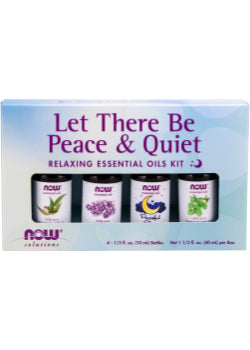
Let There Be Peace & Quiet Relaxing Essential Oils Kit - 4 x 10ml
$44.99
Now Essential Oils Let There Be Peace & Quiet Relaxing Essential Oils Kit - 4 x 10ml is a dietary supplement in oil form, intended for adults as part of a daily wellness routine.
RELAXING ESSENTIAL OILS KITNow Solutions Let There Be Peace & Quiet Essential Oil Kit contains 4 essential oils that are known to calm and relax including: lavender, eucalyptus, peppermint, and a unique peaceful sleep blend that includes the scents from orange, tangerine, lavender, chamomile, ylang ylang, and sandalwood. When added to a diffuser, hot bath, or room mist, Let There Be Peace & Quiet promotes rest, relaxation, peace and tranquility. Let There Be Peace & Quiet Essential Oil Kit is ideal for unwinding before a nap or a good nights sleep after a busy or stressful day. [LIQUID]
Each 10ml bottle contains:
100% Pure Lavender Oil
100% Pure Eucalyptus Oil
100% Pure Peppermint Oil
Peaceful Sleep Oil Blend: orange, tangerine, lavender, chamomile, ylang ylang, sandalwood
Important Information:
Use caution when adding essential oils to a bath tub since they can make surfaces slippery. Keep out of reach of children. Avoid contact with eyes. If pregnant or lactating, consult your healthcare practitioner before using. Not for internal use. Do not use on skin. Reacts strongly to sunlight and other sources of ultraviolet light.
Dosage
Add to a diffuser, add 4-5 drops to a hot bath before bed, or create a room mister by adding 30 drops to 1 oz. of water in a spray bottle.
Enjoy natural fragrances and unique aromas with Now Essential Oils outstanding selection of premium quality essential oils and blends. Now Essential Oils peppermint, frankincense, eucalyptus and lavender are top selling high quality essential oils. Now Essential Oils also brings you unique blended essential oils including peaceful night, cheer up buttercup, good morning sunshine and clear the air oil.
Lavender
The essential oil of lavender is extracted from the lavender plant and used for a variety of health benefits. It is antiseptic and anti-inflammatory, making it useful in topical inflammatory conditions like eczema and acne. For more information, please see our Essential Oil article.
Aromatherapy
The scent of lavender can be of great benefit in cases of anxiety and stress by promoting relaxation. For more information, please see our Stress and Anxiety articles. The calming properties of lavender are also beneficial in promoting sleep in cases of
insomnia. For more information, please see our
insomnia
article. It may help to relieve tension headaches when rubbed on the skin and inhaled as a vapour. When vaporized,
lavender oil
can help treat respiratory infections and soothe a cough.
Topical Use
Lavender oil is frequently added to skin products like balms, salves, perfumes, and cosmetics. It can be used as an antiseptic to clean minor injuries and burns. It is also a pain reliever and can be applied topically to treat insect bites and stings. When added to massage oil, lavender can help to relieve joint and muscle pain. It has also been shown to be helpful in healing episiotomy wounds after childbirth. As with most essential oils, lavender oil should be diluted in a carrier oil to reduce the risk of damage to the skin.
Hormonal Effects
Lavender can have a weak estrogenic effect. This effect becomes particularly prevalent in children whose sex hormone levels are still low. Lavender oil in shampoos and lotions has been implicated to have some hormonal effects in children. There have been suggestions that in a few cases lavender caused abnormal breast development in young boys, and early puberty in young girls. Ongoing use of lavender essential oil in young children is not recommended until further research can clarify this effect. It is unlikely that this effect is strong enough to affect adults with far greater hormone production of their own.
Culinary Use
The floral and slightly sweet flavour of lavender is sometimes added to baking, and paired with sheep’s milk and goat’s milk cheeses to compliment their flavours. A spice blend called herbs de Provence also contains lavender leaves combined with savory, fennel, basil and
thyme.
Hair Growth
Scientific research has shown that the application of a mixture of essential oils to alopecia areata can actually cause a return of hair growth by up to 44%. The mixture is 3 drops of lavender oil, 3 drops of
rosemary oil, 2 drops of
thyme oil, and 2 drops of cedarwood, all mixed into jojoba (carrier) oil and 20ml of grapeseed oil. This mixture is applied to any bald spots and massaged in each night. Effects are seen over a period of a few weeks.
Other Uses
Bunches of lavender can actually be used to repel insects, so it is commonly used in natural repellant sprays. Because of its calming scent, lavender is also often found in potpourri. In fact, pouches of lavender can be stored with clean linens and clothing to maintain a fresh scent and to deter moths. Some initial research has been performed on whether lavender can be used internally to help treat gastrointestinal upset, but further research is required to be sure of any effects.
How can I use lavender?
Lavender can be found as an essential oil that can be diluted in a carrier oil (or in a 1:10 dilution in water) and used topically for relaxation and pain relief, or can be vaporized for aromatherapeutic effect. A few drops of this oil can be added to hot water or a bath to promote relaxation. Flowerheads can be added to a cup of boiling water to make a relaxing tea to promote sleep. Commercially made tea bags are also available. Dried bunches of lavender can be stored with clothing or hung to deter insects. Lavender is commonly found in a variety of cosmetic and moisturizing products, deodorants, and bath salts.
Aromatherapy
How does it work?
There are two proposed mechanisms. The first follows the theory that the aroma of the oils have a direct influence on the brain. Through the olfactory system, our nose, the aromas travel to the limbic system of the brain.
The limbic system is involved in various functions in the body such as emotional responses, memory storage and hormone regulation. It also plays a role in sensory perception and motor function, as well as olfaction, the sense of smell.
Another theory is simply that, just as plants and herbs have medicinal properties, essential oils made from the same plants and herbs have pharmacological effects, as well. This theory relies on the ability of the scented oils to be absorbed through the skin and exert their medicinal effect on deeper bodily processes that way. These two mechanisms support the argument that the oils can be, but do not necessarily have to be applied on the skin to achieve their healing goals.
Aromatherapy offers treatment for a wide range of health concerns. It is commonly used for the treatment of mental emotional issues such as depression, anxiety, irritability, insomnia and lack of concentration. It has been used in the treatment of chronic concerns, such as respiratory conditions, muscle and joint pain, and overall
weakened immune system. It is also helpful in the case of acute nausea, exhaustion or headache.
Aromatherapy is a well known treatment for low libido and overall stress reduction. There are sadly few scientific studies to prove the effectiveness of Aromatherapy as medicine, simply because it is a difficult area to study as the treatments are designed for individual use.
Carefully SelectedShips to the U.S.Wellness EssentialsTrusted Brands
Product Details
Lavender
The essential oil of lavender is extracted from the lavender plant and used for a variety of health benefits. It is antiseptic and anti-inflammatory, making it useful in topical inflammatory conditions like eczema and acne. For more information, please see our Essential Oil article.
Aromatherapy
The scent of lavender can be of great benefit in cases of anxiety and stress by promoting relaxation. For more information, please see our Stress and Anxiety articles. The calming properties of lavender are also beneficial in promoting sleep in cases of
insomnia. For more information, please see our
insomnia
article. It may help to relieve tension headaches when rubbed on the skin and inhaled as a vapour. When vaporized,
lavender oil
can help treat respiratory infections and soothe a cough.
Topical Use
Lavender oil is frequently added to skin products like balms, salves, perfumes, and cosmetics. It can be used as an antiseptic to clean minor injuries and burns. It is also a pain reliever and can be applied topically to treat insect bites and stings. When added to massage oil, lavender can help to relieve joint and muscle pain. It has also been shown to be helpful in healing episiotomy wounds after childbirth. As with most essential oils, lavender oil should be diluted in a carrier oil to reduce the risk of damage to the skin.
Hormonal Effects
Lavender can have a weak estrogenic effect. This effect becomes particularly prevalent in children whose sex hormone levels are still low. Lavender oil in shampoos and lotions has been implicated to have some hormonal effects in children. There have been suggestions that in a few cases lavender caused abnormal breast development in young boys, and early puberty in young girls. Ongoing use of lavender essential oil in young children is not recommended until further research can clarify this effect. It is unlikely that this effect is strong enough to affect adults with far greater hormone production of their own.
Culinary Use
The floral and slightly sweet flavour of lavender is sometimes added to baking, and paired with sheep’s milk and goat’s milk cheeses to compliment their flavours. A spice blend called herbs de Provence also contains lavender leaves combined with savory, fennel, basil and
thyme.
Hair Growth
Scientific research has shown that the application of a mixture of essential oils to alopecia areata can actually cause a return of hair growth by up to 44%. The mixture is 3 drops of lavender oil, 3 drops of
rosemary oil, 2 drops of
thyme oil, and 2 drops of cedarwood, all mixed into jojoba (carrier) oil and 20ml of grapeseed oil. This mixture is applied to any bald spots and massaged in each night. Effects are seen over a period of a few weeks.
Other Uses
Bunches of lavender can actually be used to repel insects, so it is commonly used in natural repellant sprays. Because of its calming scent, lavender is also often found in potpourri. In fact, pouches of lavender can be stored with clean linens and clothing to maintain a fresh scent and to deter moths. Some initial research has been performed on whether lavender can be used internally to help treat gastrointestinal upset, but further research is required to be sure of any effects.
How can I use lavender?
Lavender can be found as an essential oil that can be diluted in a carrier oil (or in a 1:10 dilution in water) and used topically for relaxation and pain relief, or can be vaporized for aromatherapeutic effect. A few drops of this oil can be added to hot water or a bath to promote relaxation. Flowerheads can be added to a cup of boiling water to make a relaxing tea to promote sleep. Commercially made tea bags are also available. Dried bunches of lavender can be stored with clothing or hung to deter insects. Lavender is commonly found in a variety of cosmetic and moisturizing products, deodorants, and bath salts.
Aromatherapy
How does it work?
There are two proposed mechanisms. The first follows the theory that the aroma of the oils have a direct influence on the brain. Through the olfactory system, our nose, the aromas travel to the limbic system of the brain.
The limbic system is involved in various functions in the body such as emotional responses, memory storage and hormone regulation. It also plays a role in sensory perception and motor function, as well as olfaction, the sense of smell.
Another theory is simply that, just as plants and herbs have medicinal properties, essential oils made from the same plants and herbs have pharmacological effects, as well. This theory relies on the ability of the scented oils to be absorbed through the skin and exert their medicinal effect on deeper bodily processes that way. These two mechanisms support the argument that the oils can be, but do not necessarily have to be applied on the skin to achieve their healing goals.
Aromatherapy offers treatment for a wide range of health concerns. It is commonly used for the treatment of mental emotional issues such as depression, anxiety, irritability, insomnia and lack of concentration. It has been used in the treatment of chronic concerns, such as respiratory conditions, muscle and joint pain, and overall
weakened immune system. It is also helpful in the case of acute nausea, exhaustion or headache.
Aromatherapy is a well known treatment for low libido and overall stress reduction. There are sadly few scientific studies to prove the effectiveness of Aromatherapy as medicine, simply because it is a difficult area to study as the treatments are designed for individual use.
🌿
Daily Wellness
Easy to add to your everyday health routine.
✅
Carefully Selected
Chosen with quality and customer needs in mind.
💊
Simple to Use
Designed for convenient daily supplementation.
🚚
Ships to the U.S.
Fast, reliable shipping to U.S. customers.
Choosing a selection results in a full page refresh.