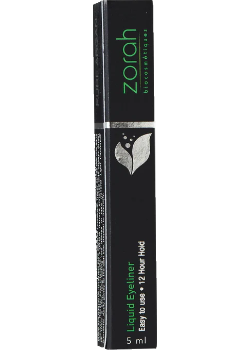
Define your eyes with precision and comfort using Zorah Biocosmetics Long-Lasting Black Eyeliner, specially formulated for sensitive eyes and contact lens wearers. Its creamy, non-irritating texture glides on effortlessly, creating a smooth, fine line with intense, opaque black color. Infused with Pure Capture Lumière mineral pigments, it delivers bold definition and natural fullness that lasts all day. Resistant to water, perspiration, and smudging, this eyeliner ensures impeccable hold without discomfort—leaving your eyes beautifully defined and perfectly comfortable from morning to night. [LIQUID]
Dosage
Apply the liner along the lash line to draw your line. Repeat to intensify. Wait 3 seconds before opening the eye. Repeat the line as needed.
Botanical luxury for luminous skin at
Zorah was born from the dream of a young aid worker in Morocco, Mélissa Harvey, who wanted to help the Berber women producing argan oil. Back in Montreal, she began selling her oil at the Jean-Talon Market, sharing with her customers the incredible topical benefits of argan oil. It was through a chance encounter at that same market with a renowned biochemist that Mélissa decided to take things further—combining science and nature to develop highly effective products that respect both people and the environment.
THE ADVANTAGES OF NATURAL EYELINER
Did you know eyeliner's origins trace back thousands of years, transcending continents and civilizations? Indeed, ancient Egyptians were among the first to adopt the practice of lining their eyes using kohl – an ancient natural eyeliner traditionally made by grinding stibnite. The distinctive almond-shaped eyes adorning the faces of pharaohs and queens in hieroglyphs and tomb paintings bear testament to its enduring legacy.
Across the globe, cultures from Mesopotamia to India also embraced eyeliner for its aesthetic and symbolic significance. Cleopatra, the legendary Queen of Egypt, was said to have her signature eyeliner style, using crushed antimony and malachite to create striking black and green hues. In Japan, on the other hand, geishas traditionally painted their upper eyelids white. They then drew a line extending past the outer corners to create an illusion of larger, more expressive eyes.
Indeed, eyeliner's cultural significance is as diverse as its application techniques, with each culture infusing its meaning and symbolism into the art of eye adornment.
Why Conventional Eyeliner May Be Toxic
While eyeliner continues to be an extremely popular cosmetic, dangerous ingredients lie under its glamorous façade. Many mainstream eyeliners contain a cocktail of synthetic chemicals and toxic ingredients that can pose serious health risks. Some of the most dangerous of these include:
Benzalkonium chloride (which may also be listed as BAK, Zephiran, or alkyldimethylbenzylammonium chloride)
Formaldehyde (which may also be listed as methylene glycol, formalin, formic aldehyde)
Parabens (which may be listed as ethylparaben, butylparaben, methylparaben, propylparaben, isobutylparaben, isopropylparaben, or any other paraben)
Phthalates (commonly listed as Dibutyl and diethyl hexyl phthalates)
Prime yellow carnauba wax (which may also be listed as opernicia cerifera wax or palm wax)
Synthetic Dyes
Additionally, heavy metals, such as lead, cadmium, and mercury, are often found as contaminants in conventional cosmetic pigments and can accumulate in the body over time, leading to a whole host of health problems.
Embracing Clean Beauty For Better Health
In an age where clean beauty reigns supreme, consumers increasingly demand safer alternatives free from harmful chemicals and questionable ingredients. Fortunately, the beauty industry has responded with a wave of natural, organic, and cruelty-free eyeliner options that prioritize both performance and safety.
Look for products formulated with nourishing botanicals like
jojoba oil,
coconut oil, shea butter,
silica,
vitamin E, and flower extracts. These will not only enhance the application experience but also provide essential hydration and protection for delicate eye skin.
Top Health Benefits Of Natural Eyeliner
Cruelty-Free
Environmentally-Friendly
Gentle On Sensitive Eyes
Hypoallergenic
No Harsh Ingredients
Nourishing & Hydrating
Sustainable
Tips For Buying Quality Natural Eyeliner
As we navigate the ever-evolving landscape of beauty and wellness, we must approach cosmetics with discernment and mindfulness. While eyeliner may seem like a small indulgence in the grand scheme of things, its impact on our health and the environment should not be underestimated.
By embracing cleaner, greener alternatives and advocating for greater transparency and accountability within the beauty industry, we can ensure that the art of eyeliner remains a source of joy, expression, and empowerment for generations to come.
Ultimately, eyeliner isn't just about looking good—it's about feeling good, inside and out. So the next time you reach for that trusty pencil or liquid liner, remember the journey it's taken to adorn your eyes and the choices you make in the name of beauty and self-care.
Carefully SelectedShips to the U.S.Wellness EssentialsTrusted Brands
Product Details
THE ADVANTAGES OF NATURAL EYELINER
Did you know eyeliner's origins trace back thousands of years, transcending continents and civilizations? Indeed, ancient Egyptians were among the first to adopt the practice of lining their eyes using kohl – an ancient natural eyeliner traditionally made by grinding stibnite. The distinctive almond-shaped eyes adorning the faces of pharaohs and queens in hieroglyphs and tomb paintings bear testament to its enduring legacy.
Across the globe, cultures from Mesopotamia to India also embraced eyeliner for its aesthetic and symbolic significance. Cleopatra, the legendary Queen of Egypt, was said to have her signature eyeliner style, using crushed antimony and malachite to create striking black and green hues. In Japan, on the other hand, geishas traditionally painted their upper eyelids white. They then drew a line extending past the outer corners to create an illusion of larger, more expressive eyes.
Indeed, eyeliner's cultural significance is as diverse as its application techniques, with each culture infusing its meaning and symbolism into the art of eye adornment.
Why Conventional Eyeliner May Be Toxic
While eyeliner continues to be an extremely popular cosmetic, dangerous ingredients lie under its glamorous façade. Many mainstream eyeliners contain a cocktail of synthetic chemicals and toxic ingredients that can pose serious health risks. Some of the most dangerous of these include:
Benzalkonium chloride (which may also be listed as BAK, Zephiran, or alkyldimethylbenzylammonium chloride)
Formaldehyde (which may also be listed as methylene glycol, formalin, formic aldehyde)
Parabens (which may be listed as ethylparaben, butylparaben, methylparaben, propylparaben, isobutylparaben, isopropylparaben, or any other paraben)
Phthalates (commonly listed as Dibutyl and diethyl hexyl phthalates)
Prime yellow carnauba wax (which may also be listed as opernicia cerifera wax or palm wax)
Synthetic Dyes
Additionally, heavy metals, such as lead, cadmium, and mercury, are often found as contaminants in conventional cosmetic pigments and can accumulate in the body over time, leading to a whole host of health problems.
Embracing Clean Beauty For Better Health
In an age where clean beauty reigns supreme, consumers increasingly demand safer alternatives free from harmful chemicals and questionable ingredients. Fortunately, the beauty industry has responded with a wave of natural, organic, and cruelty-free eyeliner options that prioritize both performance and safety.
Look for products formulated with nourishing botanicals like
jojoba oil,
coconut oil, shea butter,
silica,
vitamin E, and flower extracts. These will not only enhance the application experience but also provide essential hydration and protection for delicate eye skin.
Top Health Benefits Of Natural Eyeliner
Cruelty-Free
Environmentally-Friendly
Gentle On Sensitive Eyes
Hypoallergenic
No Harsh Ingredients
Nourishing & Hydrating
Sustainable
Tips For Buying Quality Natural Eyeliner
As we navigate the ever-evolving landscape of beauty and wellness, we must approach cosmetics with discernment and mindfulness. While eyeliner may seem like a small indulgence in the grand scheme of things, its impact on our health and the environment should not be underestimated.
By embracing cleaner, greener alternatives and advocating for greater transparency and accountability within the beauty industry, we can ensure that the art of eyeliner remains a source of joy, expression, and empowerment for generations to come.
Ultimately, eyeliner isn't just about looking good—it's about feeling good, inside and out. So the next time you reach for that trusty pencil or liquid liner, remember the journey it's taken to adorn your eyes and the choices you make in the name of beauty and self-care.
🌿
Daily Wellness
Easy to add to your everyday health routine.
✅
Carefully Selected
Chosen with quality and customer needs in mind.
💊
Simple to Use
Designed for convenient daily supplementation.
🚚
Ships to the U.S.
Fast, reliable shipping to U.S. customers.
Choosing a selection results in a full page refresh.