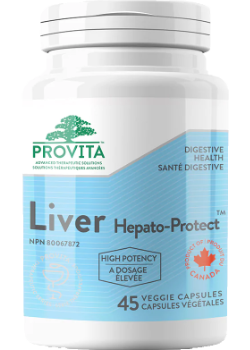
Traditionally used in Herbal Medicine as a hepato protectant. Provita Liver Hepato-Protect helps to support liver function and is used in Herbal Medicine to help increase bile flow. Liver Hepato-Protect from Provita is an orthomolecular formulation both unique and complex, targeting the nutrition, regeneration and effective detoxification of the liver. A robust orthomolecular high-potency combination of ingredients traditionally used in herbal medicine to help maintain optimal liver functions such as glycogen storage, decomposition of red blood cells, plasma protein synthesis, hormone production, and detoxification. The liver performs over 500 different functions, essential for a healthy body. [VCAPS]
Each capsule contains:
Milk Thistle (80% Silymarin) 250 mg
Beet Root (Beta vulgaris) 150 mg
Black Radish (Raphanus sativus) 140 mg
Dandelion Root 10:1 PE 50 mg
Artichoke 15:1 PE (Cynara scolymus, ~5% Cynarin) 35 mg
Curcumin (95% Curcuminoids) 50 mg
Fennel Seed (Foeniculum vulgare) 50 mg
dl-Alpha Lipoic Acid 50 mg
L-Glutathione (reduced) 5 mg
Selenium (Selenomethionine) 10 mcg
Non-medicinal Ingredients:
Microcrystalline cellulose, vegetable stearate, hypromellose (capsule shell).
Important Information:
Consult a health care practitioner if symptoms persist or worsen. Do not use if you have a bile duct obstruction. Consult a health care practitioner prior to use if you have diabetes. Consult a health care practitioner prior to use if you have gallstones, if you are taking antiplatelet medication or blood thinners or if you have stomach ulcers or excess stomach acid. Hypersensitivity, such as allergy, has been known to occur; in which case, discontinue use. Keep out of reach of children. Sealed for your protection. Do not use if seal is broken.
Dosage
Adults take 1 capsule 1 to 2 times per day.
High-Potency Herbal Supplements by Provita
Provita offers targeted natural solutions for sleep, stress, and cognitive health with formulas like
Dream-On
for deep, restful sleep without melatonin,
GABA Pro
to support calm and relaxation,
Lion’s Mane 5000
for memory, focus, and brain function, and
PS-100+ With ALC
for cognitive support and mental clarity.
These advanced, non-habit-forming supplements are designed to support neurotransmitter balance, reduce mental fatigue, and promote overall brain health and wellness.
LIVER SUPPORT
By: Articles by a Naturopathic Doctor and a Holistic Nutritionist
Think of your liver as the waste treatment plant for your body. It breaks down our own internal toxins, and those from our environment...
The liver is the largest solid organ in the body and performs a wide variety of different functions in the body. It produces bile for digestion, makes blood proteins, filters the blood, stores nutrients, breaks down old hormones, and detoxifies any contaminants in our bodies.
Bile
The main excreted product produced by the liver is bile. This is the digestive juice that breaks down fats and helps the body to absorb fat-soluble vitamins, and converts
Beta Carotene
into
Vitamin A.
Its release is triggered by the presence of fats and/or bitter herbs on the taste buds. The release of bile can also stimulate intestinal contractions, to promote regularity. For more information, please see our
Ox Bile
article.
Blood
The liver acts as a filter for all of the blood in the body, helping to remove any impurities. Blood returning from the intestines is extremely packed with nutrients, and it goes directly to the liver where some of the vitamins and minerals are stored. The liver also produces many of the proteins in the blood that help to shuttle other molecules and those that maintain osmotic (water) balance.
Filtering
Environmental toxins, medications, alcohol and other contaminants are filtered from the blood by the liver. Ammonia is a natural by-product of
protein
breakdown, which is also filtered by the liver. The liver changes these harmful byproducts into less harmful metabolites that can then be put back into circulation and excreted by the kidneys and intestines, or out into the bile.
Metabolism
The liver metabolizes fat into cholesterol, phospholipids (for cell membranes) and lipoproteins (for carrying other molecules). The liver plays a role in blood sugar regulation by making glucose tolerance factor. Sugar can also be directly stored in the liver for later use (as glycogen) and extra food is converted to fat by the liver and then transported to the fatty tissue. Because of this, the liver is central to the function of our metabolism.
Detoxification and Breakdown of Hormones
The last function of the liver is the breakdown of chemicals and toxins in the bloodstream. It is also responsible for hormone metabolism. It converts thyroid hormone into its most active form and breaks down excess and old hormones such as: sex hormones, adrenaline and insulin when they are not needed. This further helps our body to maintain balance.
PROTECTING THE LIVER
The liver can become damaged from infection, excessive alcohol consumption, medications and recreational drugs, environmental toxins and stress. There are also a variety of liver diseases. For more information, please see our
Liver Disorders
article. Fortunately, the liver is also the only internal organ that has the capacity to regenerate itself. It is important to limit the daily strain on your liver to help it to perform its many functions to the fullest.
Diet
Avoid sugar, alcohol, red meat, trans-fatty acids and processed foods. They are difficult for the liver to process. Avoid high doses of
niacin
and
Vitamin A
because they can raise liver
enzymes. Slow bowel transit time allows toxins to re-circulate in the body and forces the liver to repeat its detoxifying activity. Fibre can help to reduce this effect. For more information, please see our Fibre article.
Lifestyle
Avoid excessive use of alcohol, medications and recreational drugs. Exercise promotes liver health by increasing circulation. It also stimulates the bowels to release processed toxins.
Mental-Emotional
Traditional Asian medicine identifies emotions as a contributing agent in many disease processes. The liver is affected by anger. Anger reduction techniques, like biofeedback, or activities, such as yoga, can improve liver functioning.
Sometimes the liver’s pathways are not working up to speed or become blocked. The back up of waste material makes it harder for the rest of the body to function normally and ultimately leads to disease. Since the environment in which we live makes it impossible for us to maintain a pristine lifestyle, regular
liver cleansing
is essential. Liver detoxification involves dietary, supplemental and physical interventions. For more information see the article on detoxification.
Carefully SelectedShips to the U.S.Wellness EssentialsTrusted Brands
Product Details
LIVER SUPPORT
By: Articles by a Naturopathic Doctor and a Holistic Nutritionist
Think of your liver as the waste treatment plant for your body. It breaks down our own internal toxins, and those from our environment...
The liver is the largest solid organ in the body and performs a wide variety of different functions in the body. It produces bile for digestion, makes blood proteins, filters the blood, stores nutrients, breaks down old hormones, and detoxifies any contaminants in our bodies.
Bile
The main excreted product produced by the liver is bile. This is the digestive juice that breaks down fats and helps the body to absorb fat-soluble vitamins, and converts
Beta Carotene
into
Vitamin A.
Its release is triggered by the presence of fats and/or bitter herbs on the taste buds. The release of bile can also stimulate intestinal contractions, to promote regularity. For more information, please see our
Ox Bile
article.
Blood
The liver acts as a filter for all of the blood in the body, helping to remove any impurities. Blood returning from the intestines is extremely packed with nutrients, and it goes directly to the liver where some of the vitamins and minerals are stored. The liver also produces many of the proteins in the blood that help to shuttle other molecules and those that maintain osmotic (water) balance.
Filtering
Environmental toxins, medications, alcohol and other contaminants are filtered from the blood by the liver. Ammonia is a natural by-product of
protein
breakdown, which is also filtered by the liver. The liver changes these harmful byproducts into less harmful metabolites that can then be put back into circulation and excreted by the kidneys and intestines, or out into the bile.
Metabolism
The liver metabolizes fat into cholesterol, phospholipids (for cell membranes) and lipoproteins (for carrying other molecules). The liver plays a role in blood sugar regulation by making glucose tolerance factor. Sugar can also be directly stored in the liver for later use (as glycogen) and extra food is converted to fat by the liver and then transported to the fatty tissue. Because of this, the liver is central to the function of our metabolism.
Detoxification and Breakdown of Hormones
The last function of the liver is the breakdown of chemicals and toxins in the bloodstream. It is also responsible for hormone metabolism. It converts thyroid hormone into its most active form and breaks down excess and old hormones such as: sex hormones, adrenaline and insulin when they are not needed. This further helps our body to maintain balance.
PROTECTING THE LIVER
The liver can become damaged from infection, excessive alcohol consumption, medications and recreational drugs, environmental toxins and stress. There are also a variety of liver diseases. For more information, please see our
Liver Disorders
article. Fortunately, the liver is also the only internal organ that has the capacity to regenerate itself. It is important to limit the daily strain on your liver to help it to perform its many functions to the fullest.
Diet
Avoid sugar, alcohol, red meat, trans-fatty acids and processed foods. They are difficult for the liver to process. Avoid high doses of
niacin
and
Vitamin A
because they can raise liver
enzymes. Slow bowel transit time allows toxins to re-circulate in the body and forces the liver to repeat its detoxifying activity. Fibre can help to reduce this effect. For more information, please see our Fibre article.
Lifestyle
Avoid excessive use of alcohol, medications and recreational drugs. Exercise promotes liver health by increasing circulation. It also stimulates the bowels to release processed toxins.
Mental-Emotional
Traditional Asian medicine identifies emotions as a contributing agent in many disease processes. The liver is affected by anger. Anger reduction techniques, like biofeedback, or activities, such as yoga, can improve liver functioning.
Sometimes the liver’s pathways are not working up to speed or become blocked. The back up of waste material makes it harder for the rest of the body to function normally and ultimately leads to disease. Since the environment in which we live makes it impossible for us to maintain a pristine lifestyle, regular
liver cleansing
is essential. Liver detoxification involves dietary, supplemental and physical interventions. For more information see the article on detoxification.
🌿
Daily Wellness
Easy to add to your everyday health routine.
✅
Carefully Selected
Chosen with quality and customer needs in mind.
💊
Simple to Use
Designed for convenient daily supplementation.
🚚
Ships to the U.S.
Fast, reliable shipping to U.S. customers.
Choosing a selection results in a full page refresh.