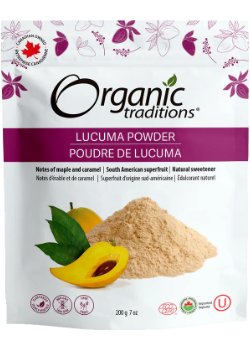
LUCUMA POWDER FROM NATURAL TRADITIONSLucuma is a South American superfruit with a delicious taste - cross between maple syrup and citrus. It's a source of fibre and potassium as well as a host of other nutrients. Lucuma has been prized for centuries by the indigenous people of Peru. It's a healthy, low-glycemic flavour and natural sweetener. Add 1-3 teaspoons to water with a teaspoon of Natural Traditions 30:1 Camu Camu to make a refreshing lemonade. Add to all smoothies, yogurts, cereals, oatmeal or on top of berries. Make exotic raw desserts, ice creams, puddings or superfruit truffles. Combine with Organic Traditions Sprouted Chia Powder to make the most nutritious flour substitute for baking. [POWDER]
1 teaspoon (6g) contains:
Calories 25
Sodium 2mg
Potassium 70mg
Carbohydrates 5g
Fibre 1g
Sugars 2g
Protein 0.4g
100% lucuma powder
Important Information:
Gluten-Free, Vegan, GMO-Free, Kosher, Raw
Dosage
It’s Not A Trend, It’s a Tradition... Naturally
Organic Traditions Fibre Flow range offers an easy and delicious way to support daily digestive health and increase fibre intake, with options like
Fibre Flow (Strawberry),
Fibre Flow (Unflavoured),
Fibre Flow (Yuzu Lime),
and
Fibre Flow (Variety Pack),
all made with clean, plant-based ingredients to support gut wellness.
The functional latte collection includes nourishing blends such as
Matcha Latte With Probiotics,
Turmeric Latte With Probiotics And Saffron,
Beet Latte With Probiotics,
Chocolate Latte With Ashwagandha And Probiotics,
Lavender Latte,
Pumpkin Spice Latte,
Holiday Spice Latte,
Mint Chocolate Latte,
and
Yerba Mate Mint Latte With Matcha And Probiotics,
delivering targeted benefits for energy, immunity, relaxation, and overall wellness.
Shop these high-quality superfoods right here at ca
Natural
Traditions Lucuma Powder
Lucuma is a South American superfruit with a delicious taste - cross between maple syrup and citrus. It's a source of fibre and
potassium
as well as a host of other nutrients. Lucuma has been prized for centuries by the indigenous people of Peru. It's a healthy, low-glycemic flavour and natural sweetener. Add 1-3 teaspoons to water with a teaspoon of Natural Traditions 30:1
Camu Camu
to make a refreshing lemonade. Add to all smoothies, yogurts, cereals, oatmeal or on top of berries. Make exotic raw desserts, ice creams, puddings or superfruit truffles. Combine with Organic Traditions Sprouted Chia Powder to make the most nutritious flour substitute for baking.
Glycemic Index
Glycemic load (GL) and glycemic index (GI) are two methods of ranking a food based on the impact they will have on blood sugar. Diets consisting of foods that have a high glycemic load have been independently associated with increased risk of developing type II
diabetes, cardiovascular disease. Similarly, research also confirms that a low GI diet may help to protect against obesity and support cell growth among other numerous health benefits.
The difference between GI and GL
Glycemic index is the numeric ranking of carbohydrate containing foods based on their potential to raise blood sugar. They are ranked via their impact on blood sugar compared to a test food (usually glucose itself, or white bread). Glycemic load ranks foods based on how high they will raise blood sugar after a specific amount of a specific carbohydrate. GL is measured by multiplying the GI with the dietary carbohydrate content of a specific food. The total is then divided by 100. To illustrate the difference between GI and GL, I'll use a carrot. The GI will give you a rating for how quickly the carbohydrate found in carrot will raise blood glucose post consumption, while the GL will index how much a whole carrot (which in one carrot is actually only a small amount of carbohydrate, combined with fibre, water,
antioxidants, etc.) will raise blood sugar. GL is therefore a more practical and useful tool for most individuals looking to get the most health benefit out of their diet.
Foods that alter your GI or GL
Something else that we need to consider is that these ratings are all based on the effect these foods have when consumed alone, not in the presence of other
carbohydrates, fats and
protein. When consumed as part of a meal, the total impact of both the glycemic load and the glycemic index goes down. In this sense, we can alter the glycemic value of a meal. If you absolutely must eat that white potato (high on the glycemic index) make sure to pair it with other foods that are ranked low. This way the meal averages out to be somewhere in the middle. There are a variety of lists available online that will be able to give you a GI or GL index of a wide range of foods. As a general rule, any white food (white bread, white rice, white flour, white sugar, white potatoes) are considered high. Foods high in fibre or
protein
tend to be lower in glycemic index and load values, as do healthy fats such as olive oil, flax seed, fish/
fish oil
and nuts/nut oils.
So what numbers are we looking for?
In terms of GI, anything ranked below 5.5 is considered low and anything above 7 is considered high. In terms of GL, anything less than 10 is low, between 11-19 is medium and anything 20 or more is considered high.
In general, it pays to have a rough idea of how the foods on your plate rank in terms of glycemic index. If you can influence the overall values in your meals to keep them moderate to low in terms of glycemic load (somewhat more practical than glycemic index in terms of overall diet) the health benefits go far beyond diabetes prevention, significantly impacting disease prevention as a whole.
Carefully SelectedShips to the U.S.Wellness EssentialsTrusted Brands
Product Details
Natural
Traditions Lucuma Powder
Lucuma is a South American superfruit with a delicious taste - cross between maple syrup and citrus. It's a source of fibre and
potassium
as well as a host of other nutrients. Lucuma has been prized for centuries by the indigenous people of Peru. It's a healthy, low-glycemic flavour and natural sweetener. Add 1-3 teaspoons to water with a teaspoon of Natural Traditions 30:1
Camu Camu
to make a refreshing lemonade. Add to all smoothies, yogurts, cereals, oatmeal or on top of berries. Make exotic raw desserts, ice creams, puddings or superfruit truffles. Combine with Organic Traditions Sprouted Chia Powder to make the most nutritious flour substitute for baking.
Glycemic Index
Glycemic load (GL) and glycemic index (GI) are two methods of ranking a food based on the impact they will have on blood sugar. Diets consisting of foods that have a high glycemic load have been independently associated with increased risk of developing type II
diabetes, cardiovascular disease. Similarly, research also confirms that a low GI diet may help to protect against obesity and support cell growth among other numerous health benefits.
The difference between GI and GL
Glycemic index is the numeric ranking of carbohydrate containing foods based on their potential to raise blood sugar. They are ranked via their impact on blood sugar compared to a test food (usually glucose itself, or white bread). Glycemic load ranks foods based on how high they will raise blood sugar after a specific amount of a specific carbohydrate. GL is measured by multiplying the GI with the dietary carbohydrate content of a specific food. The total is then divided by 100. To illustrate the difference between GI and GL, I'll use a carrot. The GI will give you a rating for how quickly the carbohydrate found in carrot will raise blood glucose post consumption, while the GL will index how much a whole carrot (which in one carrot is actually only a small amount of carbohydrate, combined with fibre, water,
antioxidants, etc.) will raise blood sugar. GL is therefore a more practical and useful tool for most individuals looking to get the most health benefit out of their diet.
Foods that alter your GI or GL
Something else that we need to consider is that these ratings are all based on the effect these foods have when consumed alone, not in the presence of other
carbohydrates, fats and
protein. When consumed as part of a meal, the total impact of both the glycemic load and the glycemic index goes down. In this sense, we can alter the glycemic value of a meal. If you absolutely must eat that white potato (high on the glycemic index) make sure to pair it with other foods that are ranked low. This way the meal averages out to be somewhere in the middle. There are a variety of lists available online that will be able to give you a GI or GL index of a wide range of foods. As a general rule, any white food (white bread, white rice, white flour, white sugar, white potatoes) are considered high. Foods high in fibre or
protein
tend to be lower in glycemic index and load values, as do healthy fats such as olive oil, flax seed, fish/
fish oil
and nuts/nut oils.
So what numbers are we looking for?
In terms of GI, anything ranked below 5.5 is considered low and anything above 7 is considered high. In terms of GL, anything less than 10 is low, between 11-19 is medium and anything 20 or more is considered high.
In general, it pays to have a rough idea of how the foods on your plate rank in terms of glycemic index. If you can influence the overall values in your meals to keep them moderate to low in terms of glycemic load (somewhat more practical than glycemic index in terms of overall diet) the health benefits go far beyond diabetes prevention, significantly impacting disease prevention as a whole.
🌿
Daily Wellness
Easy to add to your everyday health routine.
✅
Carefully Selected
Chosen with quality and customer needs in mind.
💊
Simple to Use
Designed for convenient daily supplementation.
🚚
Ships to the U.S.
Fast, reliable shipping to U.S. customers.
Choosing a selection results in a full page refresh.