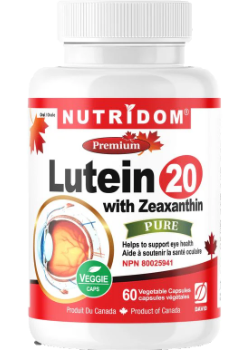
Nutridom Lutein 20mg with Zeaxanthin 2mg is a premium eye health supplement derived from Marigold Flower Extract. Each vegan, non-GMO, gluten- and dairy-free capsule supports vision by protecting the retina from oxidative stress, reducing eye strain, and filtering harmful blue light. Key benefits include lowering the risk of age-related macular degeneration (AMD), preventing cataracts, improving visual performance, enhancing retinal health, supporting skin protection, and promoting cardiovascular wellness. Designed for daily use, this supplement provides a convenient, long-term solution for maintaining eye function, reducing fatigue, and supporting overall wellness. [VCAPS]
Each capsule contains:
Lutein Esters (Marigold flower)(Tagetes erecta) 20mg
Zeaxanthin (Marigold flower)(Tagetes erecta) 2mg
Non-Medicinal Ingredients:
Microcrystalline cellulose, Magnesium stearate, Hypromellose(Capsule shell)
Important Information:
Do not use if you are allergic to plants of the Asteraceae/Compositae/Daisy family.
Dosage
Adults: 1 Capsule 1 time per day. Take with a meal containing oil/fat.
Uniting Families with Healthy Habits at
Every Nutridom product is crafted with non-GMO, sustainably sourced ingredients and features clinically proven key actives to ensure real, measurable results. From immune and joint support to energy, beauty, and digestive health, Nutridom offers a comprehensive line of natural supplements that meet the highest standards of quality and efficacy.
LUTEIN & ZEAXANTHIN
By: Articles by a Naturopathic Doctor and a Holistic Nutritionist
Your eyes will love you for them...
Lutein and zeaxanthin are both different isomers of the same xanthophyll pigment molecule. They are naturally occurring
carotenoids
found in highest abundance in green leafy vegetables. Both of these molecules play a large role in
eye health. They are both found to be highly concentrated in the retina, which is the lining on the back of the eye that is responsible for vision.
Like with many other
carotenoids, any lutein and zeaxanthin that is not used for immediate bodily requirements is able to act as an antioxidant to reduce free radical damage to the tissues.
Eye Health
Lutein and zeaxanthin are responsible for the ability of our eyes to absorb blue light, which is a wavelength of light that produces free radicals and puts significant oxidative stress on tissues. Studies show a correlation between high lutein consumption and increased pigmentation of the retina. Increased pigment has been shown to lower your risk of macular degeneration and cataracts, although it doesn't reverse already established illnesses. Interestingly, lutein is found in highest concentration in the peripheral retina, which better senses motion and black-and-white. Zeaxanthin, on the other hand, is found to be highly concentrated in the macula, the more detail and colour-sensitive region of the retina. Lutein may also prove helpful for retinopathies associated with advanced
diabetes
likely from protection against damage from excess sugar in the blood.
Other Benefits
High lutein consumption has been associated with a reduced incidence of prostate cell growths in men. It may also help prevent or slow down the thickening of the arteries known as atherosclerosis, which is a major risk for cardiovascular disease. Interestingly, cardiovascular disease is often accelerated by free radical damage.
How Can I Get Lutein And Zeaxanthin?
Eating a diet rich in green leafy vegetables like spinach,
kale
and collard
greens
is a great way to increase your lutein and zeaxanthin intake. As a supplement, lutein comes individually in capsules, or as a sublingual spray for those with compromised digestion. Both lutein and zeaxanthin can be found in a number of combination formulas for eye health. There is currently no recommended dosage for lutein or zeaxanthin. Many supplements commonly suggest between 6-12mg/day of lutein and 2-6mg/day of zeaxanthin. It is advisable to follow the recommended dosage provided by each manufacturer.
Important Information
Lutein and zeaxanthin are non-toxic, but can cause harmless yellow-orange skin pigmentation if consumed in very large amounts.
Lutein & Zeaxanthin – Quick Facts
Food Sources
· Green Leafy Vegetables Such As Kale, Collard Greens And Spinach Are Among The Highest Sources. Lutein Can Also Be Found In Eggs And Animal Fats.
Optimum Dosage
· 6-10mg Depending On The Condition.
Works Well With
· Other Carotenoids,
Alpha Lipoic Acid, Vitamins A, C, E And
Selenium
Important Information
· Lutein And Zeaxanthin Are Non-Toxic, But Can Cause A Yellow-Orange Skin Pigment If Consumed In Abundance.
Carefully SelectedShips to the U.S.Wellness EssentialsTrusted Brands
Product Details
LUTEIN & ZEAXANTHIN
By: Articles by a Naturopathic Doctor and a Holistic Nutritionist
Your eyes will love you for them...
Lutein and zeaxanthin are both different isomers of the same xanthophyll pigment molecule. They are naturally occurring
carotenoids
found in highest abundance in green leafy vegetables. Both of these molecules play a large role in
eye health. They are both found to be highly concentrated in the retina, which is the lining on the back of the eye that is responsible for vision.
Like with many other
carotenoids, any lutein and zeaxanthin that is not used for immediate bodily requirements is able to act as an antioxidant to reduce free radical damage to the tissues.
Eye Health
Lutein and zeaxanthin are responsible for the ability of our eyes to absorb blue light, which is a wavelength of light that produces free radicals and puts significant oxidative stress on tissues. Studies show a correlation between high lutein consumption and increased pigmentation of the retina. Increased pigment has been shown to lower your risk of macular degeneration and cataracts, although it doesn't reverse already established illnesses. Interestingly, lutein is found in highest concentration in the peripheral retina, which better senses motion and black-and-white. Zeaxanthin, on the other hand, is found to be highly concentrated in the macula, the more detail and colour-sensitive region of the retina. Lutein may also prove helpful for retinopathies associated with advanced
diabetes
likely from protection against damage from excess sugar in the blood.
Other Benefits
High lutein consumption has been associated with a reduced incidence of prostate cell growths in men. It may also help prevent or slow down the thickening of the arteries known as atherosclerosis, which is a major risk for cardiovascular disease. Interestingly, cardiovascular disease is often accelerated by free radical damage.
How Can I Get Lutein And Zeaxanthin?
Eating a diet rich in green leafy vegetables like spinach,
kale
and collard
greens
is a great way to increase your lutein and zeaxanthin intake. As a supplement, lutein comes individually in capsules, or as a sublingual spray for those with compromised digestion. Both lutein and zeaxanthin can be found in a number of combination formulas for eye health. There is currently no recommended dosage for lutein or zeaxanthin. Many supplements commonly suggest between 6-12mg/day of lutein and 2-6mg/day of zeaxanthin. It is advisable to follow the recommended dosage provided by each manufacturer.
Important Information
Lutein and zeaxanthin are non-toxic, but can cause harmless yellow-orange skin pigmentation if consumed in very large amounts.
Lutein & Zeaxanthin – Quick Facts
Food Sources
· Green Leafy Vegetables Such As Kale, Collard Greens And Spinach Are Among The Highest Sources. Lutein Can Also Be Found In Eggs And Animal Fats.
Optimum Dosage
· 6-10mg Depending On The Condition.
Works Well With
· Other Carotenoids,
Alpha Lipoic Acid, Vitamins A, C, E And
Selenium
Important Information
· Lutein And Zeaxanthin Are Non-Toxic, But Can Cause A Yellow-Orange Skin Pigment If Consumed In Abundance.
🌿
Daily Wellness
Easy to add to your everyday health routine.
✅
Carefully Selected
Chosen with quality and customer needs in mind.
💊
Simple to Use
Designed for convenient daily supplementation.
🚚
Ships to the U.S.
Fast, reliable shipping to U.S. customers.
Choosing a selection results in a full page refresh.